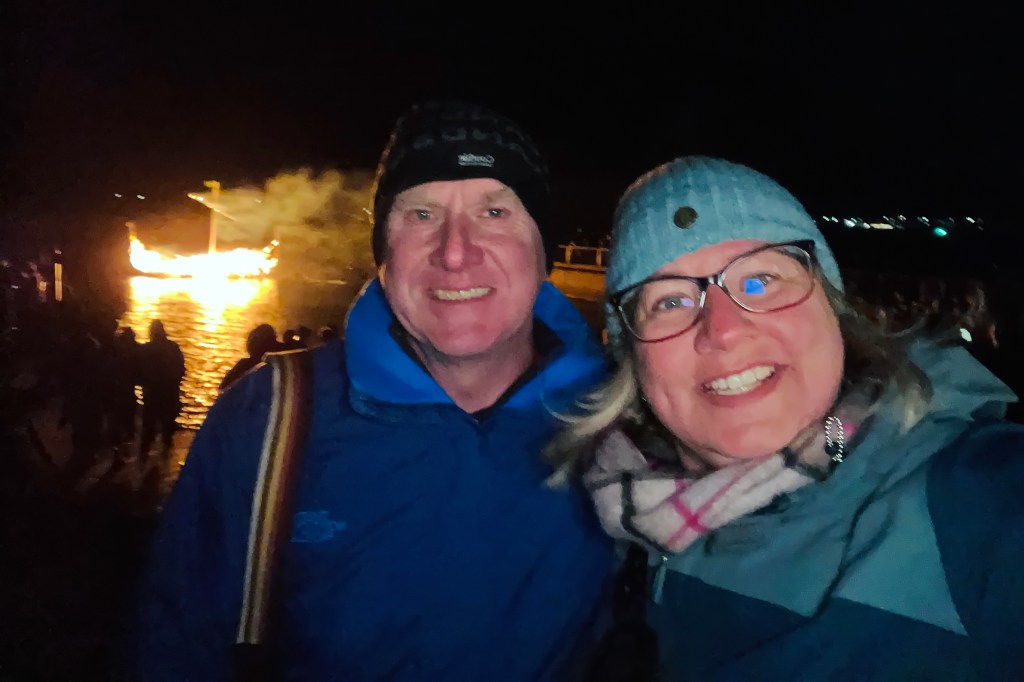
Every winter, as the long dark nights settle over Shetland, the islands come alive with fire, tradition, and a deep sense of community. The most famous of these celebrations is Up Helly Aa in Lerwick—a spectacular torchlit festival that has become synonymous with Viking heritage and island identity.
Though it feels ancient, Up Helly Aa as we know it today dates back to the late 19th century, evolving from older midwinter celebrations and the rowdy Christmas festivities once known as “tar barreling.” Over time, these traditions were shaped into something more organized, culminating in the first official Up Helly Aa in 1881. What emerged was a celebration that honours Shetland’s Norse roots, complete with a costumed Jarl Squad, a meticulously crafted Viking galley, and a dramatic nighttime procession ending in the galley’s fiery fate.
But what many visitors don’t realize is that Lerwick’s Up Helly Aa is just the beginning.
Across the Shetland Islands, a whole season of fire festivals unfolds from January through March, each community hosting its own version of Up Helly Aa. While they share common elements—torches, guizers (the costumed torchbearers), and that unmistakable blaze of firelight—each has its own character, shaped by local traditions and the people who bring it to life year after year. Together, they form a winter-long celebration that feels both deeply rooted and wonderfully alive.
It was this broader story that drew us beyond Lerwick to experience one of the lesser-known—but no less meaningful—festivals: Delting Up Helly Aa. Smaller and more intimate, Delting offers a different perspective—one where you feel less like a spectator and more like part of the community, sharing in a tradition that burns just as brightly.
If Up Helly Aa in Lerwick is the grand spectacle, then Delting Up Helly Aa is its beating heart.
Set in the North Mainland, in the town of Brae, Delting’s festival feels less like an event you attend and more like one you are welcomed into. It’s not just a single evening of fire and procession—it’s an entire weekend of celebration, deeply rooted in community and tradition. People who grew up here return year after year, drawn home not just by the spectacle but by something far more meaningful: belonging.
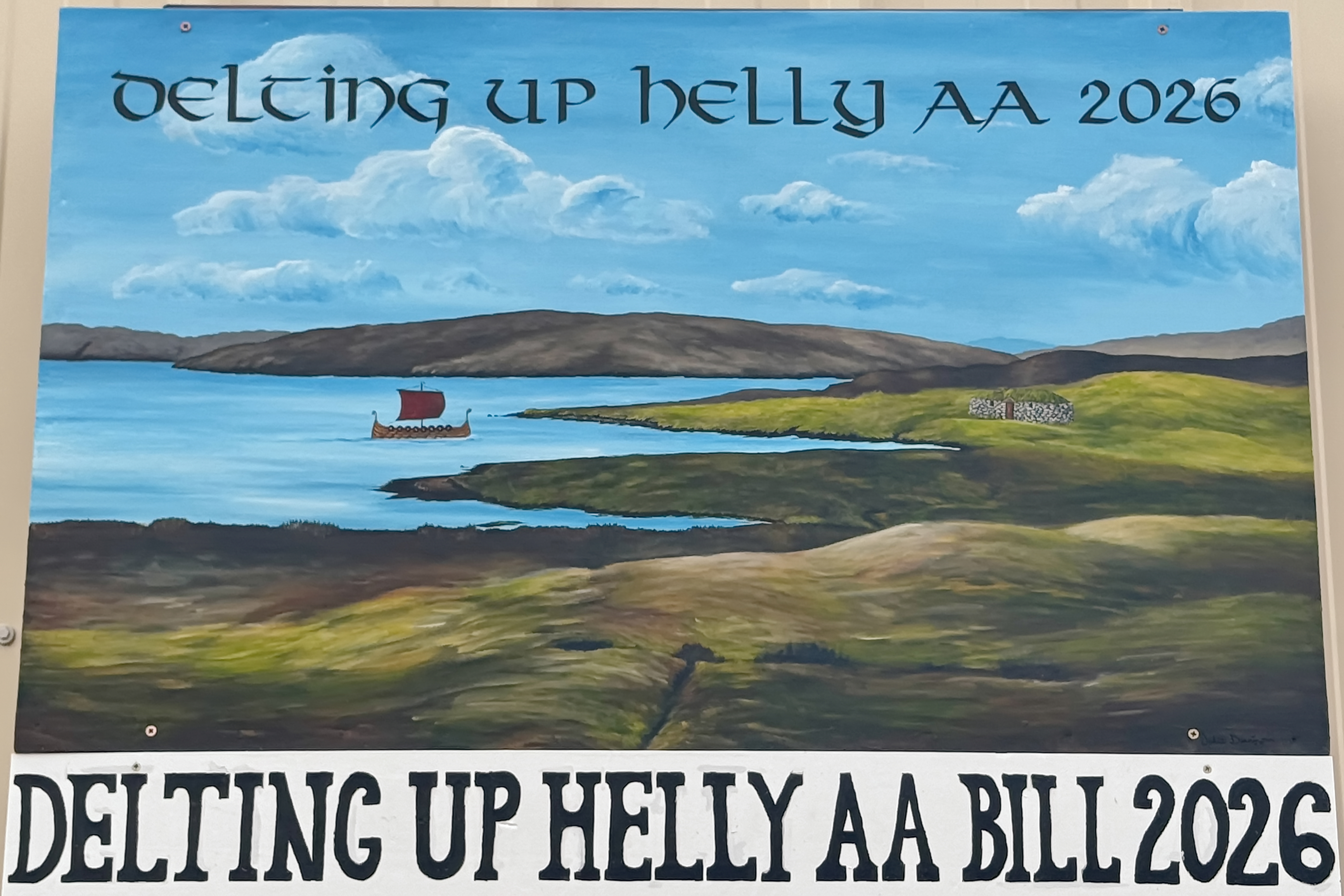
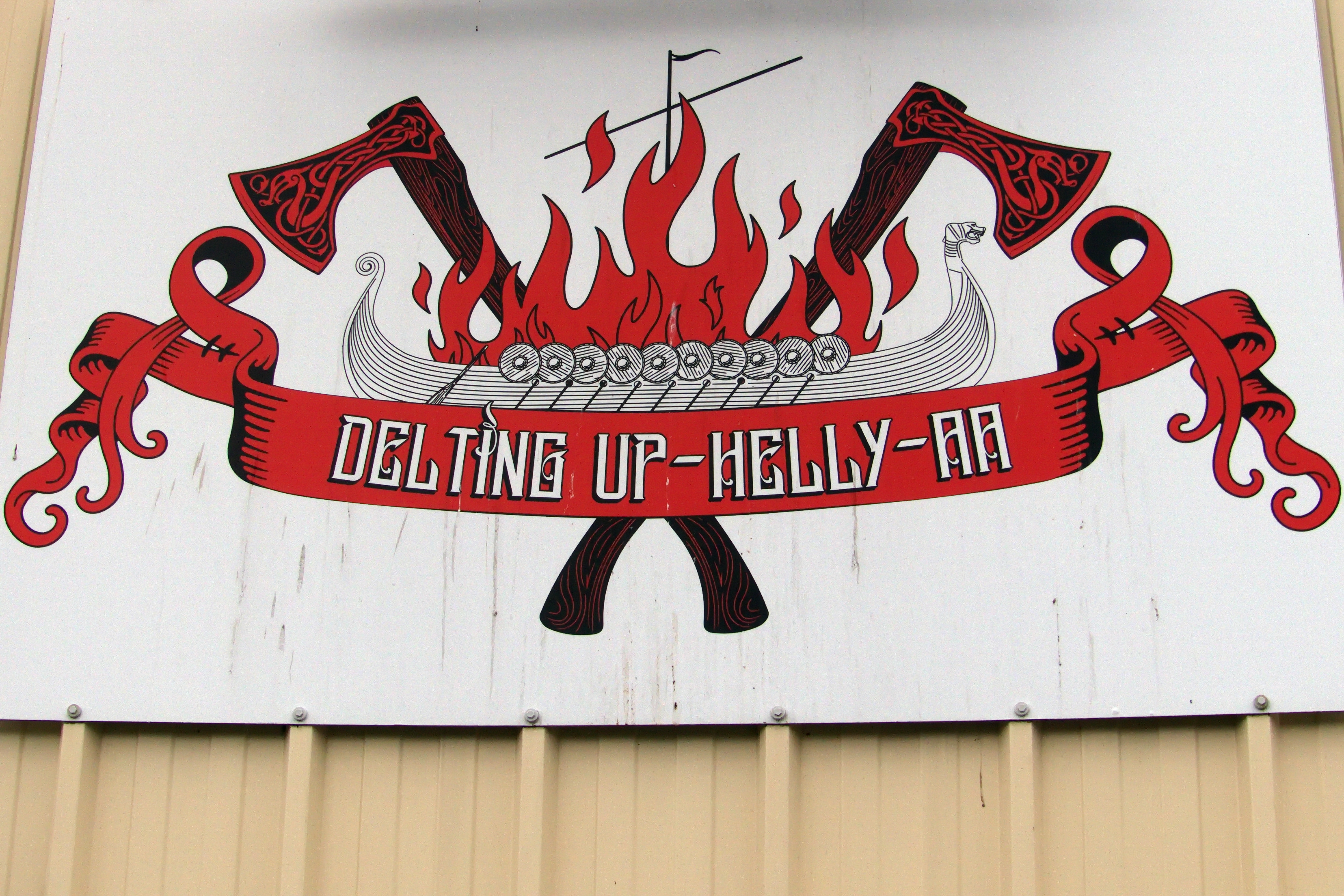
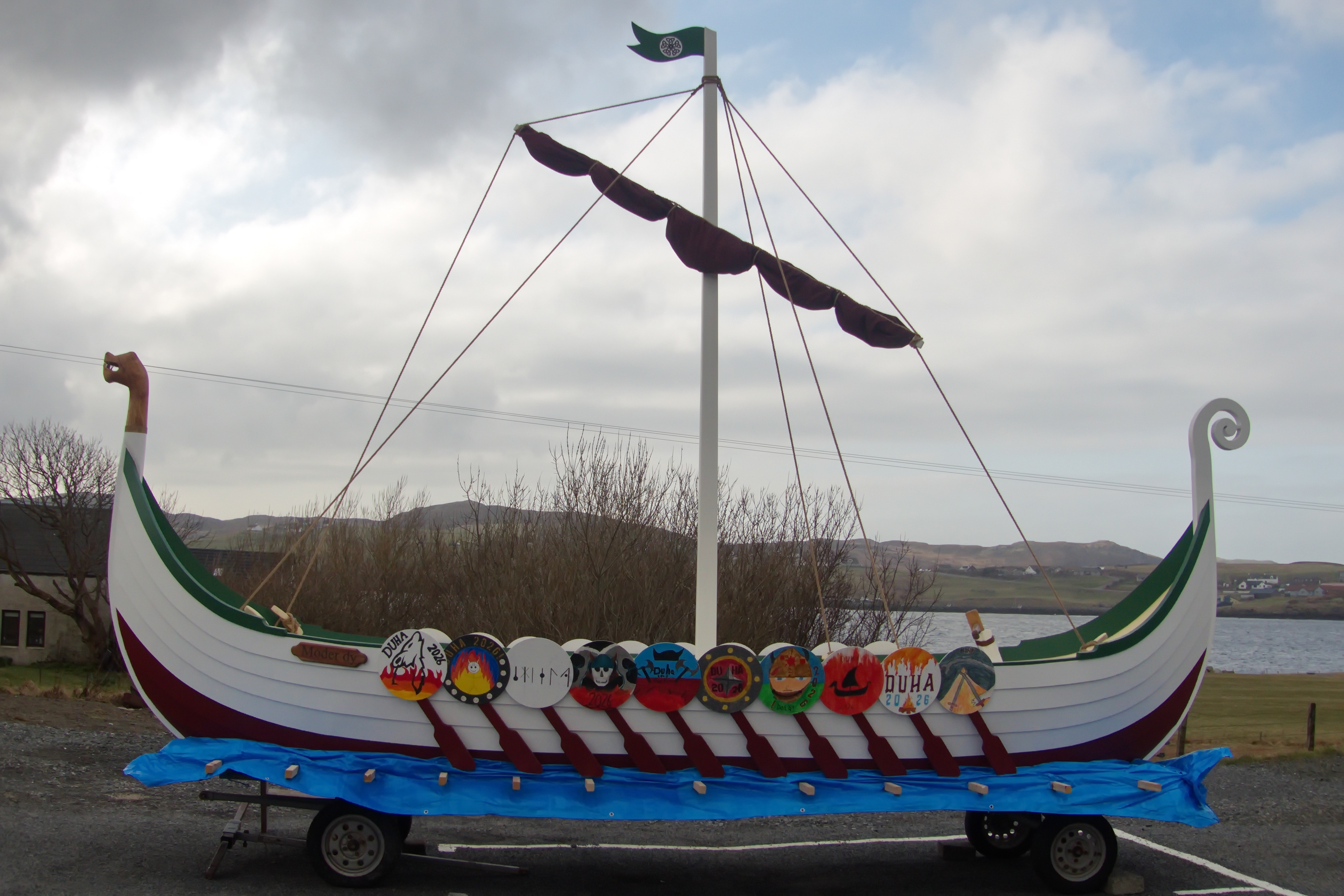
That sense of continuity is everywhere. The Jarl and squad leaders are planned years, even decades, in advance, with Jarls already selected as far ahead as 2038. It’s hard to wrap your head around that kind of commitment, but here, it feels completely natural. This isn’t just a festival—it’s a lifelong connection.
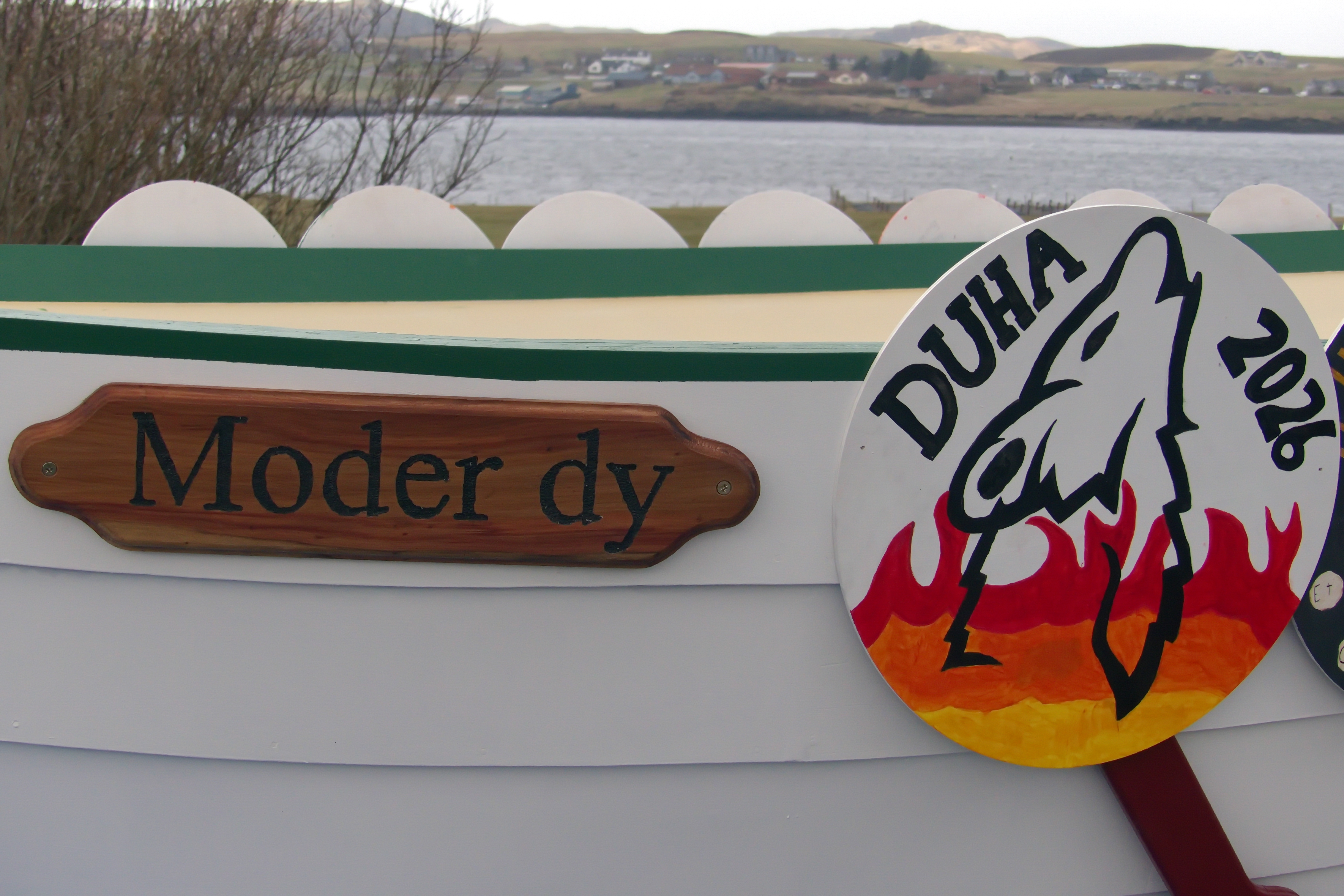
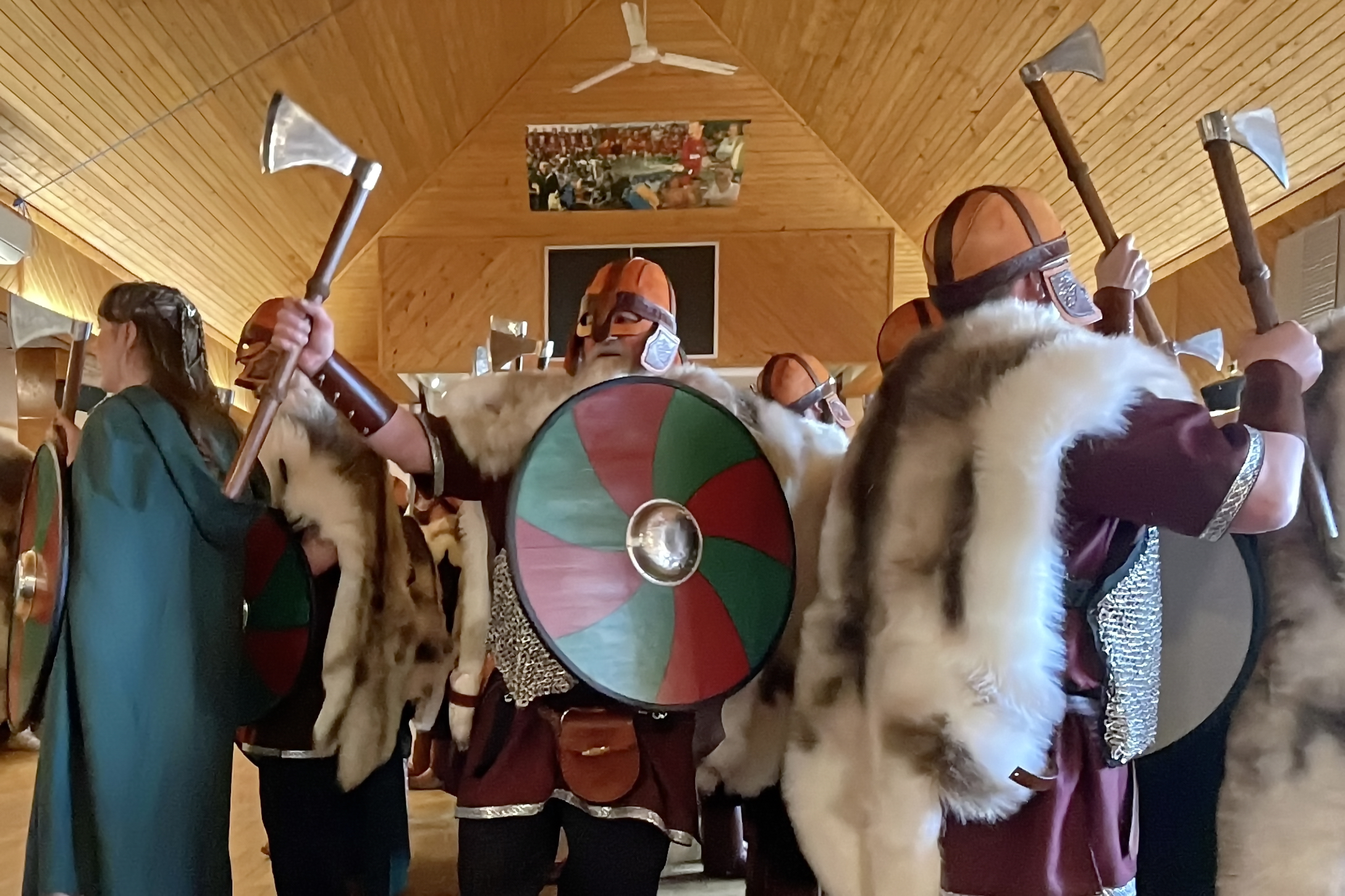
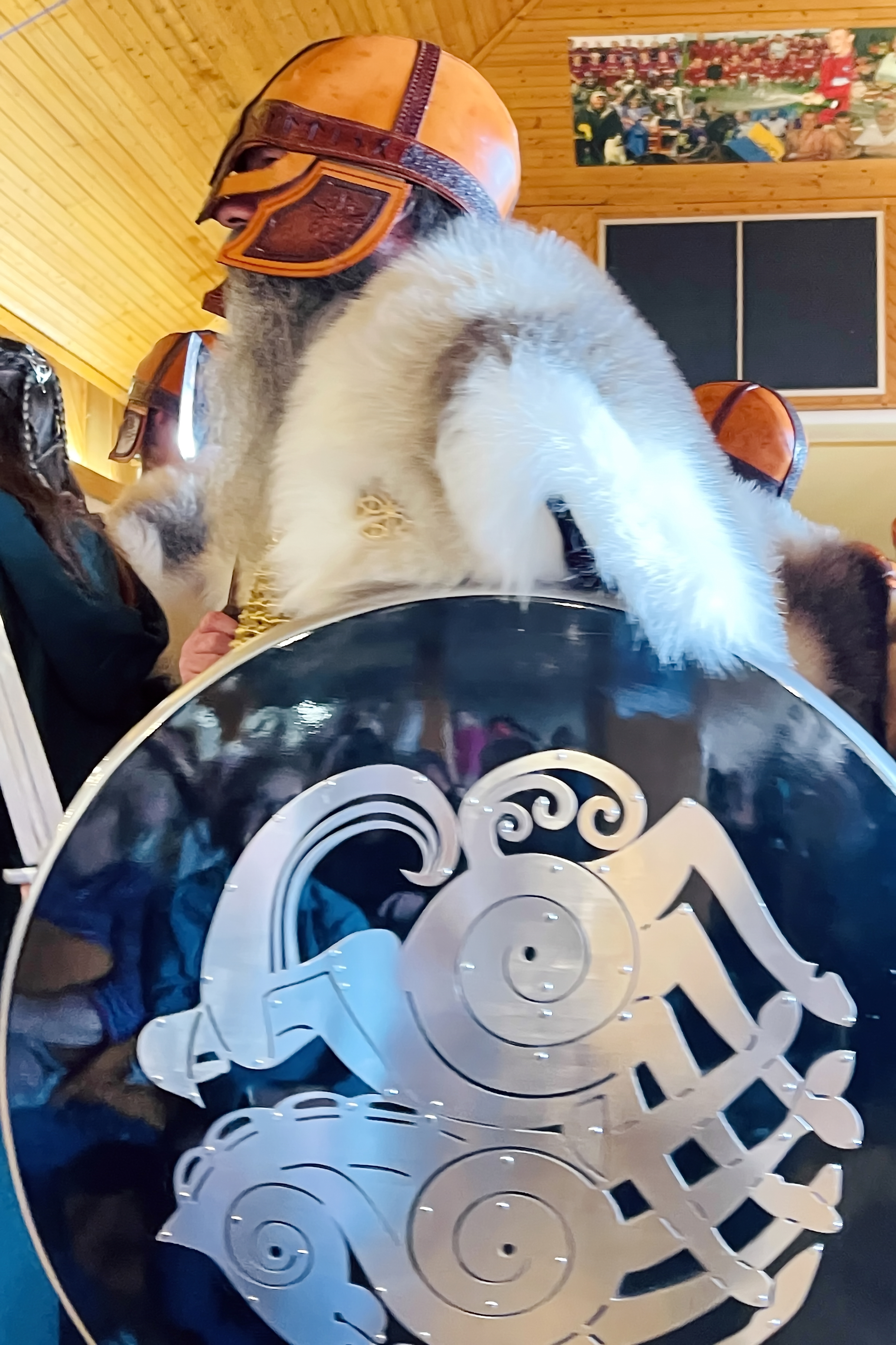
What stood out most to us was how much of Delting Up Helly Aa is built, quite literally, by the community. In the months leading up to the festival, people gather on weekends to construct the torches that will light the night. The galley, the centrepiece of the celebration, is also built locally—this year named Moder Dy, rising from weeks of shared effort before its destined, fiery end. Even the costumes reflect that creativity and dedication. This year’s squad crafted their chainlink armour from drink can pull tabs—an incredible example of ingenuity, patience, and pride.
And it doesn’t stop with the adults. The children are just as much a part of it. Local school kids create their own costumes to match the squads, stepping into the tradition in a way that feels both playful and profound. You can see it in their faces—they’re not just dressing up, they’re imagining their future, dreaming of the day they’ll march the two miles through town, torch in hand, part of something bigger than themselves.
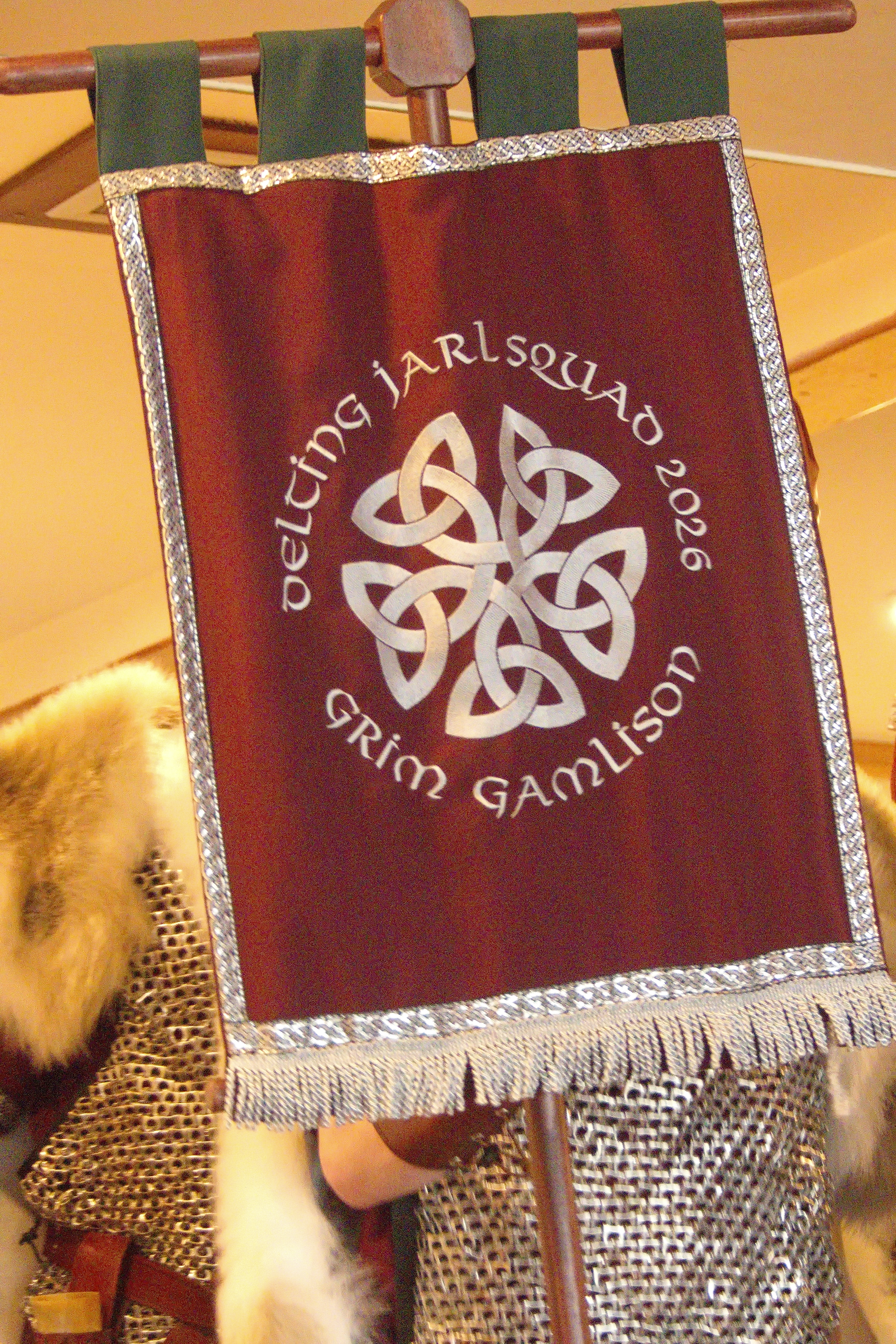
The celebrations begin long before the flames are lit. On Friday morning, the Jarl Squad gathers early in the morning to toast the Jarl Grim Gamlison, the squad leader, and officially begin the festivities. From there, the day unfolds as a series of visits across the community. Schools, seniors’ homes, and local gathering places all become part of the celebration, ensuring that everyone, regardless of age, can share in the experience.
There’s also a wonderful openness to it all. Community events invite the public to meet the squad, hear the songs, and feel the energy building. One of the highlights for us was hearing this year’s cleverly reworked anthem—set to the tune of Is This the Way to Amarillo—transformed into a local chant: “Is this the way to Delting Parish?” It was fun, familiar, and full of pride—the kind of moment that perfectly captures the spirit of the festival.
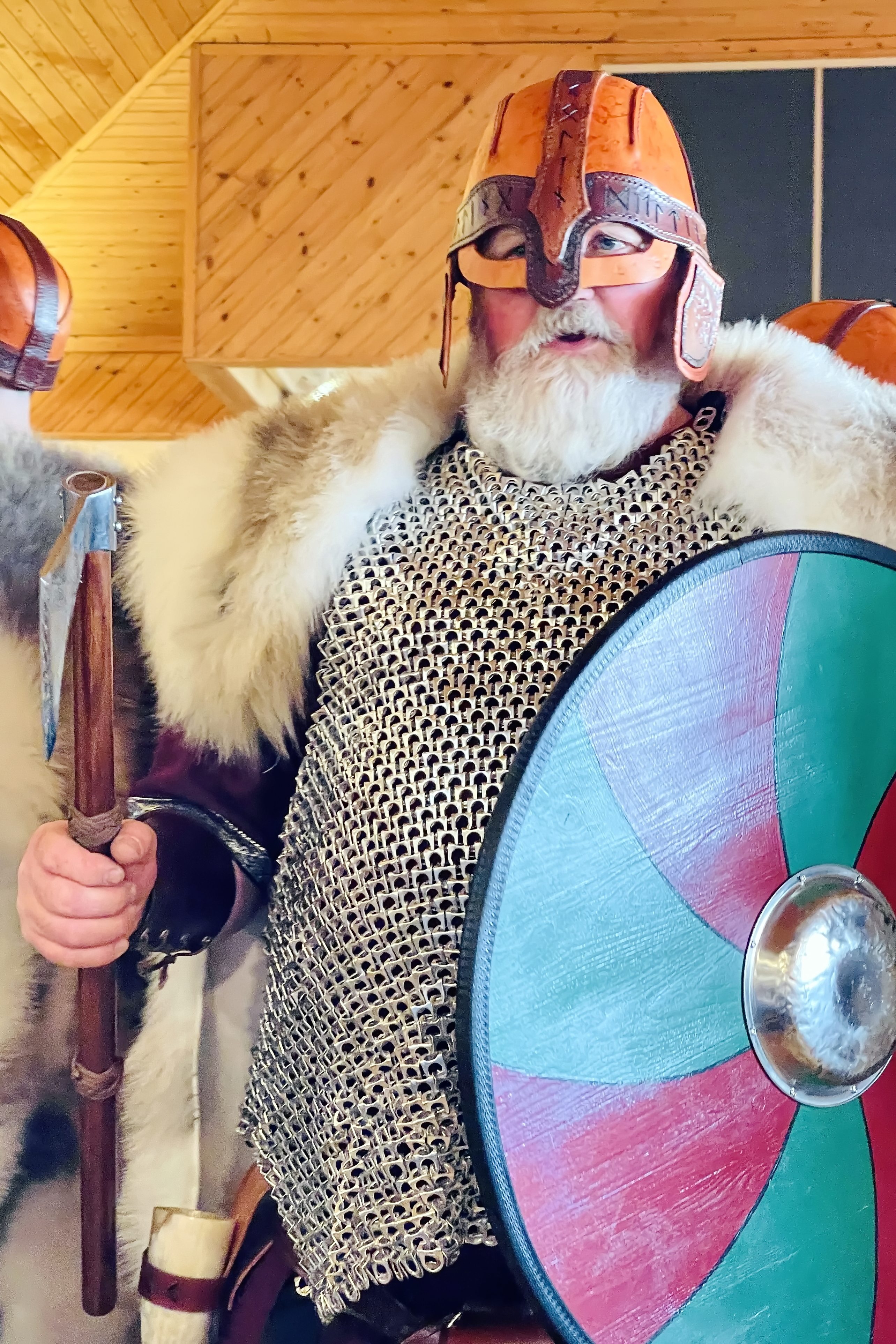
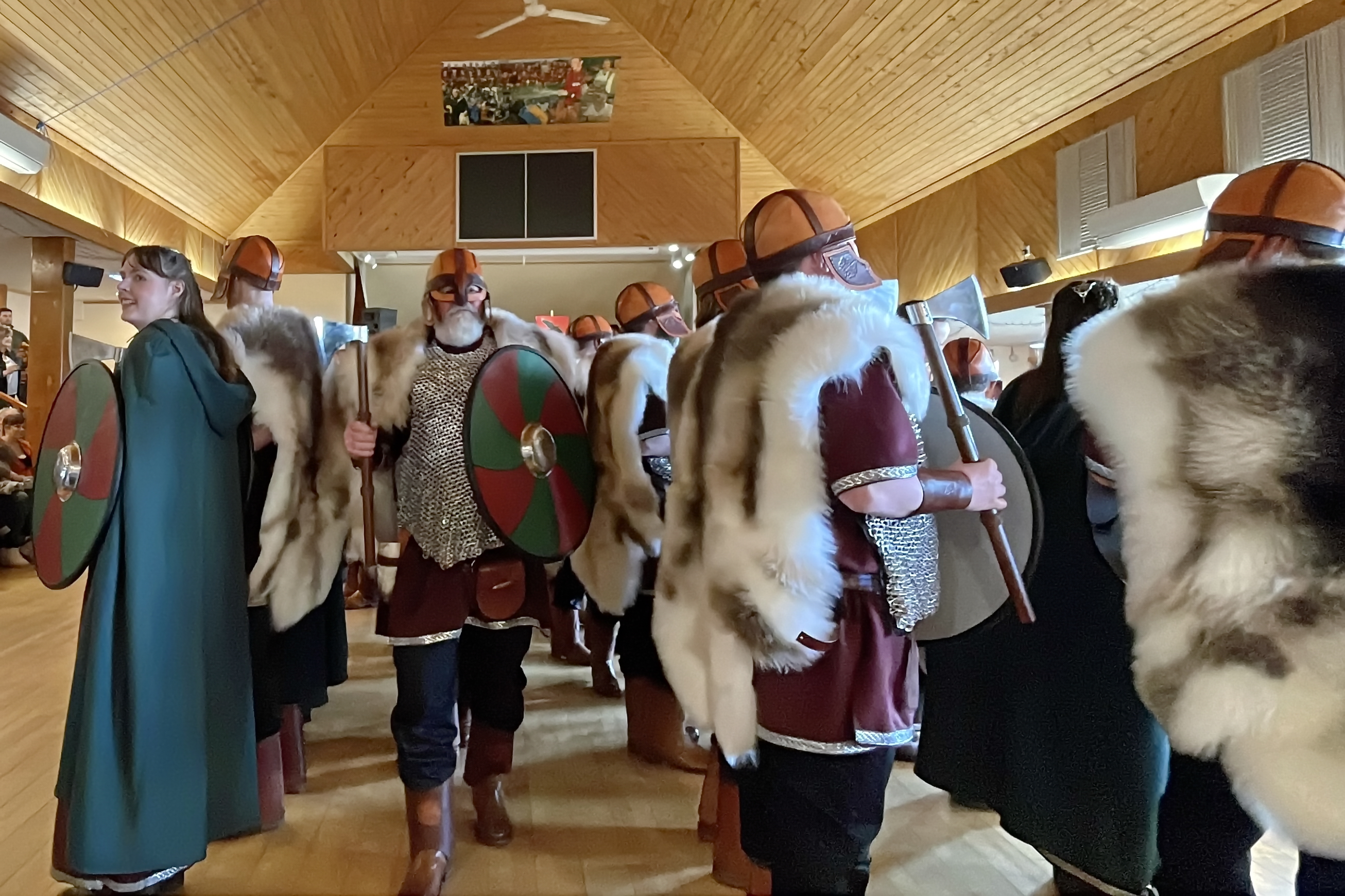
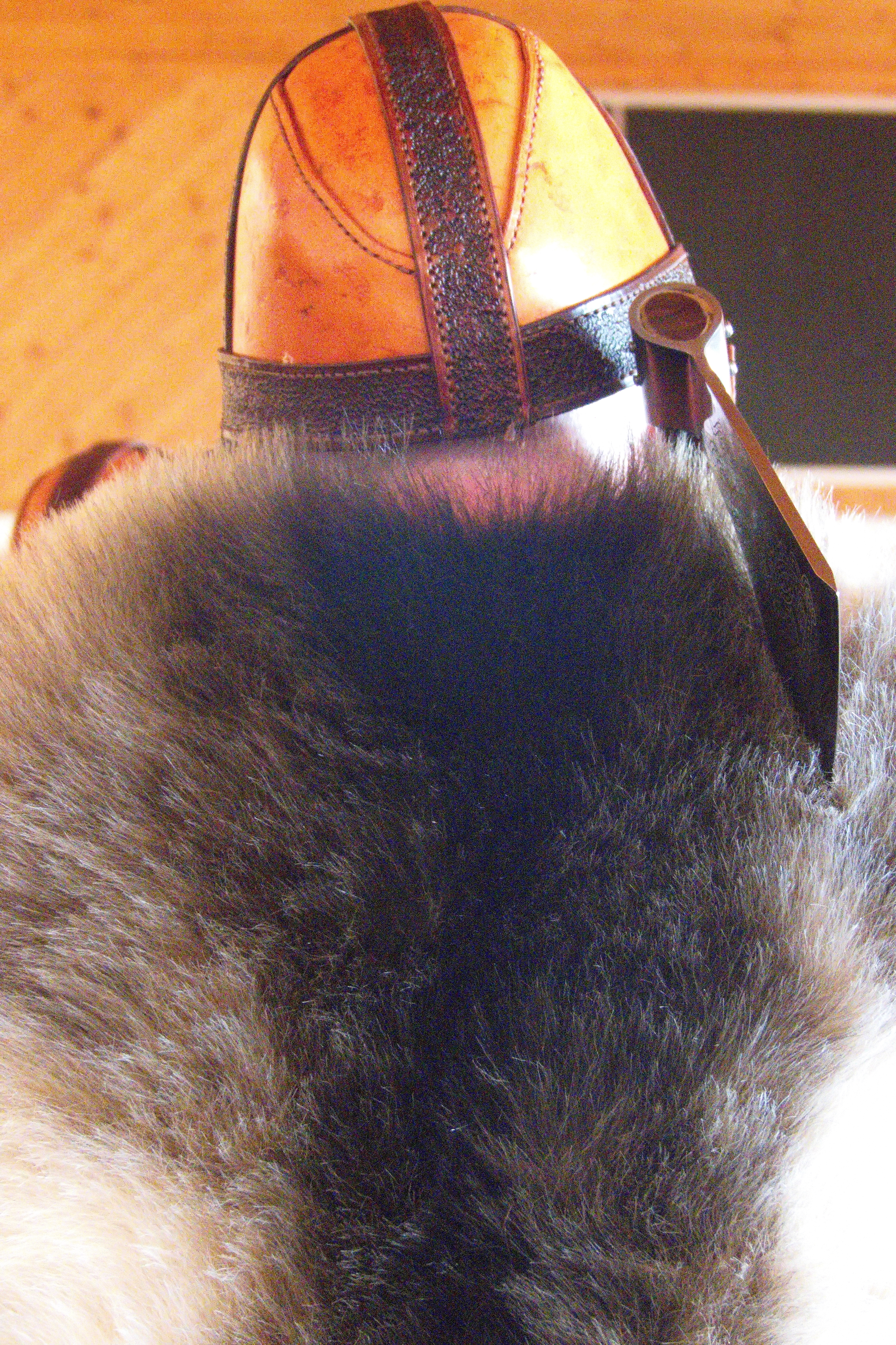
While many of the first day’s activities are centred around the local community—and we weren’t able to join the visits to the schools and seniors’ homes—we found ourselves with a quiet stretch of time before the evening’s events. So, we took a wee drive out to Muckle Roe, a rugged little island just a short distance away, hoping to spot seals and shorebirds along the coast. It was the perfect contrast to what we knew was coming—a calm, windswept pause before the fire and spectacle of the night.
By late afternoon, we made our way back and settled in near the harbour, not far from where the galley Moder Dy would meet its fate. We waited, not entirely sure what to expect. With a squad of around 40, we imagined something modest—perhaps a small group pulling the galley the two miles from the community hall to the harbour. We couldn’t have been more wrong.
As darkness fell, the streetlights were switched off, and for a moment, everything went still. Then, in the distance, we saw it—a flicker. And then another. Slowly, the night began to glow.
What emerged was breathtaking.
A river of fire stretched across the landscape, hundreds of torches moving together in the dark. At one point, the procession extended nearly half a mile, a glowing, flickering line weaving its way through the community. The march itself spanned just over two miles, and every step felt steeped in tradition.
Leading the way was the Jarl, proudly perched on the galley, followed by the squad and then wave after wave of torchbearers—the guizers—more than 200 people, all in costume. Some were fierce and traditional, others wildly creative. We spotted everything from Vikings to a furry fox and even a unicorn woven into the procession. It wasn’t just a march—it was a living, moving celebration of identity and imagination.
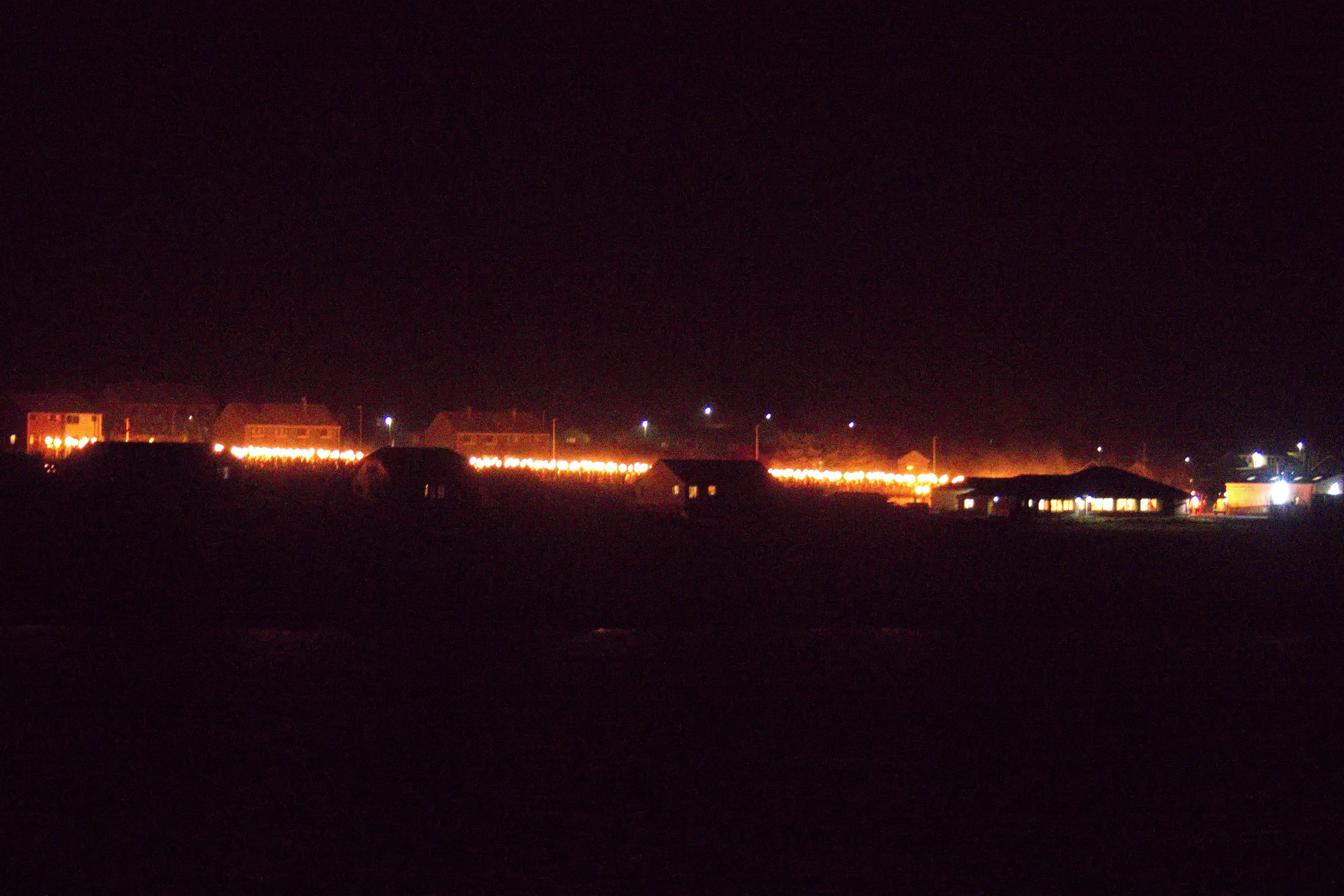
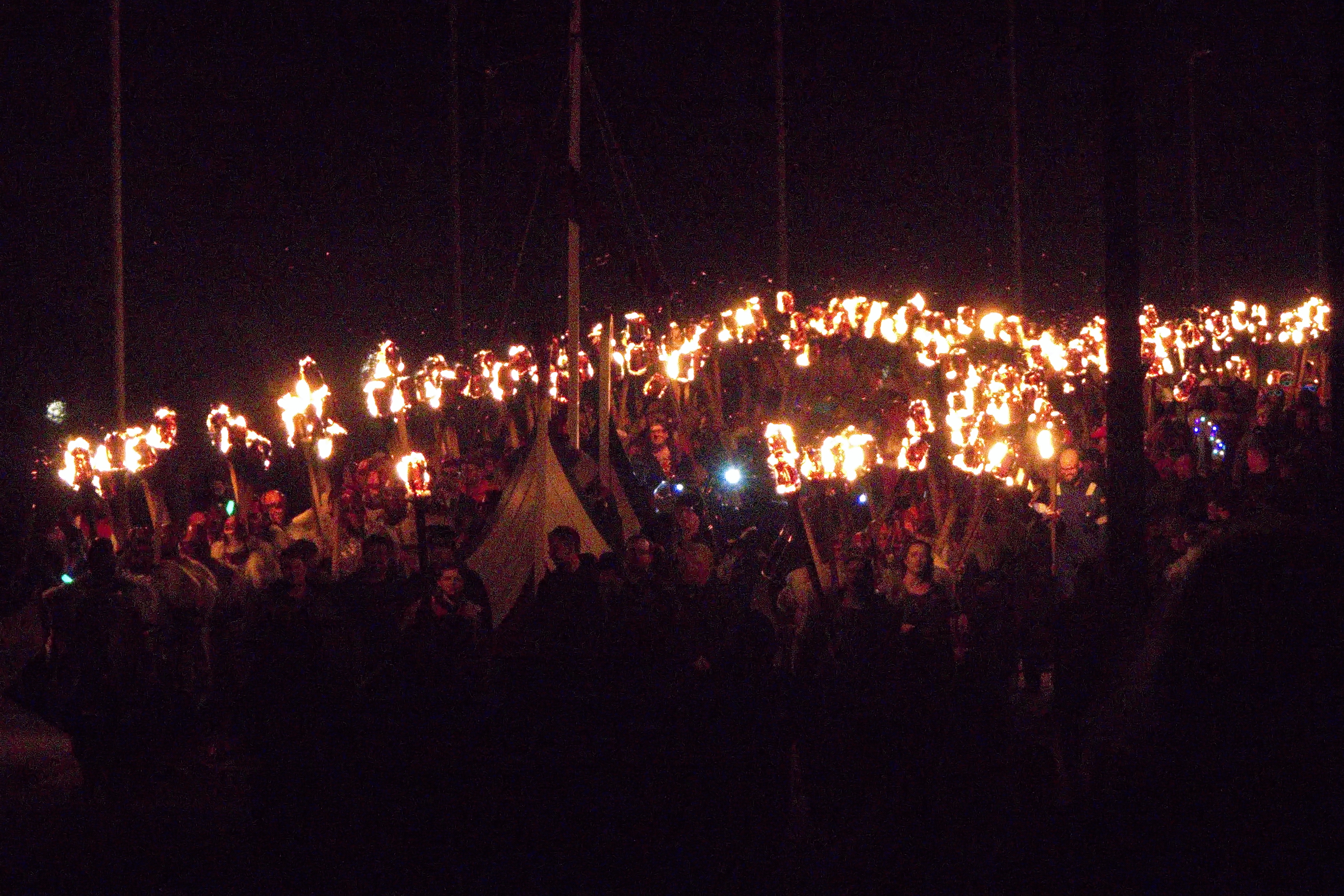
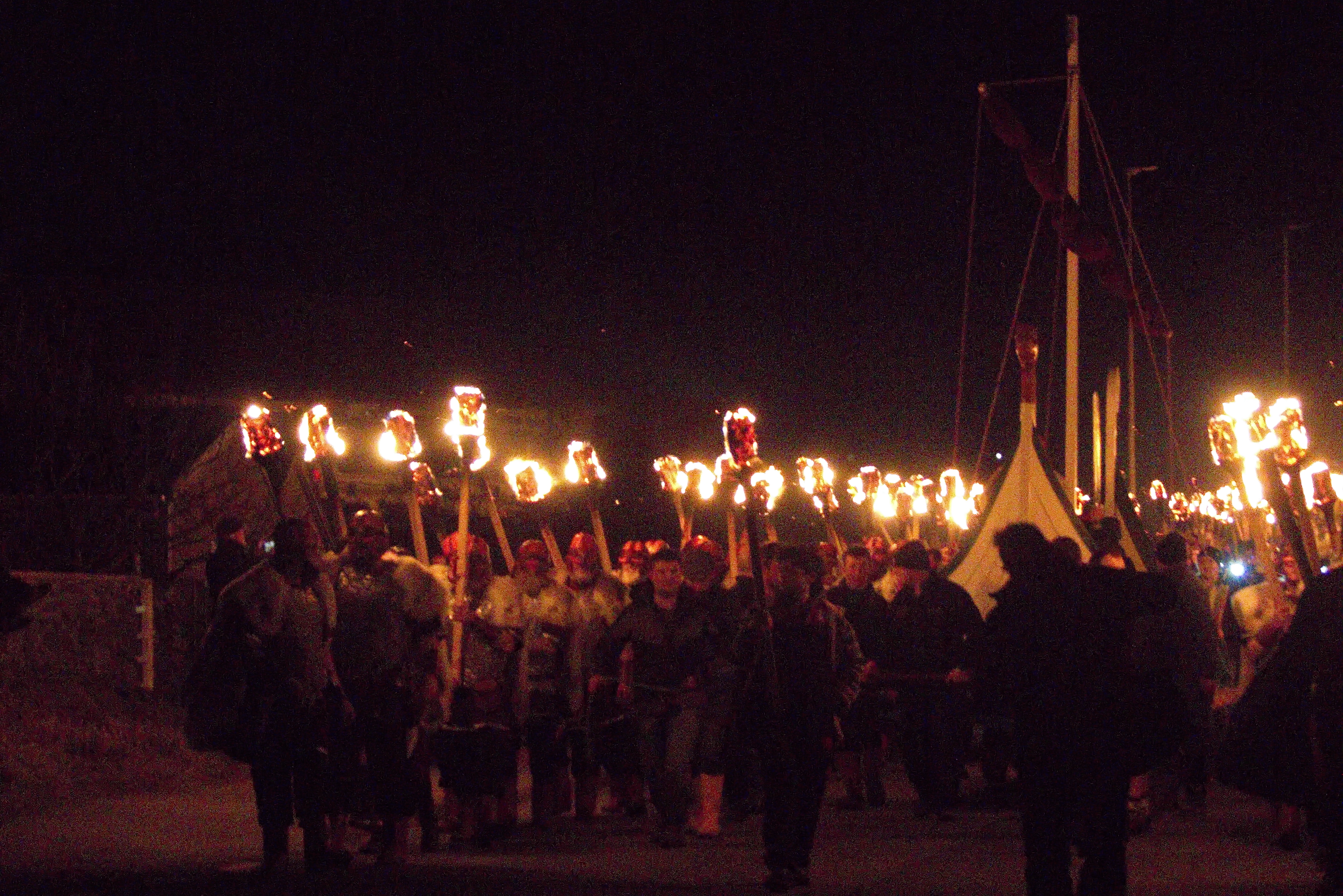
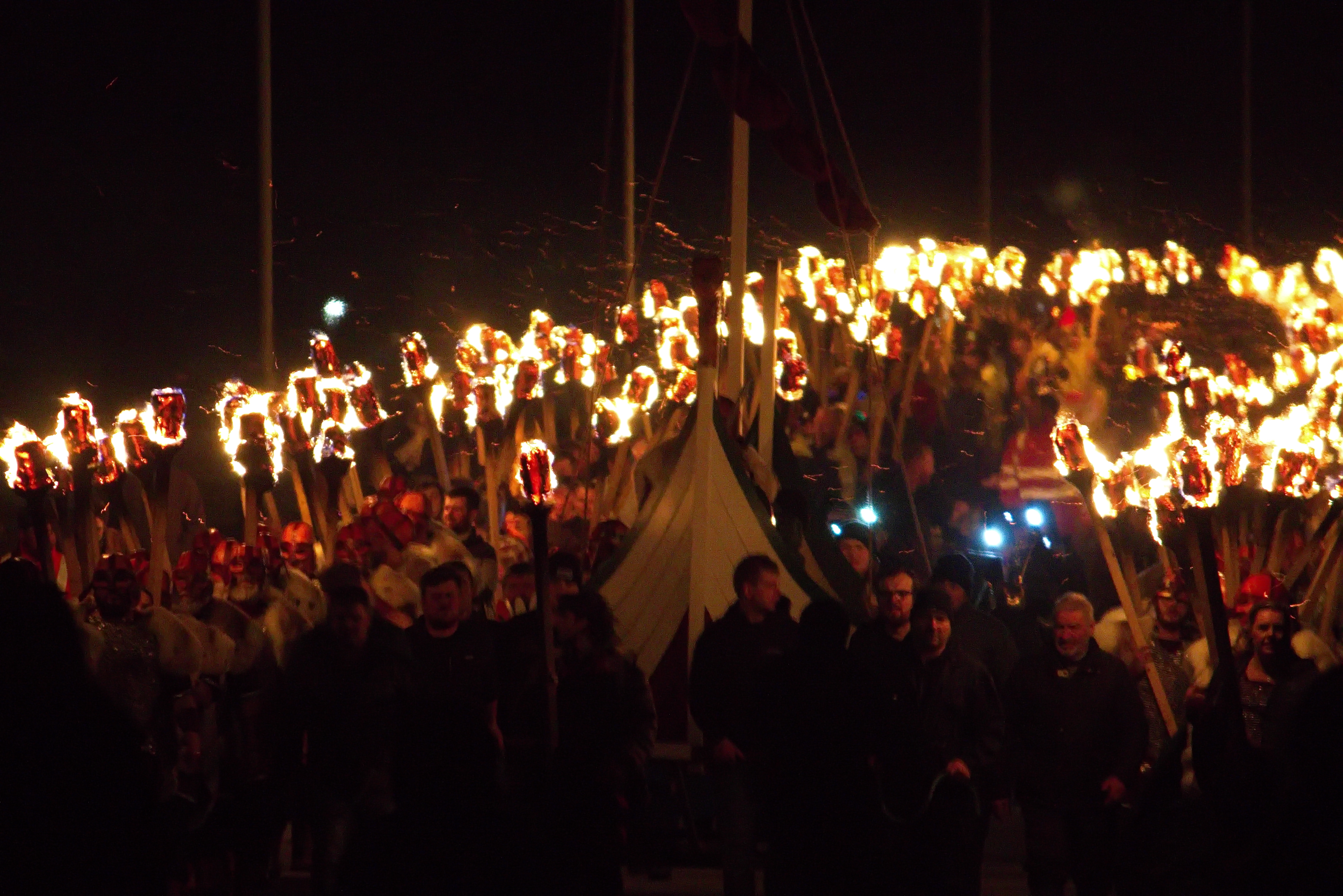
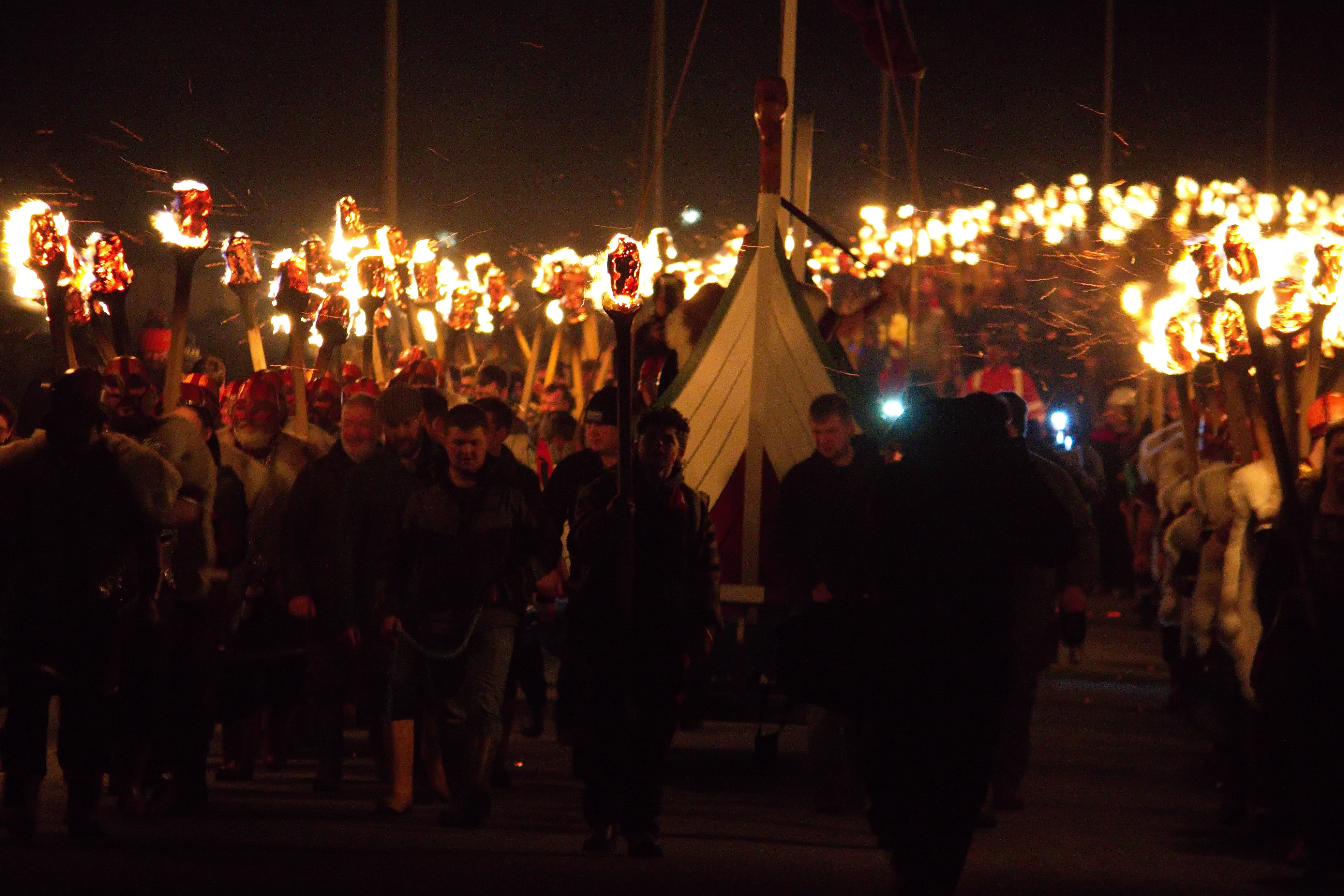
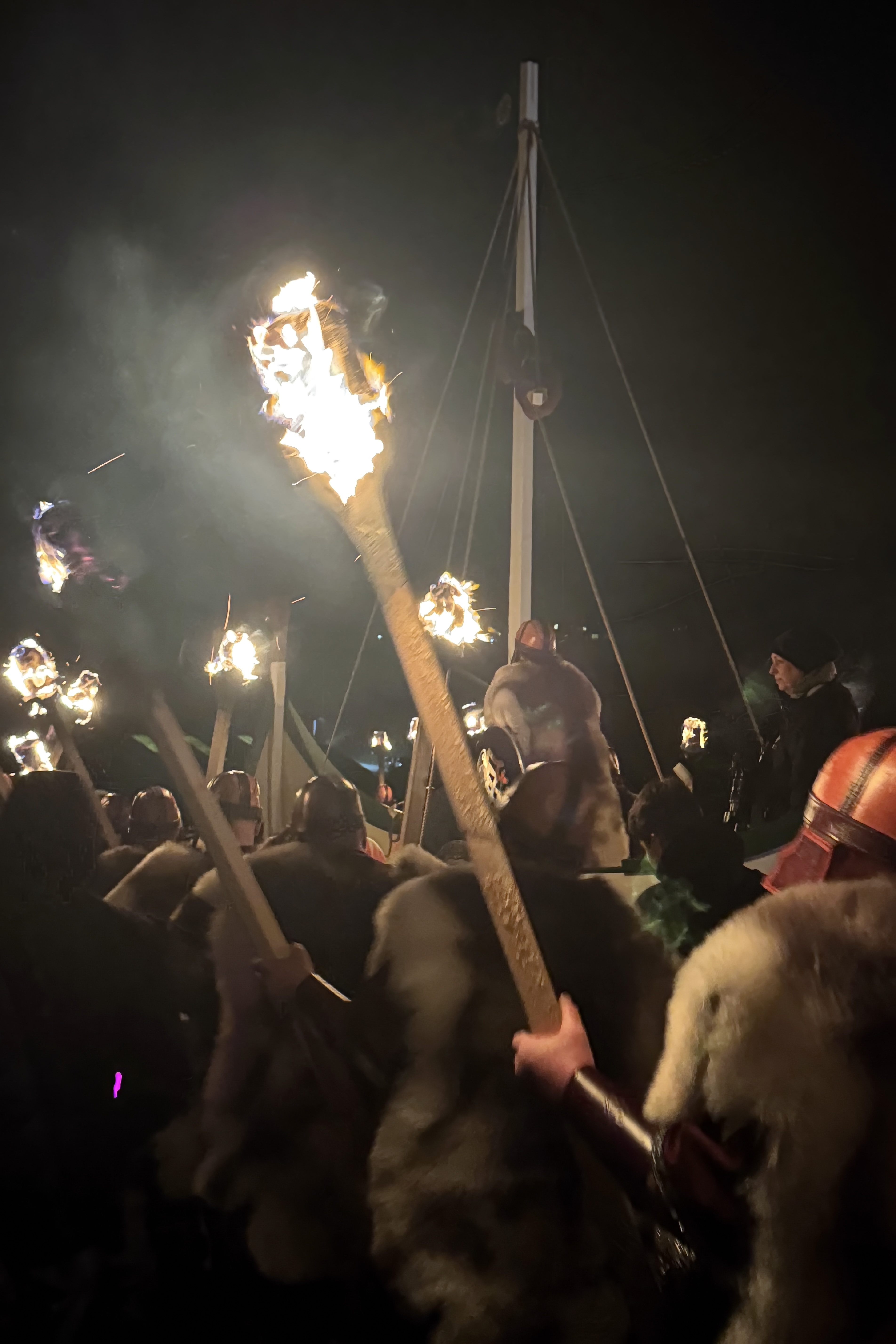
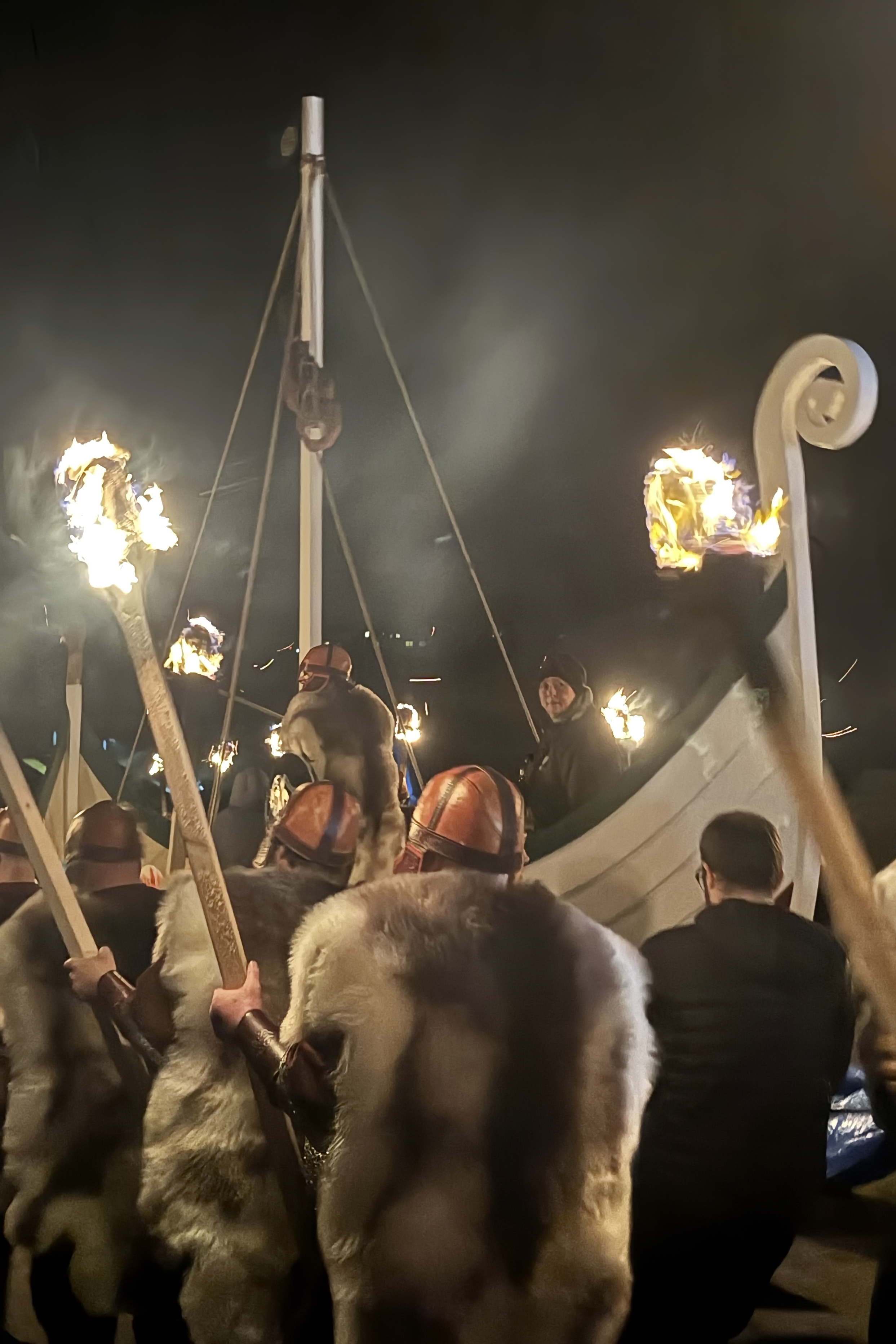
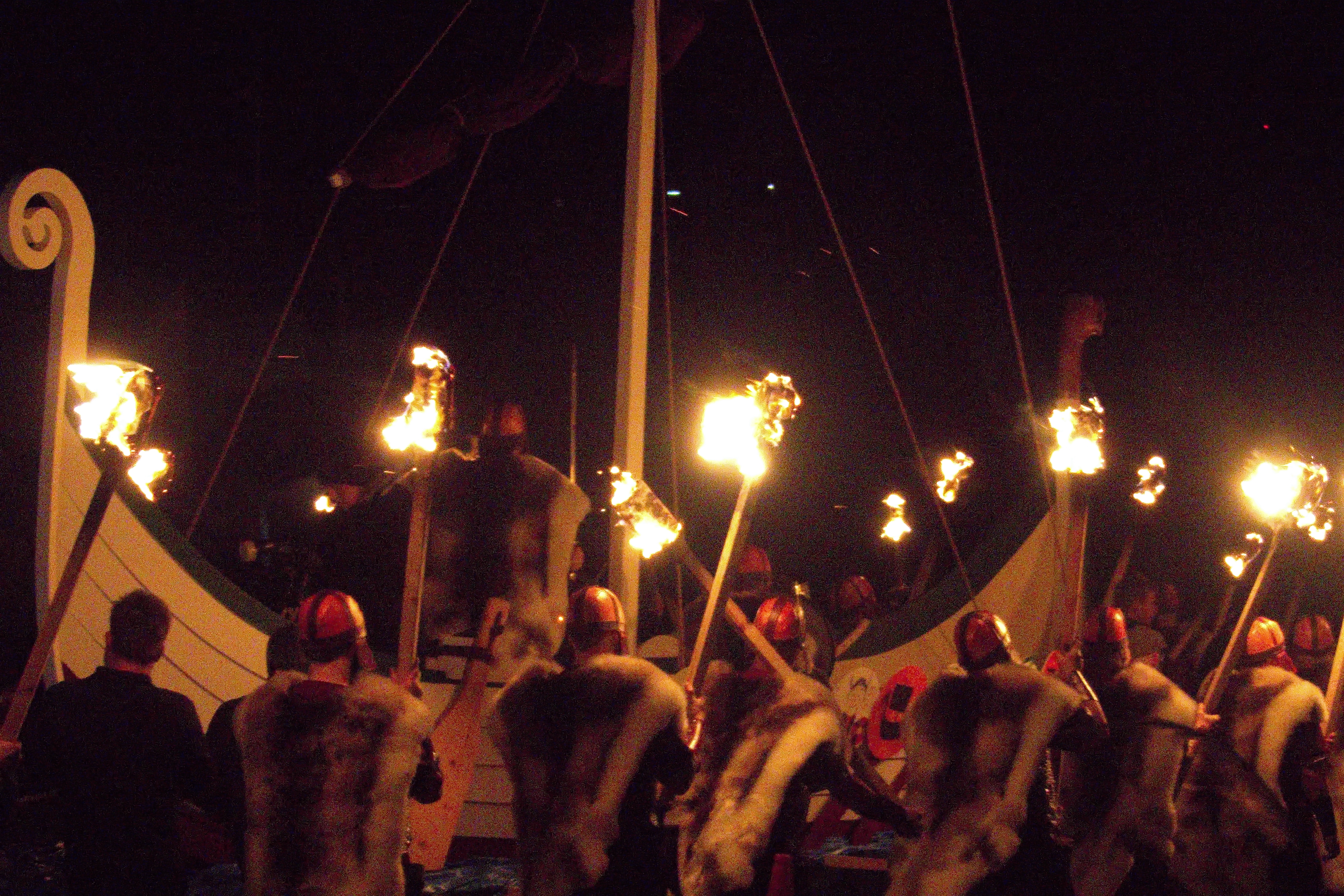
As they passed us, we joined the rhythm of footsteps and firelight, moving together toward the harbour.
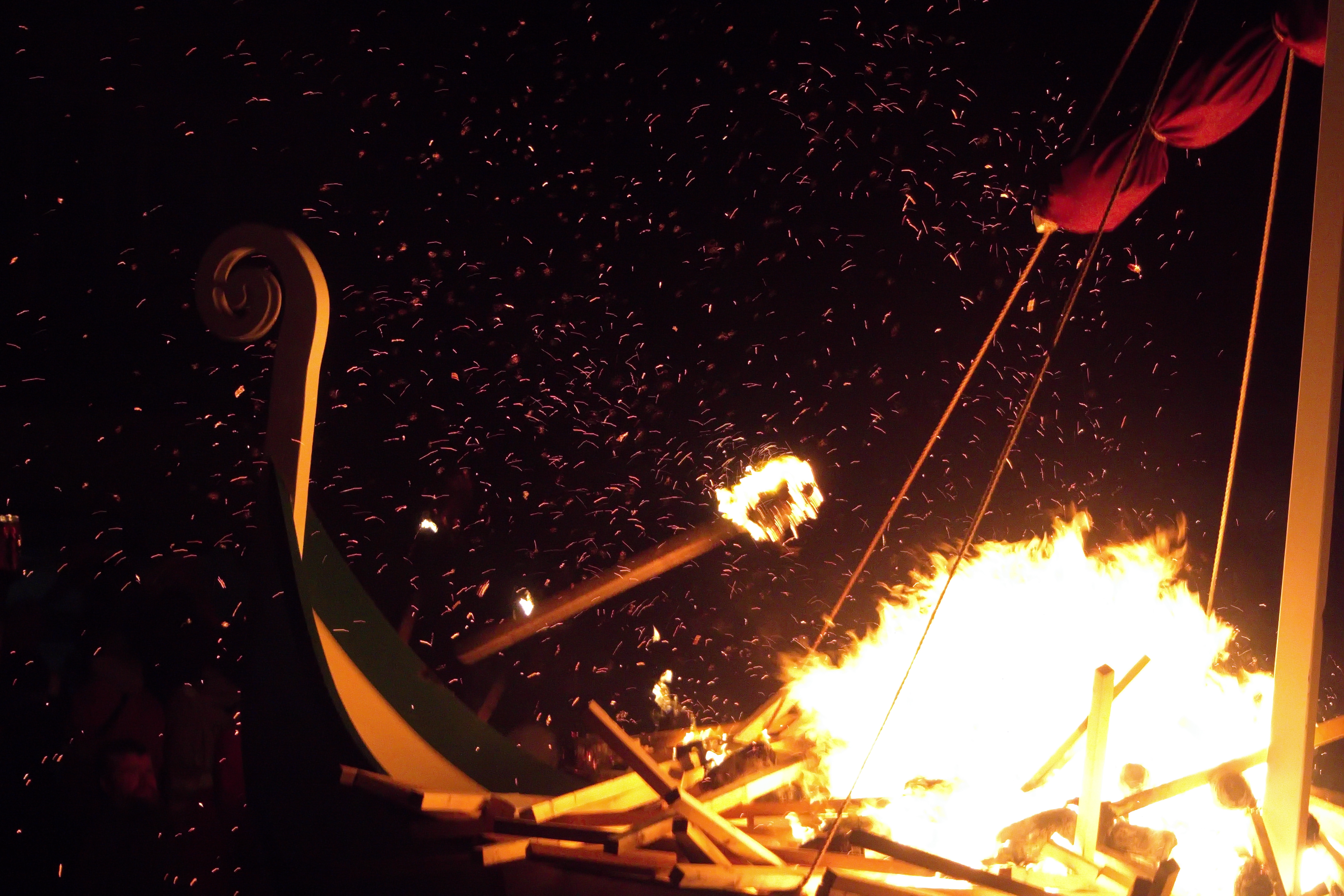
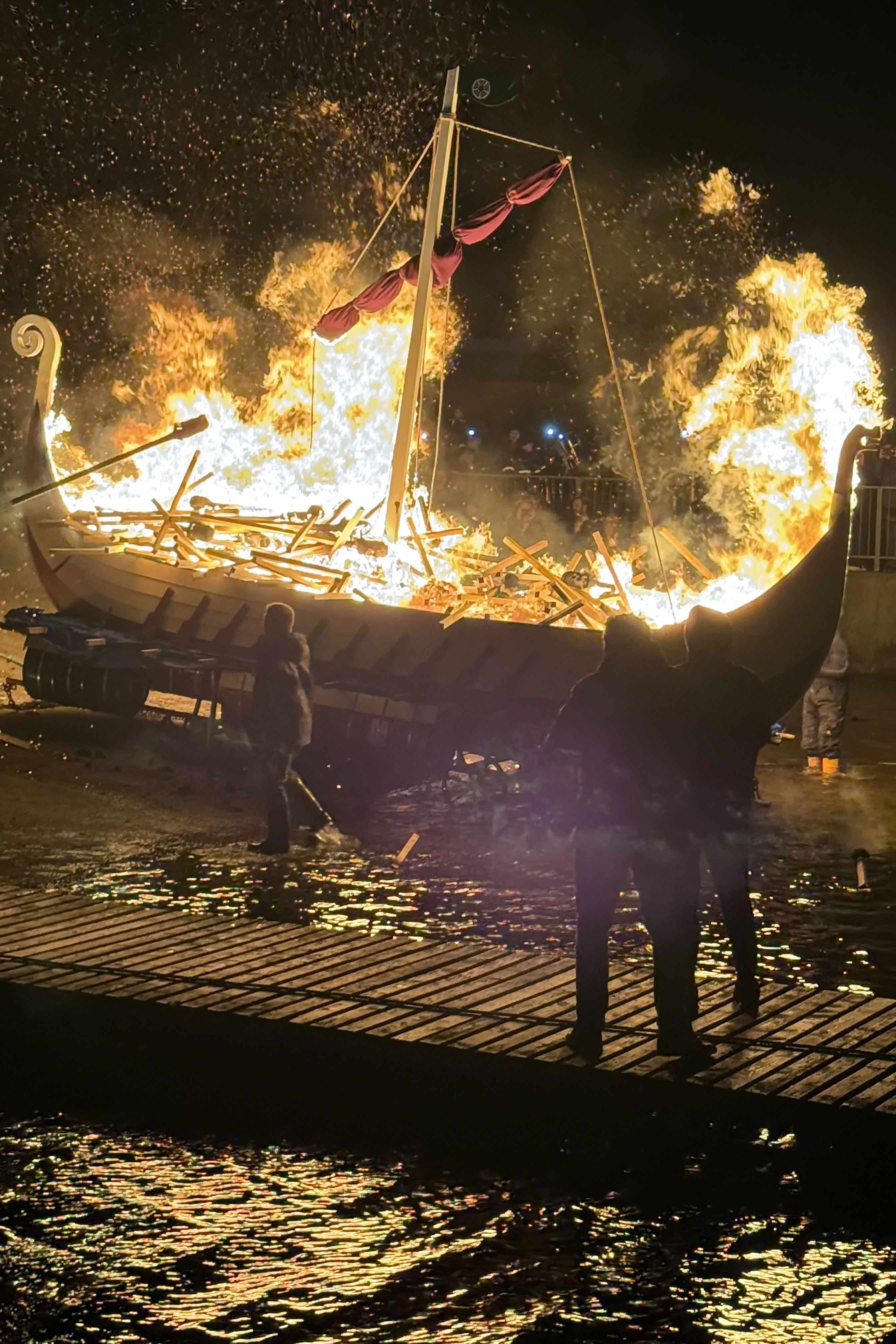
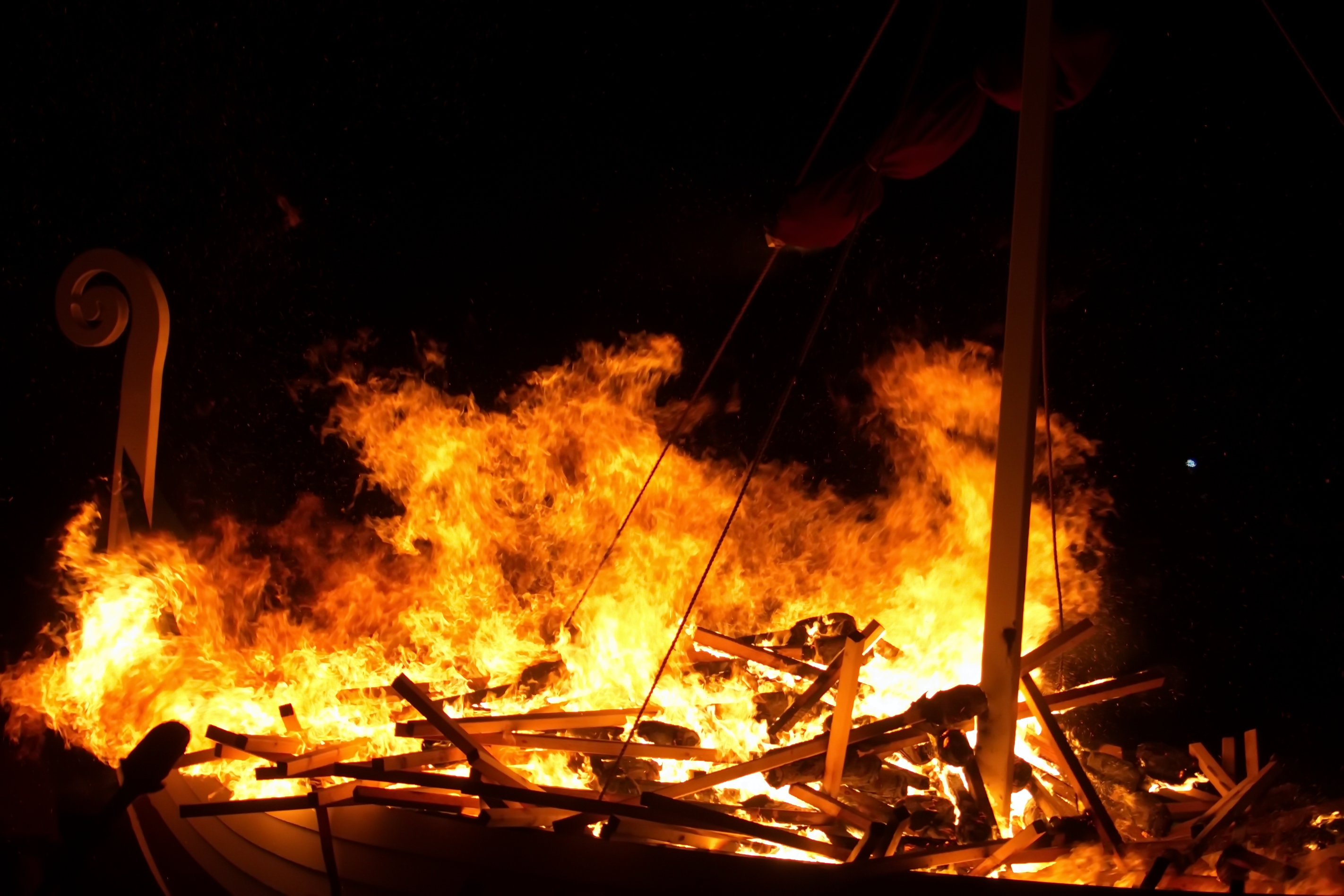
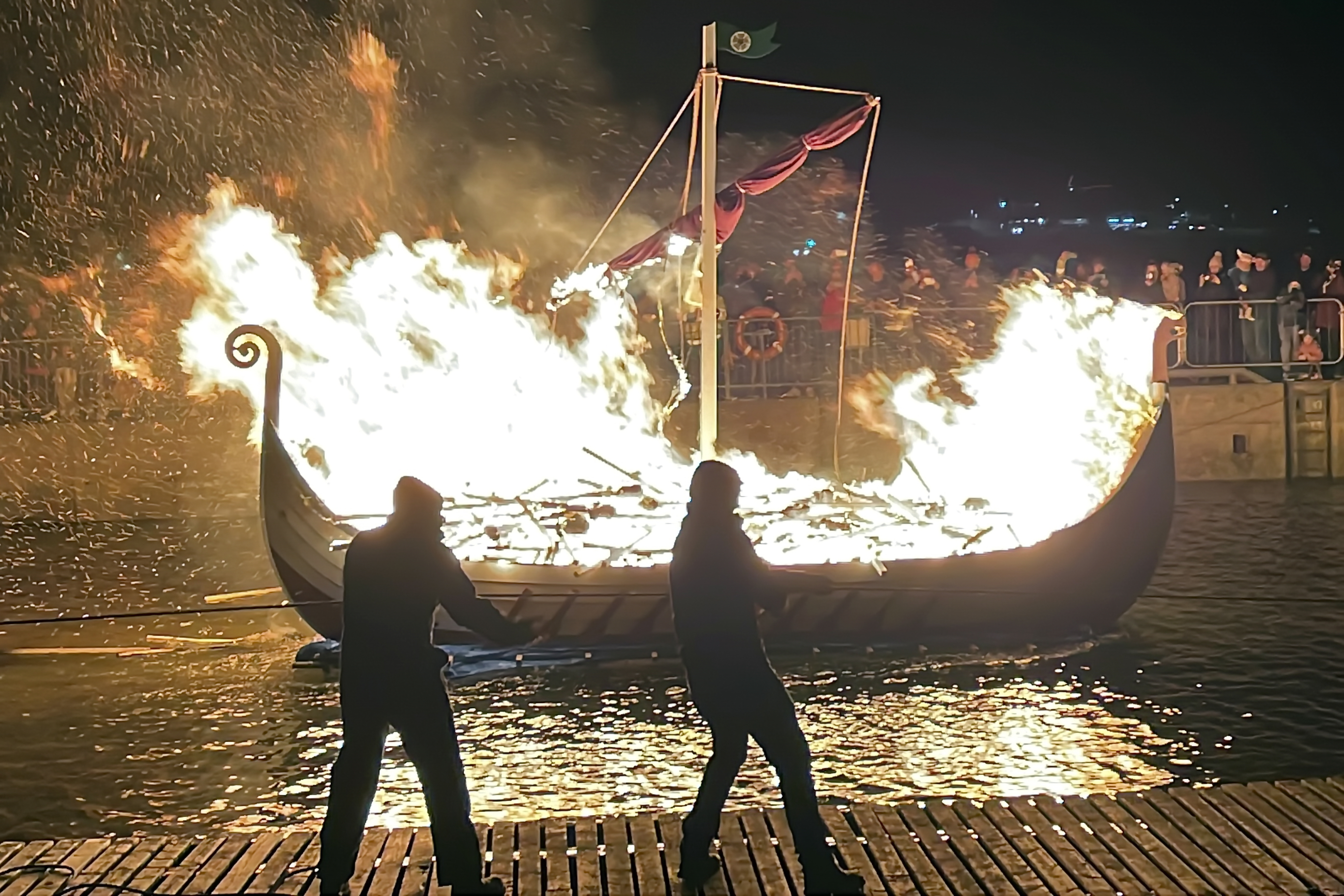
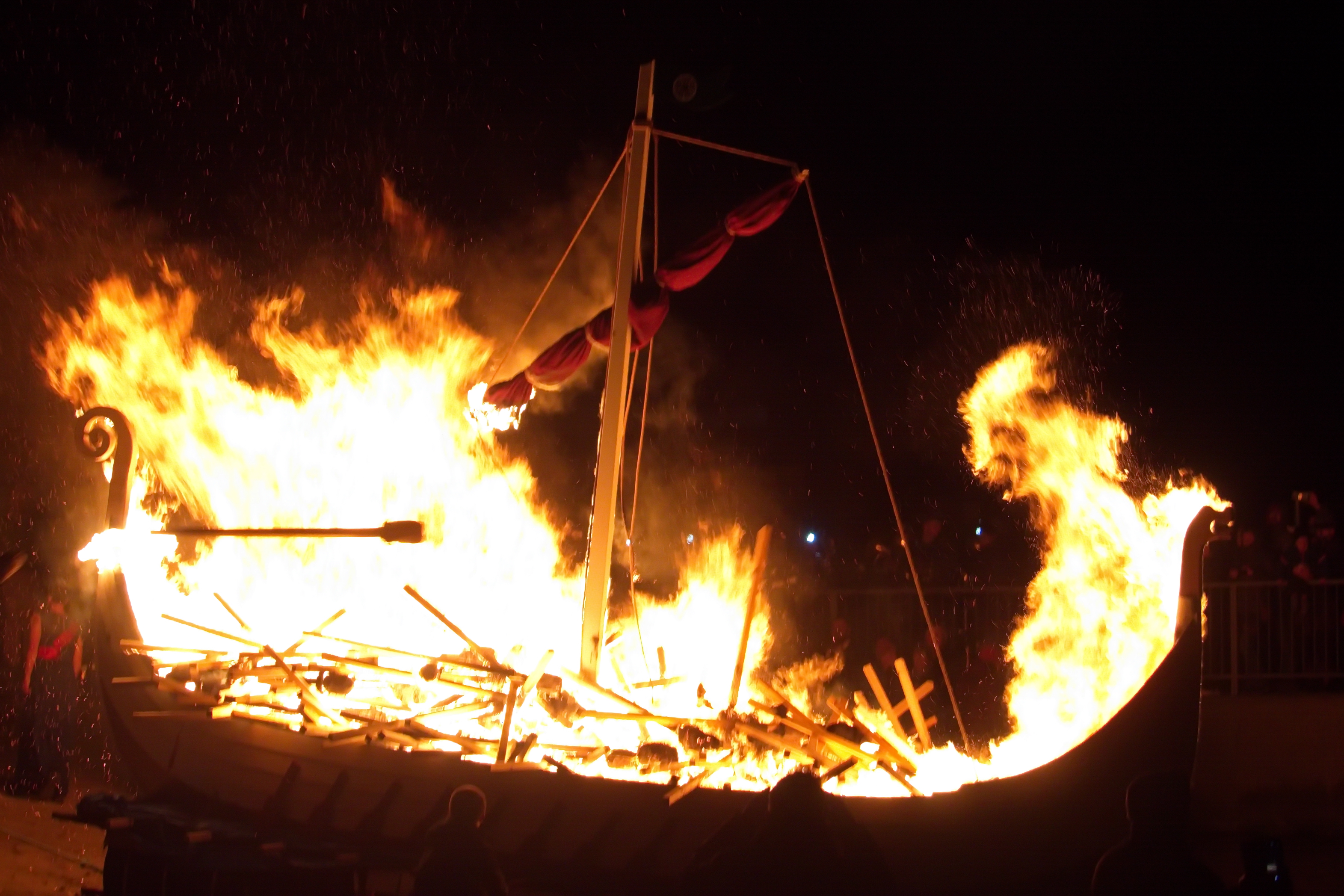
There, on the slipway, the galley was set down. The air shifted—cheers rang out, voices rising together in celebration, echoing with “hip hip hooray” as the moment built. And then, one by one, the torches were thrown.
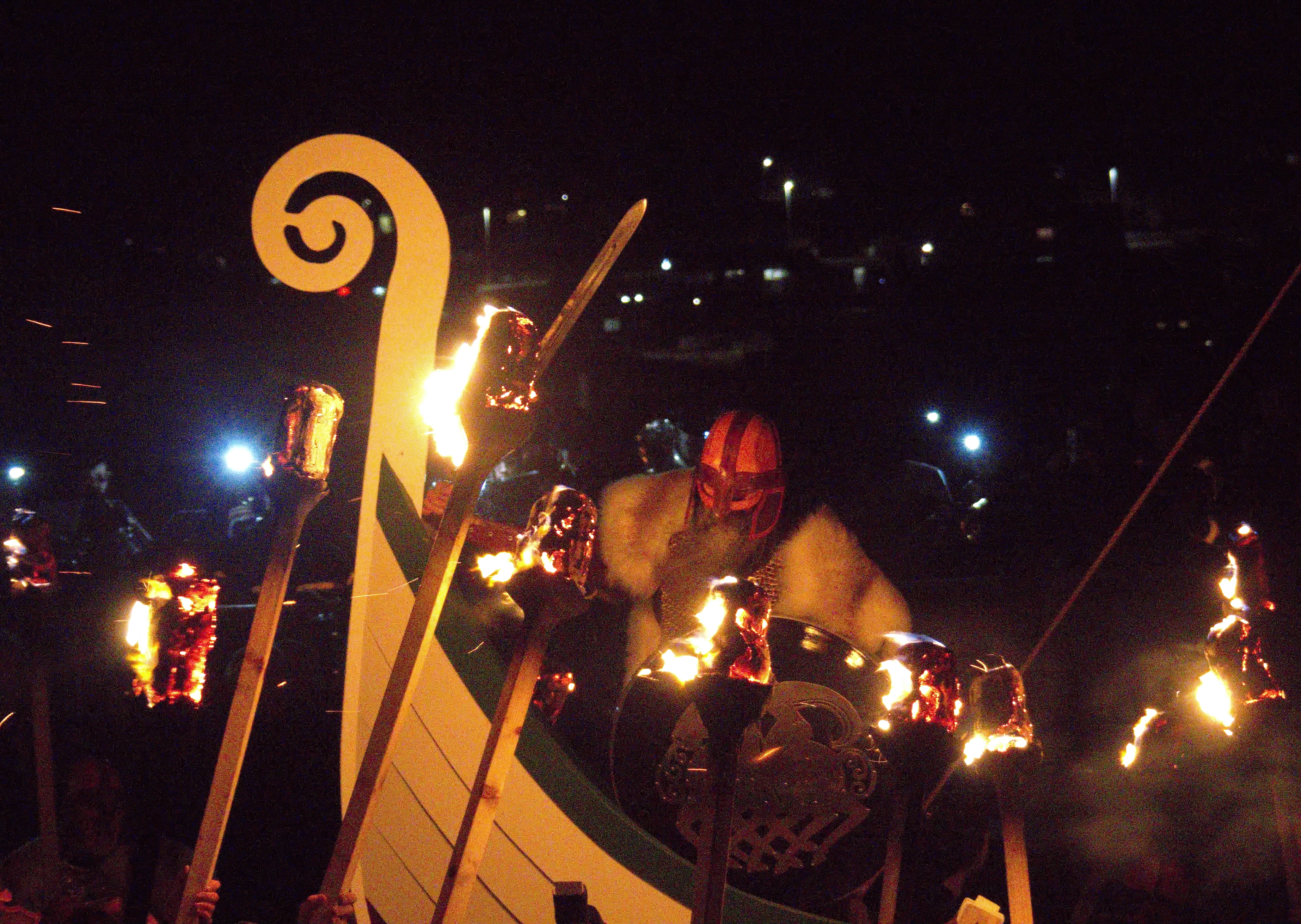
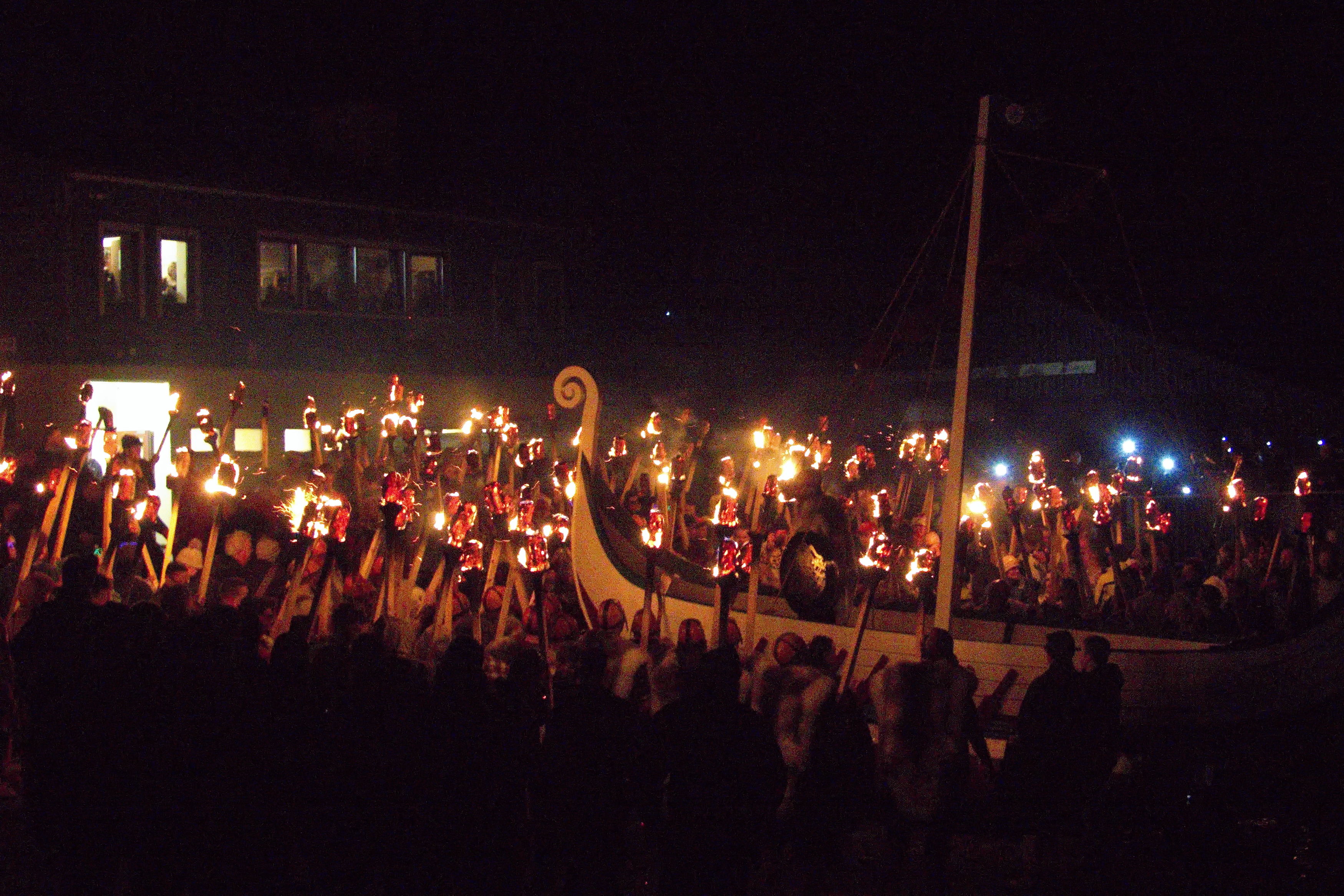
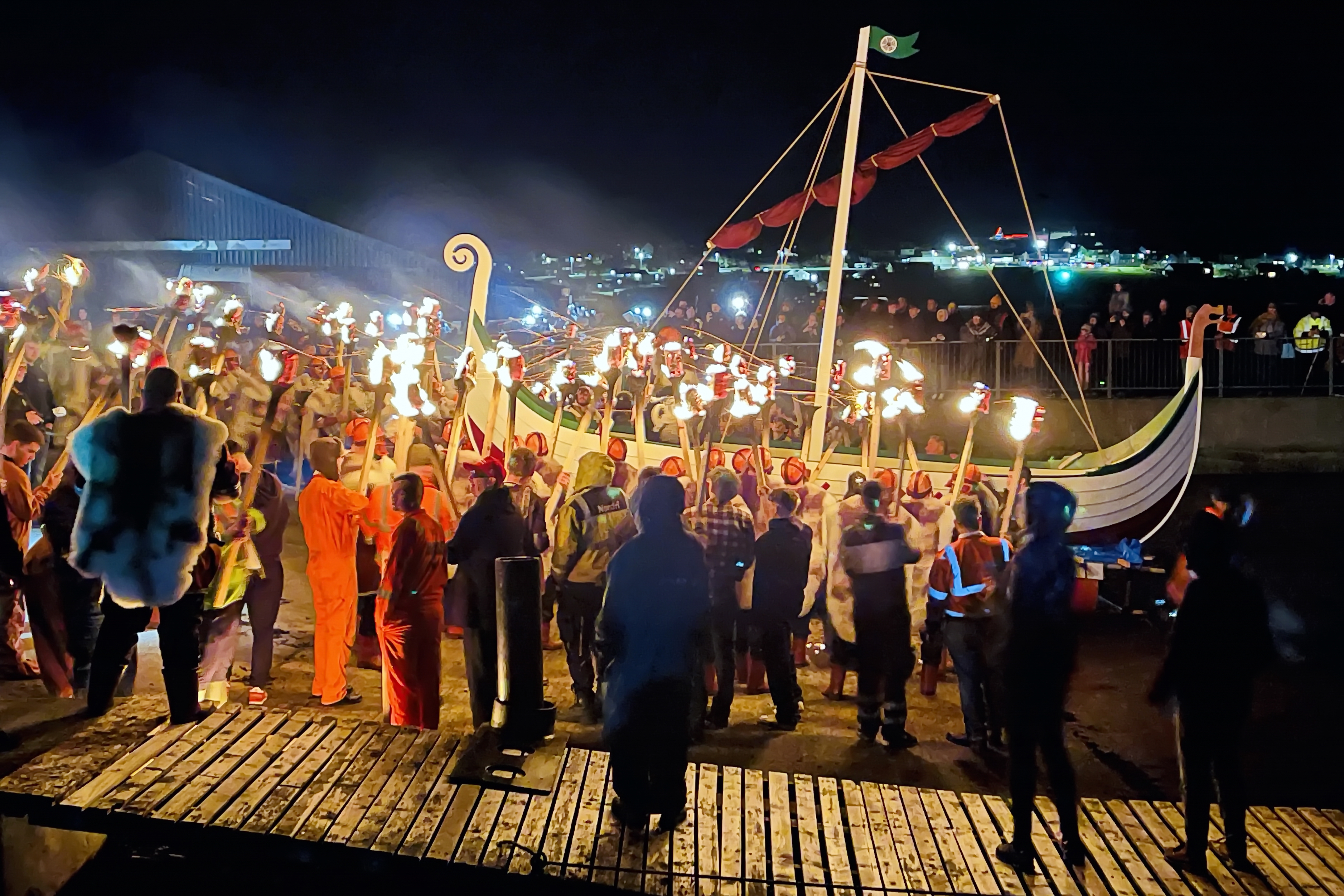
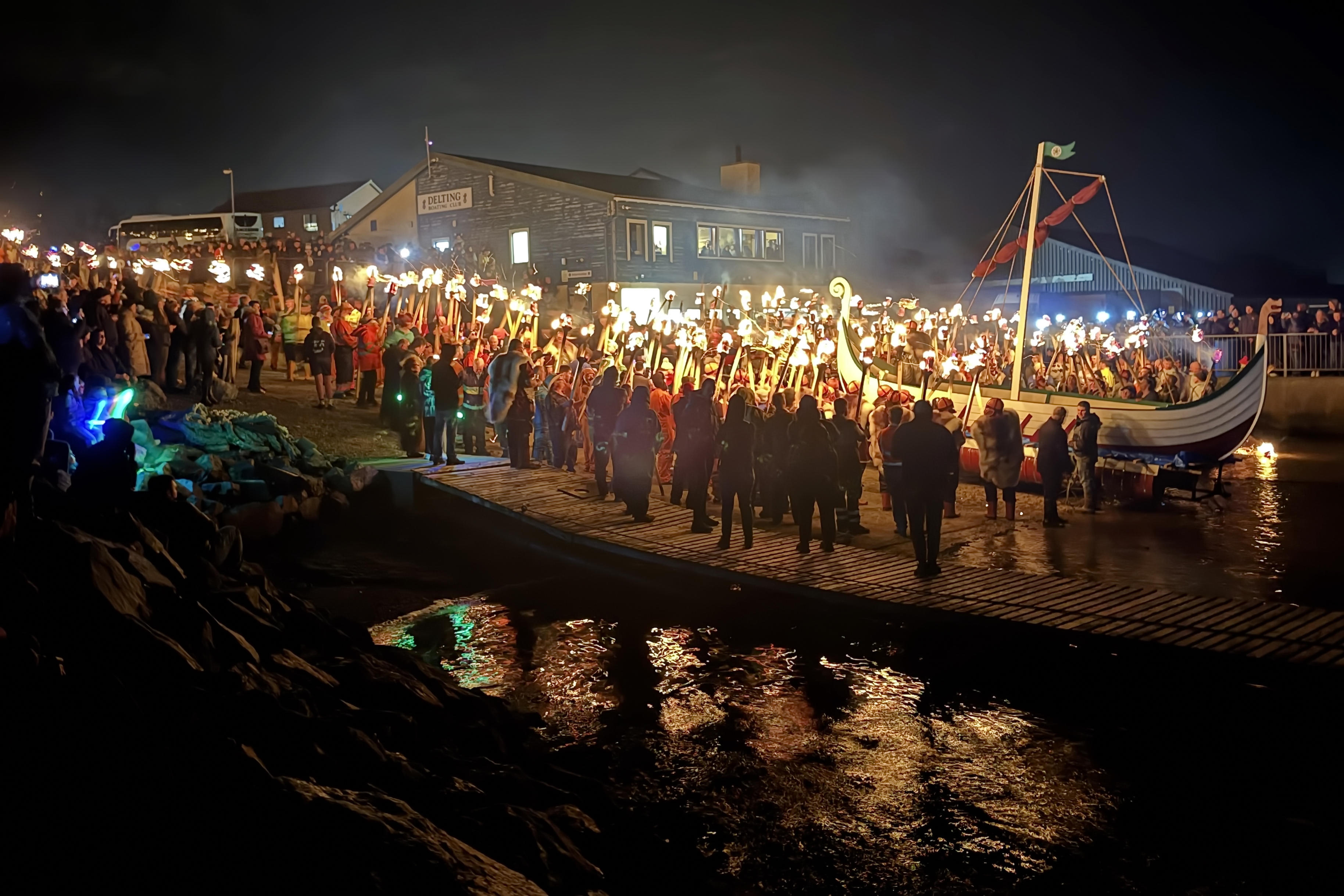
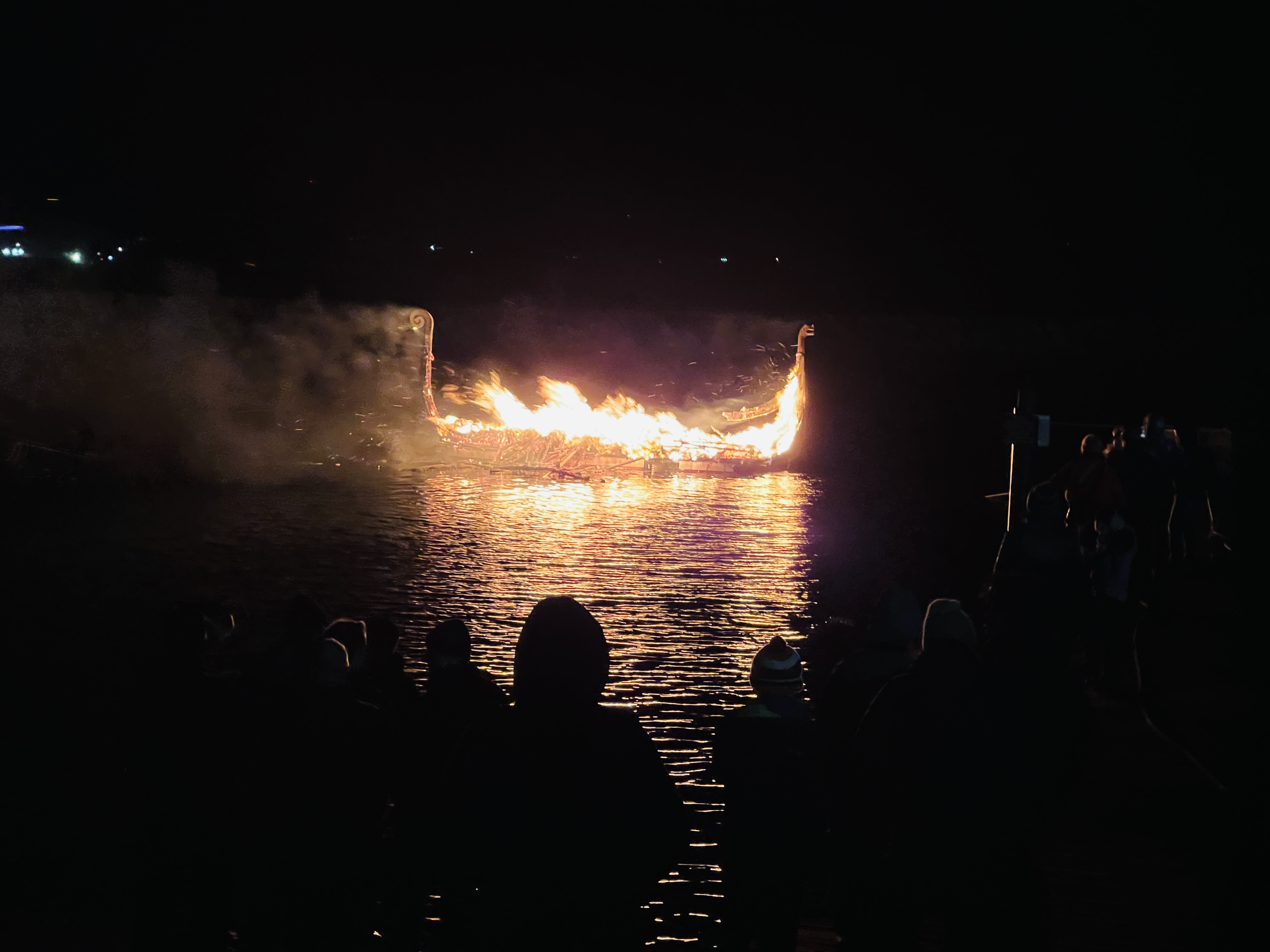
Imagine it—over 200 flaming torches hurled into a wooden galley. The flames caught quickly, roaring to life as the fire consumed Moder Dy, sending sparks into the night sky. And then, as if in a final act of release, the burning vessel was cast out into the water. It was powerful. Mesmerizing. A little surreal.
And standing there, surrounded by the community that built it, carried it, and ultimately set it alight—you could feel that this wasn’t just an ending.
It was a continuation.
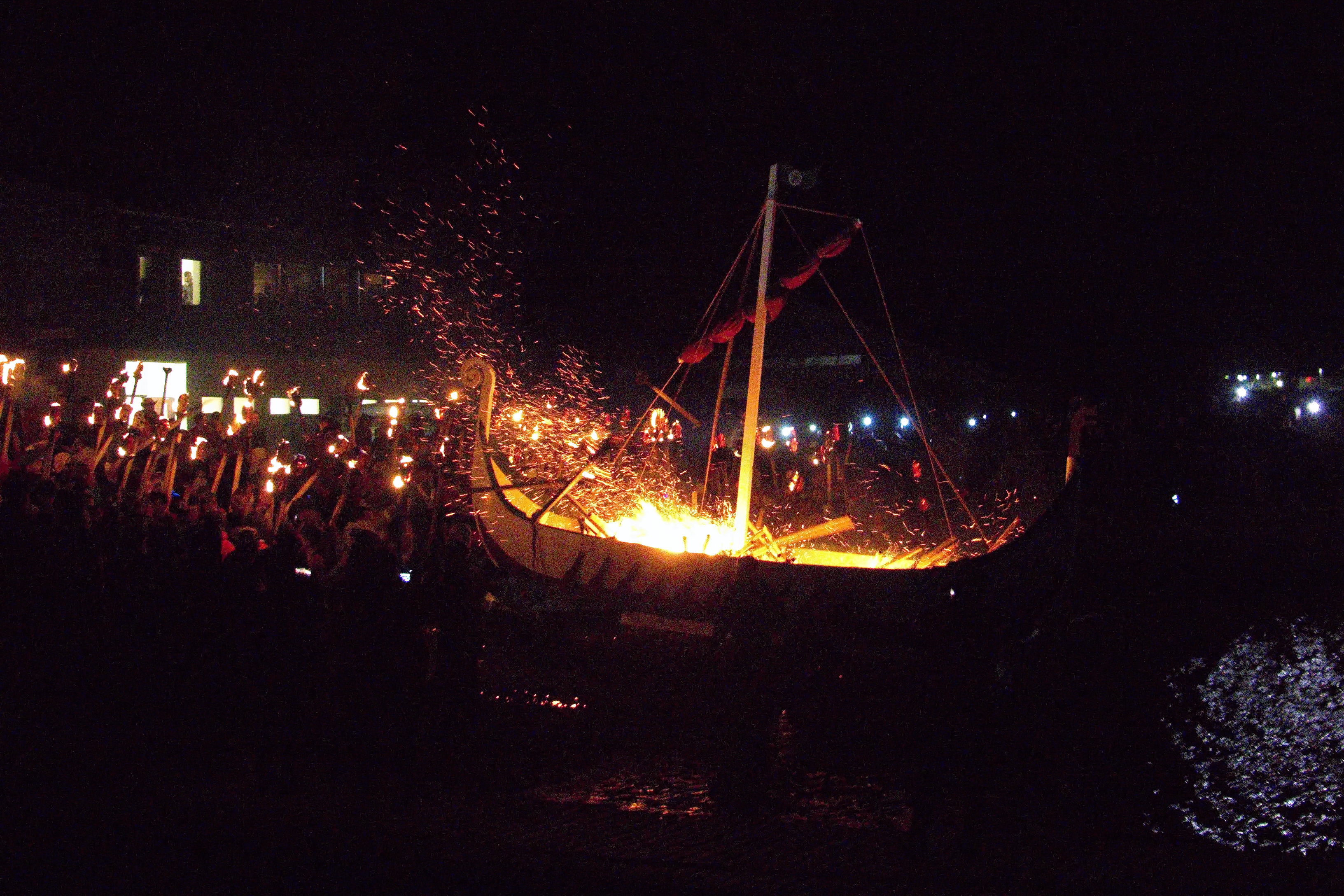
As we walked back to our car, we could hear locals chatting about the many community gatherings planned for the rest of the weekend—a time to reconnect and carry the celebrations on. It was clear the night we had just witnessed was only the beginning, with the town of Brae and the surrounding area just getting started. Although we didn’t stay to take part, with more of Shetland still waiting to be explored, it was a moment that stayed with us—a memory that lingered long after the flames had faded.

 Mapgirl Adventures
Leave a comment