Stromness
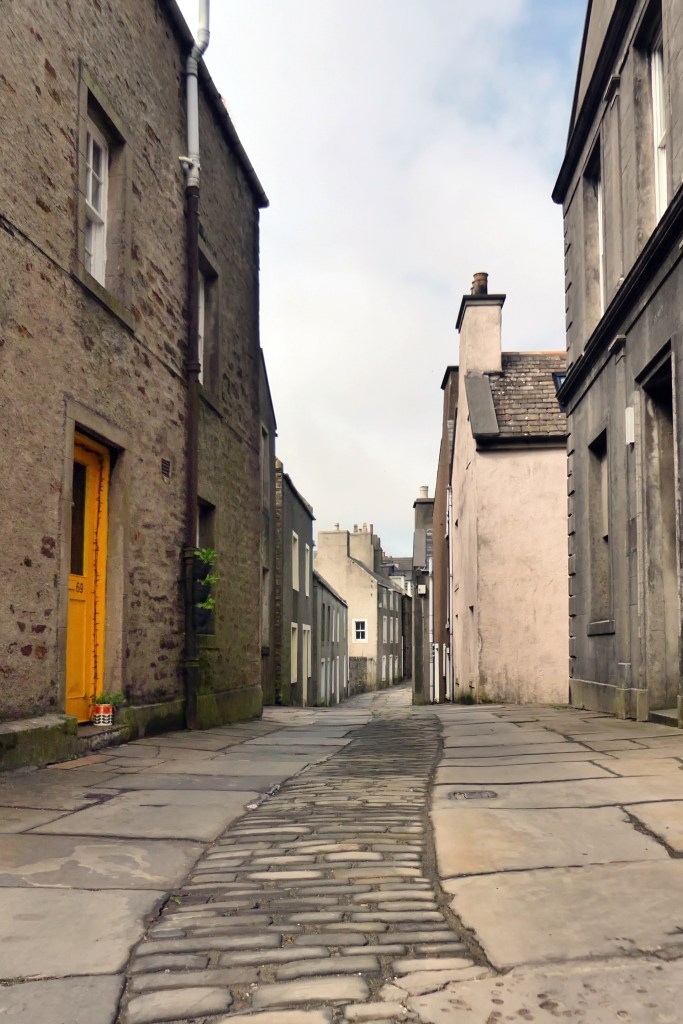
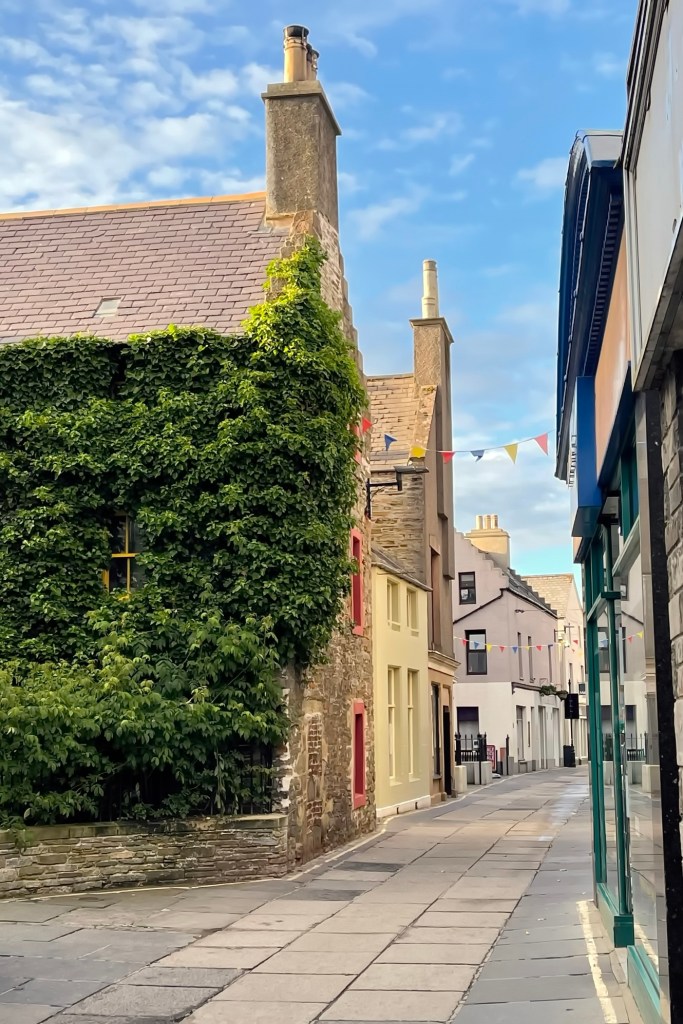
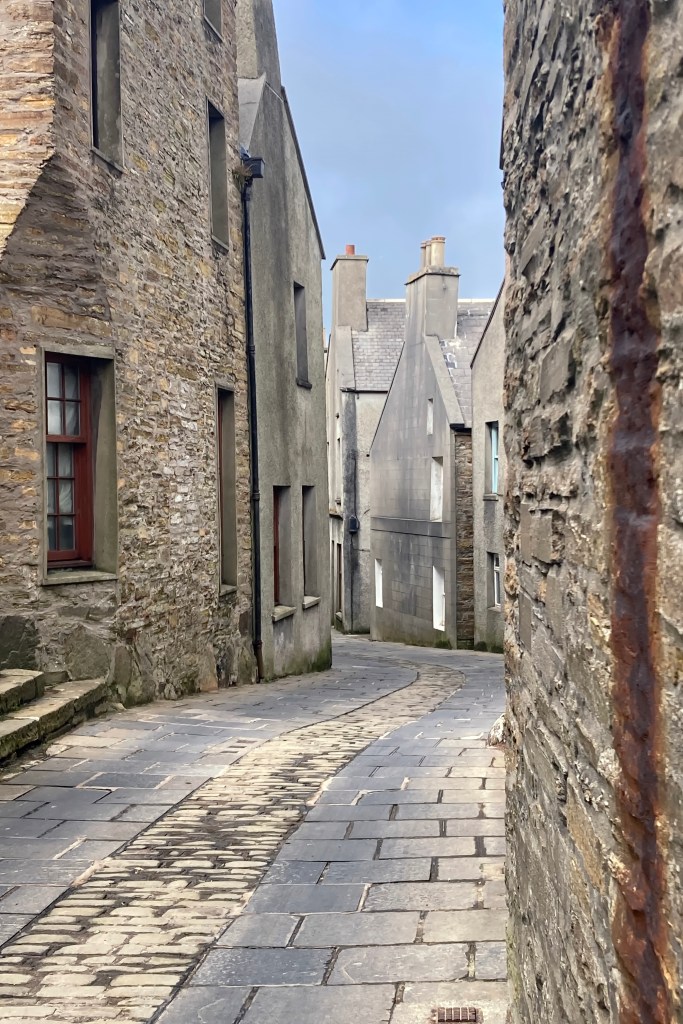
Oh, Stromness. You don’t stroll through this town — you wind, you wander, you weave. The streets here don’t apologize for being narrow. They were built for feet, hooves, maybe a cart or two. Definitely not your average motorhome (sorry, Benny). These are lanes that have seen centuries, and they carry it well.
The flagstone path rolls out in front of you like a story being told. Houses shoulder up to one another, all slant and character, some with names, some with painted shutters, all of them weathered in the best way. The wind snakes around corners ahead of you — playful, a little salty, never mean. I walked slowly. You kind of have to. There’s too much to look at. Mossy steps. Worn lintels. Sea glimpses through alleyways so narrow you could touch both sides.
I didn’t take many pictures, not right away. Some places ask you to see them first. Stromness was one of those.
Birsay Coast
Birsay isn’t loud about its magic. It waits. Lets the wind do most of the talking.
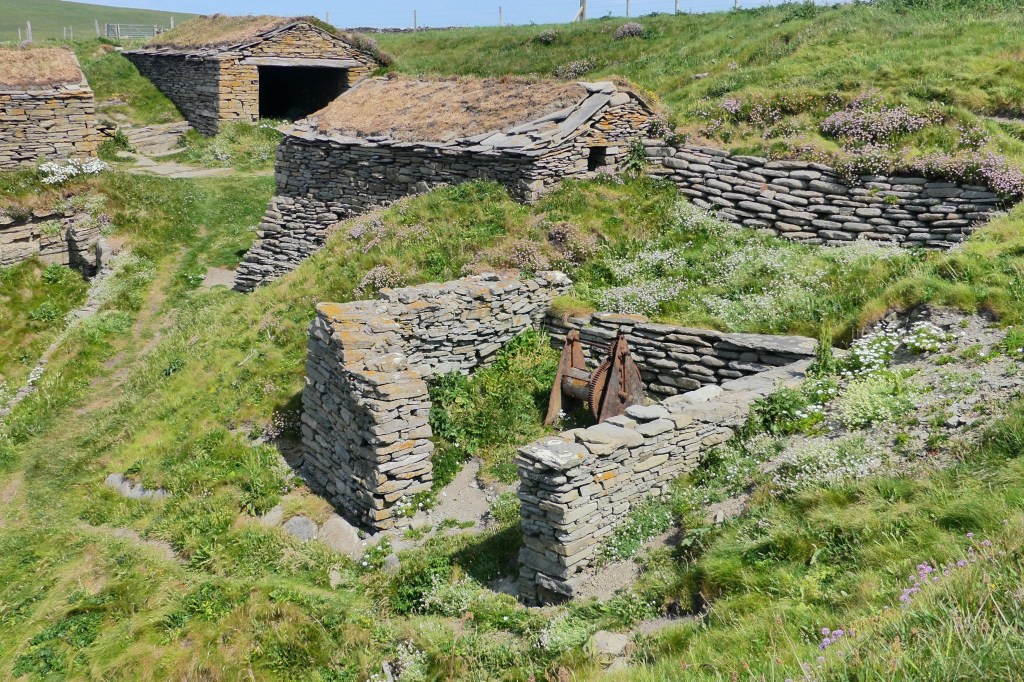
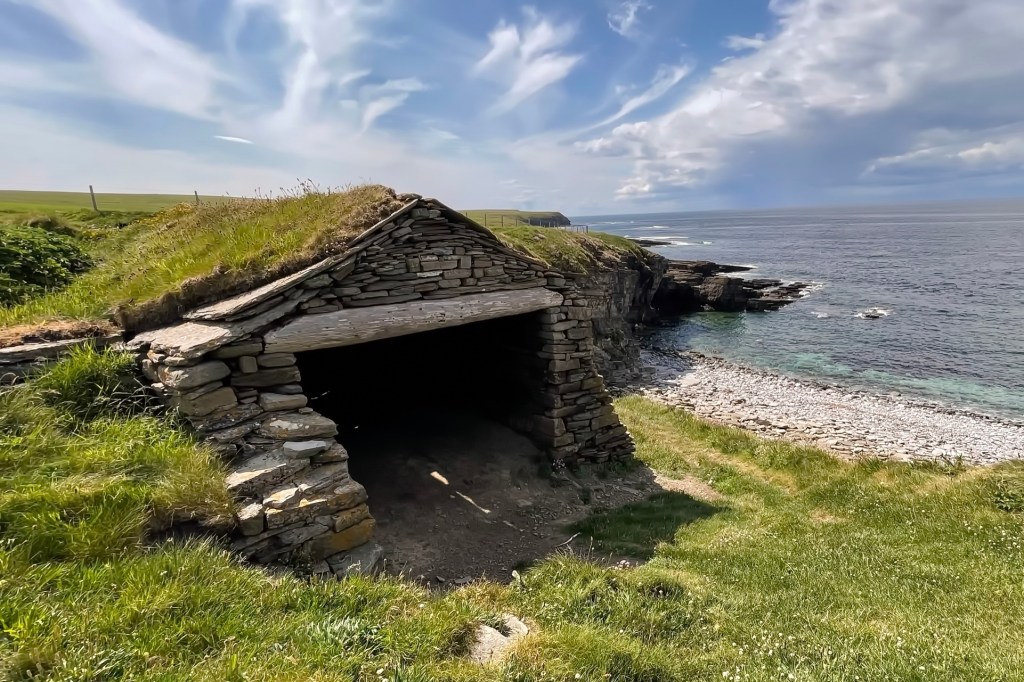
We were in search of the old fishermen’s huts, and Google Maps led us a little astray — right through a farmer’s yard. He didn’t seem to mind. Gave us a wave. I’m sure we weren’t the first to take that route.
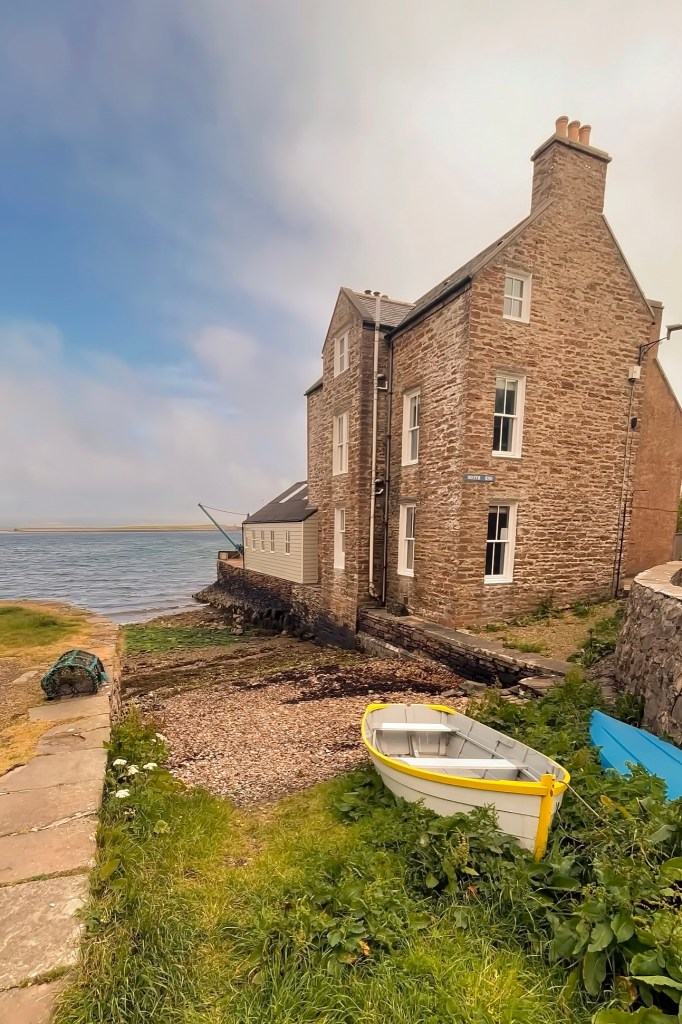
Eventually, we found the small parking lot and the fishermen’s huts. Their stonework hunches against the elements like they know what’s coming — and they probably do. We could’ve stayed there all day, just watching the clouds churn over the sea.
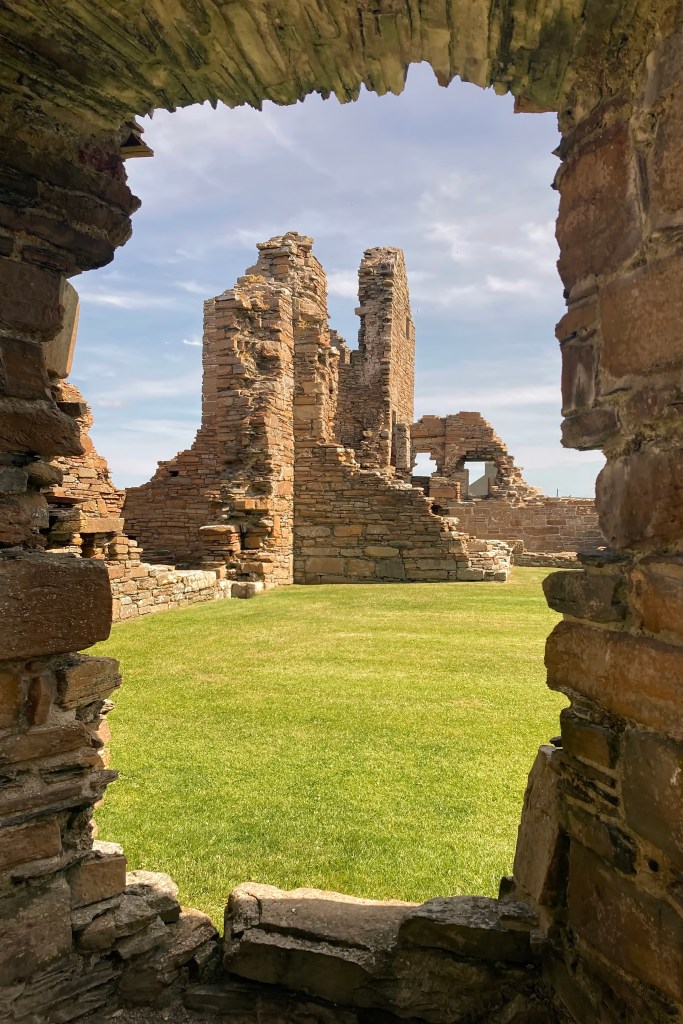
From the huts, we spotted the Earl’s Palace ruins a few miles down the coast. Empty windows watching the shore. Not grand anymore, but still proud. We had to visit. The ruins still hold their shape like they’ve got something left to prove. You can almost hear footsteps echoing in there, cloaks brushing past cold stone. Or maybe that’s just the wind again, playing tricks.
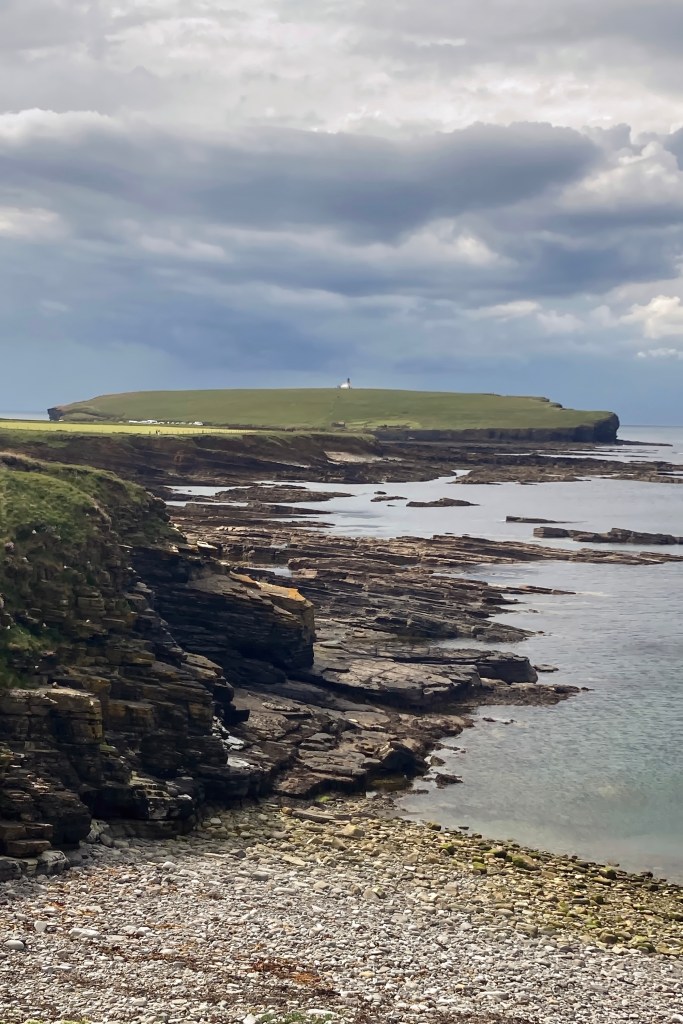
We stopped at the Brough of Birsay for lunch and watched many people attempt the causeway crossing at low tide — shoes in hand, testing each slippery stone. Some turned back. Some didn’t.
We didn’t tempt the tides this time. A National Trust crew was there that day, mowing and trimming around the edges. So we just sat back and enjoyed the scene. Sometimes, that’s more than enough.
Orphir Round Church
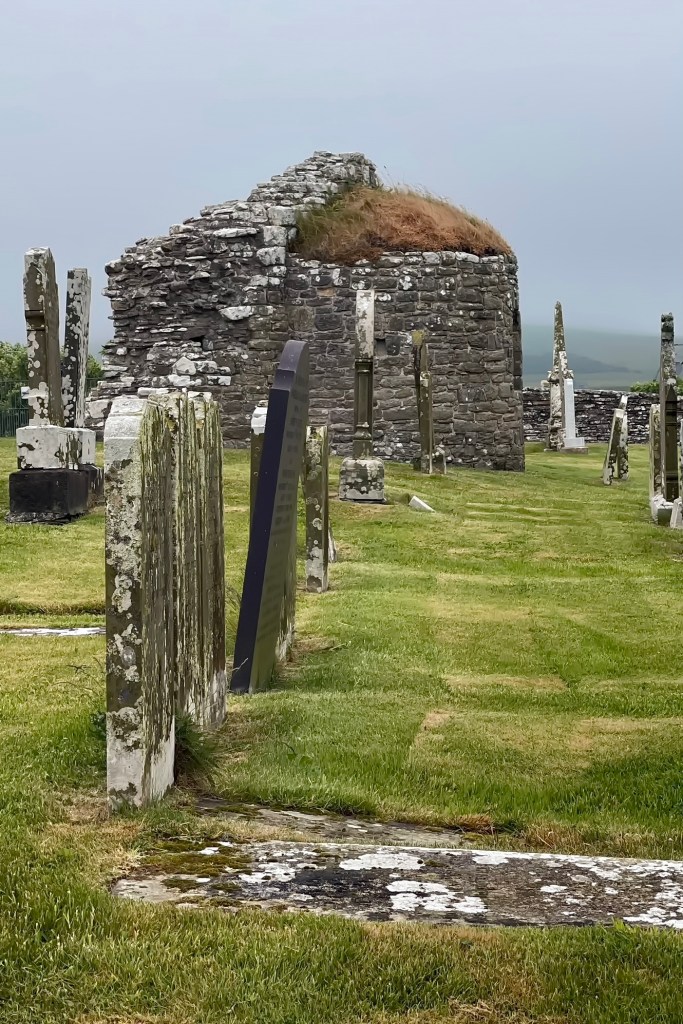
Tucked behind a modern community hall and a quiet graveyard, the Orphir Round Church doesn’t shout for attention. You could almost miss it — a curve of ancient stone, worn down but still standing. Just a sliver of what it once was, but enough to stop you in your tracks.
We wandered through the grass, reading the signs, trying to piece together the story. A round church, built for a round idea — perfect symmetry, heavenly intention. Now just a fragment, but still holding space. Still sacred, somehow.
And here, tangled in the quiet, is a piece of saga. The Orkneyinga Saga tells of Earl Haakon, who built this church as penance after a murder during a Yule feast at the nearby Earl’s Bu. Politics, betrayal, and redemption — the old Norse way. It’s strange, standing in this soft green field, to feel the weight of that story settle around you.


Churchill Barriers
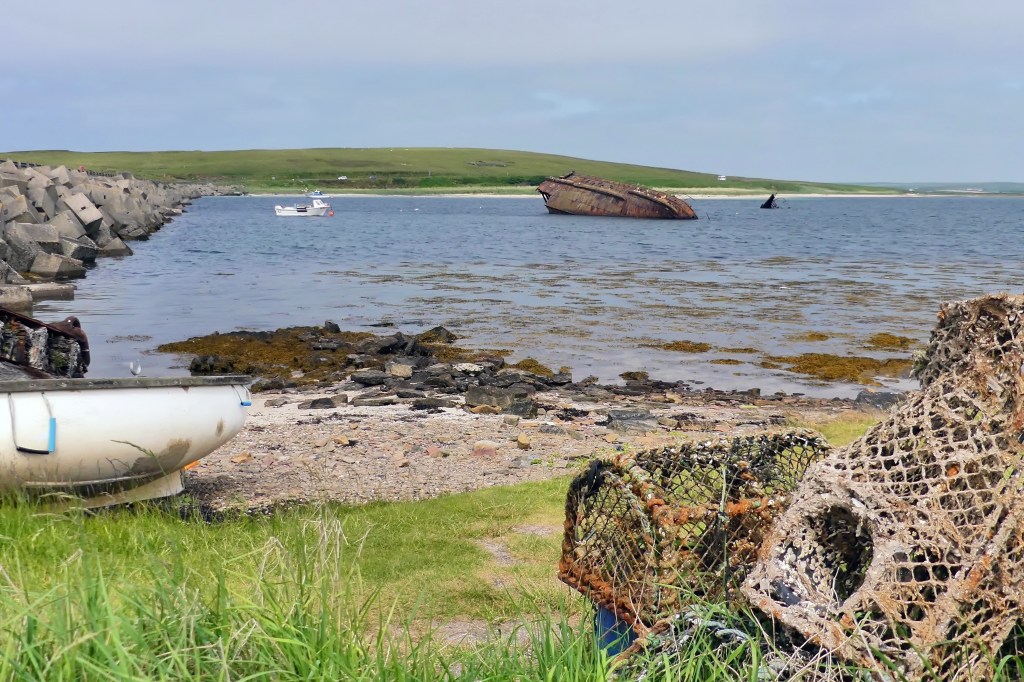
Driving across the Churchill Barriers feels almost casual, like any other road, with the sea on both sides and gulls riding the wind. But the history here runs deep and heavy.
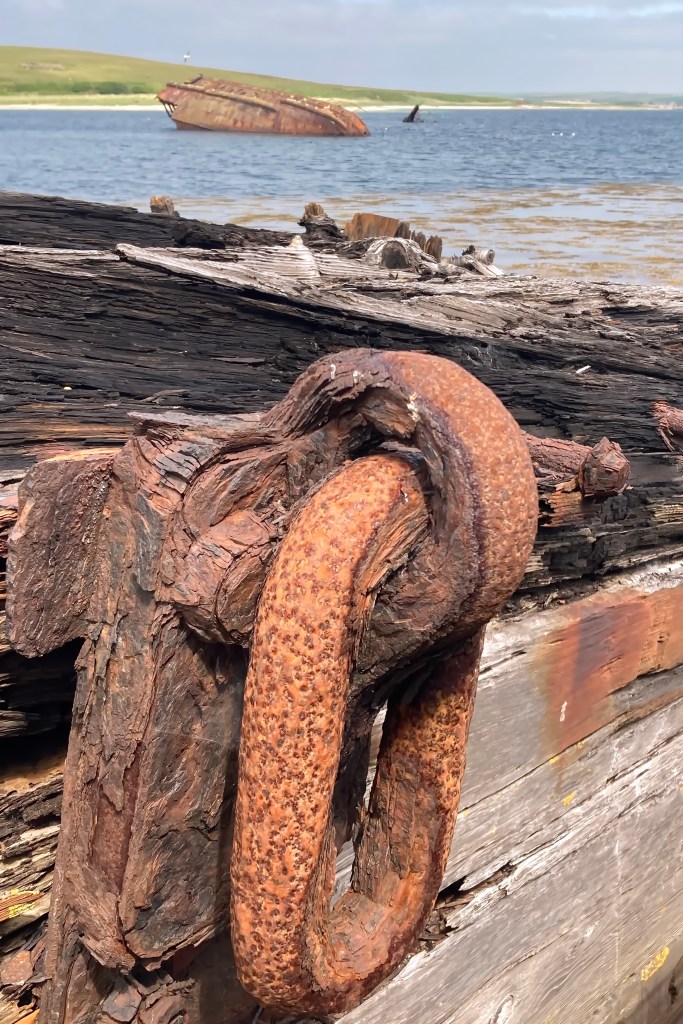
Built during the Second World War, these causeways were part of a massive defence effort after the tragic sinking of HMS Royal Oak in Scapa Flow. German U-boats had slipped through the natural channels, and the loss was staggering. Churchill ordered the barriers to be part protection, part promise, and to be built by thousands of Italian prisoners of war.
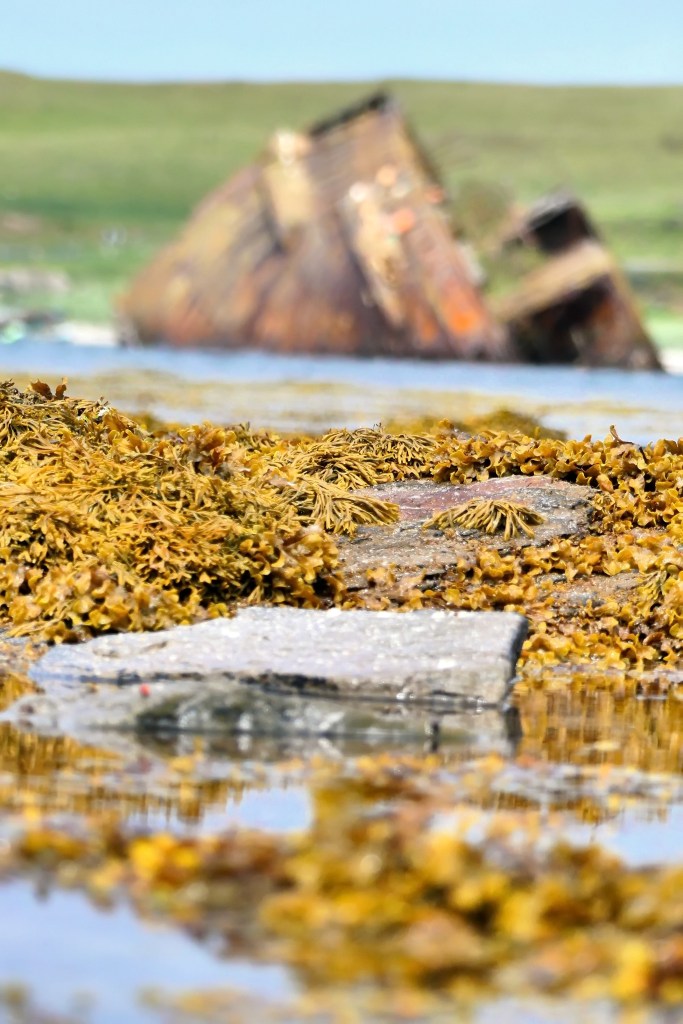
You can still see the massive concrete blocks, slumped and scattered like old bones along the shore. Some places are more ruin than road. Others feel stubbornly solid, holding back the sea even now.
It’s strange — something built for war has become such a peaceful link between islands. Cars roll across. Sheep graze nearby. The sea still presses in on both sides, but the barriers hold.
We stopped a few times, just to look. At the water. At the light. At the history hiding in plain sight.
Italian Chapel
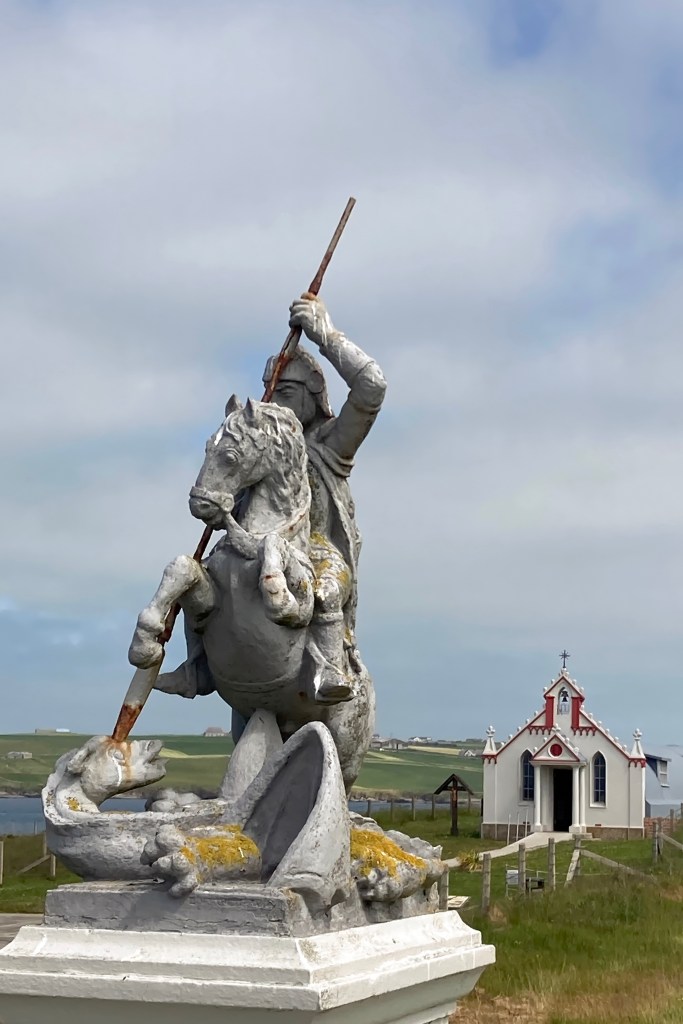
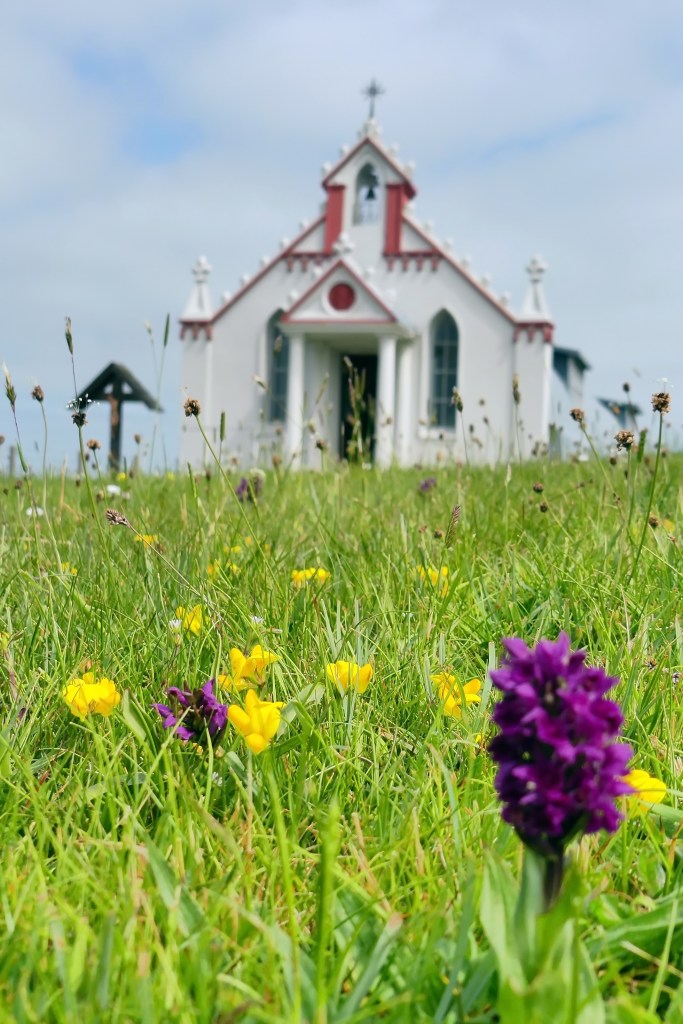
It’s not what you expect to find on a windswept island road in Orkney, a delicate chapel, whitewashed and glowing, standing quietly beside the causeway. The Italian Chapel feels out of place and perfectly at home all at once.
During the Second World War, Italian prisoners of war were brought to Orkney to help build the Churchill Barriers a massive sea defence meant to seal off Scapa Flow. They worked in hard conditions, far from home. But in the midst of that, they built a place of faith.
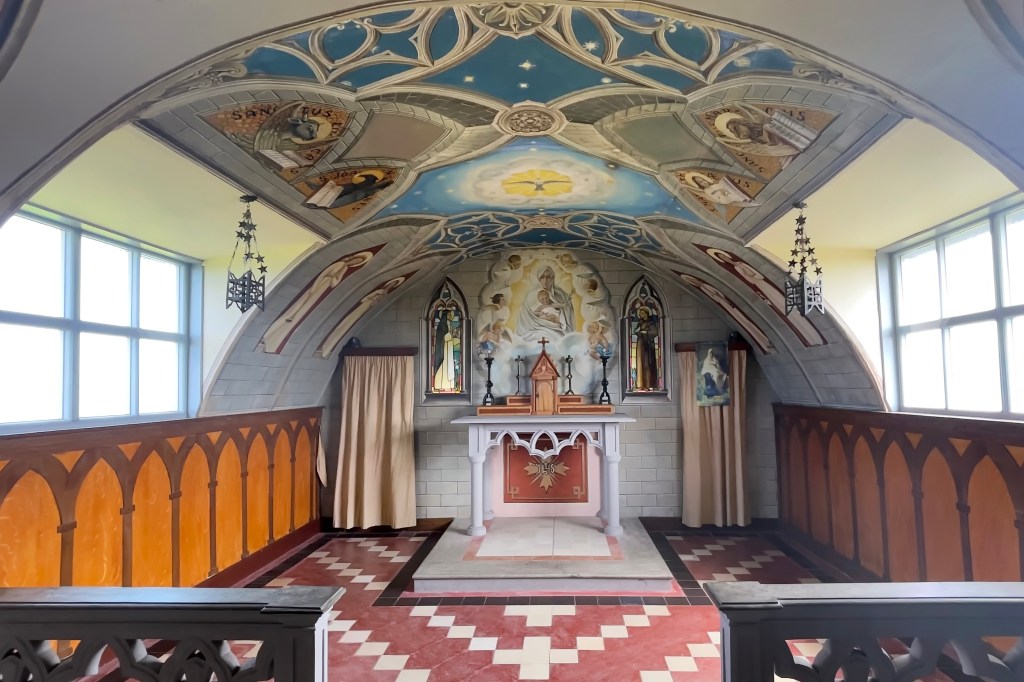
The chapel was made from two Nissen huts, joined end to end. Just corrugated iron shelters, really military-issue and unremarkable. But through paint, plaster, and sheer determination, they transformed them into something extraordinary. Led by prisoner Domenico Chiocchetti, they painted saints, carved a sanctuary, and created beauty out of scraps.
We stepped inside, and it was quiet. The kind of quiet that feels full, not empty. Every inch is cared for. The painted ceiling. The detailed altar. The wrought-iron gate was made from old bedsprings. It’s not grand in size, but it’s overwhelming in spirit.
It’s not just a chapel. It’s a story of resilience, of creativity, of faith held together by hope and plaster.
Broch of Gurness
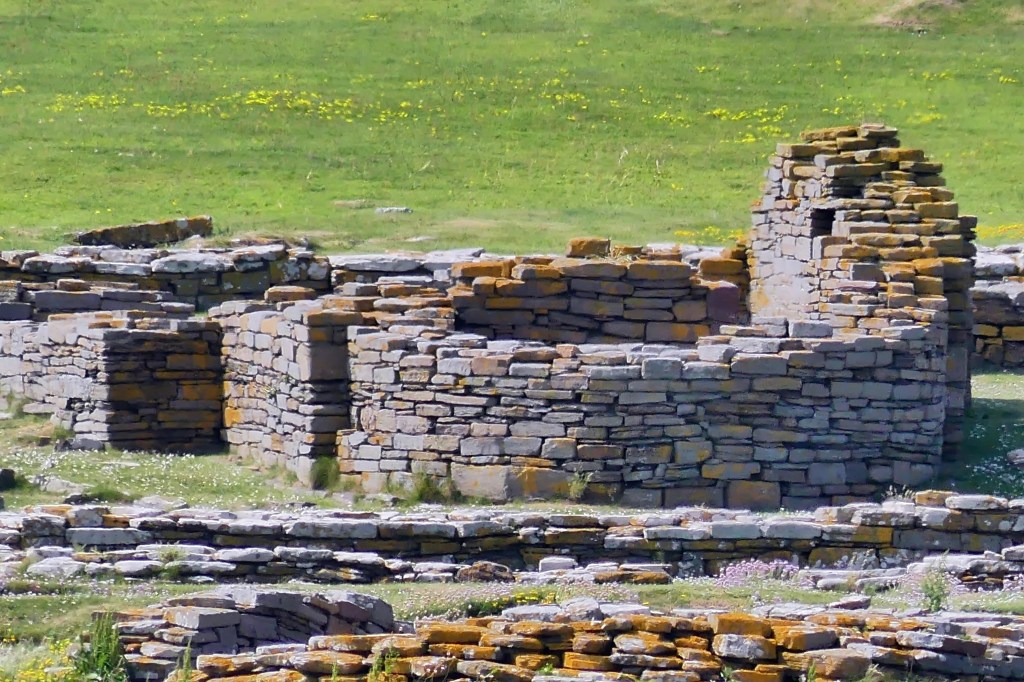
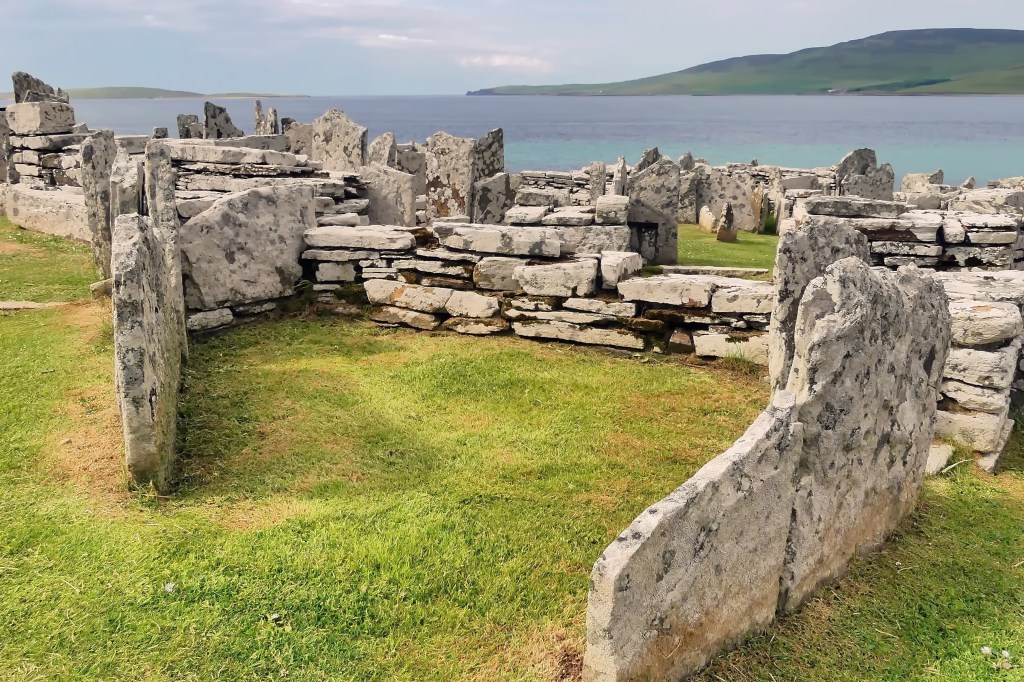
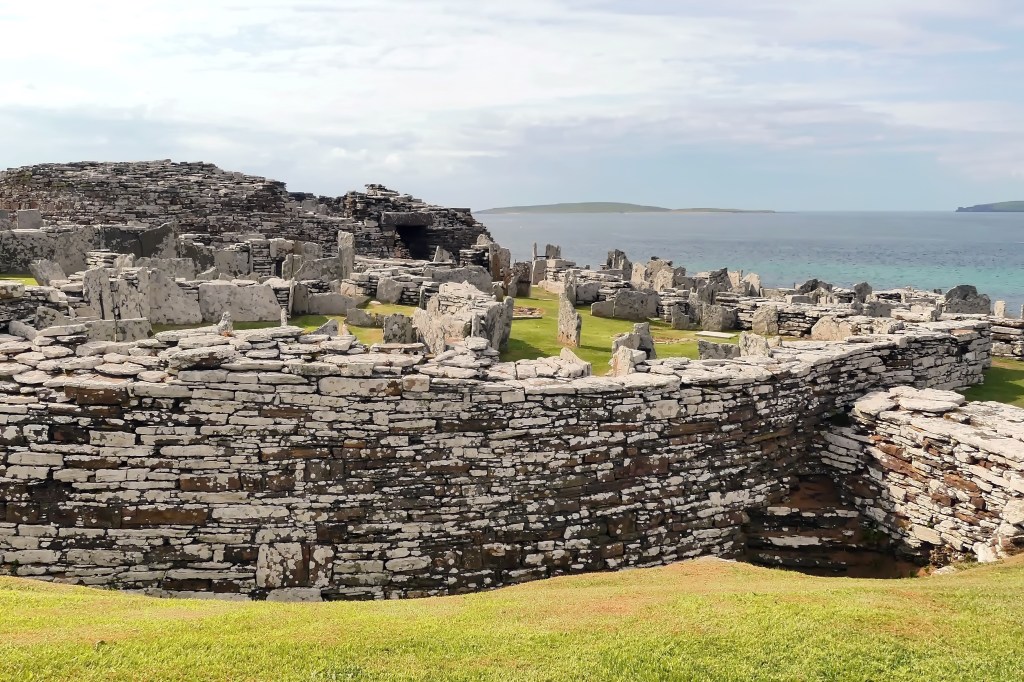
Some places stop you mid-step; the Broch of Gurness did that place. From the parking lot, it looks modest enough. A few stone walls, a fenced path. But as we stepped down into the site, the scale of it opened up, and suddenly we were walking through history.
The broch at the centre rises up in a tight spiral of thick walls, still standing tall in places, built with care and purpose. It’s not just the broch, though. It’s the village that surrounds it. Layers of roundhouse walls, passageways, hearths, and storage spaces all laid out like time just hit pause. You don’t need much imagination here. It’s all still there.
You can see where they cooked, where they slept, where they sat and looked out at the sea. The layout makes sense, practical, sheltered, and connected. There’s a rhythm to the way it’s built that feels deeply human.
The view out across Eynhallow Sound is stunning. Peaceful now. But you can picture longboats on the horizon, smoke from the hearths curling into the wind, voices calling across the stone.
We wandered slowly through the broch to look closely, then look again. Gurness isn’t just a ruin. It’s a reminder. People lived here.
Heart of Neolithic Orkney
It’s hard to describe the feeling of standing among stones older than the pyramids. On Orkney’s Mainland, it’s not just one site, it’s a whole landscape stitched together with time. You move through it like turning pages in a very old book.
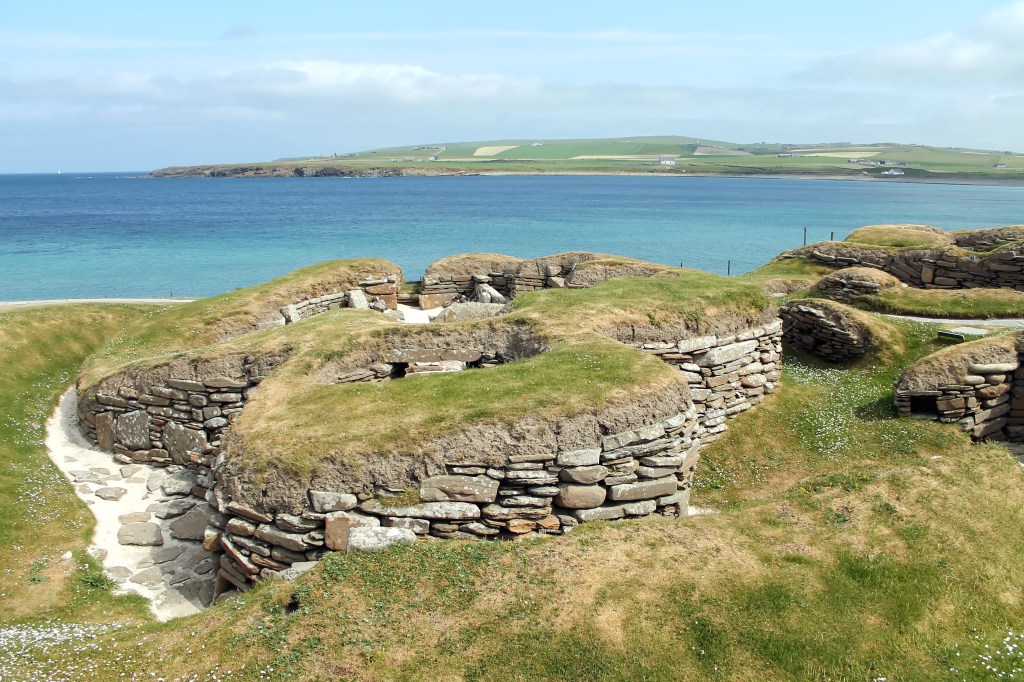
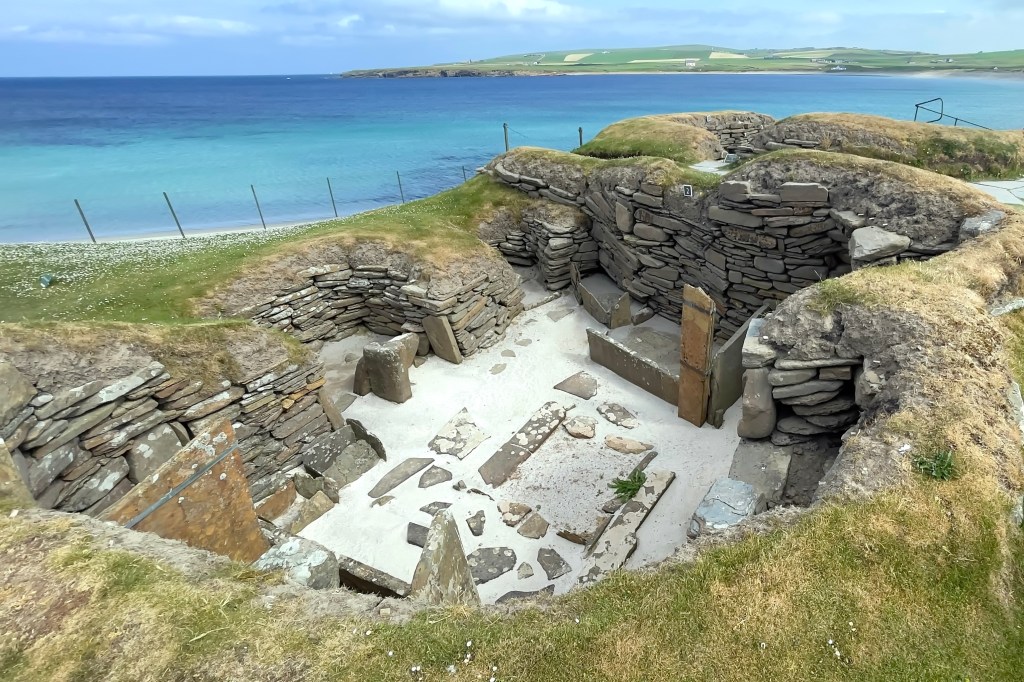
We started at Skara Brae, where the past is dug right into the sand. The village sits low and snug to the earth, its stone furniture still in place, like someone just stepped out for a walk and never came back. You can see where they cooked, where they stored food, even where they may have laid their heads.
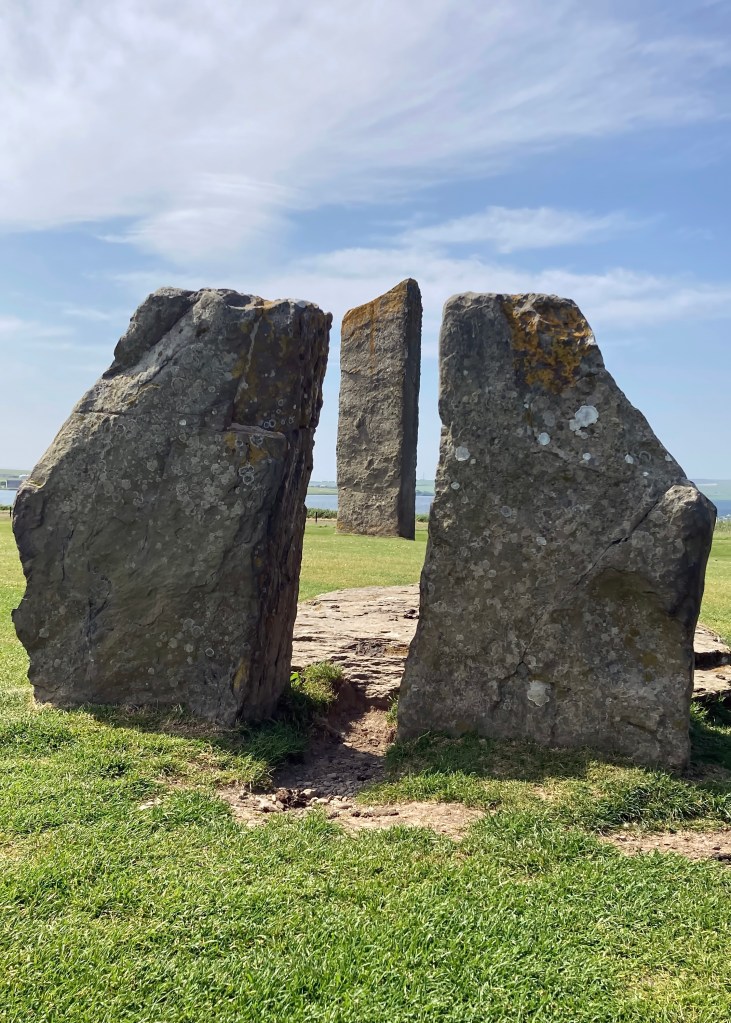
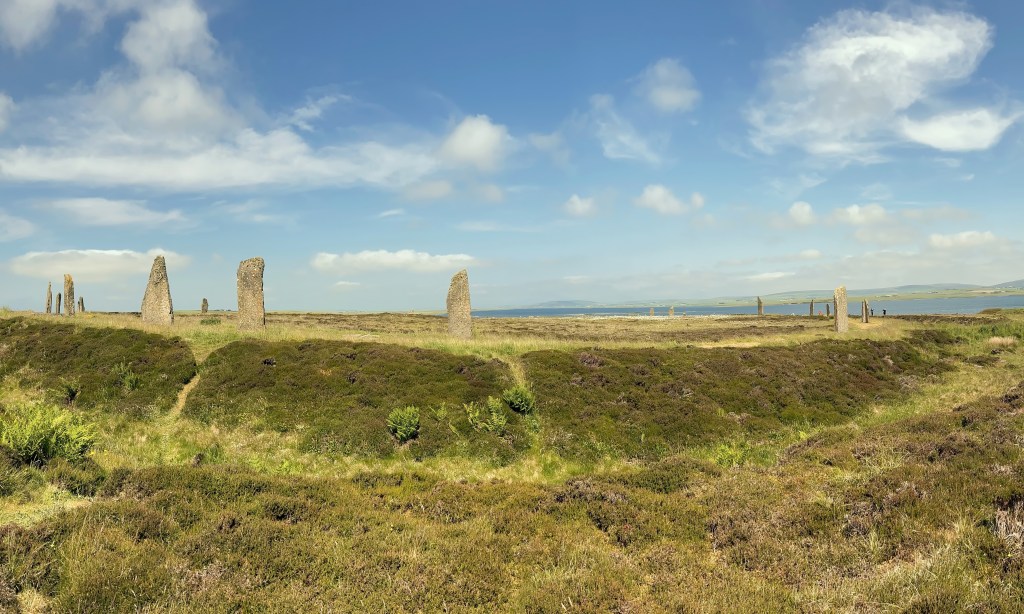
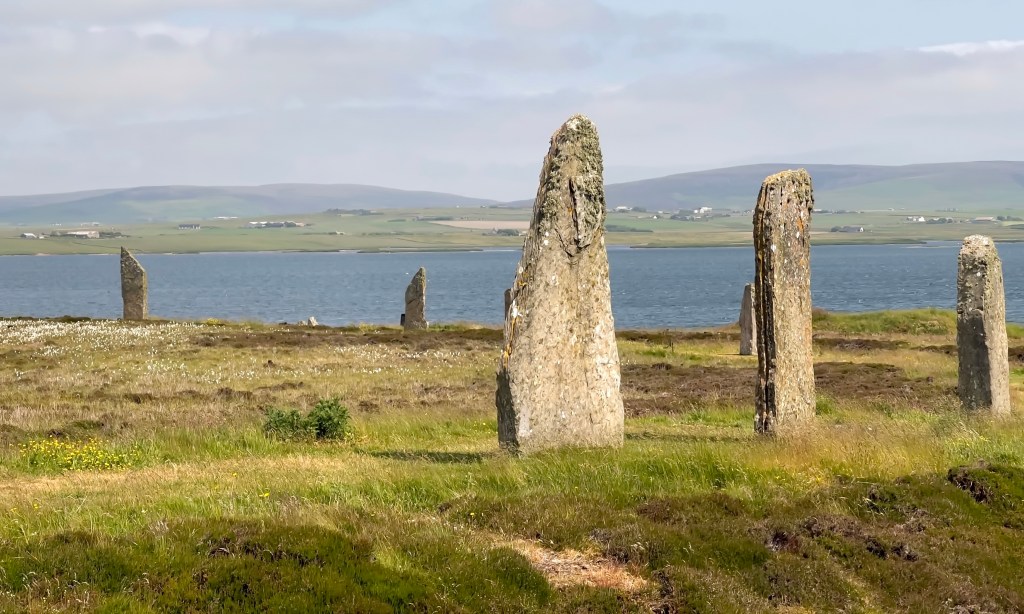
From there, we made our way across the island to the Ring of Brodgar — wide and weathered, standing proud in a sweep of heather and wind. It’s hard not to feel small there. Massive stones, set in a perfect circle, reaching skyward. No one knows exactly what it was for, rituals, gatherings, or something lost to time, but whatever it was, it mattered. You can feel it in your bones. We walked the full ring slowly, quietly. It felt right to listen more than speak.
A little farther along the road, the Stones of Stenness rise up, fewer in number, but taller, sharper, somehow more confrontational. Just off to the side, we followed a quiet track into the old village of Stenness, a simple cluster of stone houses from a much later time, but still full of stories. It’s easy to imagine voices there, smoke from chimneys, the rhythm of ordinary life unfolding next to these ancient ceremonial spaces. A long time ago, the past and the present were neighbours.
We had hoped to visit Maeshowe, the great chambered tomb aligned with the winter solstice, but we weren’t that organized. You have to book well in advance, and we just hadn’t. It’s one of the few regrets, but also a reason to return.
Instead, we explored a couple of the lesser-known cairns. Unstan Chambered Cairn was peaceful and atmospheric, with its central tomb space and soft light filtering in, and Cuween Hill. Now that one was an adventure. We crawled on hands and knees into a hillside, with ancient stones all around us and the hillside above. We both came out grinning and a little dusty and with muddy knees.
This part of Orkney doesn’t just show you history. It humbles you with it. These places were built to last, and they have. And somehow, even after 5,000 years, they still feel alive.

Kirkwall Cathedral
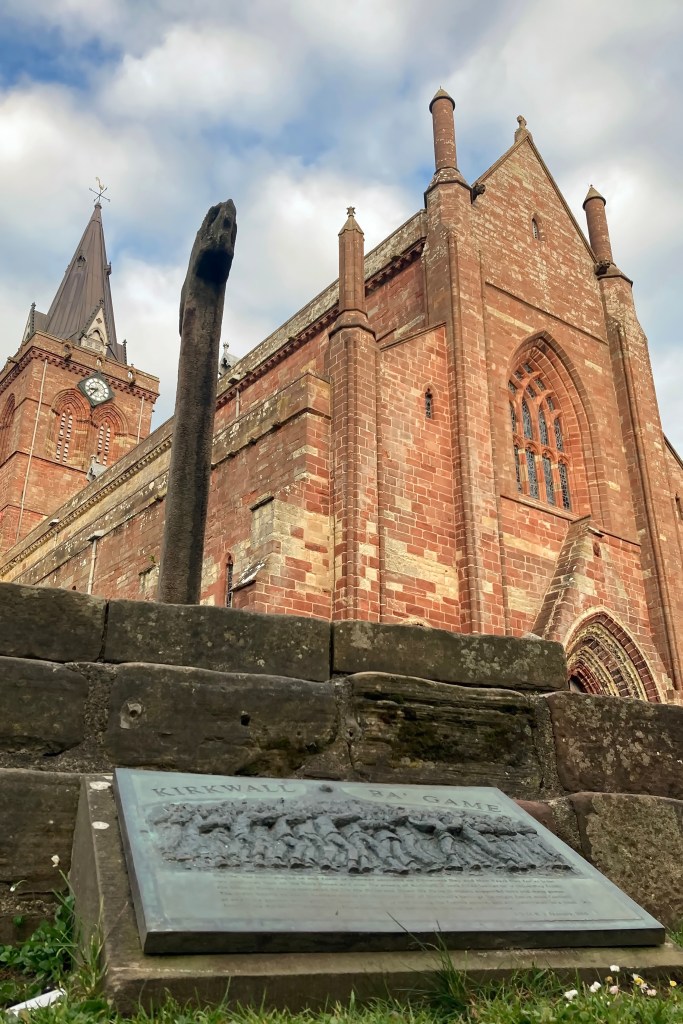
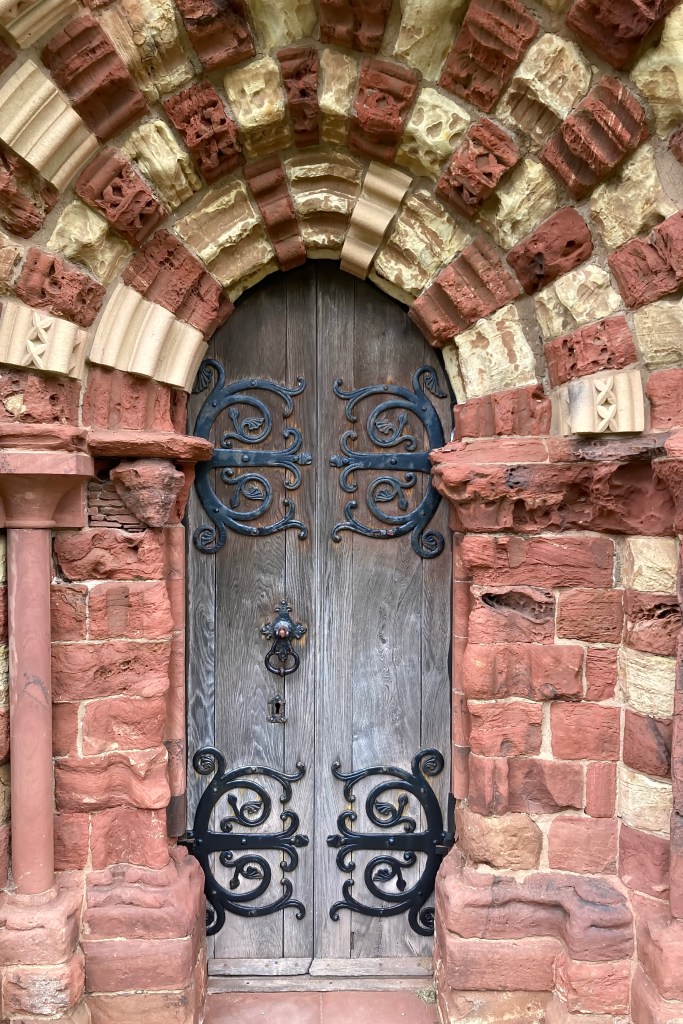
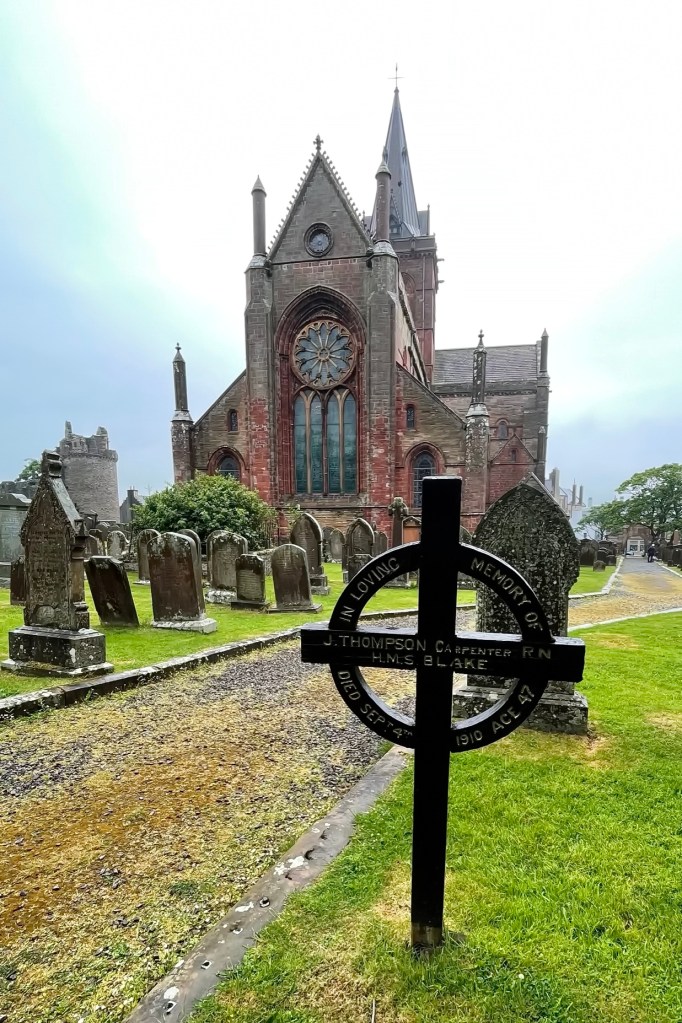
You don’t expect a cathedral like this, not way up here, on an island in the North Sea. But St. Magnus Cathedral rises out of Kirkwall like it’s always been there, red sandstone catching the light, steady and sure.
It was built in the 1100s by Viking hands, for a Viking saint St Magnus, the earl who chose peace and paid for it with his life. The Orkneyinga Saga tells his story, and the stones of this place seem to remember it. You feel it before you even step inside.
The outside is impressive, with tall and strong, solid Romanesque arches, but the real awe comes once you pass through the doors. The air shifts. It’s cool and quiet, with pillars marching down the nave and light filtering through stained glass. There’s beauty here, but not in a polished, grandiose way. It feels lived in. Cared for.
We wandered slowly, reading carved names and worn gravestones set into the floor. Some go back centuries. Some are more recent. This is still a working cathedral, still a place of community and grief and hope.
And above it all, the bones of St. Magnus are said to rest in a small pillar, behind a simple stone plaque. No fanfare. Just presence.
Outside, the square is peaceful now, but twice a year, it transforms. On Christmas and New Year’s Day, the streets of Kirkwall erupt with the Ba’, a traditional ball game that’s more like a town-wide scrum. Uppies versus Doonies, charging through narrow lanes, the cathedral standing right at the heart of it all, a witness to centuries of both reverence and joyful chaos.
View all our Orkney Islands pictures here.

 Mapgirl Adventures