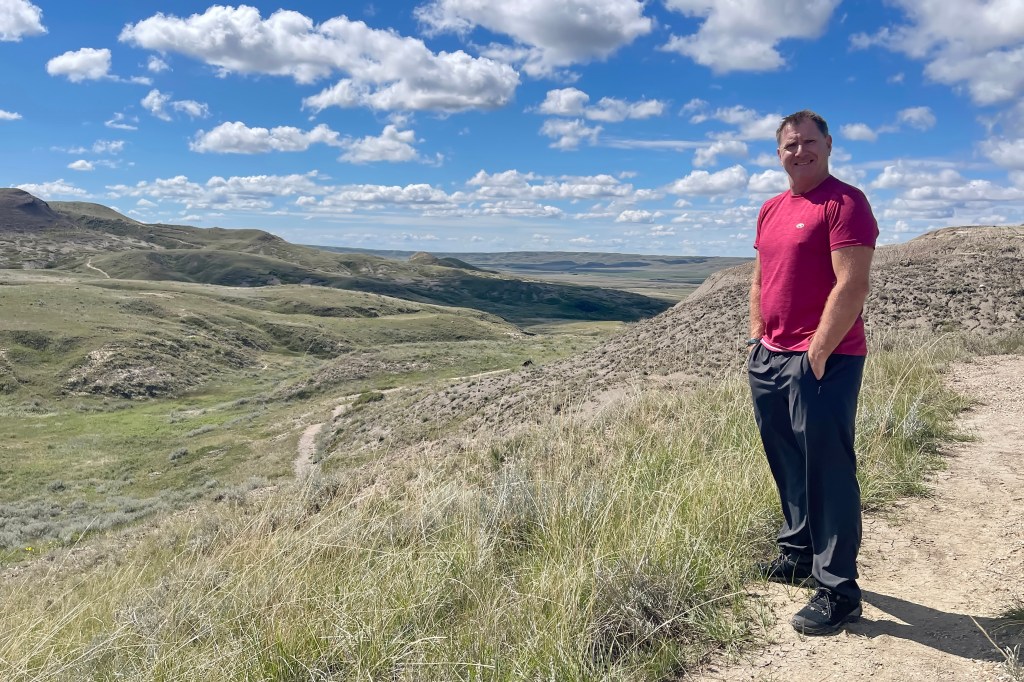
Growing up in Saskatchewan, I always heard the same running commentary: “It’s so flat you can watch your dog run away for days.” Coming from the north, I would quickly reply, “Not all of Saskatchewan is flat!” I grew up surrounded by lakes, forests, and rolling hills. But after visiting Grasslands National Park, I can now say with confidence that Saskatchewan is anything but flat.
Grasslands National Park sits along the southern border of the province and is split into two distinct sections: the East Block and the West Block, each with its own unique characteristics. We dedicated a full week to exploring both sides.
We began our adventure by setting up just outside the park’s western boundary in the village of Val Marie, which is the closest townsite to the West Block and acts as the park’s unofficial gateway. This is home to the main Visitor Centre, where travelers can grab maps, brochures, and a few souvenirs before making an excursion into the prairies. With a population of just around 120, Val Marie is the kind of village where everyone knows everyone. Yet, it manages to punch above its weight with character. One of my favorite discoveries was tucked away in their charming visitor pamphlet: Val Marie claims the highest per capita number of yoga teachers, soap makers, beekeepers, and cartographers in Canada. As a cartographer myself, that last one caught my eye. I even spotted some of his work displayed in the local café. His name is Alex McPhee, and now I’ll have to keep an eye out for more of his maps.
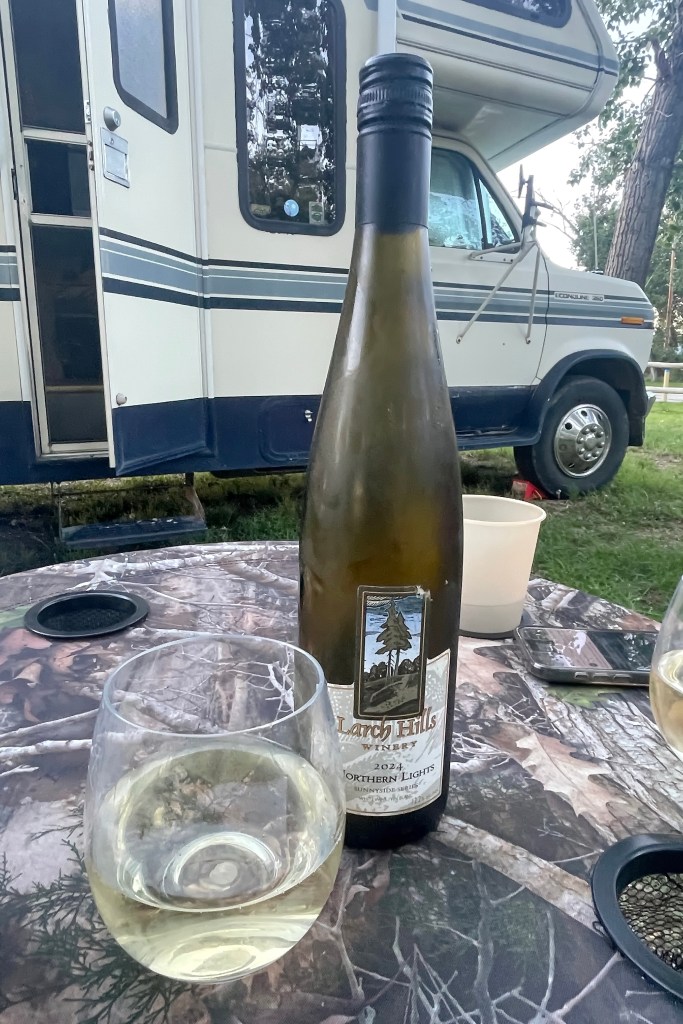
Although we filled our days exploring the park, the early mornings and evenings were spent relaxing with a few beverages at the small community campsite in the village, which provided a great base for our stay, where I got the chance to try out my new branded glass made by Fostered Artistry, a former co-worker (thanks Brandy!).

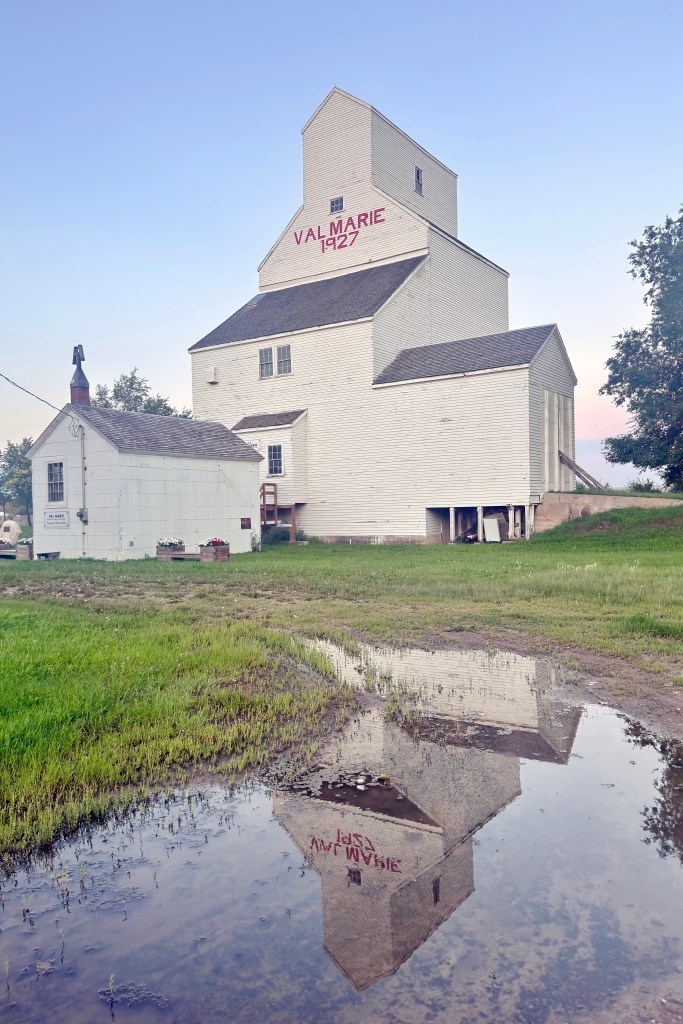
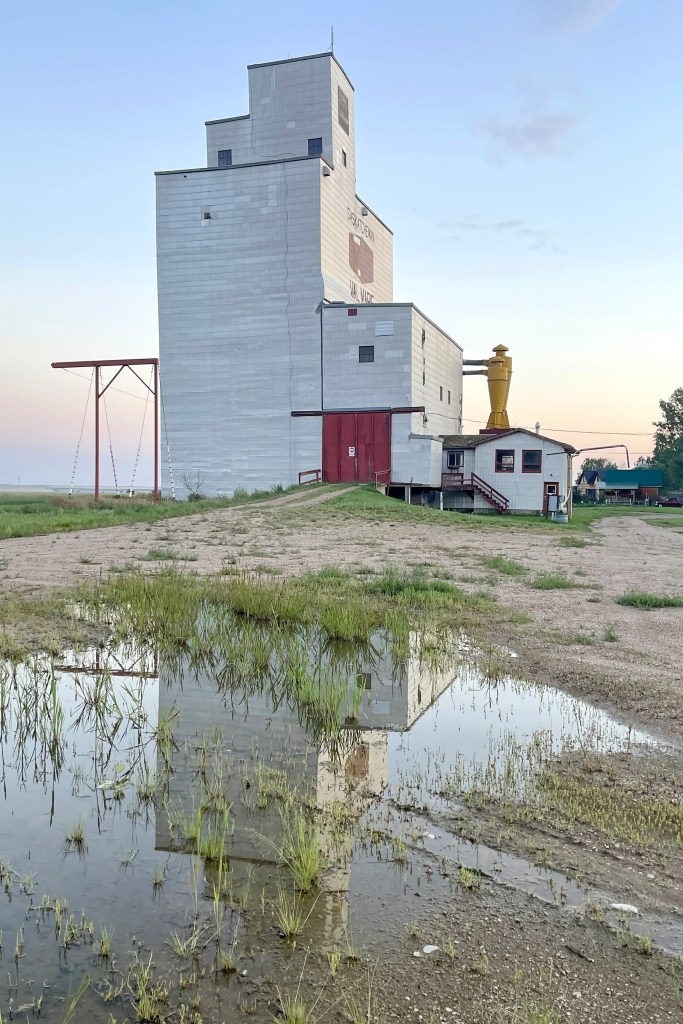
For centuries, the Val Marie area was a vital hunting ground for Indigenous peoples who followed the bison herds. Later, it became a key location for cattle ranching, serving as the terminus for long cattle drives from Texas. The village itself was established when the Canadian Pacific Railway built a branch line here in 1924, although the restored heritage grain elevator from that time is now a museum offering a reminder of more prosperous times for this landmark.
Grasslands National Park is the only national park in Canada that protects and promotes native prairie grasslands. Both blocks showcase landscapes carved thousands of years ago by retreating glaciers, with the Frenchman River snaking through valleys and coulees that seem to stretch forever under the prairie sky.
The West Block of Grasslands is where the prairie feels most alive. This is one of the last remaining stretches of native prairie in Canada, and Parks Canada works hard to protect it – not just the rolling grasses, but the many endangered species that call it home. Out here you’ll find creatures that once thrived across the Great Plains but now survive in only a few protected pockets: the black-tailed prairie dog, swift fox, pronghorn antelope, burrowing owl, greater sage grouse, and even the majestic plains bison.
One of the best ways to take it all in is the Ecotour Scenic Drive. This self-guided route winds deep into the West Block, past wide valleys and rolling hills. Our tour started fortuitously at the first of the Ecotour stops where a Parks Canada guide was preparing to lead a guided walk. On a whim, we decided to join the small group and it turned out to be one of the best decisions of our trip. As we descended from the flat table-top of the prairie to the valley floor, our guide’s knowledge brought the landscape to life in ways we never could have imagined on our own. He pointed out plants and animal tracks we’d never have noticed, shared stories about the land’s history, and gave us a glimpse into the park’s delicate balance – thanks Nick!
The true thrill came when we spotted one of the park’s most elusive residents: the greater short-horned lizard. This tiny reptile, perfectly camouflaged against the dusty earth, is Canada’s only native lizard and a species at risk. Seeing it in the wild felt like finding a hidden treasure – a reminder of just how special and fragile these prairies are. We also spotted a Cecropia or a Giant Silk Moth, in its Larvae stage. The Cecropia is North America’s largest native moth and this larvae was about 4 inches or 10 cm long, similar in size to the lizard.


This guided walk, which we stumbled upon almost by accident, became a defining memory of our time in the West Block. Sometimes the best experiences aren’t the ones you plan, but the ones that find you when you’re paying attention.
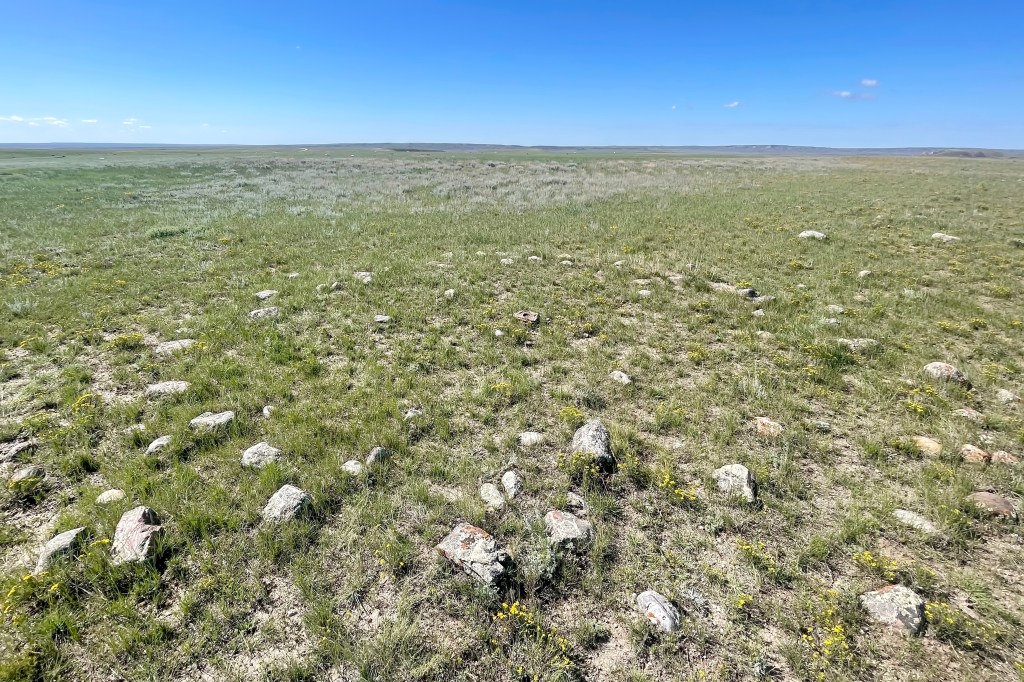
Continuing our driving tour, we stopped at several spots where interpretive panels highlighted different habitats of the ecosystem and different uses of the lands, from the remains of tipi rings used by indigenous peoples long ago to abandoned structures of former homesteads and ranches, prior to the park’s creation.


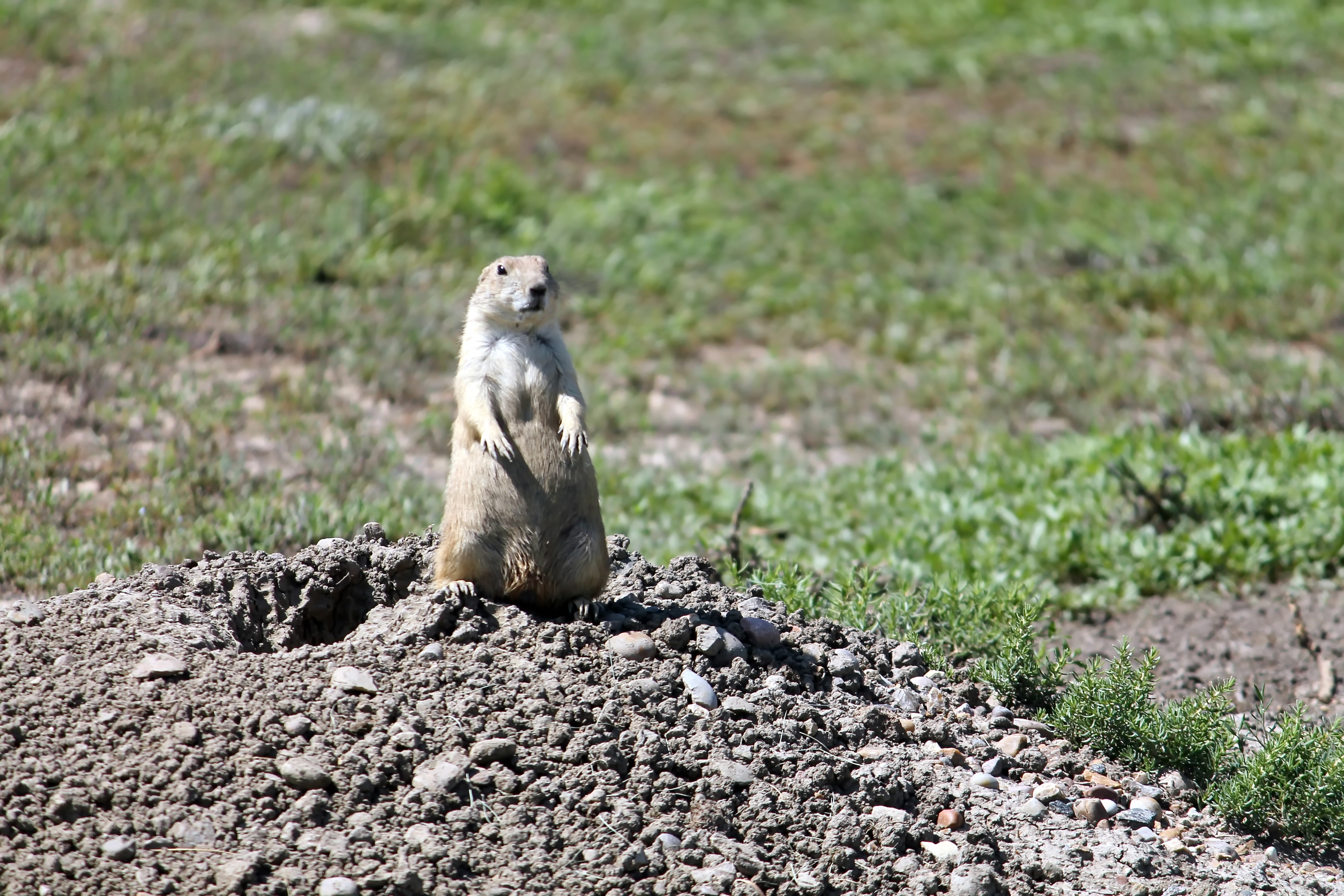
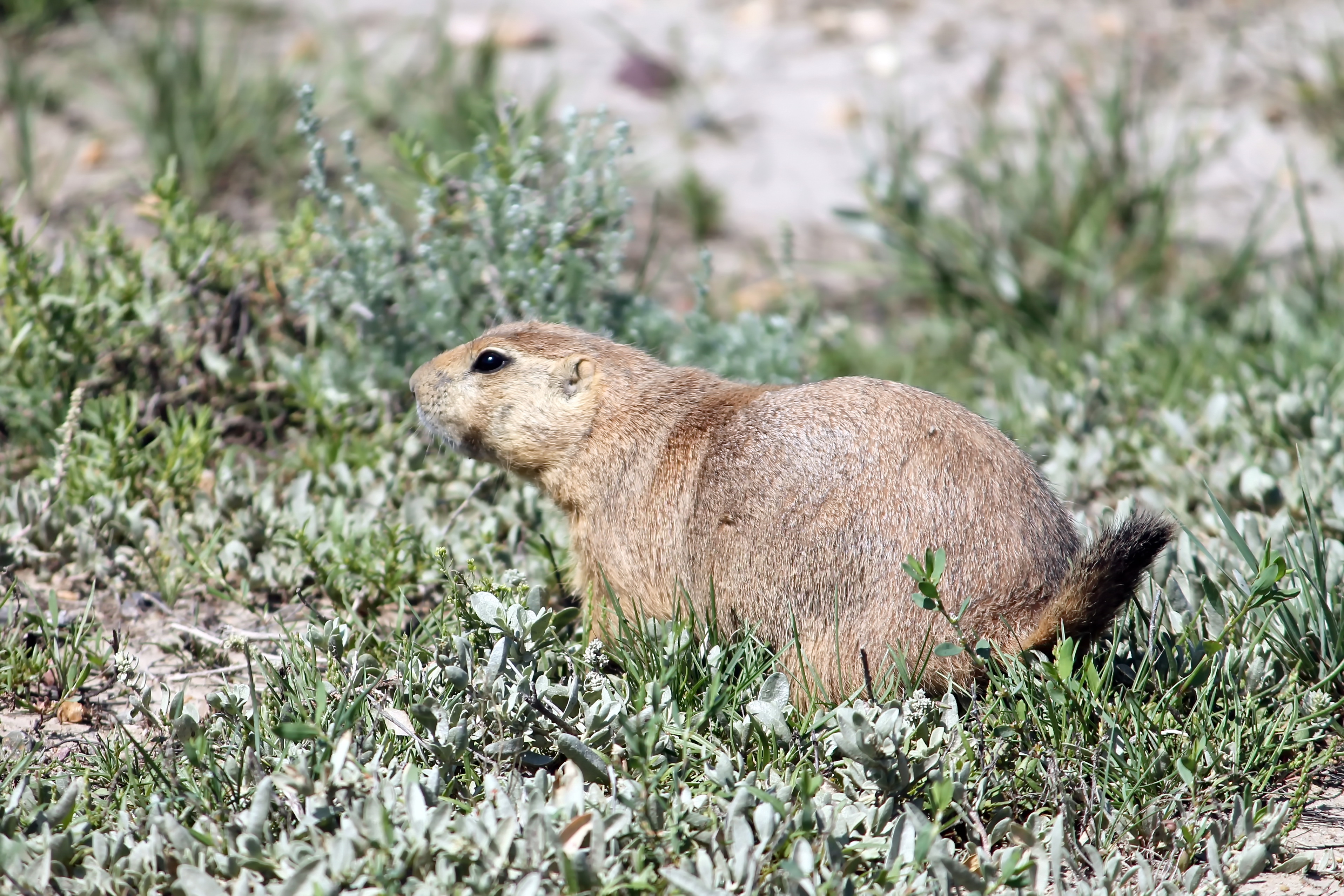
At several spots, there are colonies where the black-footed prairie dogs have created towns of interconnected burrows. Although they are endangered in Canada due to the scarcity of their remaining habitat, they are plentiful in numbers here with each of the 20 colonies supporting around 1000 animals each. The younger animals scurried around, playing and chasing each other, while the parents kept close watch from the mounds, chirping and barking warnings before vanishing underground when an unknown presence (i.e. us) approached.


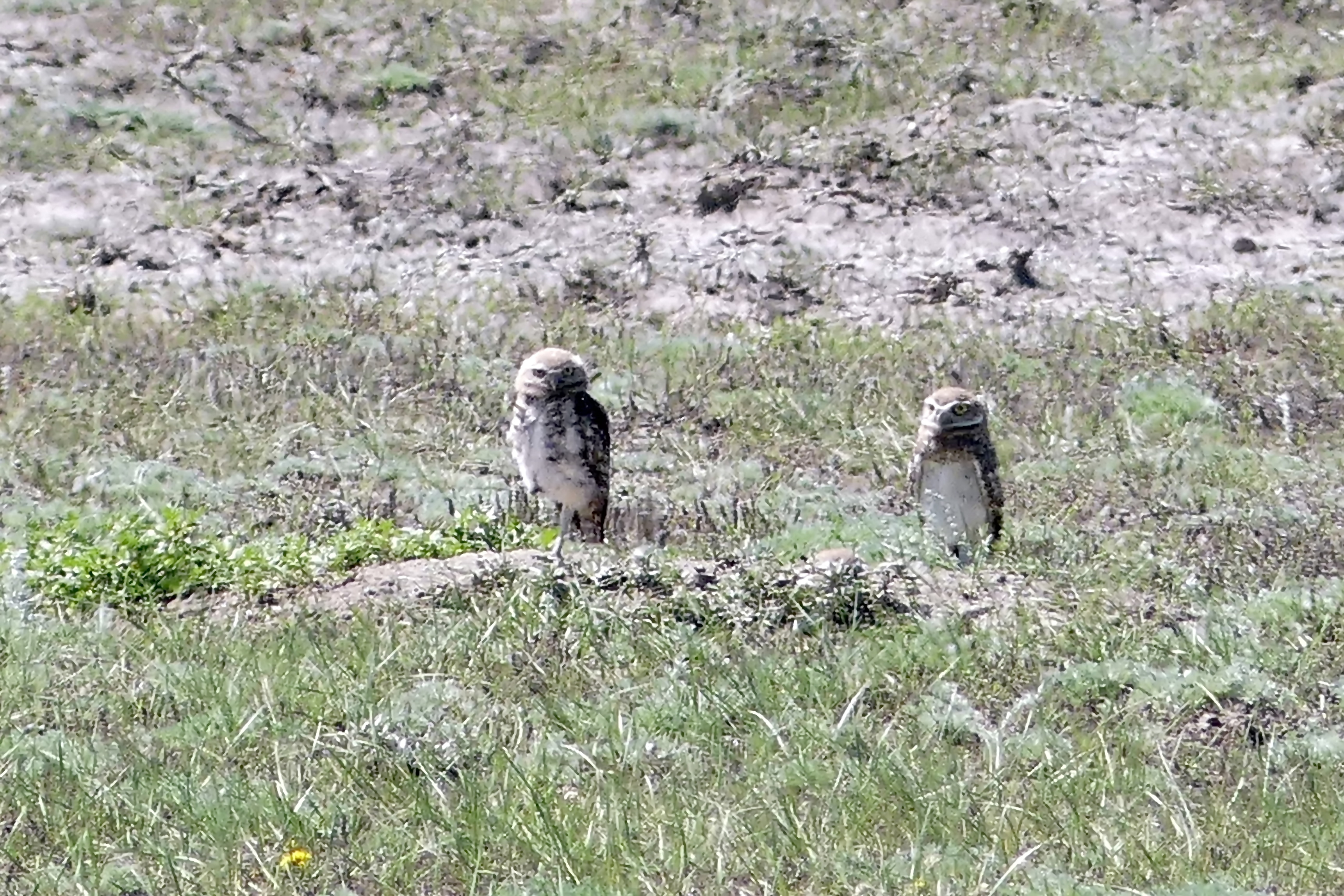
Not all the heads poking up from the burrows were prairie dogs though. On some of the mounds, we spotted burrowing owls, standing guard on their spindly long legs and scanning the horizon with their beady eyes. These small, ground-dwelling owls often nest in abandoned burrows, and due to this behaviour they are also affectionately known as ‘borrowing owls’.

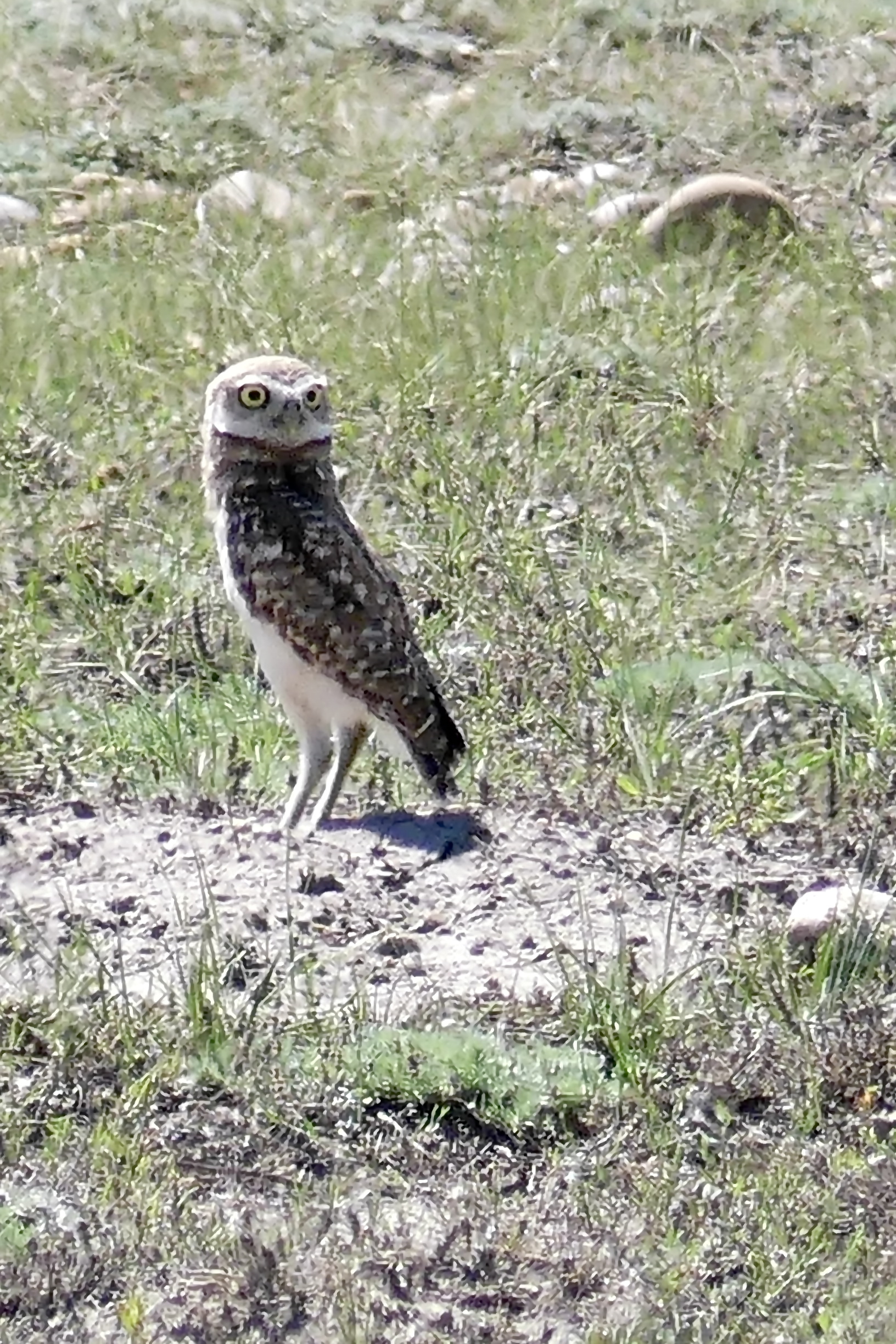
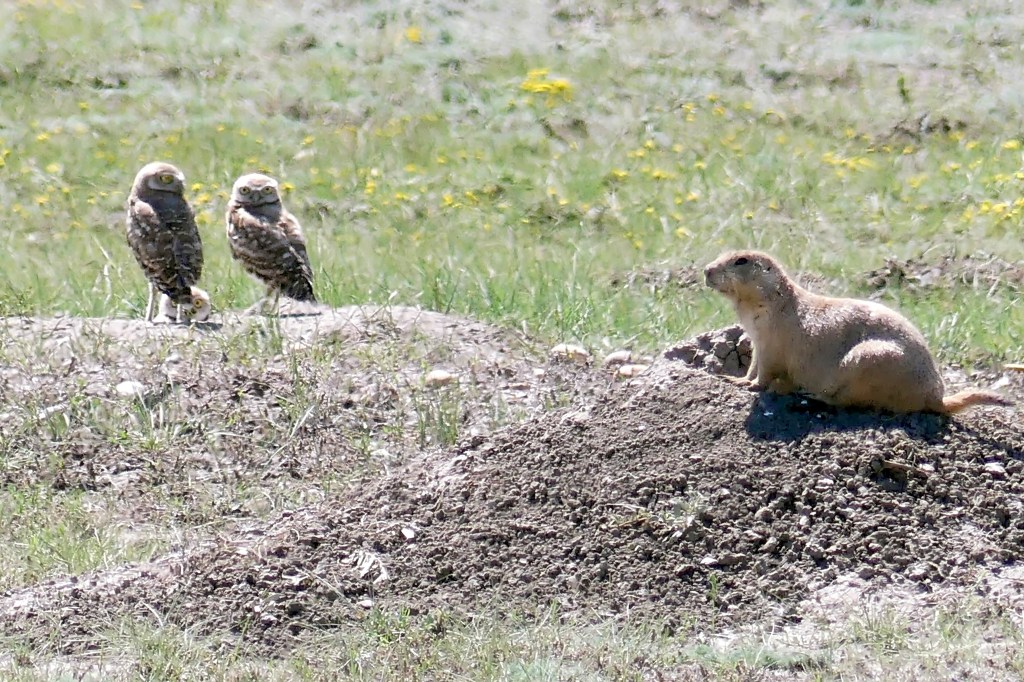
While the animals amaze, the land is equally stunning in its own right. Walking across the prairie, you notice how the grasses ripple like waves under the wind, hiding a delicate but resilient ecosystem. Every wildflower, every blade of speargrass plays its part in keeping this rare landscape alive. In an area where the average annual rainfall is only 30-35 cm (12-14 inches), this has been an uncharacteristically wet summer. The terrain, typically barren at this time of year, was awash with colour, in particular from the invasive Sweet Yellow Clover which spreads quickly and hinders native plant growth. To control this and other non-native species Parks Canada employs an ecosystem specific approach to determine the most effective habitat restoration methods.


Beyond the Ecotour Scenic Drive, there is another road that offers adventures into the remote and undeveloped wilderness. The Back Country Loop is a longer driving route that carries you further into the heart of the prairie, on a winding circuit along a dusty gravel road. Out there, it’s just you, the grasses, and the sky, with a silence so complete you almost forget the outside world exists. It’s a drive that rewards patience – every kilometer reveals subtle details, from animal tracks in the dust to hidden bursts of wildflowers in bloom.
This driving tour includes one of the most breathtaking viewpoints, called the Borderlands Lookout. Perched high above the Frenchman River Valley, it offers a sweeping panorama of the park and beyond into Montana. Throughout the full 80 kilometre loop, this was the only spot we encountered any other park visitors! From here, the prairie seems to roll on forever, unbroken until it meets the hazy horizon. It’s the kind of view that makes you pause, breathe, and realize just how immense this landscape really is.
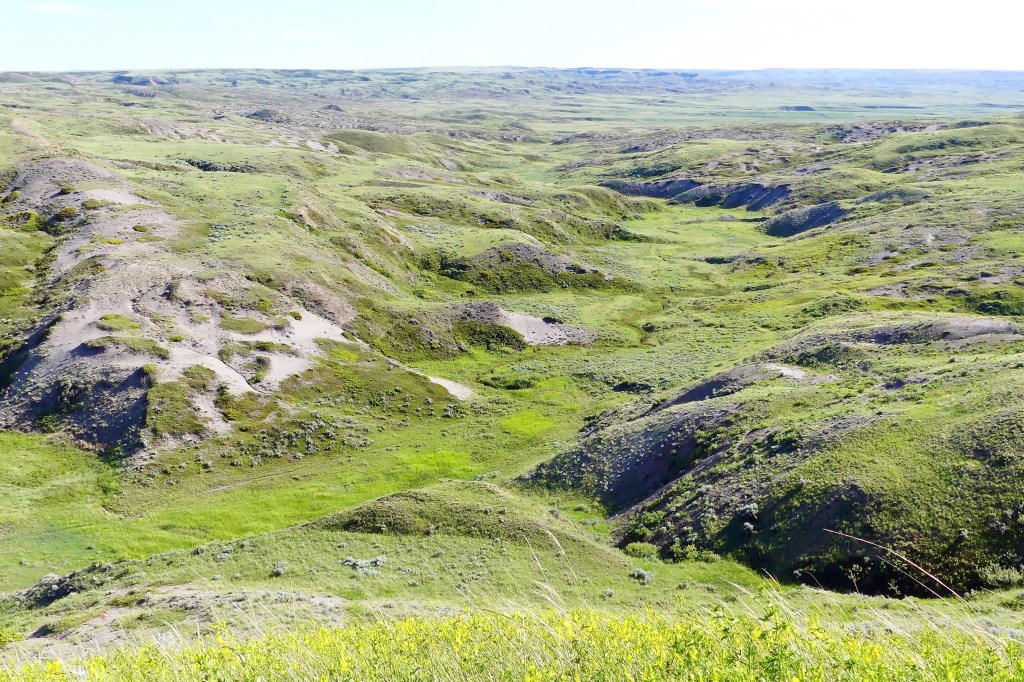
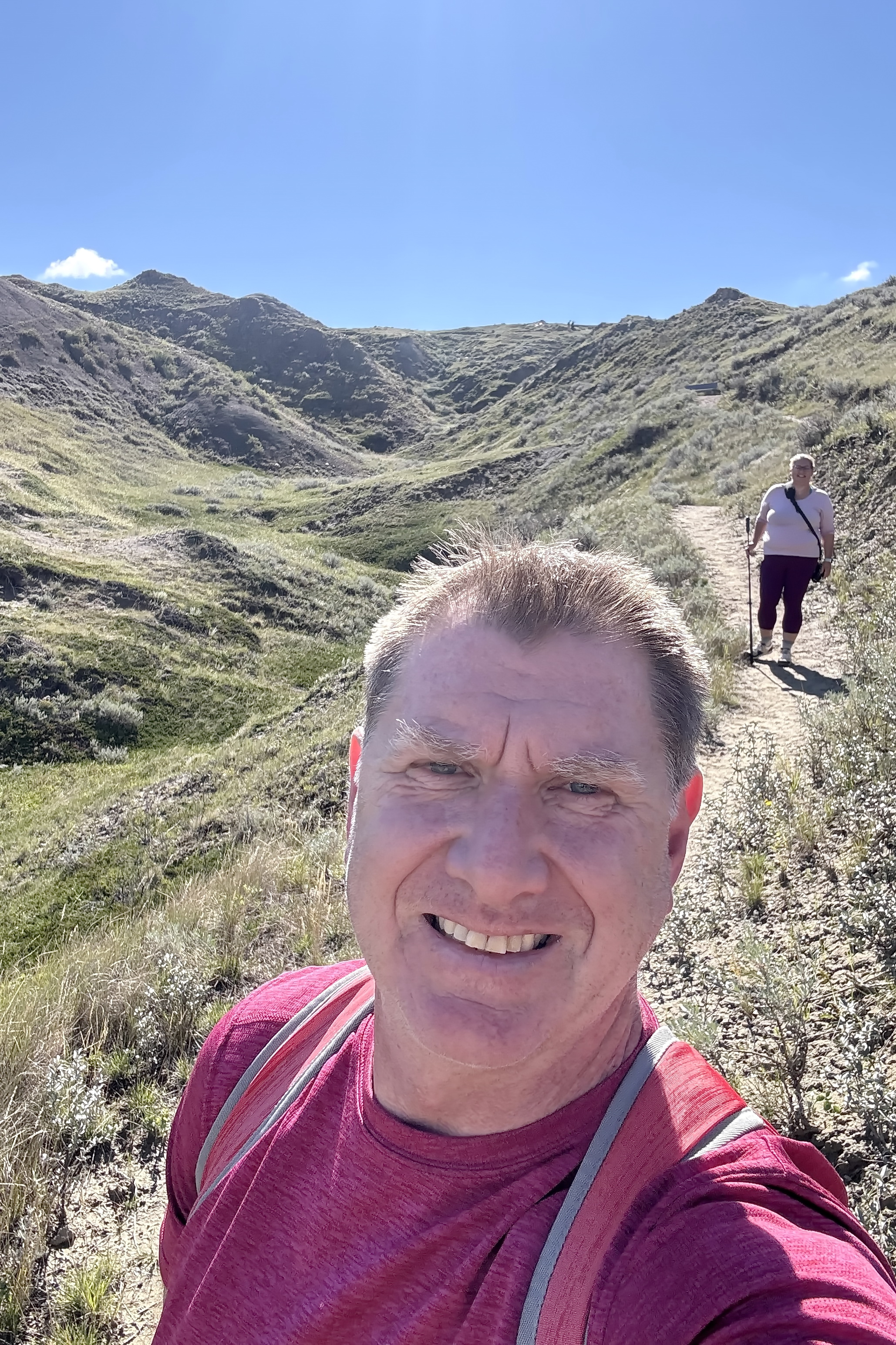
The West Block offers several other trails that showcase just how diverse this prairie landscape can be. Two of the most memorable for us were the 70 Mile Butte Trail and the Eagle Butte Trail, loops that join together to make one longer hike. Both take you up to incredible viewpoints where the prairie stretches endlessly in every direction, the rolling grasslands broken only by coulees and river valleys. Standing at the top, with the wind tugging at your hair and no sign of human development in sight, it feels like you’ve stepped back in time.
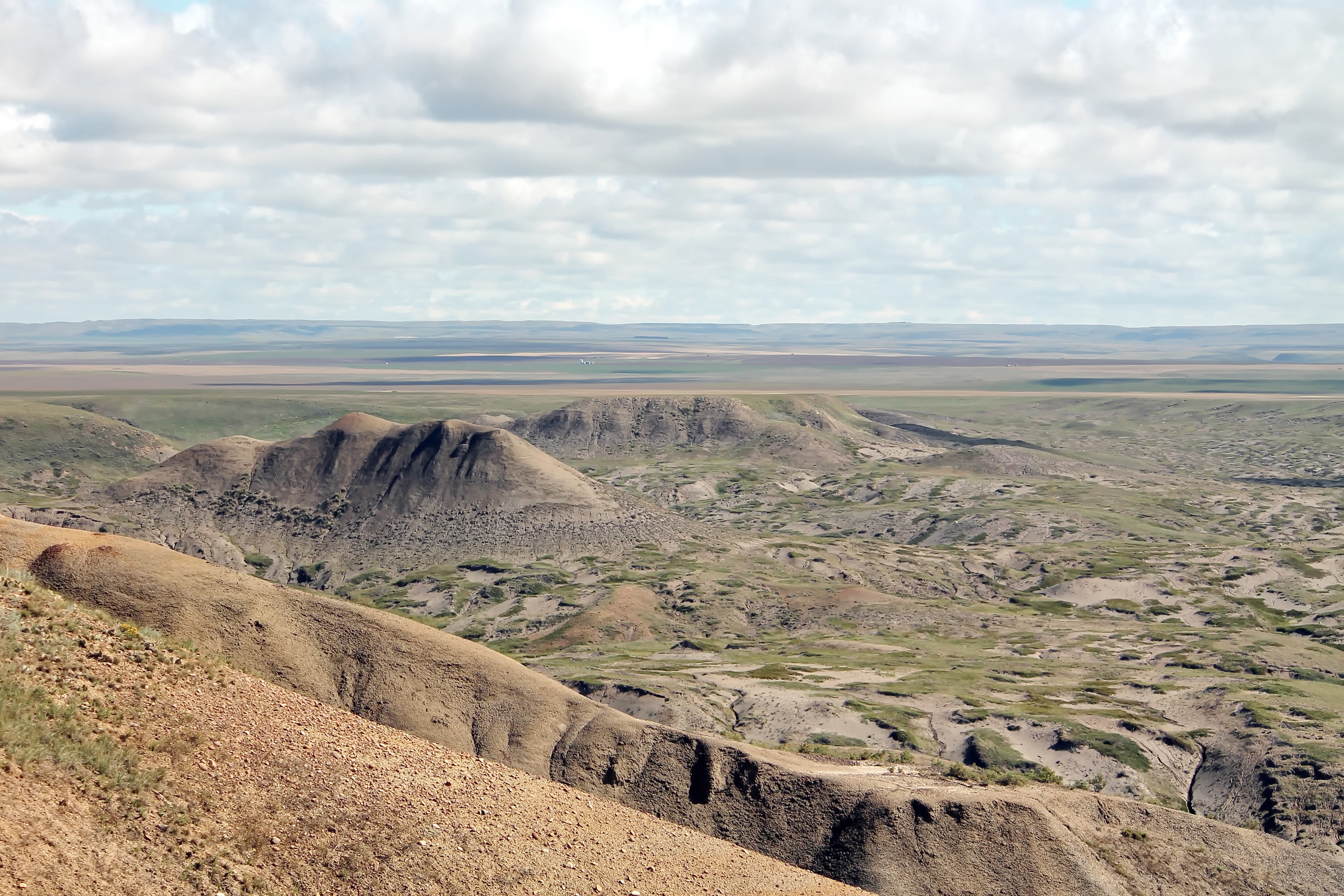
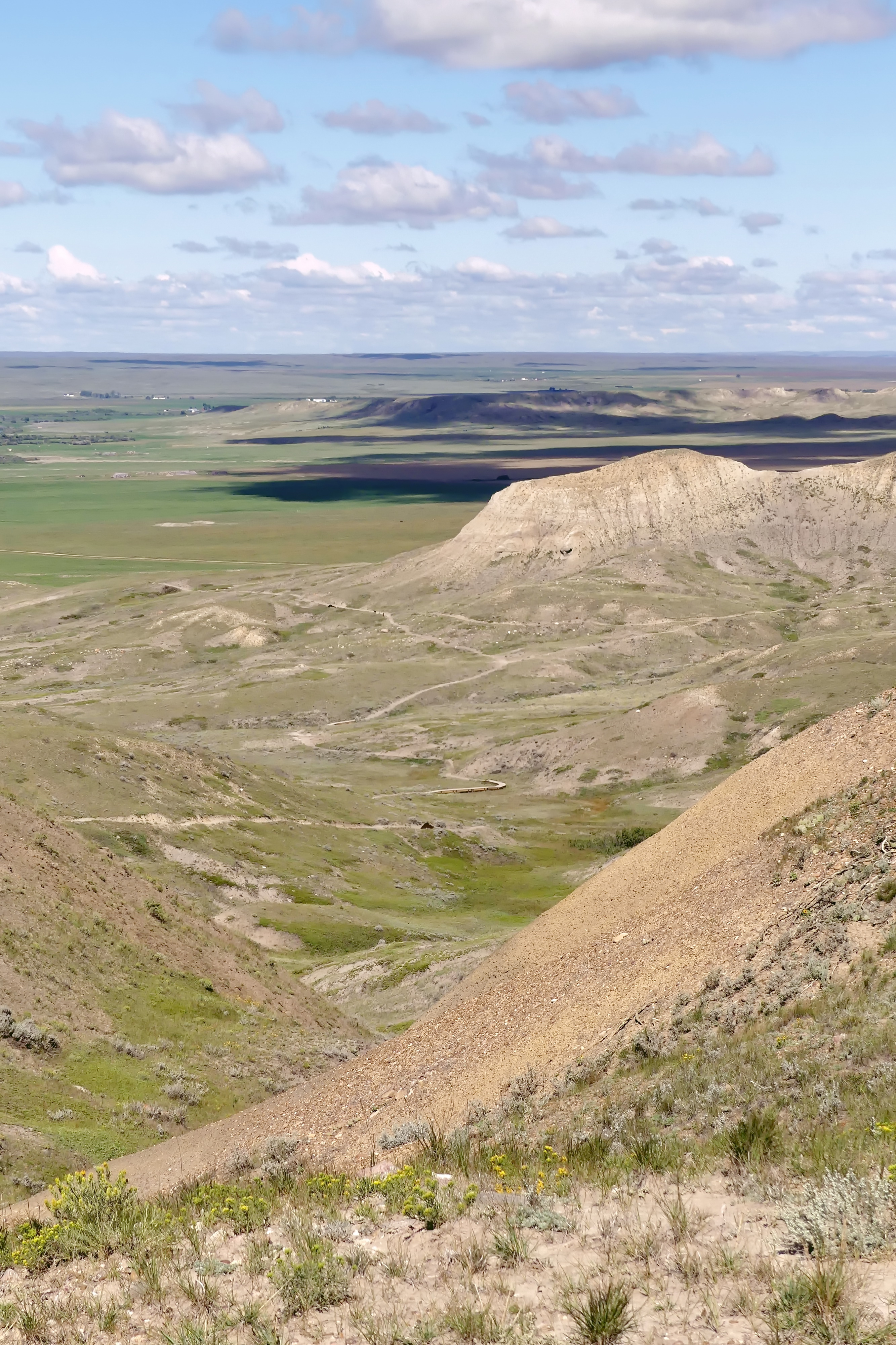
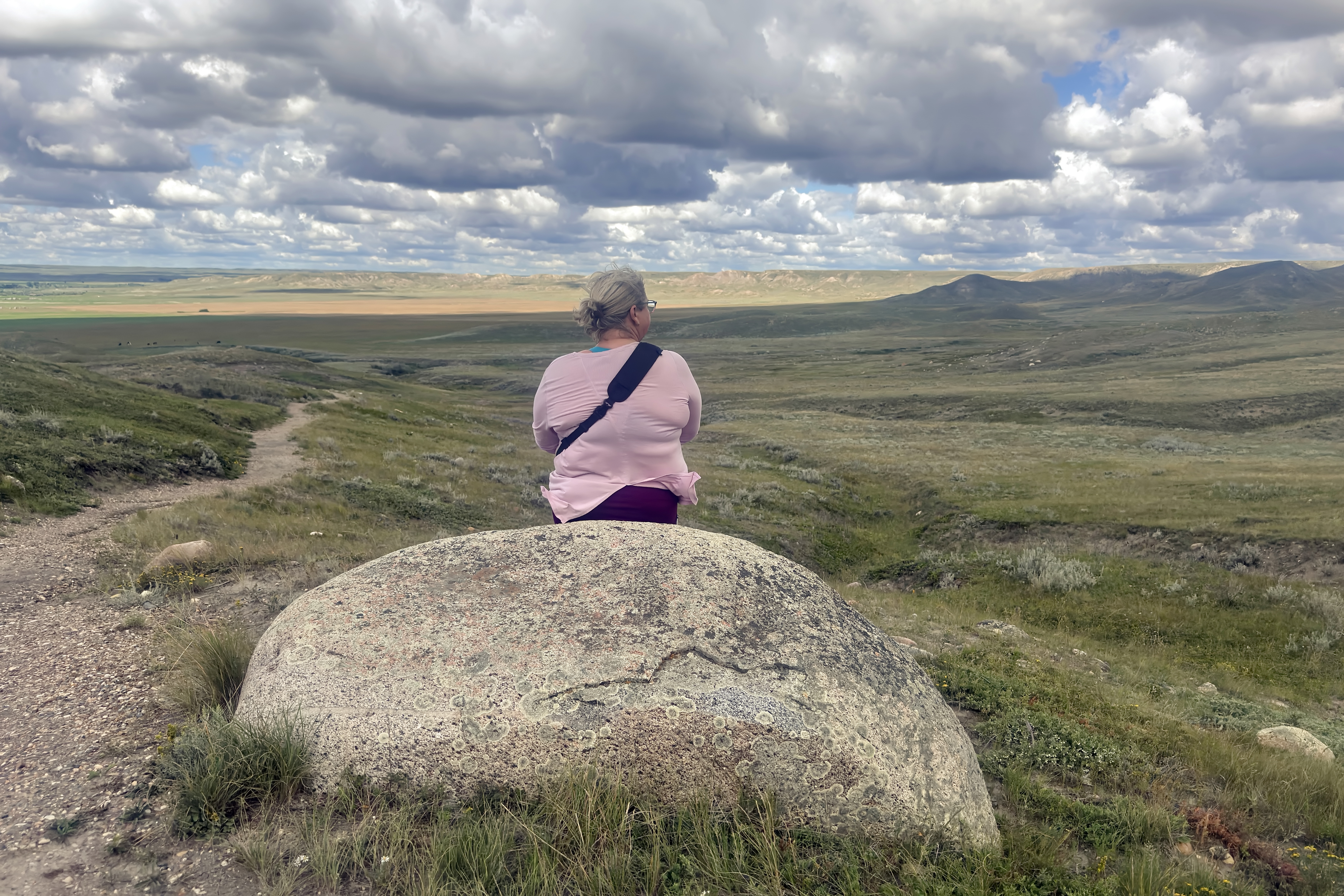
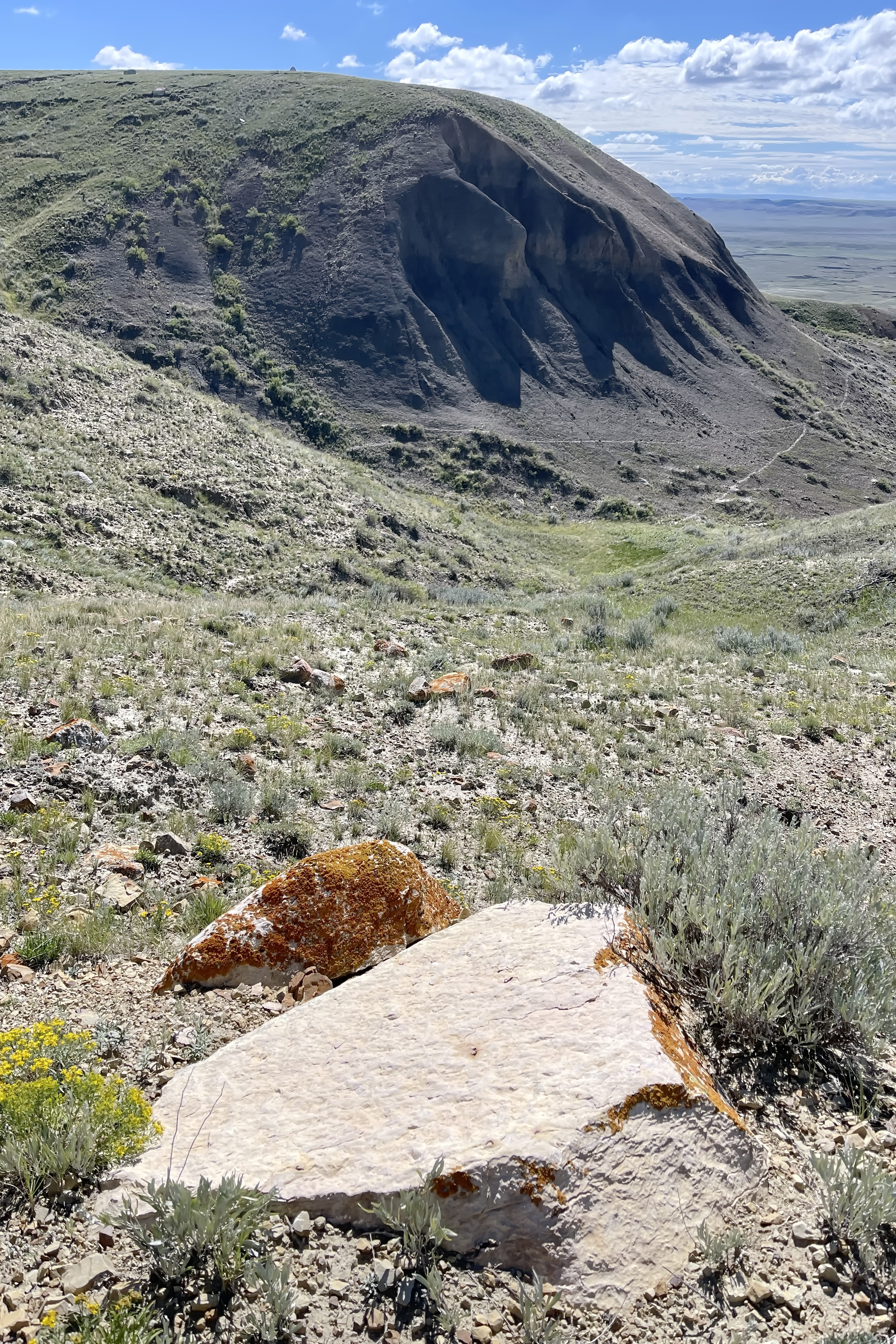

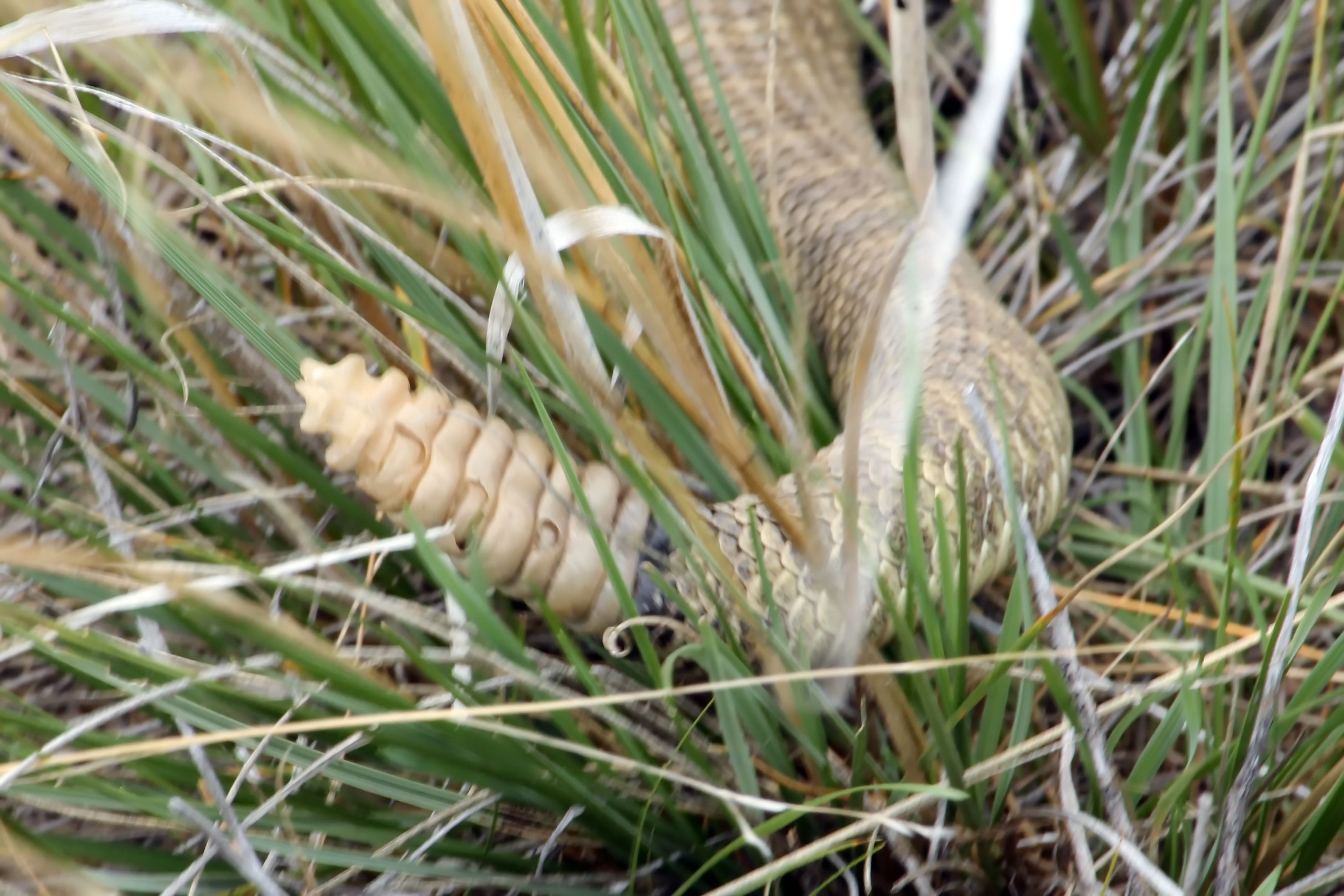
On the Eagle Butte Trail, we had one of those rare moments that makes you stop in your tracks (literally!) as we spotted a prairie rattlesnake slithering in the vegetation close to the path. Because we were upwind, the snake never noticed us and we were able to quietly and carefully watch it for several minutes as it moved through the grass, undisturbed and completely in its element. It was fascinating to see such a secretive creature going about its life, a reminder that the prairie is full of surprises if you slow down and pay attention.


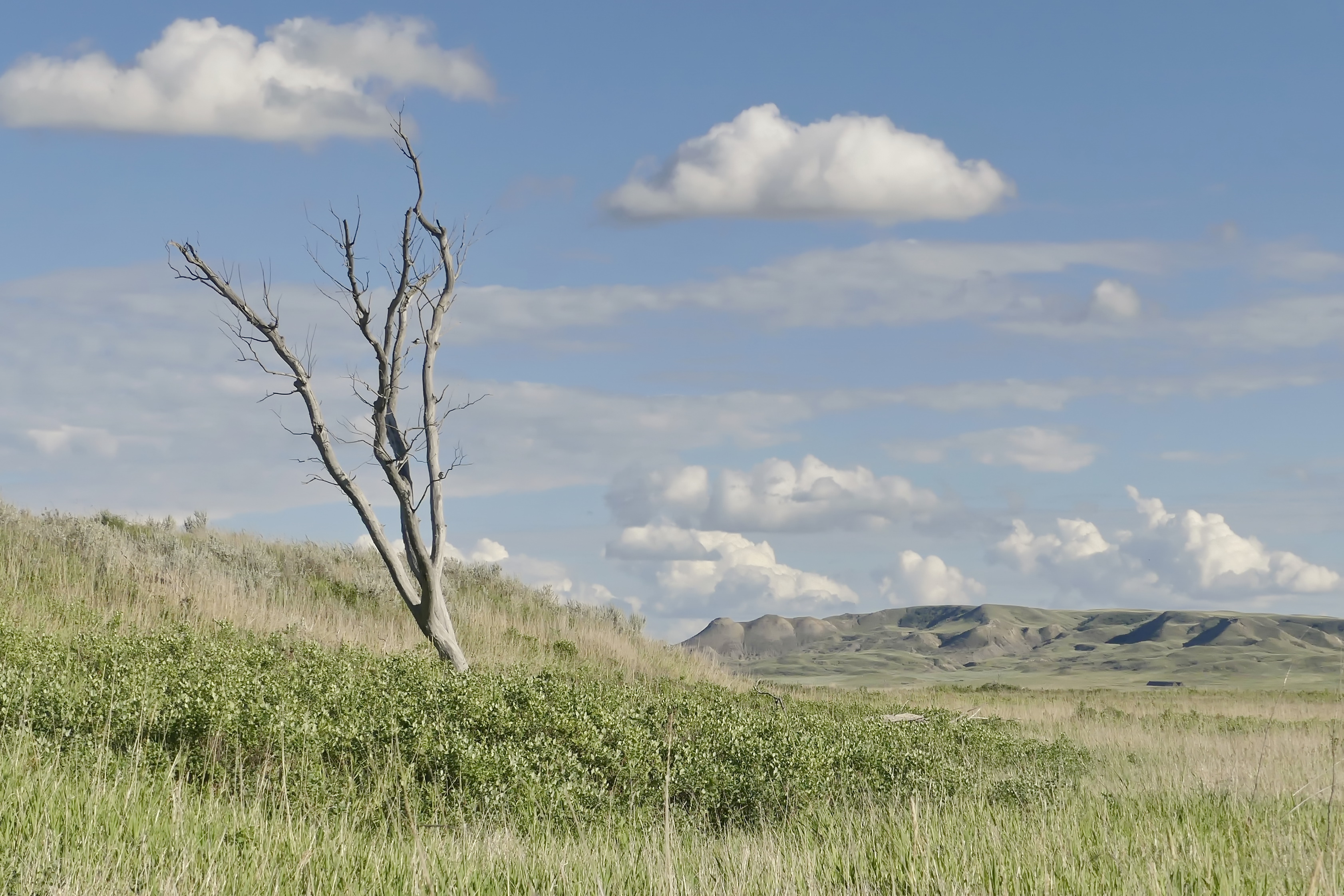
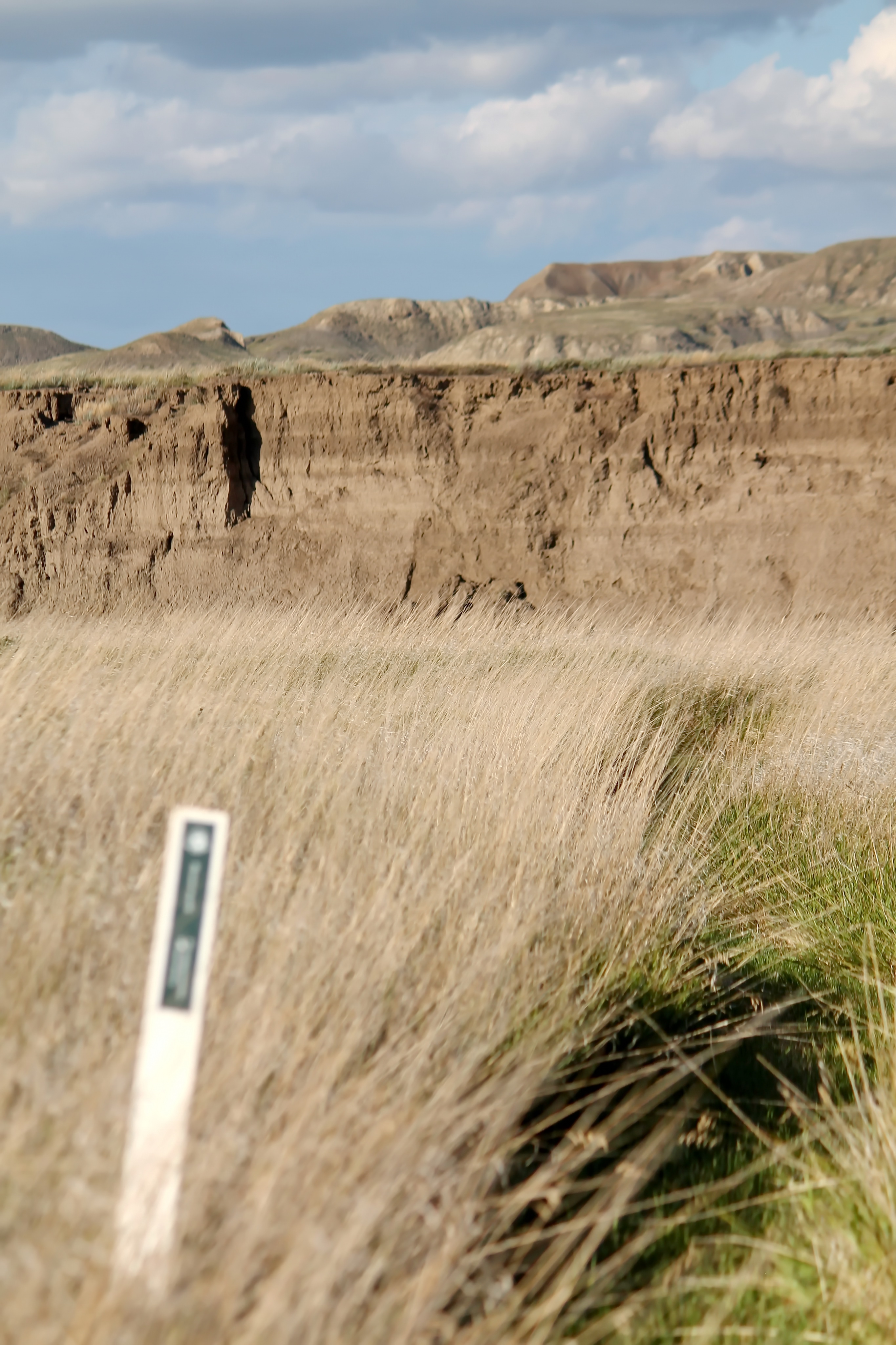
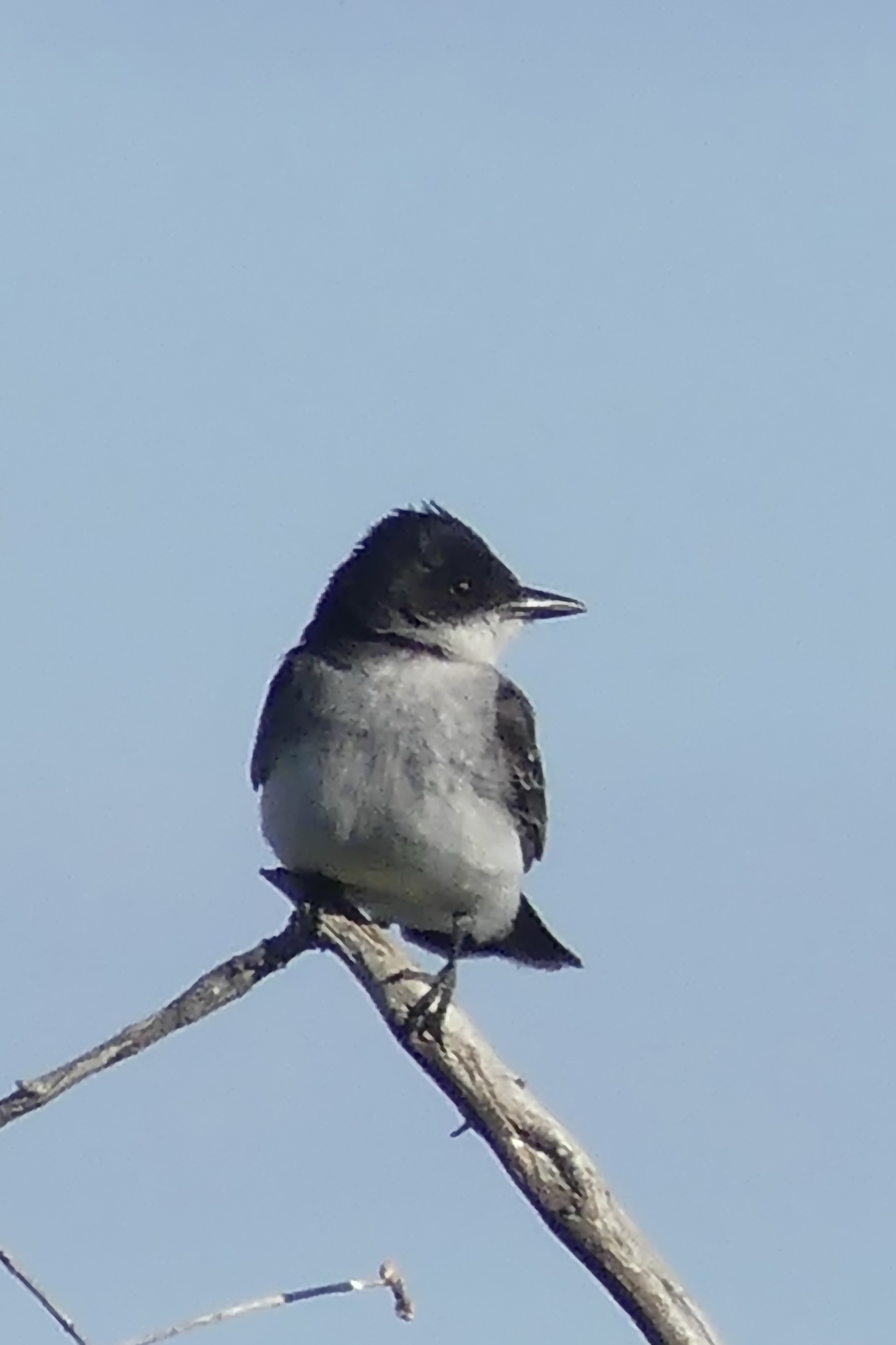
Our final acitvity was the Riverwalk Trail, an easy loop that follows the meandering Frenchman River. It’s a gentler walk compared to the buttes, but it lets you experience the park at a slower pace, noticing the wildflowers, birds, and subtle changes in the terrain along the water’s edge. The billowing grasses shimmered like silk in the wind, and the towering, sandy banks of the river dwarfed the current flow. The bleached trunk of a lone tree stood stark against the horizon and from it’s branches we were dive-bombed a few times by a territorial Eastern Kingbird as we passed by.


What makes hiking in Grasslands feel so different from other parks is the sense of freedom. While there are marked trails, visitors are actually encouraged to go off-trail and explore. There are no fences, no boardwalks keeping you contained. You can strike off across the open prairie in any direction and discover your own path. It’s a rare invitation to roam, to feel like an explorer, and to connect with the land on your own terms.
Spending several days in the West Block gave us a completely different perspective than our quick overnight visits in the past. Instead of rushing through, we had the time to slow down, to watch the light shift across the valley, to notice the wildlife that only reveals itself when you linger. Nights brought skies so dark and full of stars that it felt like sleeping under an endless galaxy. Days stretched long and quiet, filled with the sound of wind in the grass and the occasional call of a meadowlark.
That blend of wild freedom and fragile beauty made our time in the West Block unforgettable. It’s not a place that tries to entertain you; it invites you to listen, to wander, and to rediscover the simple wonder of being present in nature. Although we did a lot here, we felt like we had only just scratched the surface, yet we carried with us a deeper connection to the prairie than ever before.
The story continues… next week we’ll take you to the East Block of Grasslands National Park.

 Mapgirl Adventures
Leave a comment