After several days in the West Block, we packed up and set out for the East Block, about a two-hour drive away. The drive itself is a quiet reminder of how vast and varied the prairie can be, passing through small hamlets surrounded by ranchland and farmland while hinting at elements of a more dramatic landscape over the horizon.

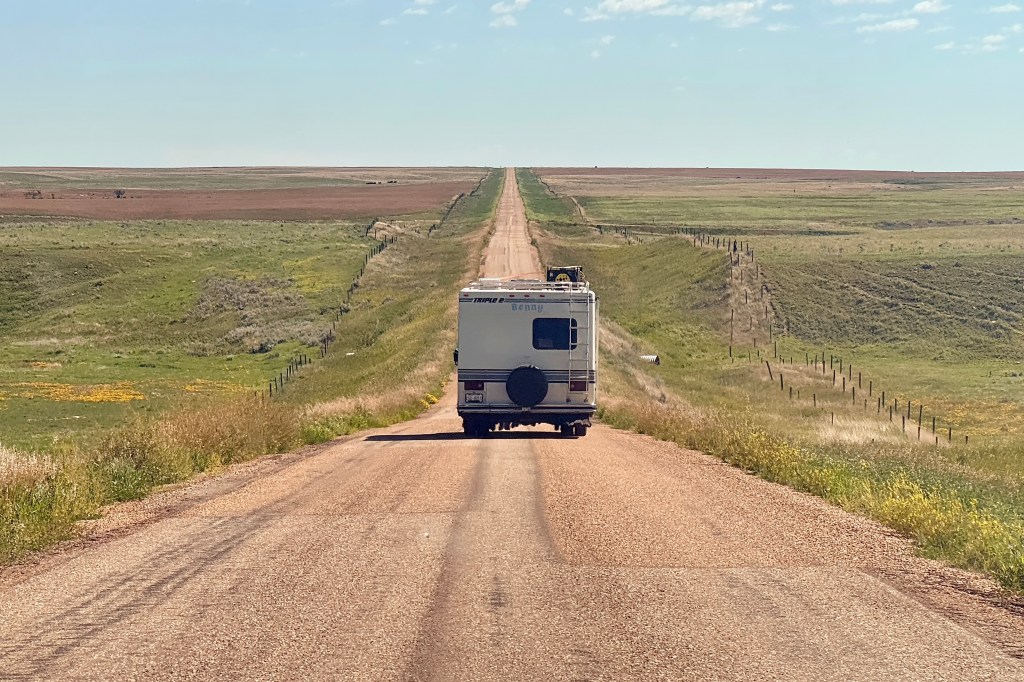
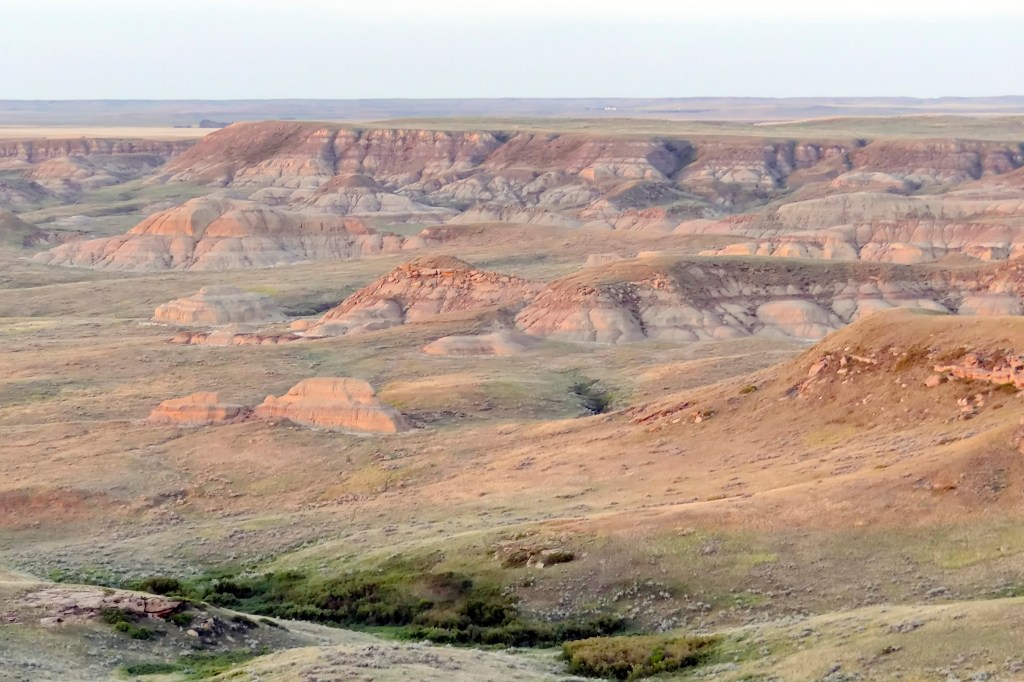
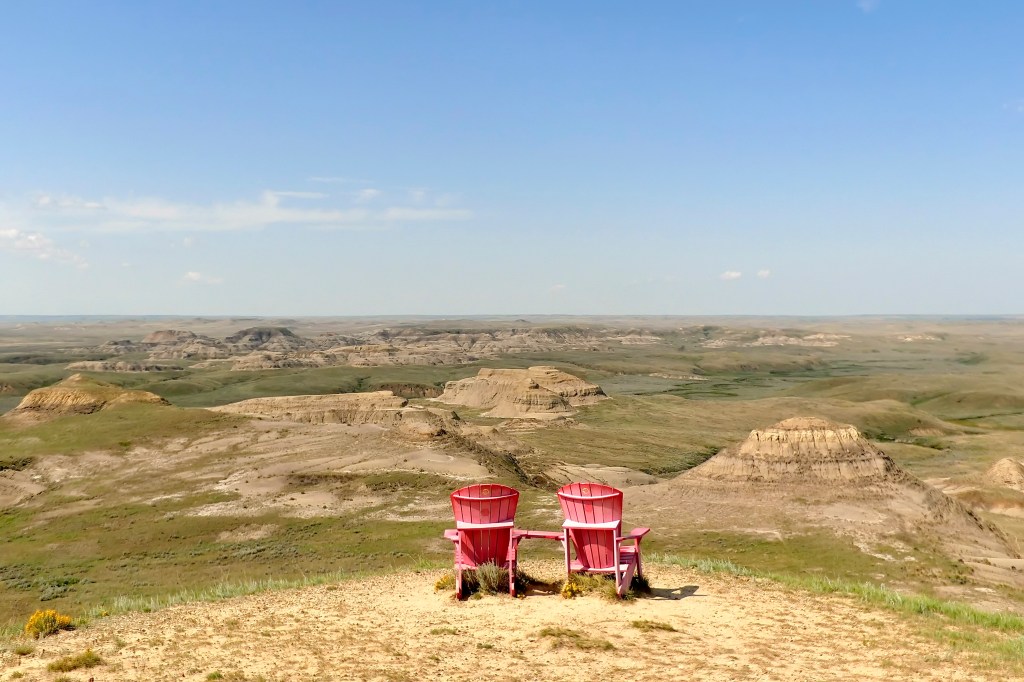
As we arrived at the East Block, it was clear that this part of Grasslands National Park has a personality all its own. The road dipped into a coulee beside Rock Creek and offered views of terrain dramatically sculpted by erosion, with rugged badlands, hoodoos, and deep valleys that hint at a time long before humans walked these plains.
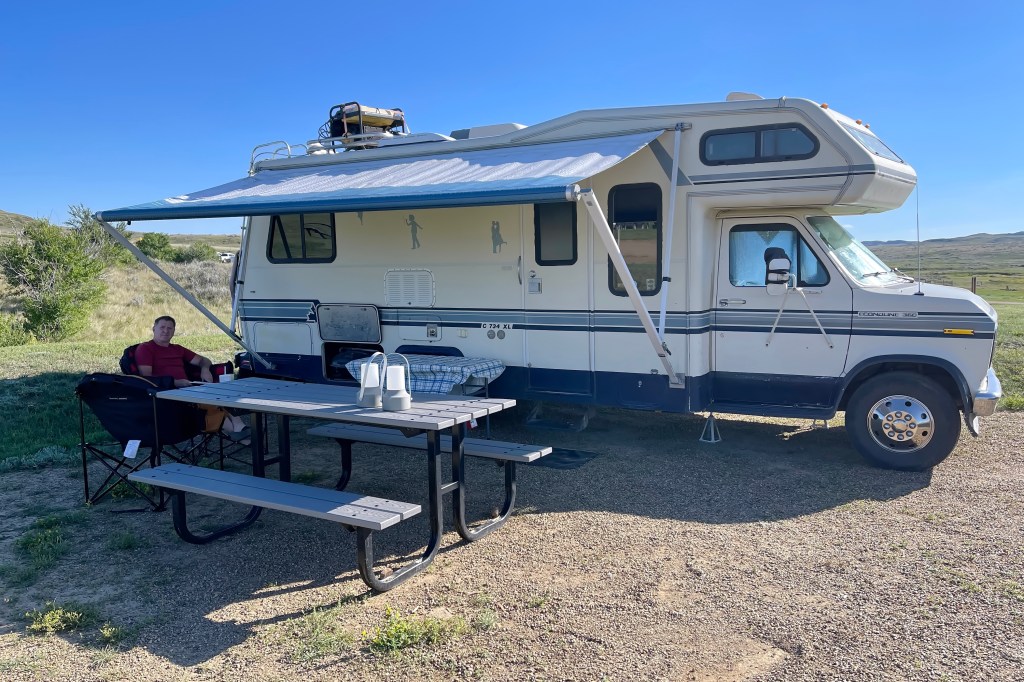
We set up camp at the Rock Creek Campground, enjoying the convenience of a campsite with power and drinking water. It made our stay comfortable while still being fully immersed in the wild beauty of the surrounding badlands, although the location did leave us exposed to the strong prevailing winds. Thankfully the breeze helped keep us cool as well as keeping some, but unfortunately not all, of the pesky mosquitoes at bay.
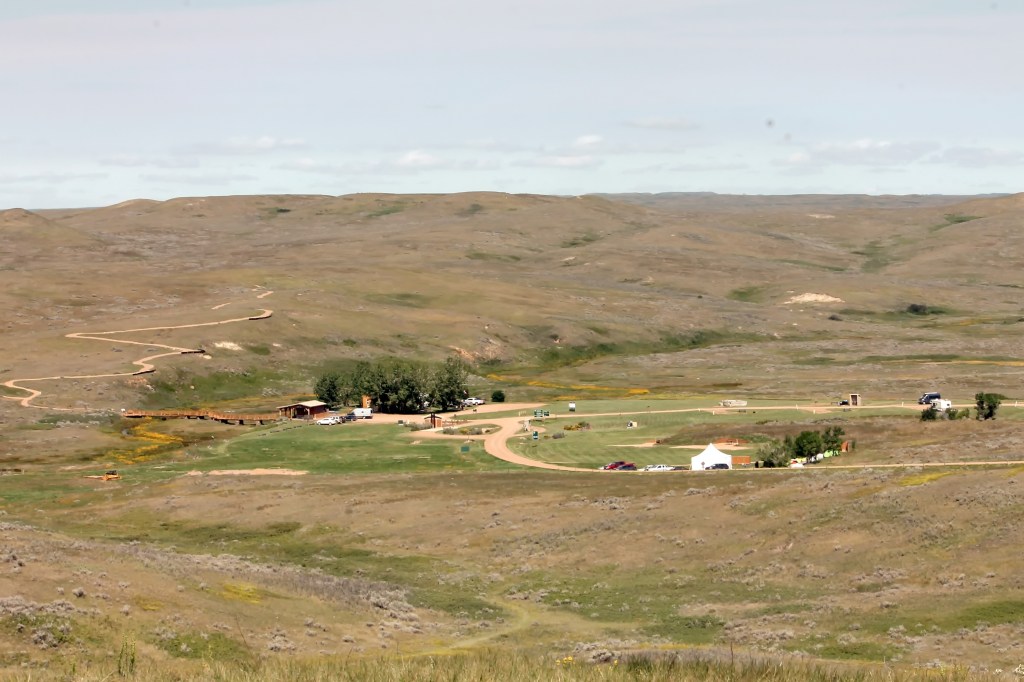
A highlight of the East Block was the guided walk called ’70 Million Years in 60 Minutes,’ and like the guided walk we stumbled upon in the West Block, it was truly worth it. The walk takes you down into the dry coulees on the valley floor, with our knowledgeable interpreter Brenda sharing stories about the region’s geography, the forces that shaped the badlands, and the fascinating discoveries of dinosaur bones embedded in the rocks.
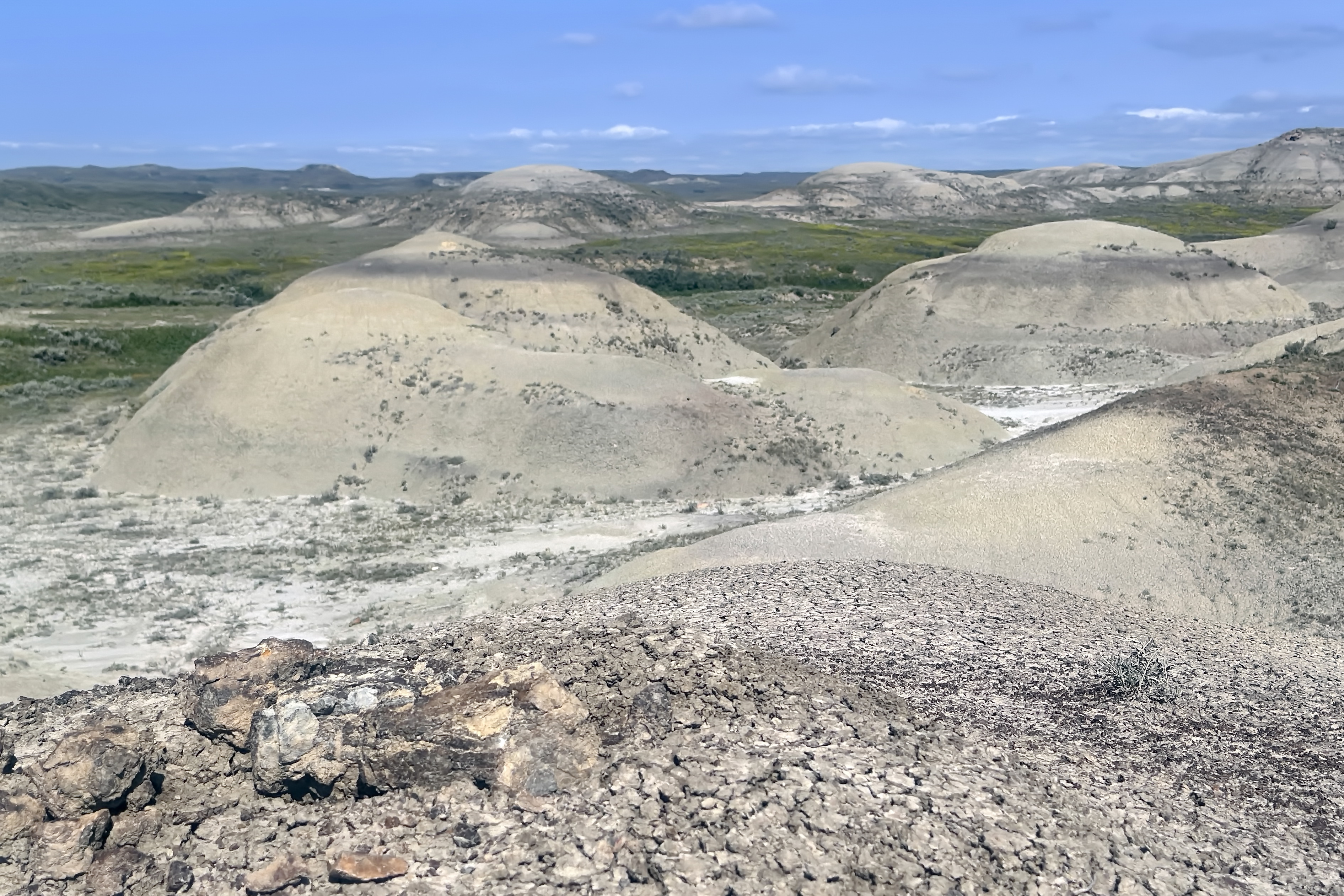
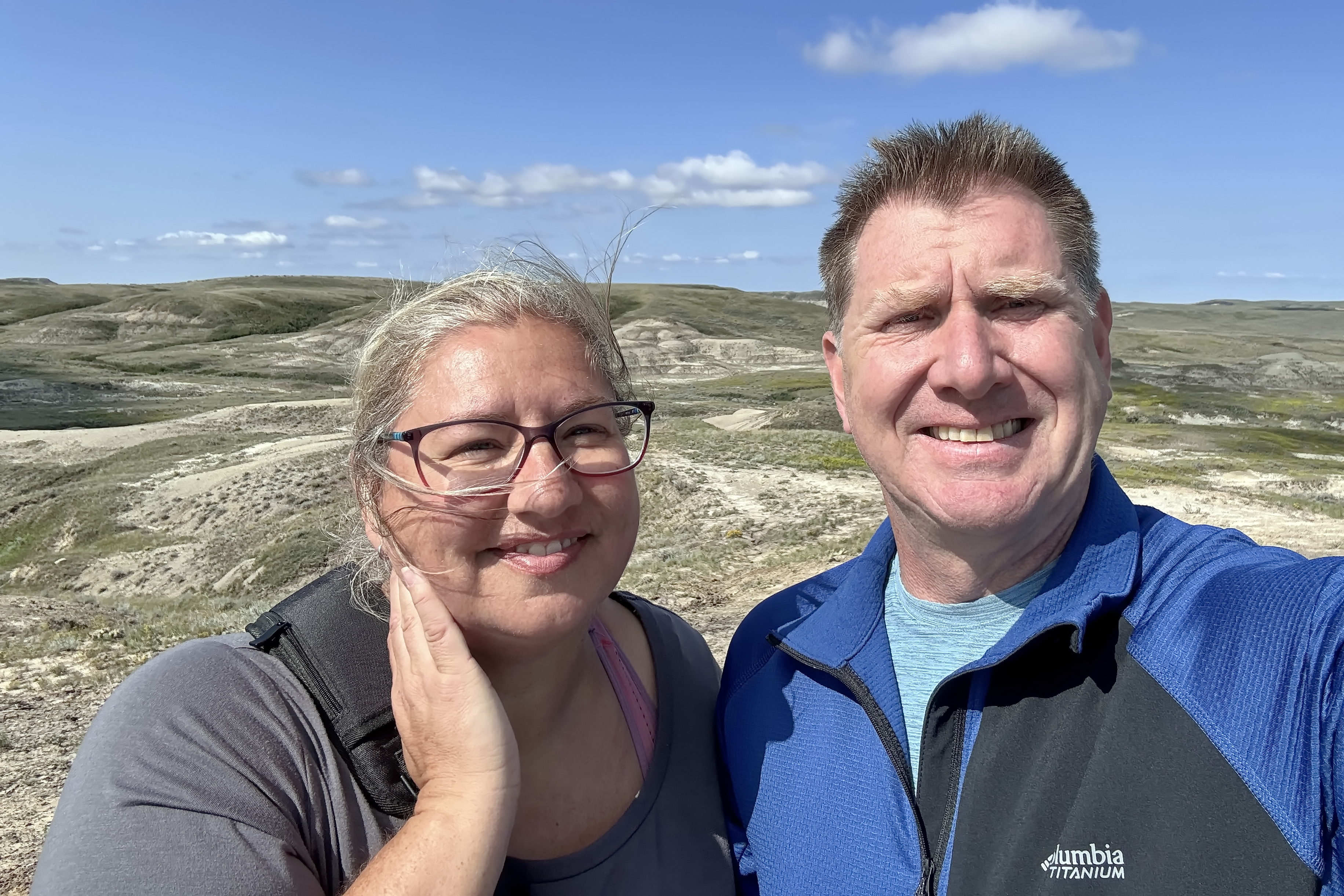
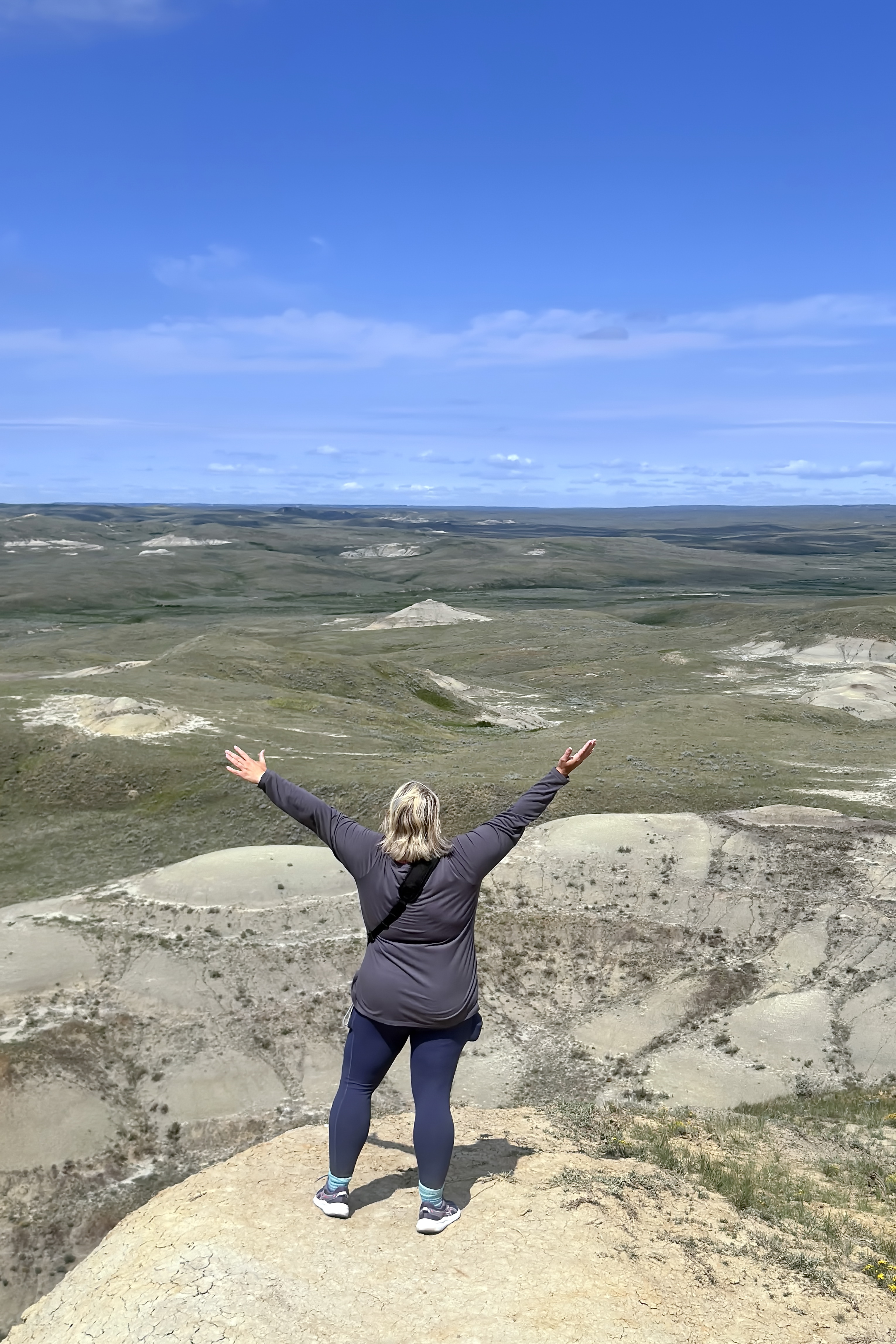
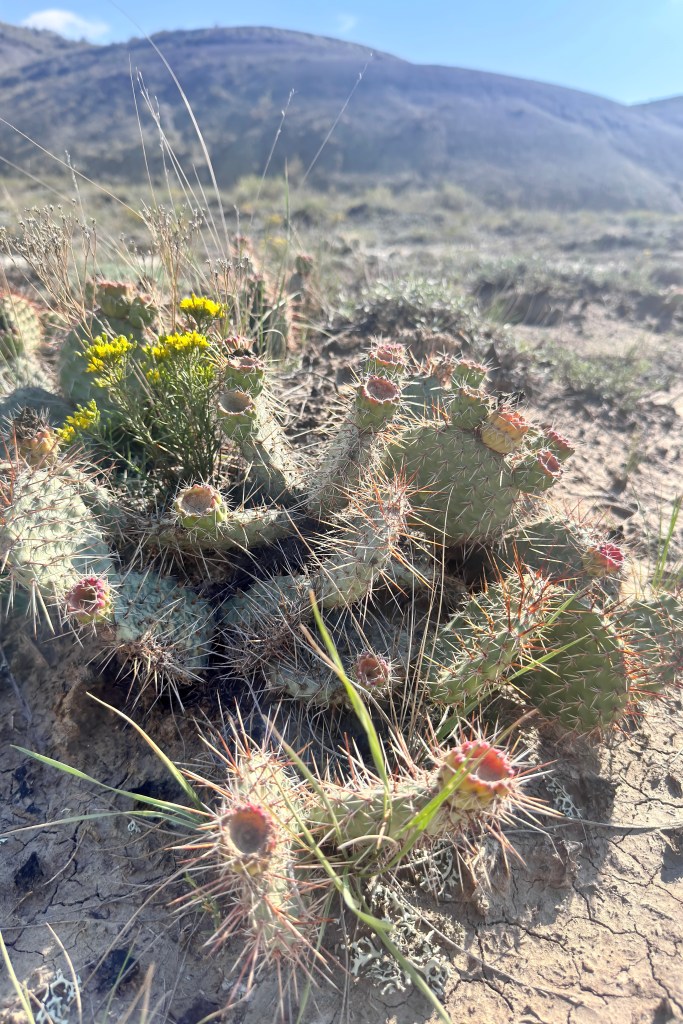
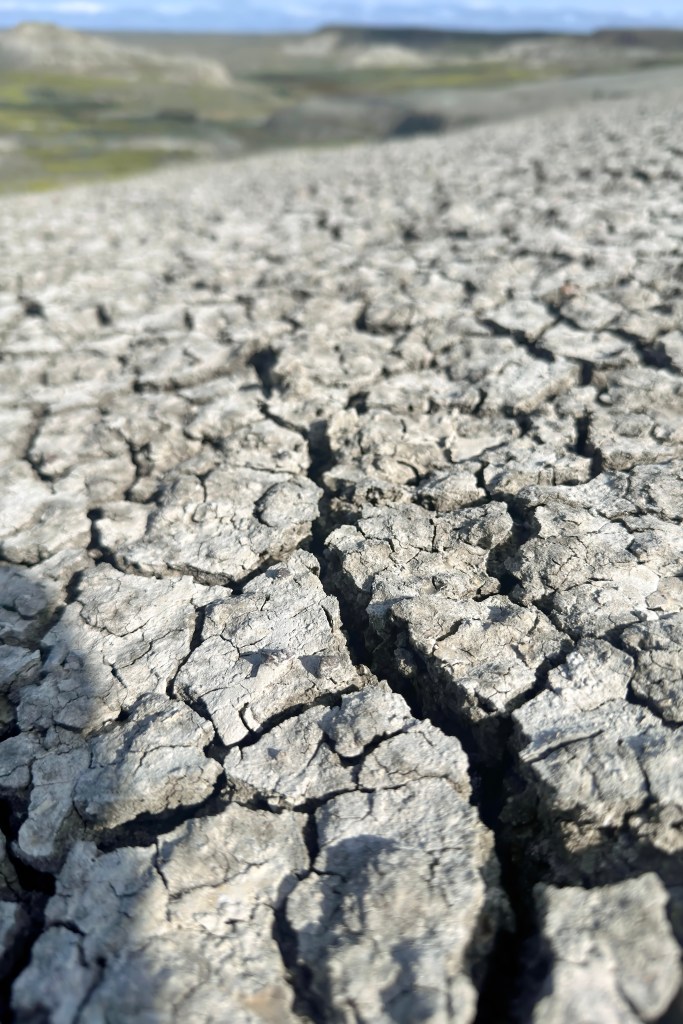
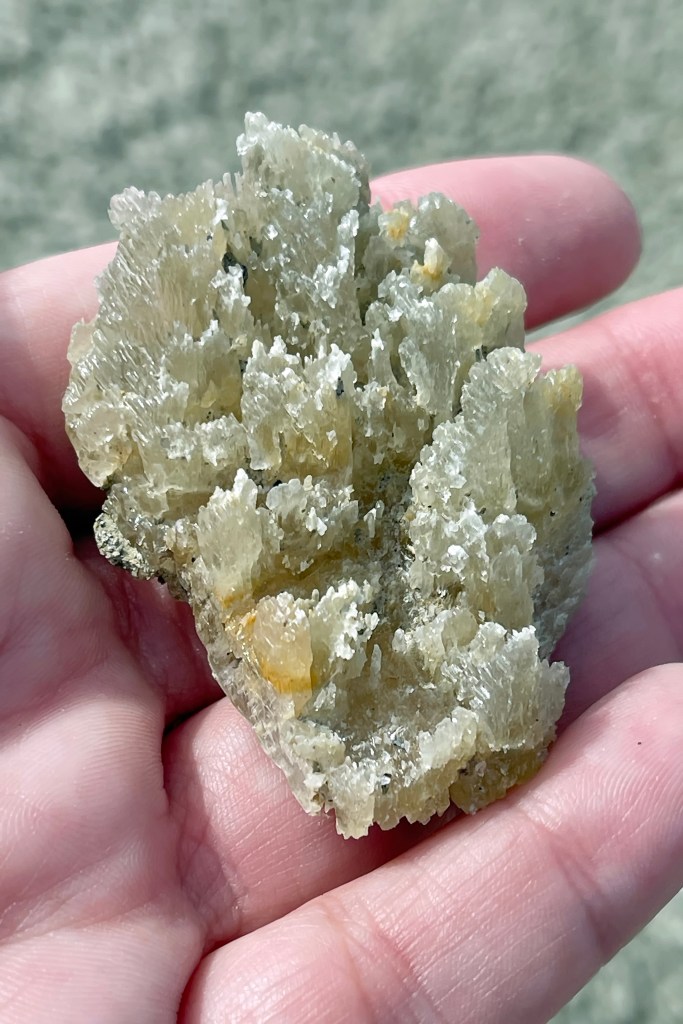
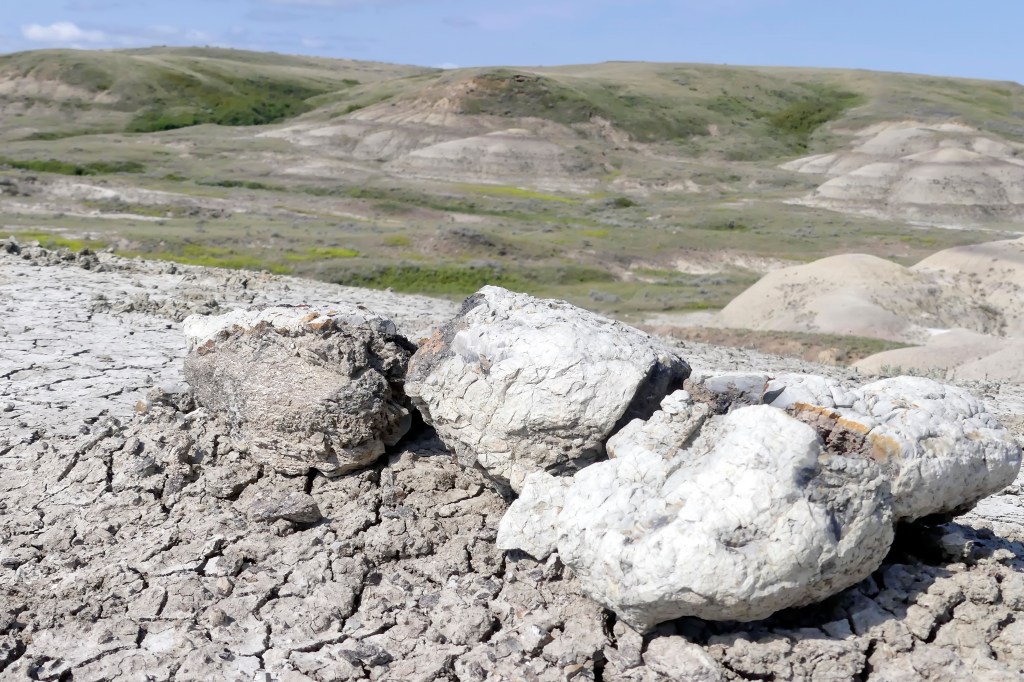
Walking amongst the buttes and badlands, you really feel the layers of history beneath your feet. The hoodoos (tall, thin spires of rock carved by wind and water) stand as silent witnesses to millions of years of geological change. Pockets of sand eroded and blown from the sedimentary rocks were interspersed with sprigs of sagebrush and thorny cacti, and the dried-out and cracked bentonite clay was sprinkled with glistening chunks of selenite.
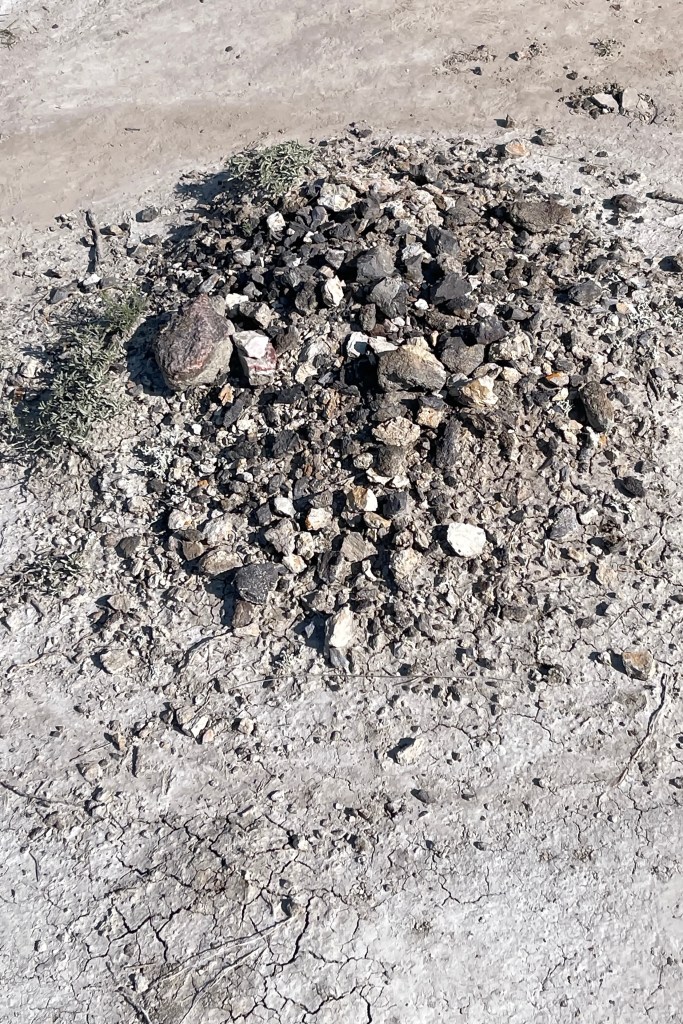
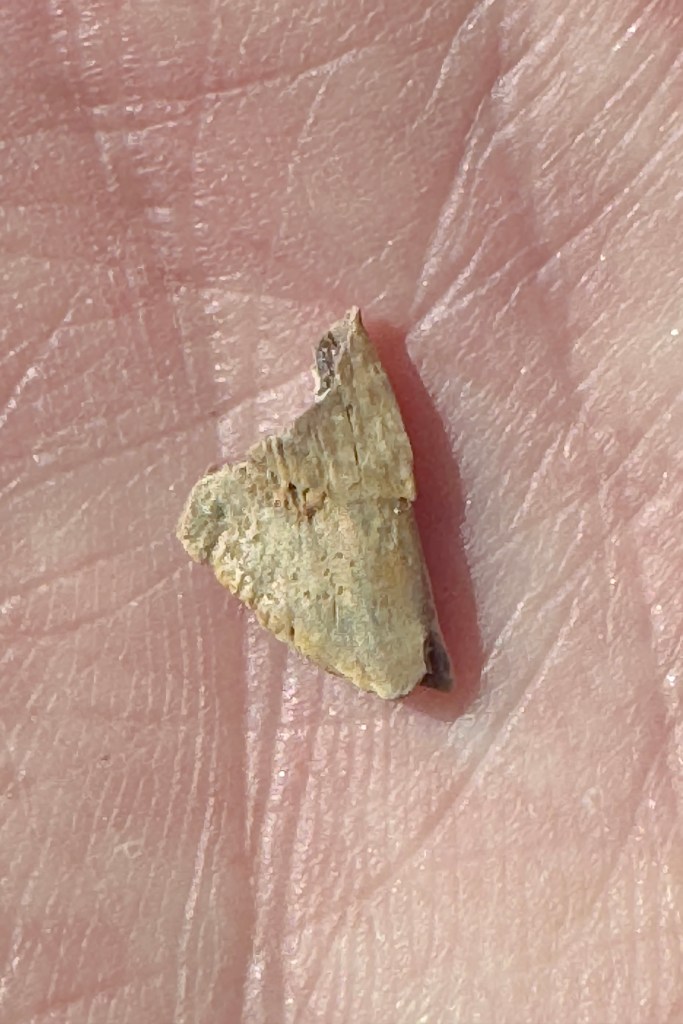
Our interpreter showed us fragments of dinosaur bones and explained how Rock Creek carved its path through these ancient sediments, preserving secrets of a prehistoric world. On top of one of the bluffs there was a large Triceratops bone, exposed to the elements, and on the valley floor there was a micro-site with shell fragments from various species of turtle, fish scales, and several fossilized dinosaur teeth. It’s one thing to read about it, but seeing the land and imagining creatures that lived here 70 million years ago brings the story to life in a way no textbook ever could.
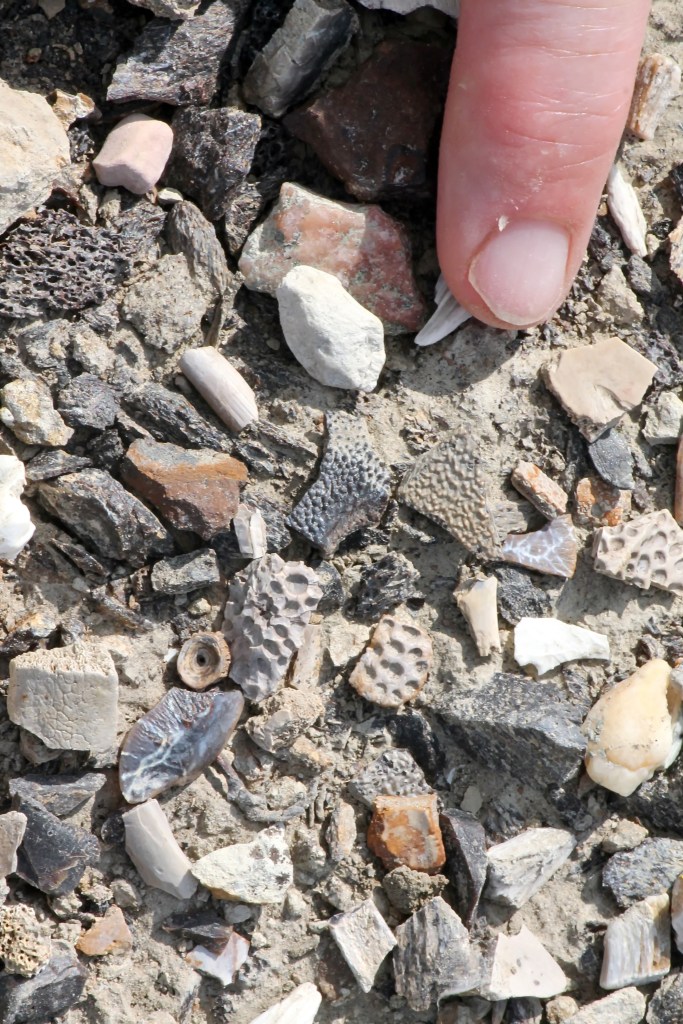
Although we didn’t sign up ourselves, there is also an amazing annual event called Fossil Fever. This week-long educational program lets park visitors join paleontologists in the field to help excavate dinosaur fossils. Each evening, attendees participate in fossil talks where paleontologists and paleontology students share fascinating insights from their studies. One memorable talk by Dr. Emily Bamforth pointed out that Saskatchewan is the only province in Canada with T. Rex fossils, including the largest known specimen, affectionately nicknamed Scotty, found just outside the village of Eastend in southeast Saskatchewan. It’s the kind of experience that brings the prehistoric world vividly to life and makes the East Block a must-visit for anyone curious about dinosaurs and geology.
One of our most memorable adventures in the East Block was the Valley of 1000 Devils Trail, a 10 km hike that begins right at Rock Creek Campground and winds deep into the heart of the badlands. We started our trek early to make the most of the cool morning air and avoid the hot midday sun.
From the very first steps, the landscape captivated us. Initially the trail rises to the far side of the valley from the campground, then meanders across open prairie to reach the far side of Hellfire Creek.
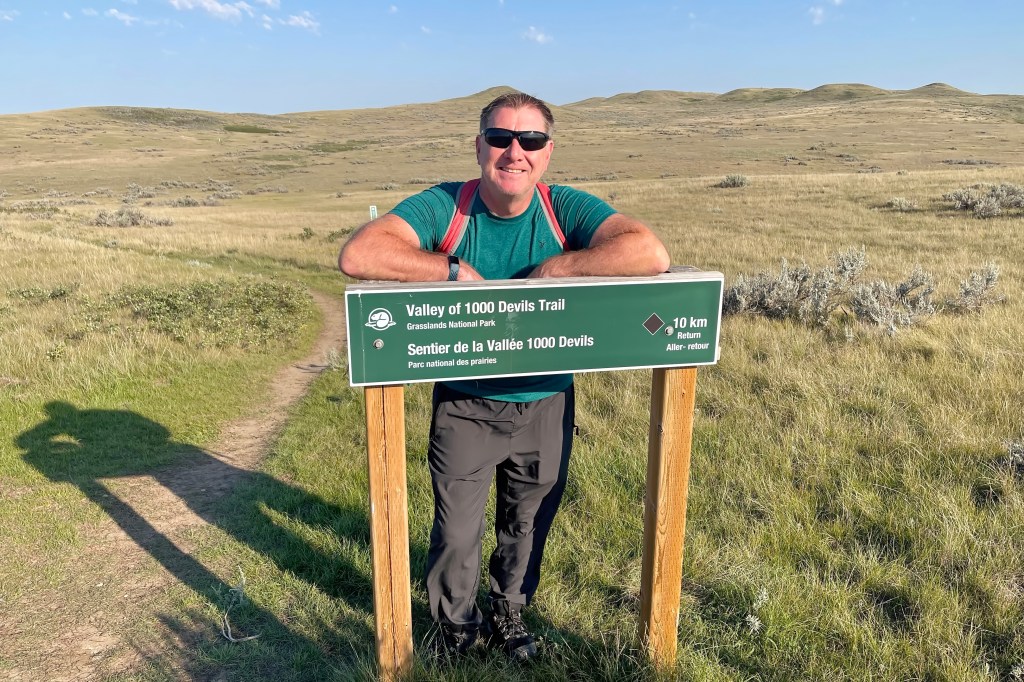
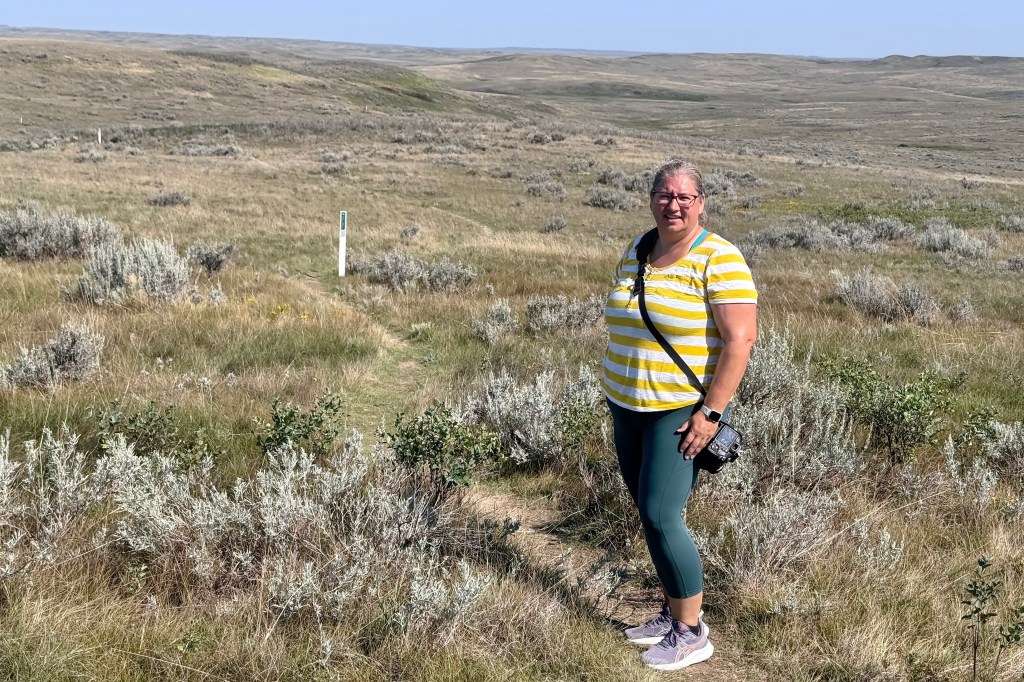
Then the terrain begins to change as the trail drops into narrow valleys, weaving past jagged cliffs and hoodoos that rise like natural sculptures. Every turn revealed another striking formation, and the contrast between shadowed coulees and sunlit ridges created a dramatic, almost otherworldly atmosphere.
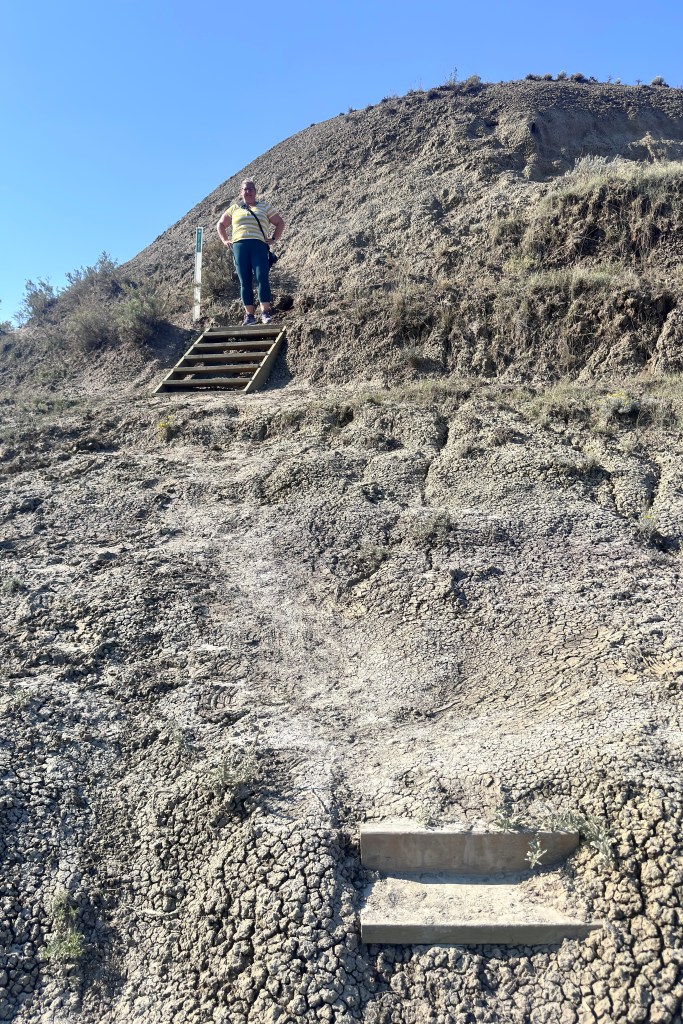
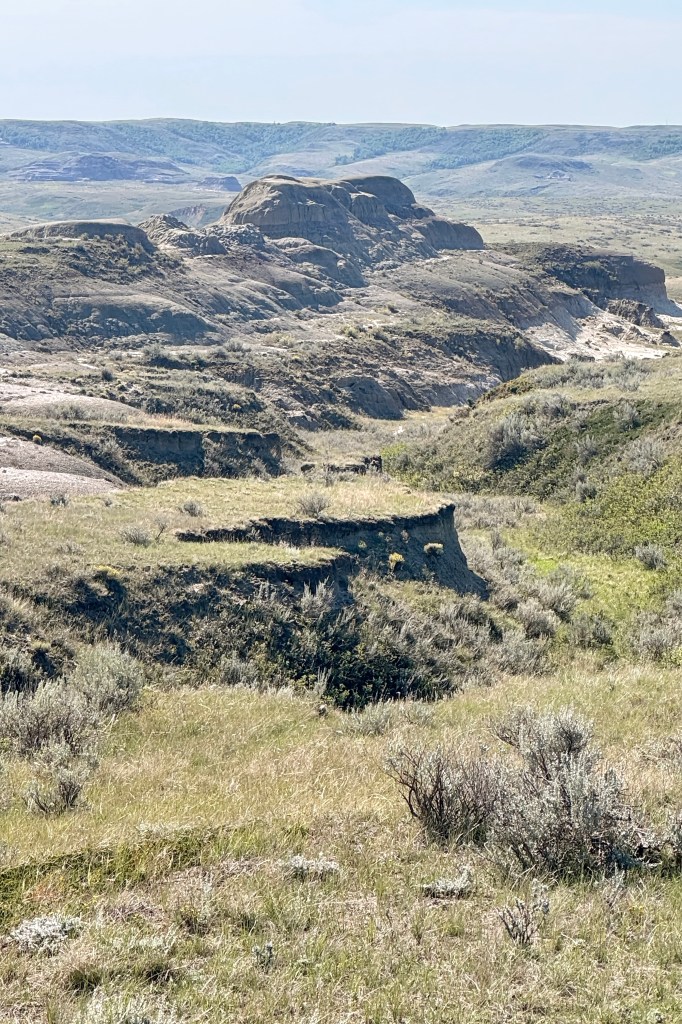
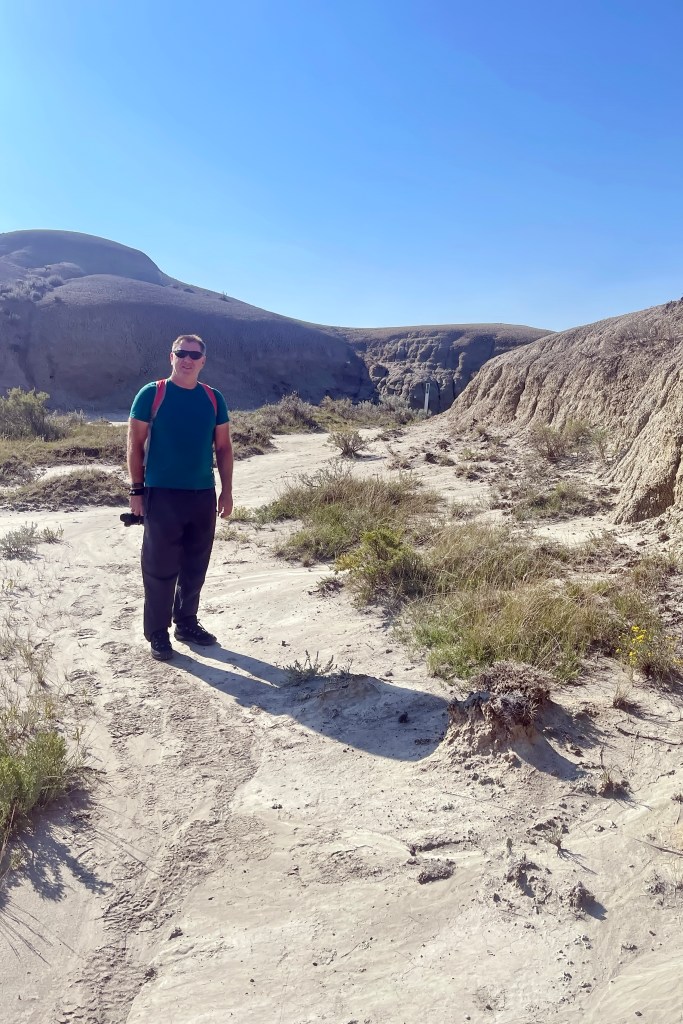
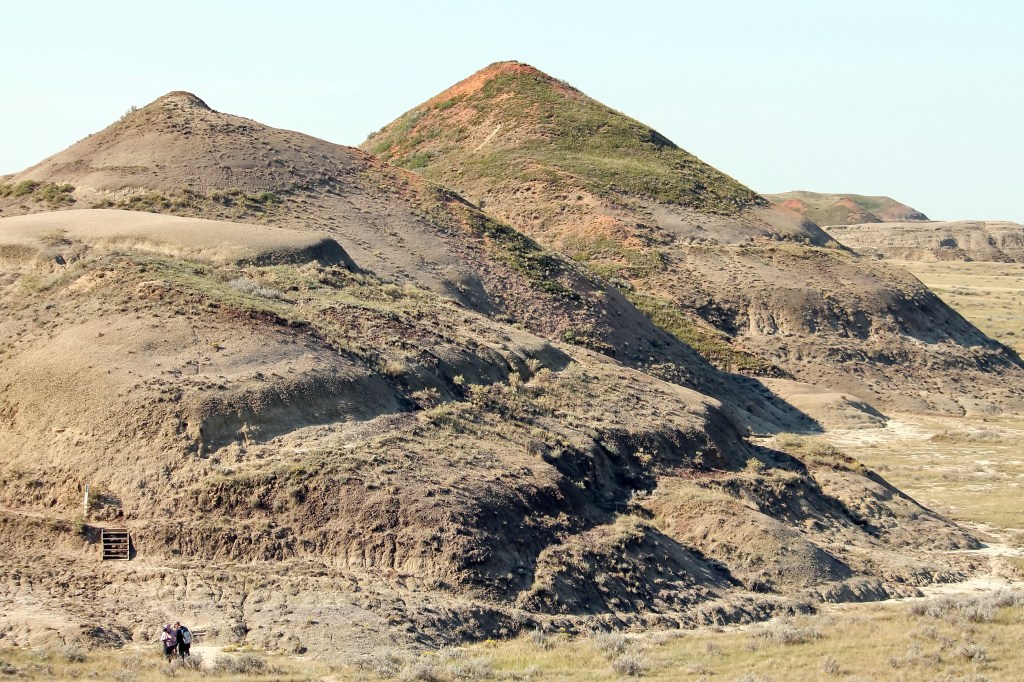
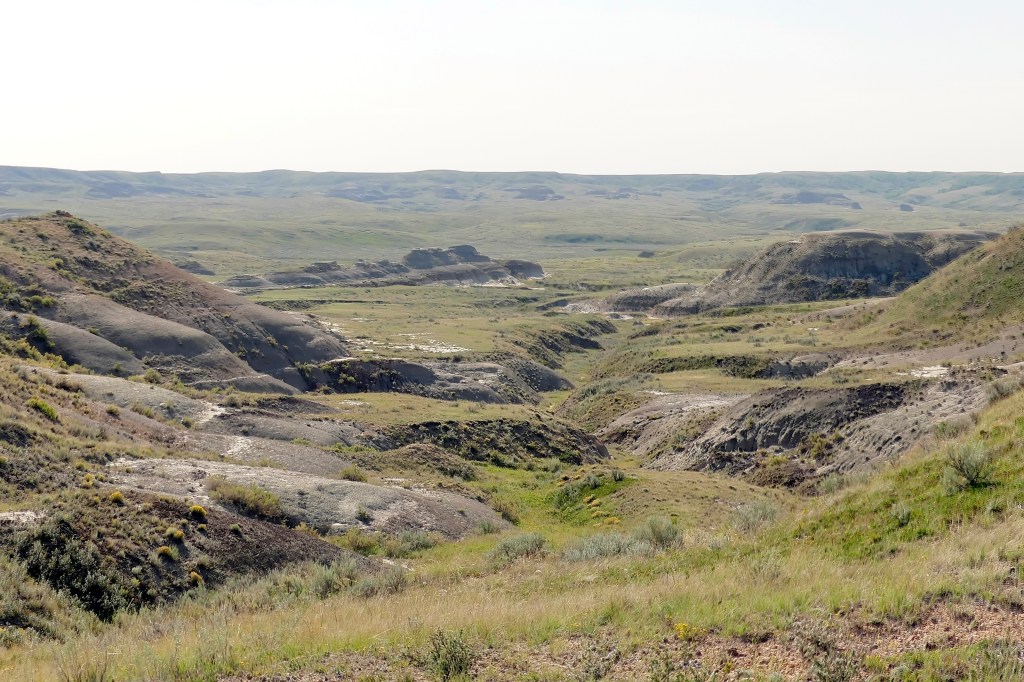
As we hiked, we couldn’t help but imagine the dinosaurs that once roamed this very terrain. Small fossils embedded in the rocks occasionally caught our eye, and the interpreter’s earlier talk about prehistoric life made each discovery feel like a real connection to the past. The Valley of 1000 Devils isn’t just a trail; it’s a journey through geological time, where every rock tells a story millions of years in the making.
A simpler, but no less striking, way to experience the East Block is to follow the Badlands Parkway scenic drive, which winds along the edge of the valley. The 11 km paved road offers several stopping points with interpretive displays and endless breathtaking views towards the rugged badlands.
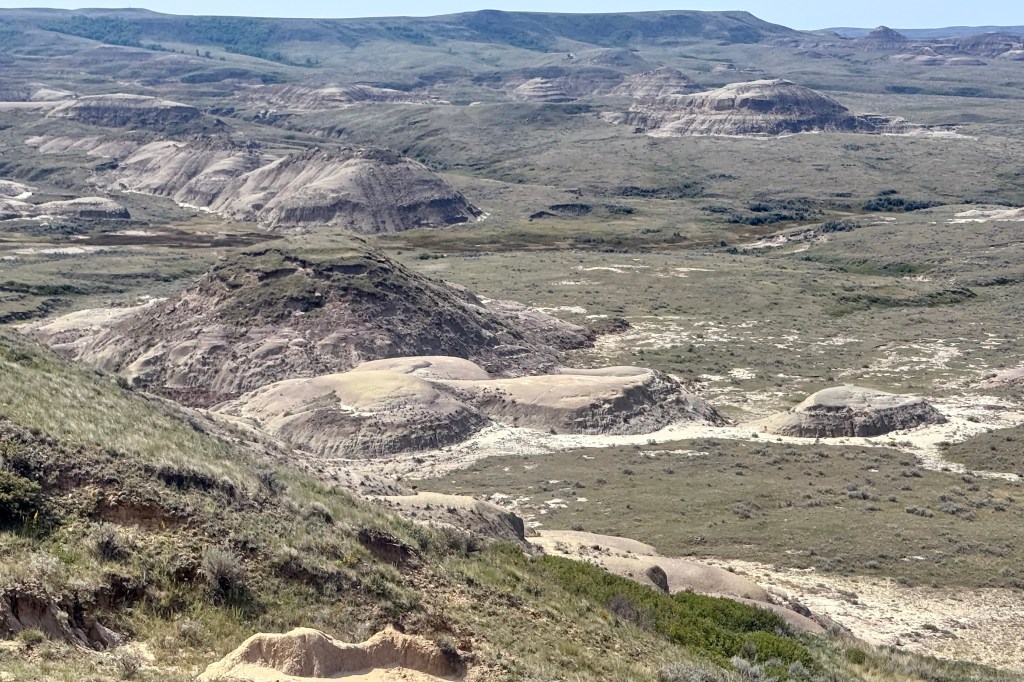
At a couple of spots, it is possible to view the K-Pg layer, a geological boundary marking the end of the Cretaceous Period (dinosaurs) and the start of the Paleogene Period (mammals) occurring 66 million years ago. The boundary is indicated by a thin white layer rich in iridium, sandwiched between darker carboniferous layers, like an Oreo cookie.
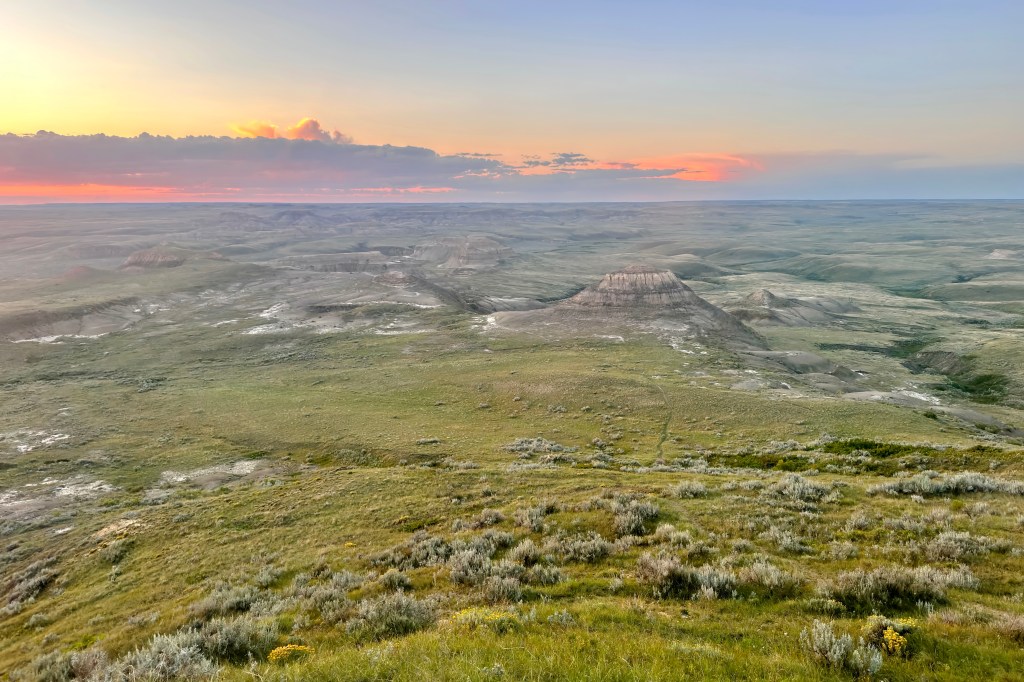
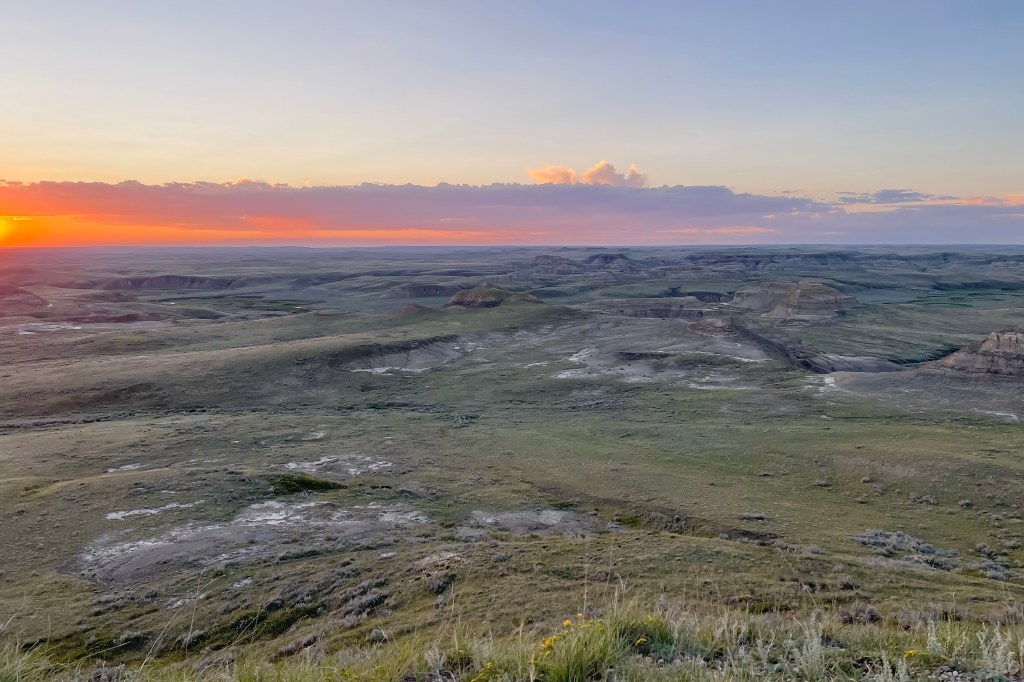
Unlike the wide-open prairie of the West Block, the East Block feels more intimate and dramatic, with Rock Creek carving a broad, deep valley lined with coulees, buttes, and hoodoos standing proud like ancient sentinels. Driving the route, we stopped frequently to snap photos and take in the mesmerizing views as well as sauntering down into the valley to get closer to the land.
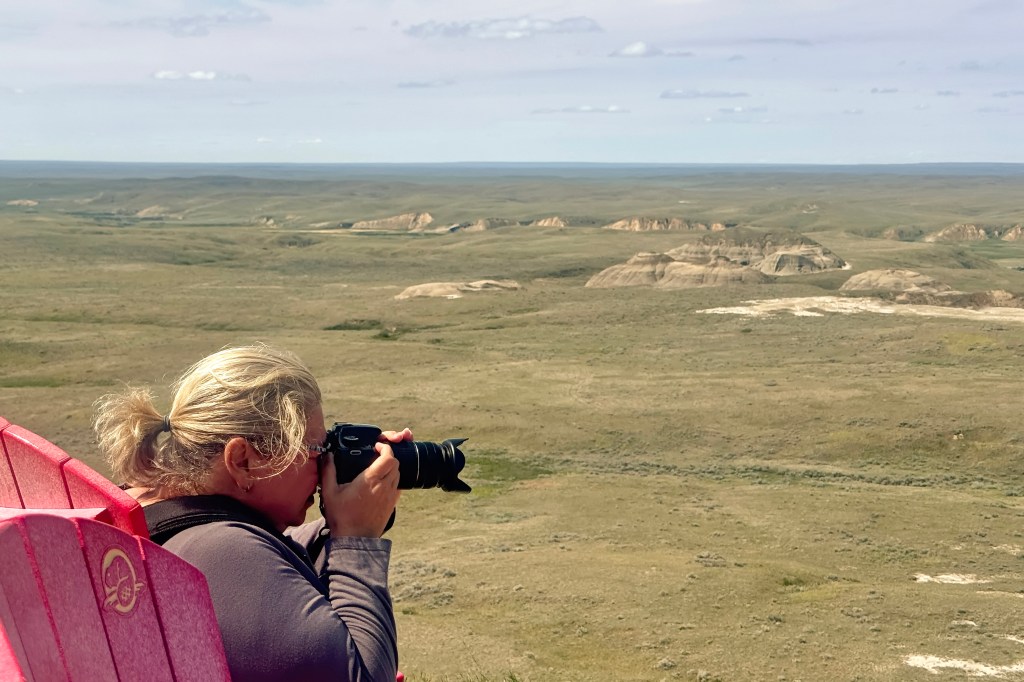
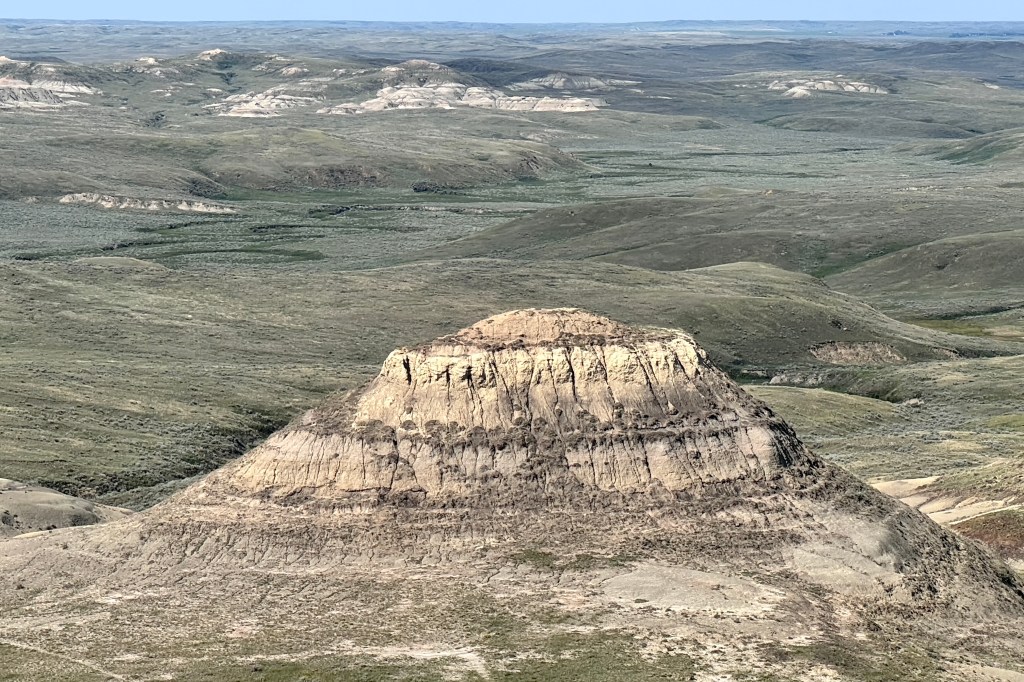
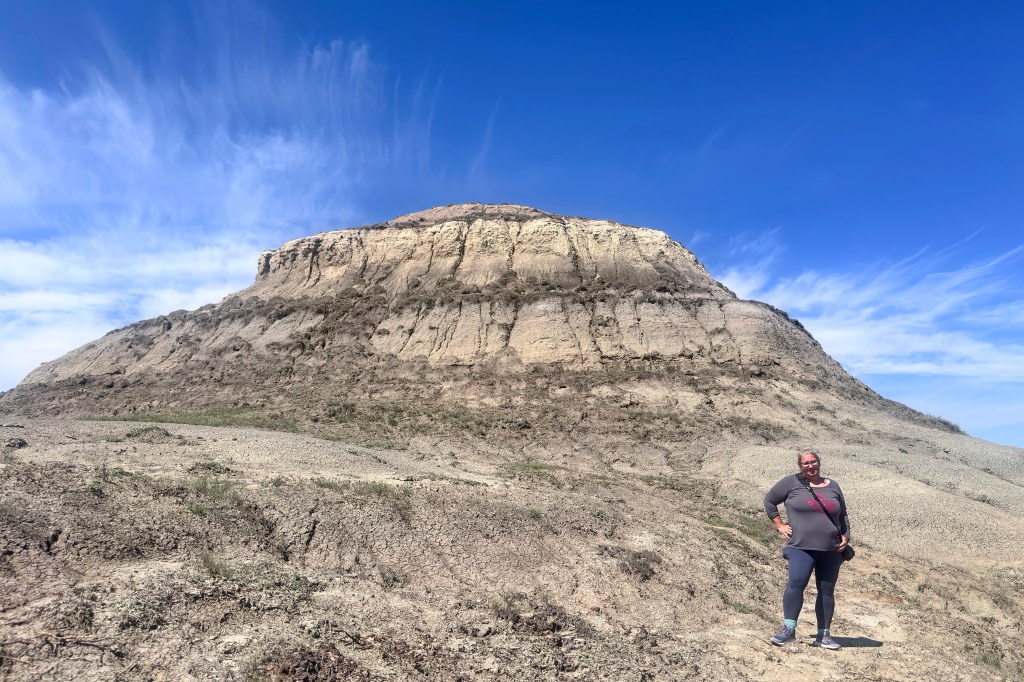
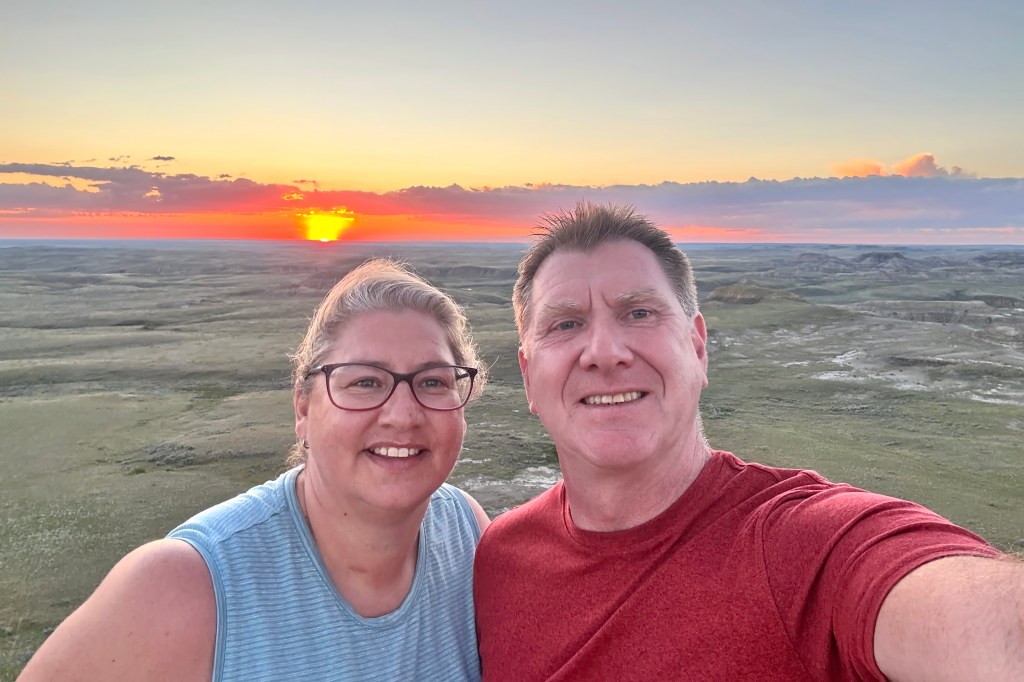
We made this short drive a couple of times, with the changing light throughout the day adding drama to the landscape, casting long shadows and highlighting hidden details in the formations. From the edge of the valley, you can appreciate the scale and depth of the badlands, seeing the intricate layers of rock and sediment indicating the passing of time.
We also spotted small wildlife along the way: birds flitting among the hoodoos or soaring overhead, the occasional prairie fox darting across the valley floor in the distance, and a pencil-sized smooth green snake crossing the path in front of us. Each turn of the road feels like stepping into a new scene, and it’s easy to understand why the park encourages visitors to slow down, explore, and take time at each lookout. Some stops are perfect for short walks, while others invite quiet reflection as you take in the vast, ancient landscape below.
Spending several days in the East Block gave us a new appreciation for Saskatchewan’s geological diversity. From the rugged hoodoos to the hidden fossils beneath our feet, every experience reminded us that this land has been shaped over millions of years. Early morning hikes, scenic drives along the valley edge, and the chance to imagine dinosaurs roaming these same valleys made our time here unforgettable. By the time we packed up to leave, we felt as though we had stepped back through time, witnessing the raw, wild beauty of the badlands firsthand.
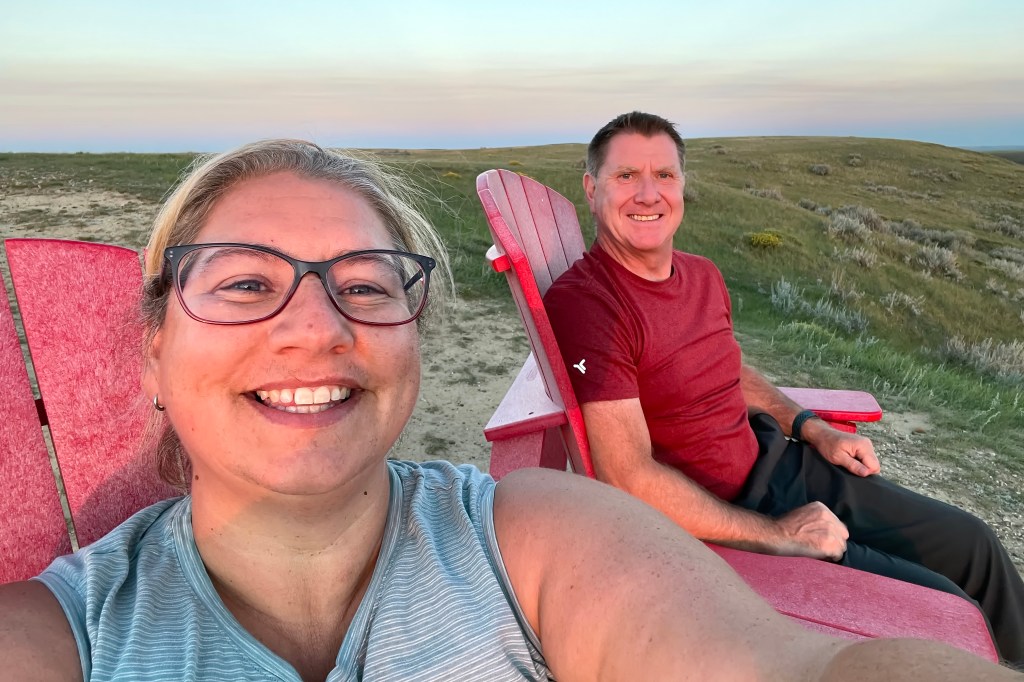
Spending time in both the West and East Blocks of Grasslands National Park gave us a deep appreciation for the remarkable diversity of this southern Saskatchewan gem. The two blocks couldn’t be more different, yet each tells a distinct story about the land, wildlife, and history.
The West Block is defined by rolling grasslands, wide-open skies, and hidden valleys carved by the Frenchman River. It’s a place where you can hike, drive, or simply sit and feel the vastness of the prairie. Encounters with endangered species, raptors soaring overhead, and the surprising short-horned lizard in its natural habitat reminded us how fragile and unique these grasslands are. Guided walks, lookouts along the Ecotour Scenic Drive and Backcountry Loop, and the quiet charm of Val Marie make this block feel like a true sanctuary.
The East Block, in contrast, is a dramatic badlands landscape, sculpted by erosion over millions of years. Hoodoos rise like sentinels above deep valleys, fossils lie just beneath your feet, and each hike or drive is a journey back in time: the guided walk offered us an insight into the wide variety of fossils found in the park; the Valley of 1000 Devils trail immersed us in the rugged and unforgiving terrain and the stunning geological formations; and the edge-of-valley Badlands Parkway scenic drive provided broad vistas showcasing the prehistoric and geological history of the region. Events like Fossil Fever highlight the park’s commitment to education and hands-on experiences that bring the past vividly to life.
Despite their differences, both sides of Grasslands share several remarkable qualities. Each block is part of a Dark Sky Preserve, offering stunning night skies that feel infinite and perfect for stargazing. Both blocks also protect rare and endangered species, preserving the unique prairie ecosystem and the wildlife that depends on it. And both blocks offer peace, solitude, and a sense of connection to the land’s deep history.
Whether you’re drawn to the open prairie and wildlife of the West or the rugged badlands and fossils of the East, Grasslands National Park presents a landscape that surprises, delights, and inspires. Spending a week exploring both sides gave us a newfound respect for Saskatchewan: not flat at all, but full of life, history, and adventure waiting just off the beaten path.


 Mapgirl Adventures
Leave a comment