Tucked along the north shore of the Firth of Forth, just west of Edinburgh, lies one of Scotland’s most picturesque little villages – the royal burgh of Culross (pronounced Coo-riss). With its white-harled houses, red-tiled roofs, and steep cobbled streets, this village looks painted in layers of history. Culross feels like stepping straight into the 17th century. The air carries a quiet stillness, broken only by the cry of gulls and the soft echo of footsteps on stone.
It doesn’t take long before you realize Culross is no ordinary village. Its historic buildings are preserved and cared for by the National Trust for Scotland, and history clings to every doorway and windowpane, a living museum of 17th- and 18th-century port life where stories whisper through the narrow wynds.

Along the Waterfront
We began our exploration along the waterfront, where a QR code marked the start of a self-guided tour. A lovely Scottish voice guided us past an old pier that still clings precariously to the edge of the shore, weathered by centuries of wind and tide. Keith wandered out to the end, of course, while I stayed safely on dry land.

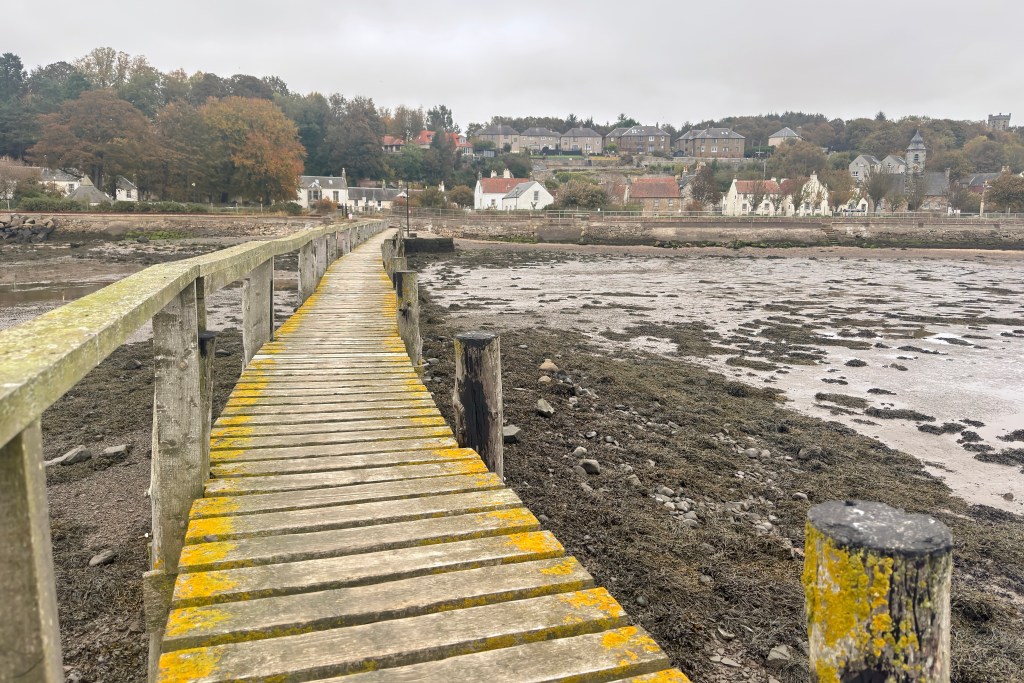
The audio guide shared the story of Culross’s wealth, built on coal mining and salt production, driven by the ingenuity of Sir George Bruce. Adjacent to the pier once stood the Moat Pit, built around 1590, the world’s first coal mine to extend beneath the sea, an engineering marvel of its time.
Although coal was valuable, salt was far more so. It was essential for preserving and seasoning food, and Bruce saw a lucrative opportunity. He established salt pans along the River Forth, and after James VI granted Culross its royal burgh status in 1592, the village gained the right to trade directly with foreign ports. The result was prosperity for both Bruce and the village, a golden age for this quiet coastal corner of Scotland.
Culross Palace – A Merchant’s Dream
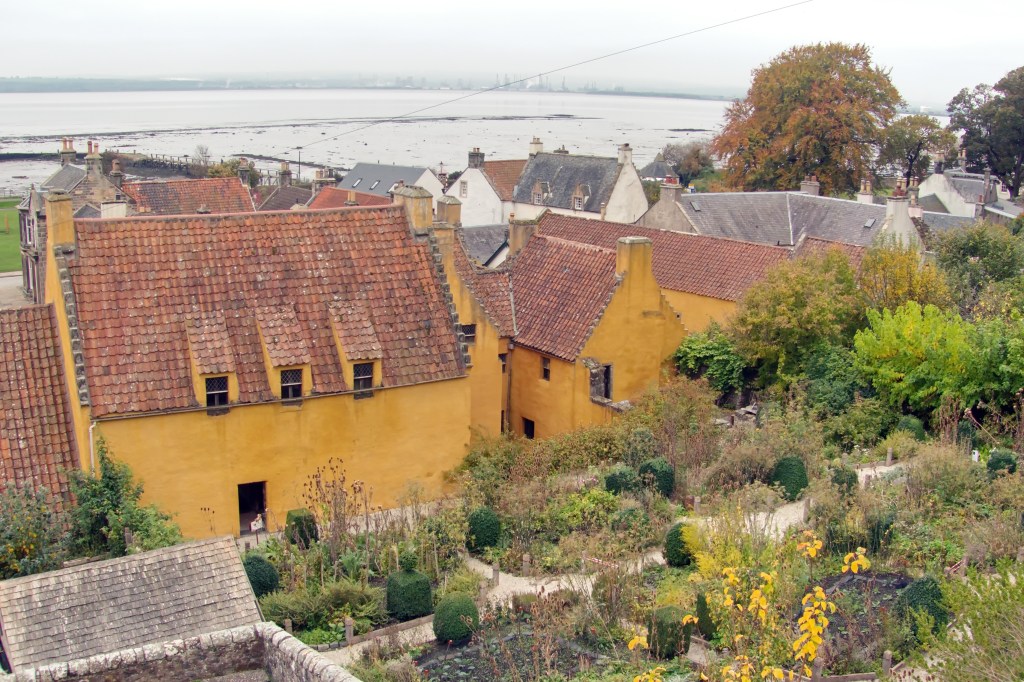
That wealth inspired the creation of Culross Palace, a landmark that dominates the village with its striking ochre-colored walls. Built between 1597 and 1611, it is both elegant and practical, the perfect reflection of a man who made his fortune beneath the sea.

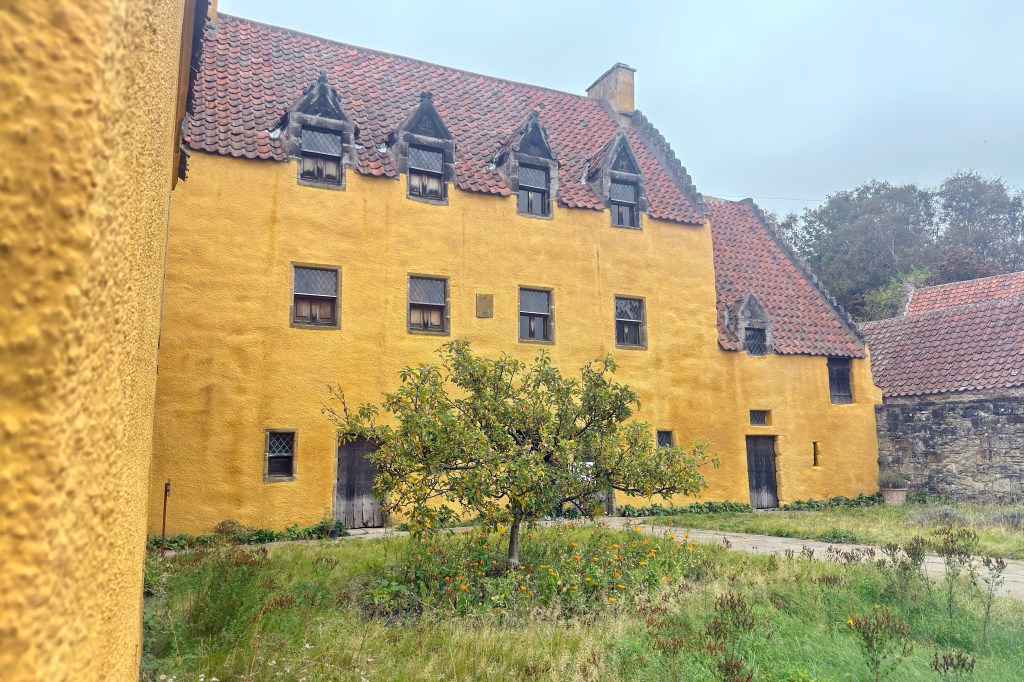
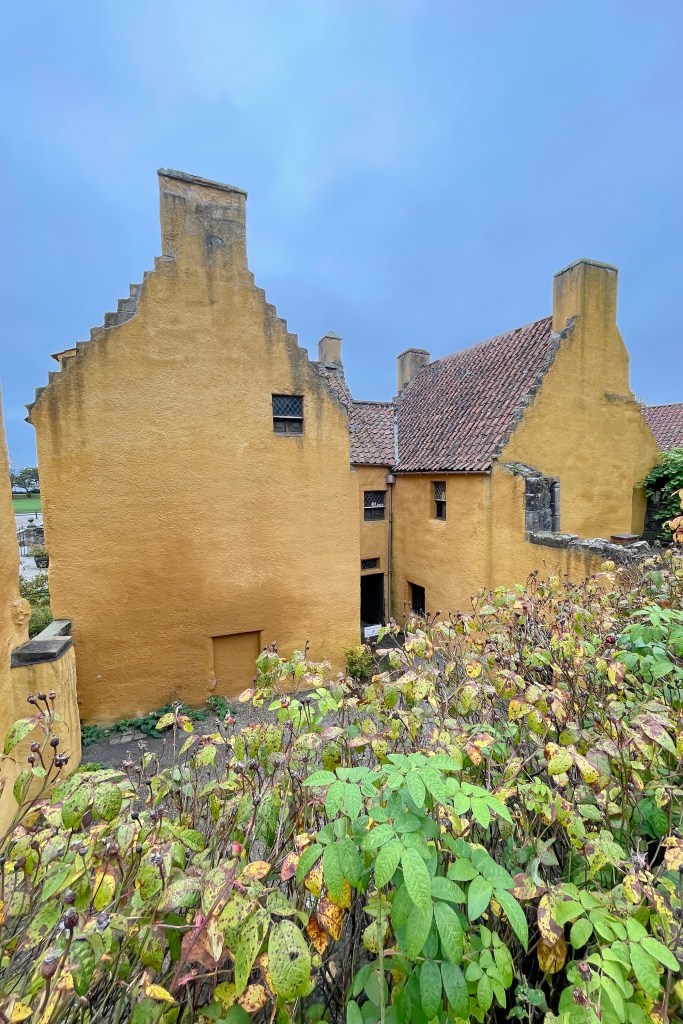

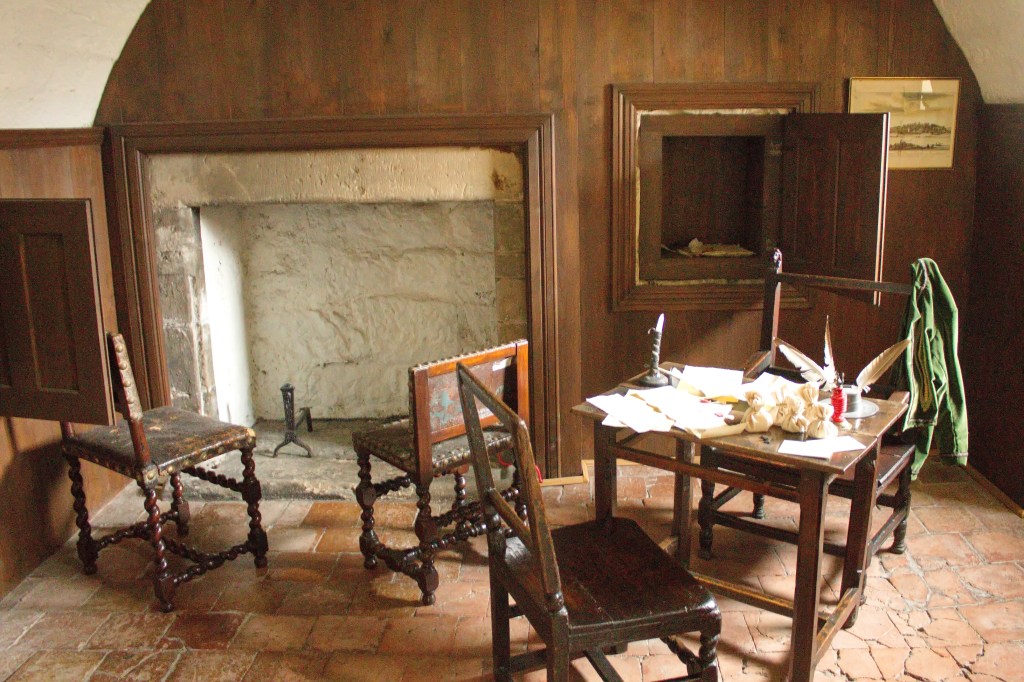
Though called a “palace,” it was in truth a grand merchant’s house, and it has been carefully restored to resemble the home as it would have been when George Bruce and his family lived there. The late Renaissance-style design features beautifully painted woodwork, decorative murals, and barrel-vaulted ceilings, paired with period furnishings from the 17th and 18th centuries.

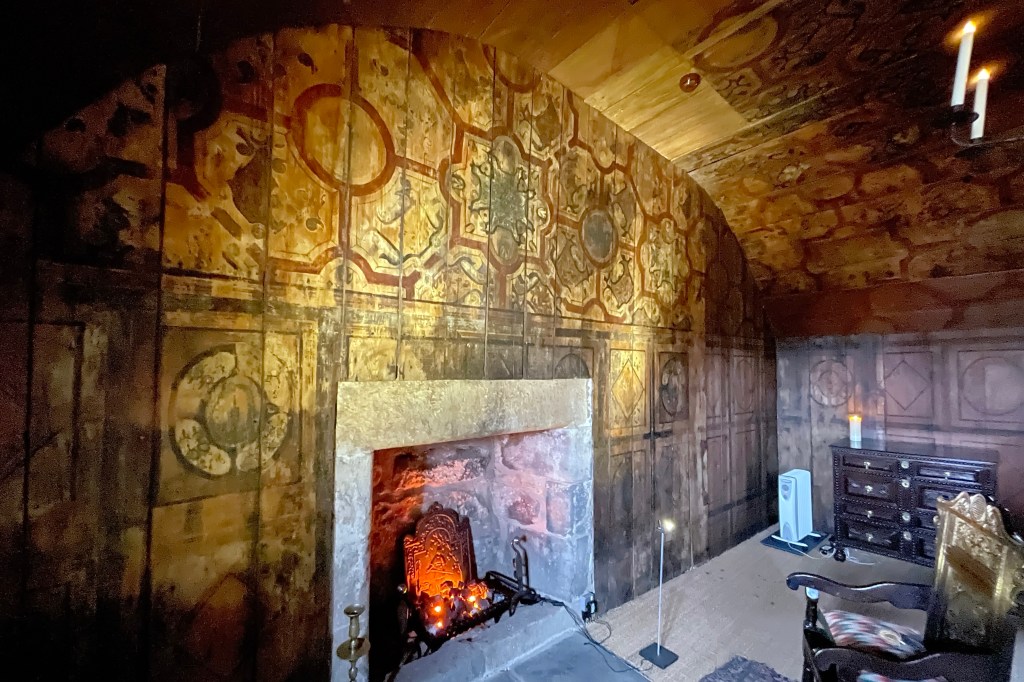
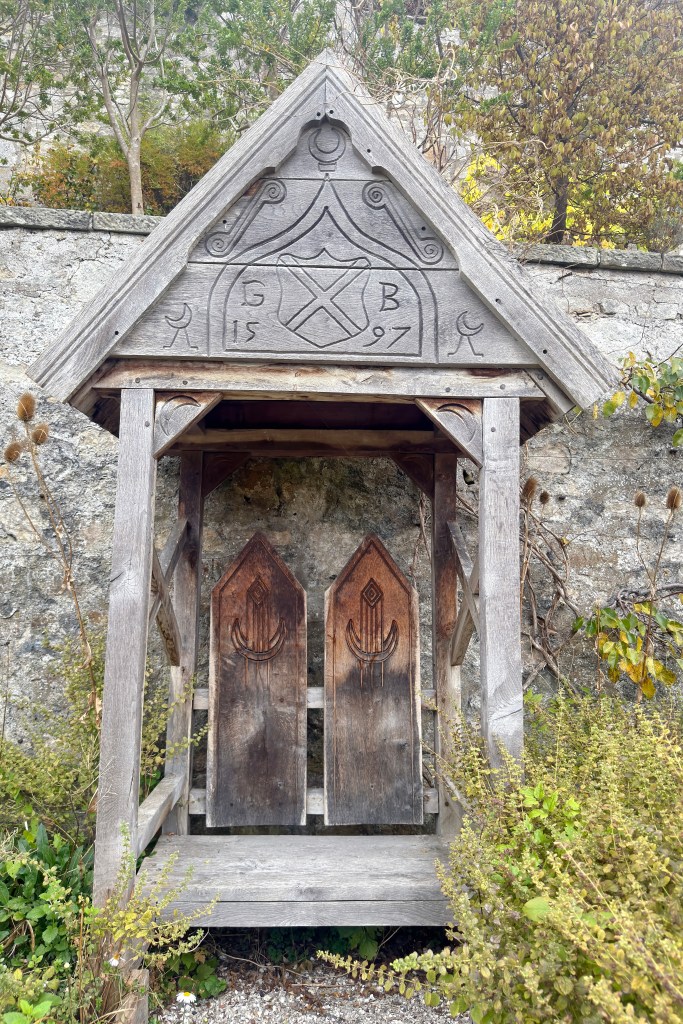
Behind the house, the seventeenth-century gardens have been lovingly recreated by the National Trust for Scotland. Complete with raised beds, a covered walkway, and crushed-shell paths, they are planted with herbs, vegetables, and fruit trees typical of the early 1600s. A small, carved wooden folly, inscribed with the initials GB offers magnificent views across the village and over the shimmering Firth of Forth.


The Heart of the Village
Continuing uphill, we reached the Mercat Cross, which still retains its original octagonal base from the late 1600s. Set in a cobbled square that once thrived with market life, this was the bustling heart of Culross. Here, merchants bartered salt, coal, and local produce, the very lifeblood of the community.

From the square, narrow streets wind uphill towards the remains of the 13th-century abbey, including Tanhouse Brae, once the shoemaking district, which is lined with colourful houses in the traditional architectural style. If you look closely at the lintels above the doors, you notice that some are carved with emblems or symbols hinting at the trades of former residents.
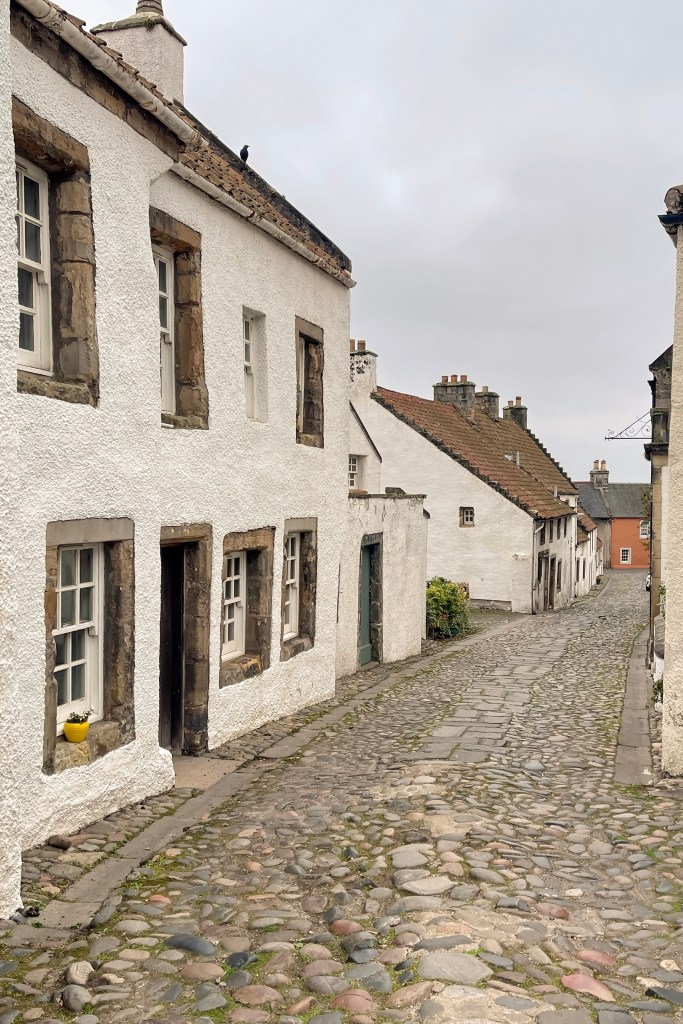
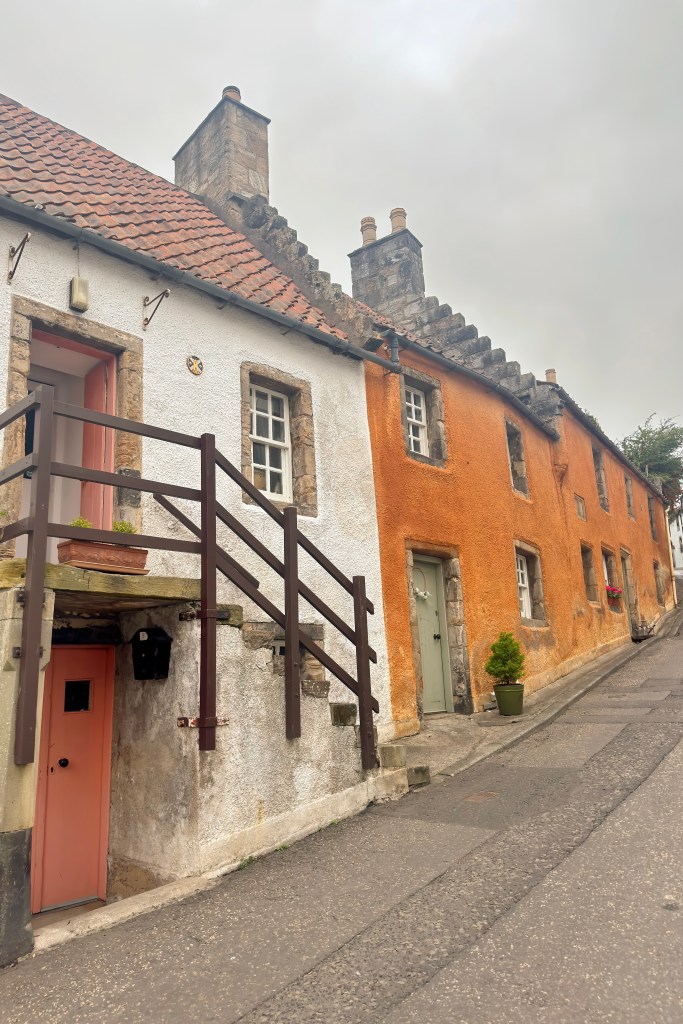

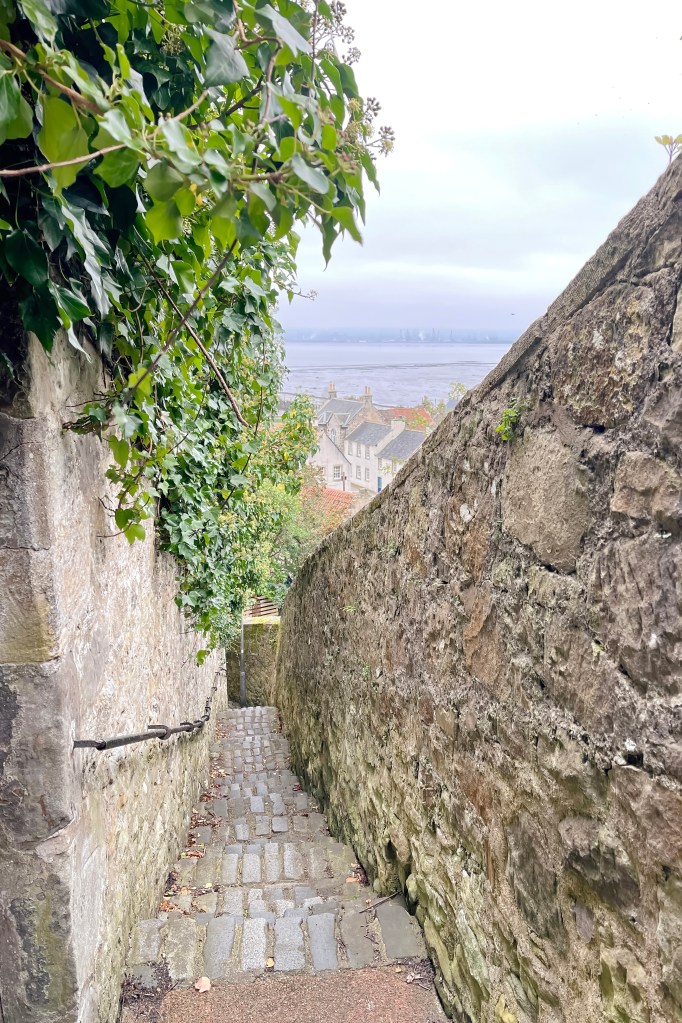
Steep steps and winding alleys intertwine and connect the few cobblestone streets, including Haggs Wynd, the main route leading to the historic hanging gardens behind the palace – a hidden oasis of terraced greenery and quiet charm.


Dark Shadows of the Past
But for all its charm, Culross holds darker stories too. In the 17th century, this peaceful Fife village was swept up in Scotland’s witch trials. Between 1626 and 1675, 32 women were accused of witchcraft and imprisoned in the Town House before facing trial and execution. Their only crime was often being different, outspoken, or simply unlucky. Today, a memorial marker to these ‘innocent victims of unenlightened times’ faces the Town House across the village green.
A few kilometres away, in nearby Torryburn, lies the grave of the most famous accused witch from the Culross area, Lilias Adie. After enduring torture, she confessed and died in prison before her trial could be completed. Fearing her “reanimated spirit,” her body was buried in the mud of the estuary and covered with a heavy stone slab that is still visible at low tide today.
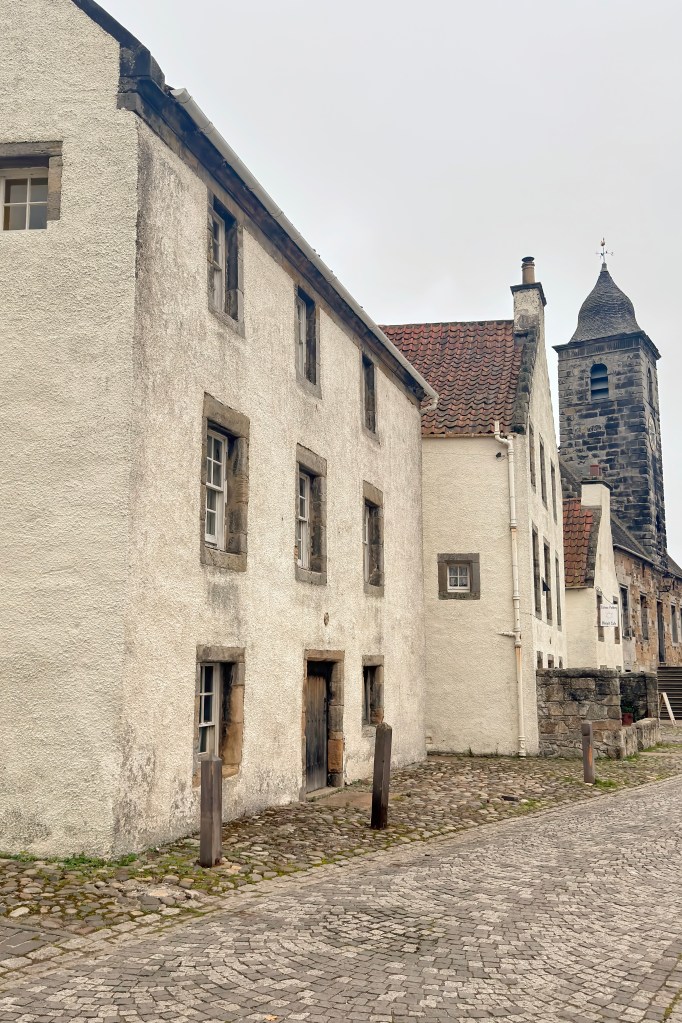
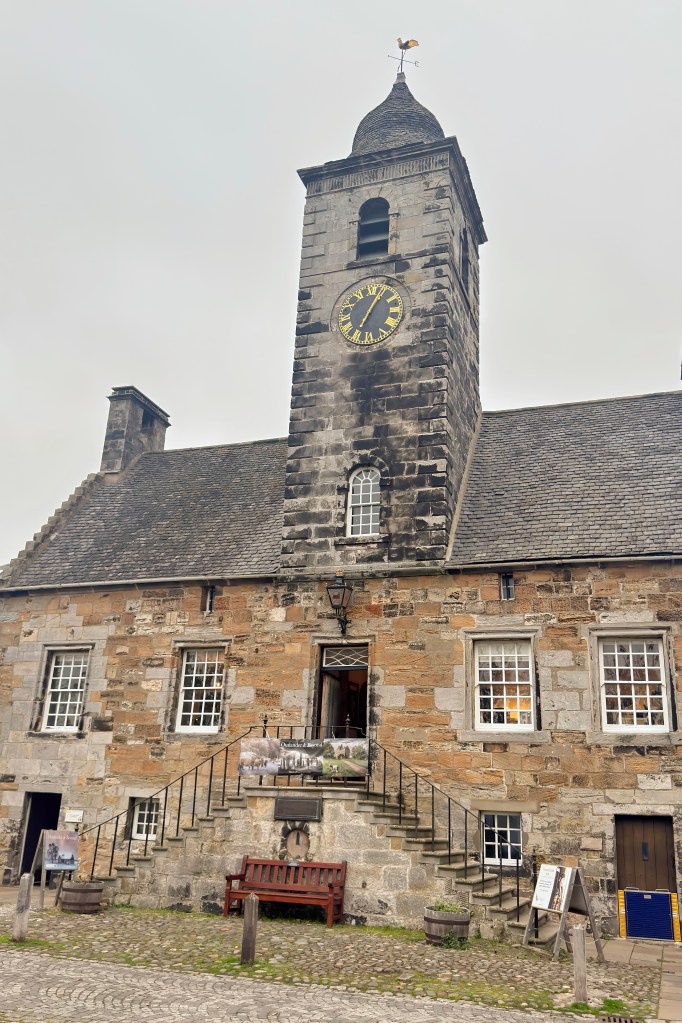

Standing before the old Town House, with it’s prominent location on the main street, it is hard not to feel the weight of those lost lives. Incongruously, the building is now used as a visitor centre and exhibition space. The contrast between the sunshine on the cobblestones and the shadows of history is haunting and humbling.
A Touch of Outlander Magic
Modern visitors might recognize Culross for another reason, Outlander fans will know it as the fictional village of Cranesmuir, home to the mysterious Geillis Duncan. The Mercat Cross and Palace courtyard appear throughout the series, and walking here truly feels like stepping into a scene with Claire and Jamie. Even if you’ve never seen the show, there’s a cinematic quality to Culross, the golden walls glowing in soft Scottish light and the sense that you could turn a corner and find yourself in another century entirely.
Final Reflections
Culross may be small, but it holds a world of stories within its streets, tales of innovation, ambition, tragedy, and preservation. Whether you come for the history, the Outlander connection, or simply to wander along the picturesque streets with a camera in hand, this royal burgh will leave its mark on you.

As the tide rolled in and the golden light touched the palace one last time, I couldn’t help but smile: another Mapgirl Adventure complete, another map pinned with memories.


 Mapgirl Adventures
Leave a comment