Most people picture the Algarve as golden beaches, warm coves, and those iconic ochre cliffs, but the west coast is like a completely different world—rugged, raw, and shaped by the full force of the Atlantic, it feels wonderfully wild. This coastline has an untamed energy to it, the kind that makes you breathe a little deeper and slow down without even noticing. We spent a full day road-tripping from Odeceixe in the north to Cabo de São Vicente at the very southwest tip of Portugal, soaking in everything from pounding surf to vast, empty beaches where our footprints were the only ones in sight.
Odeceixe Mar – Where the River Meets the Sea
Our coastal adventure kicked off at Odeceixe Mar Beach, the northernmost slice of Algarve coastline. Here, the Seixe River curves around the beach, marking the natural border with the Alentejo. The centre is calm and shallow, a gentle sweep of sand perfect for wading; the sides face the open Atlantic, where rhythmic waves roll in with hypnotic persistence.

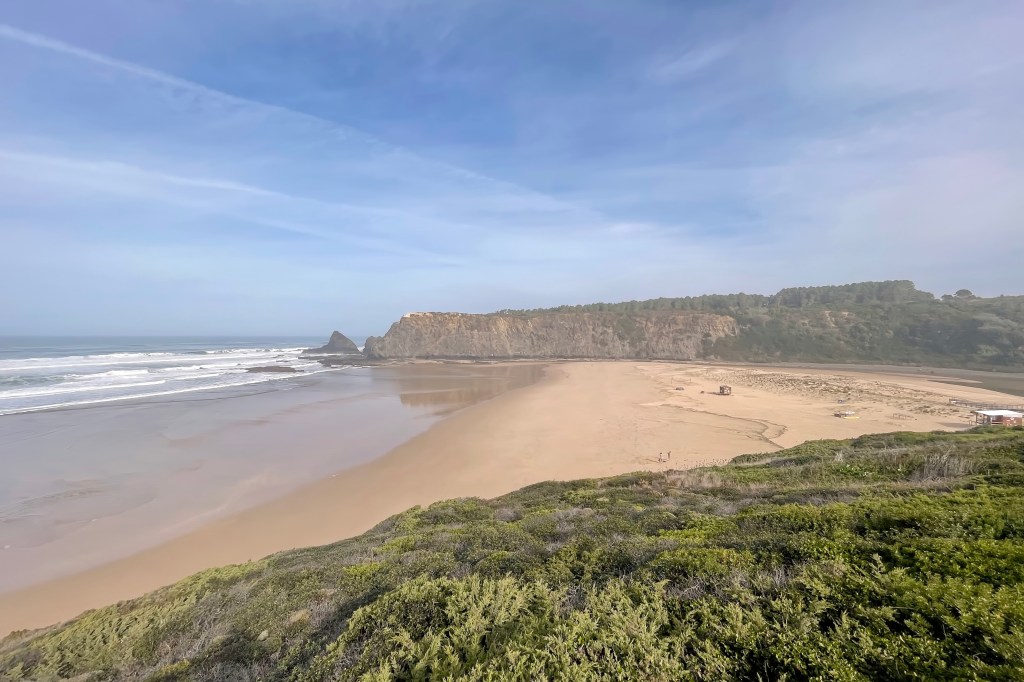
From the elevated boardwalk we had a sweeping view of the entire shoreline. Below us, the waves crashed, curled, and retreated, slowly reshaping the smooth sand—a beach entirely devoid of people. We felt encapsulated by the natural landscape, the only sounds the wind and the sea. It was just the beginning of the journey, but the west coast was already showing off.
Monte Clérigo – A Village With a View
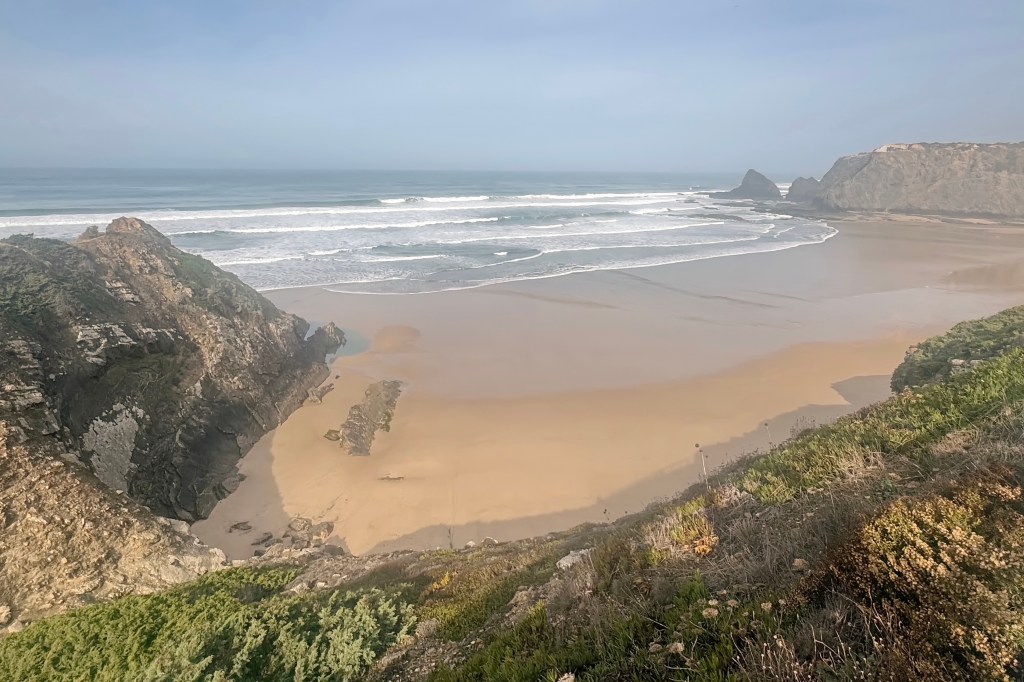
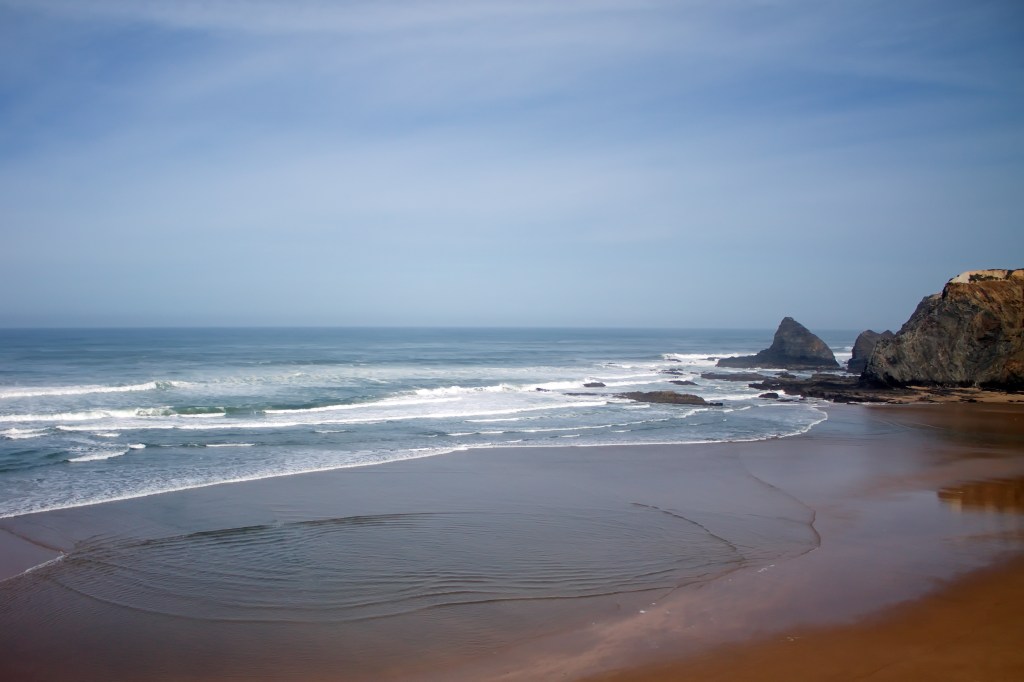
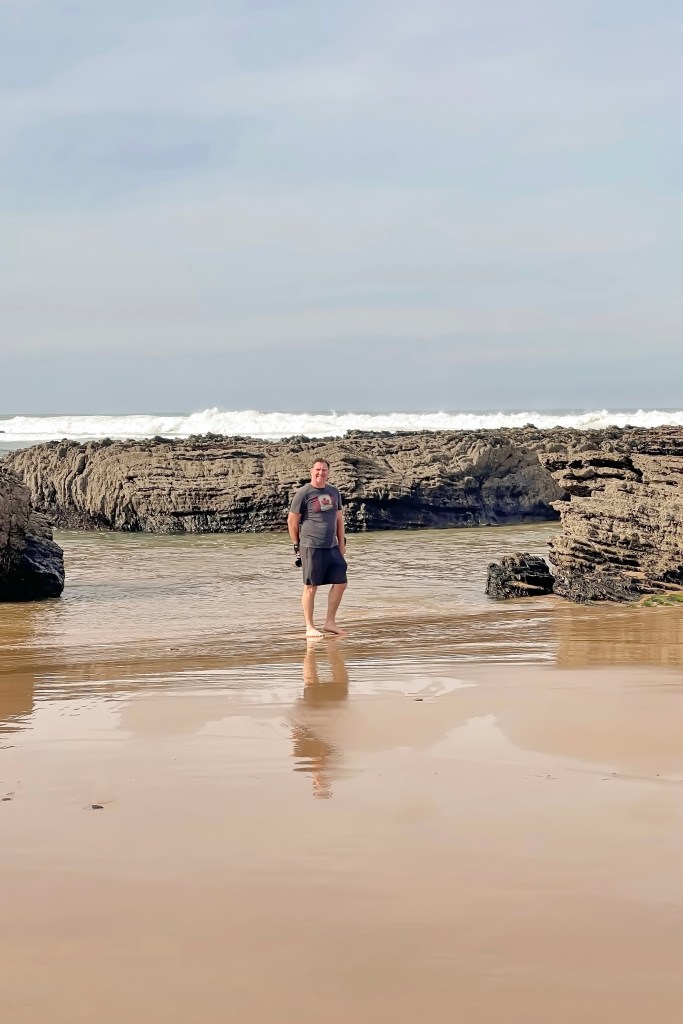
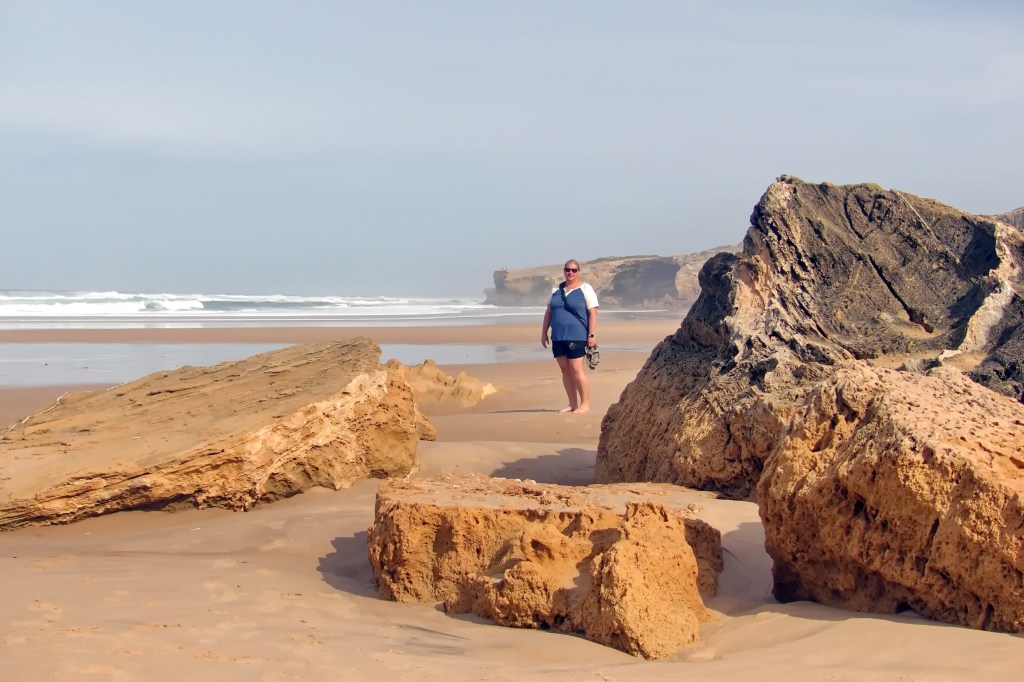
Further south, Monte Clérigo welcomed us with wide-open sands, fossil-rich cliffs, and a tiny whitewashed village perched above the water, protected from the elements by a large outcrop. Below, rock formations appeared like natural playgrounds, revealing tide pools teeming with life where families wandered and children splashed.
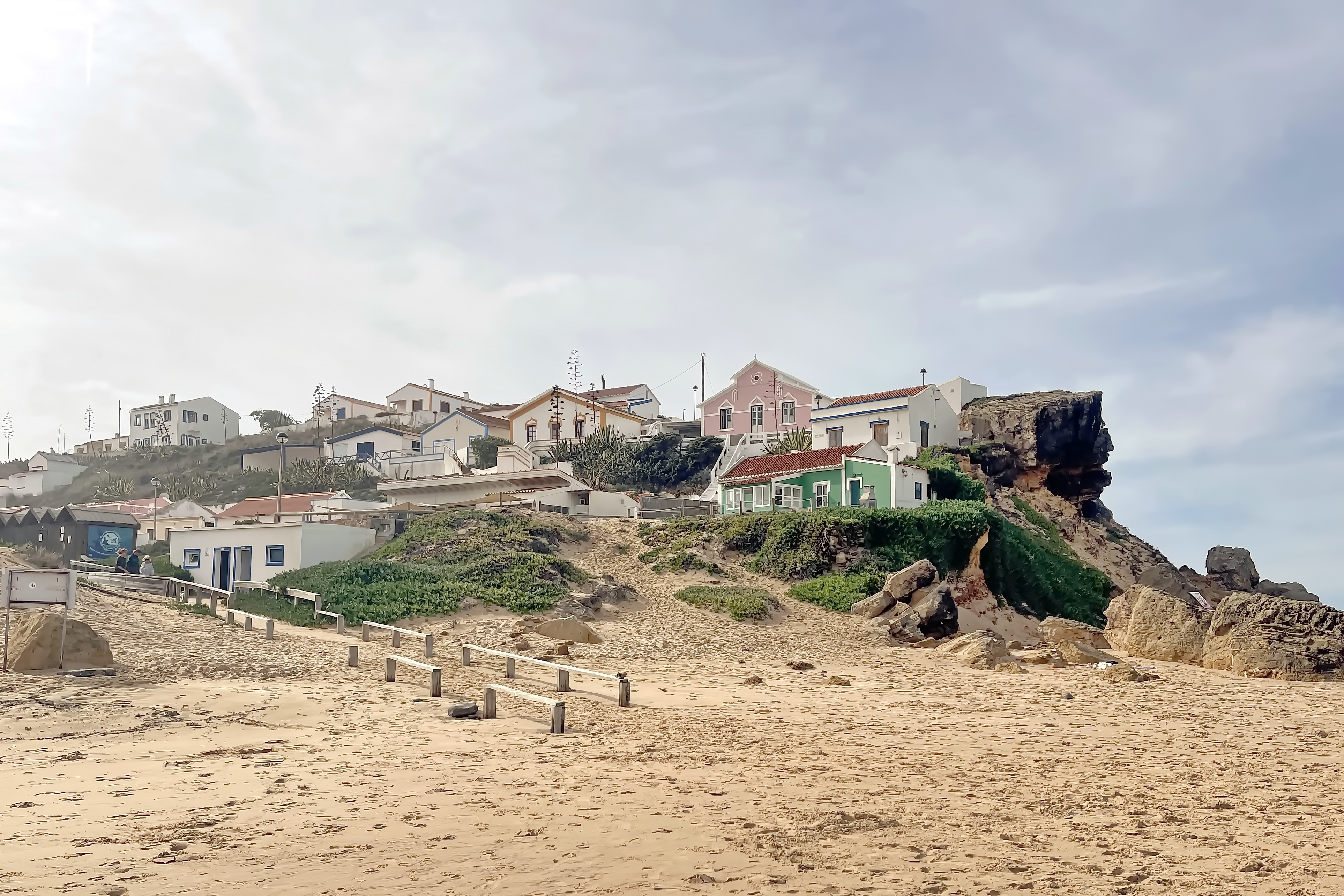

The glimmer of sunlight reflected on the wet sand, and we tiptoed along the waterline, alone with the spirit of the shore. The whole scene felt peaceful in that slow, timeless way coastal villages often do, life measured to the tide, not the clock.

Arrifana – Surf, Cliffs, and a Wild Surprise
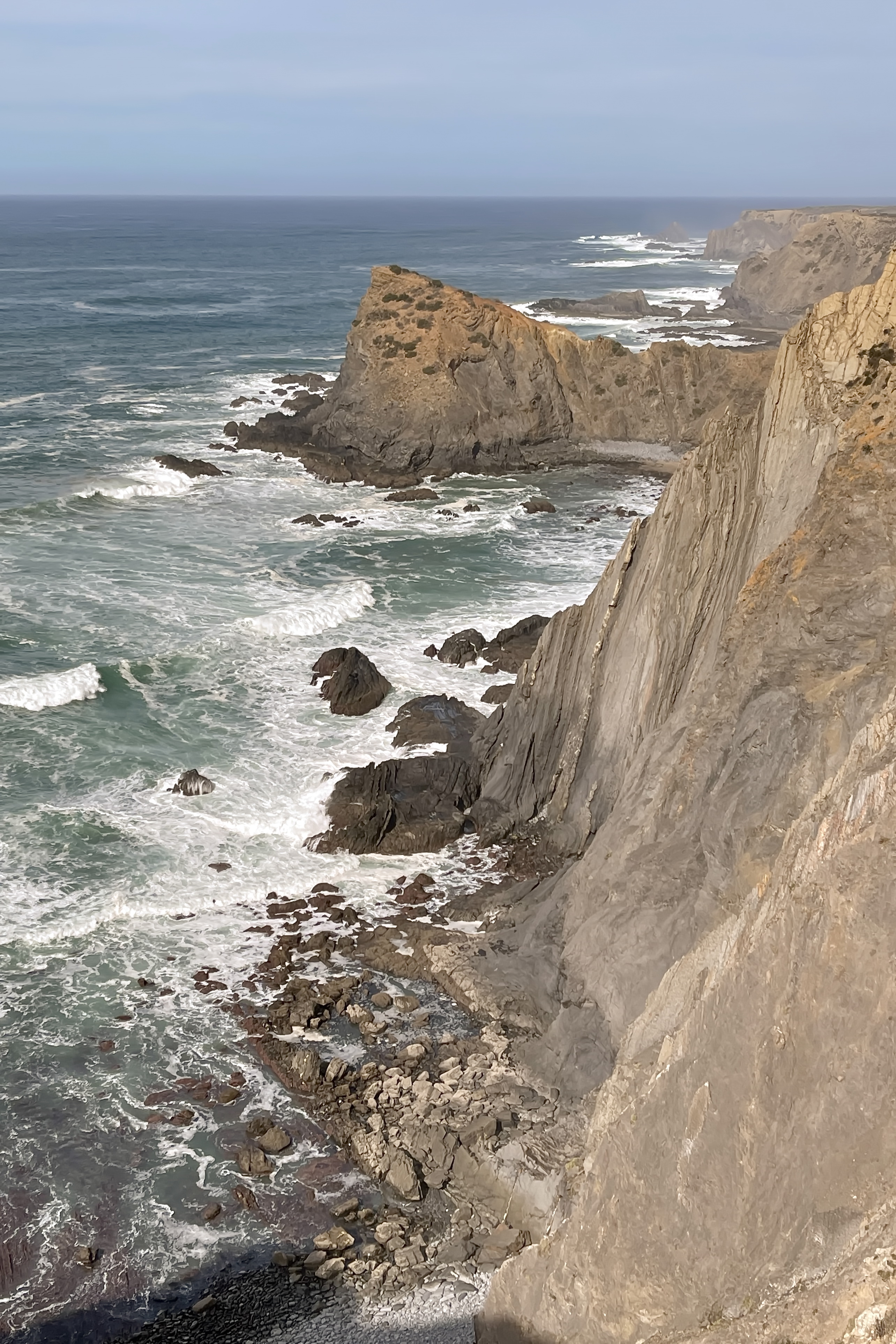
Then came Arrifana, one of the Algarve’s most dramatic coastal pockets. From the clifftop village, a long crescent of sand unfolded below, framed by steep, dark cliffs that looked as though they were carved in a single sweep. Arrifana is one of the region’s surf capitals, and from up top we watched surfers bob like tiny silhouettes in the swell, waiting for their perfect wave.


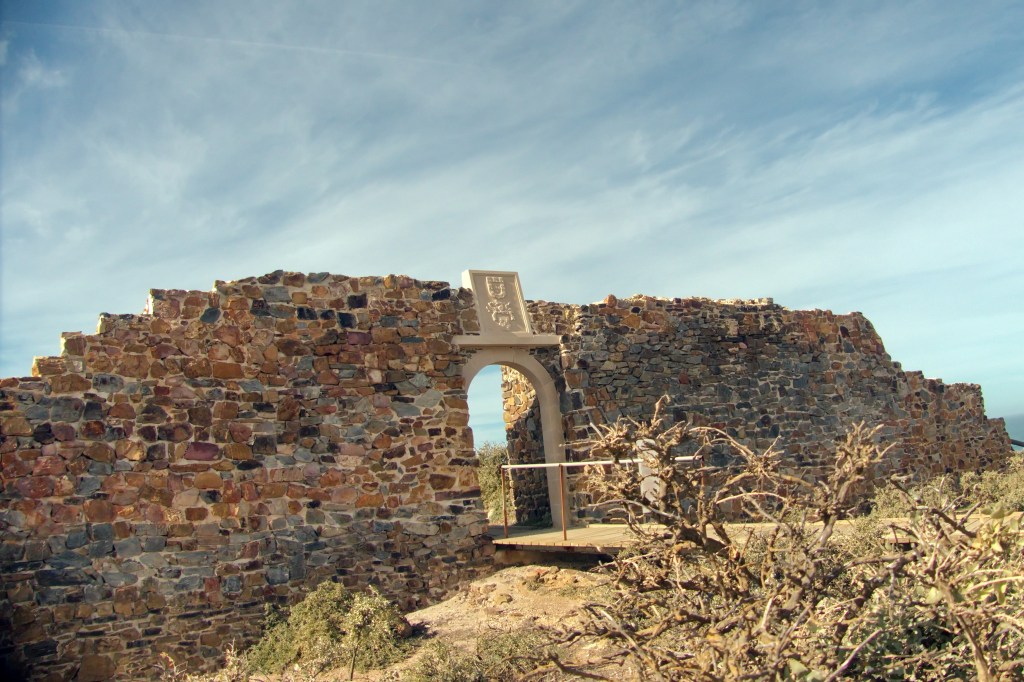
A rough road led us to the ruins of the 12th-century Arrifana Fortress, its weathered stones clinging to the cliff edge. The promontory opened into jaw-dropping views—craggy inlets, hidden coves, and layers of cliffs stretching into the hazy distance.



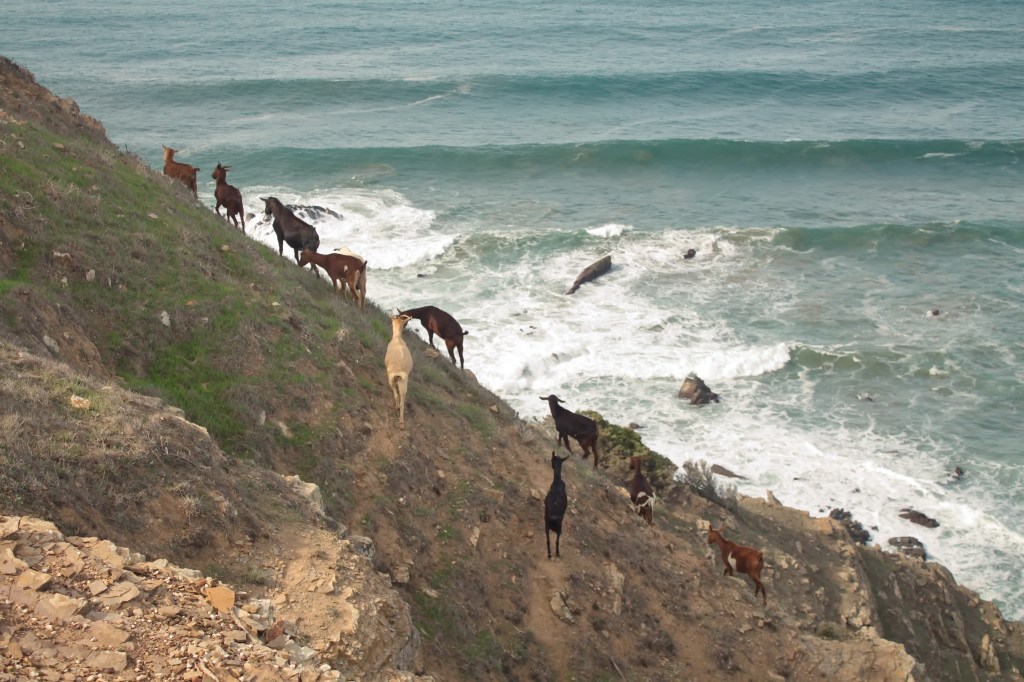
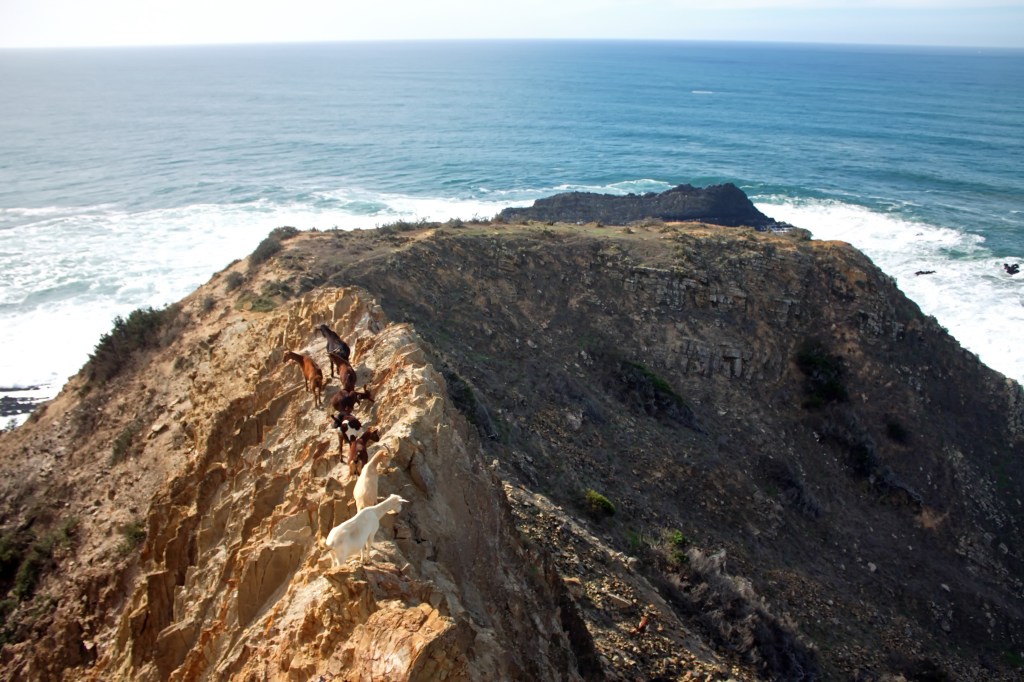
And then the west coast delivered one of its signature surprises: a small herd of goats appeared along the narrow cliffside path, navigating it with casual confidence, before nimbly picking their way across a razor-thin ledge like it was nothing.

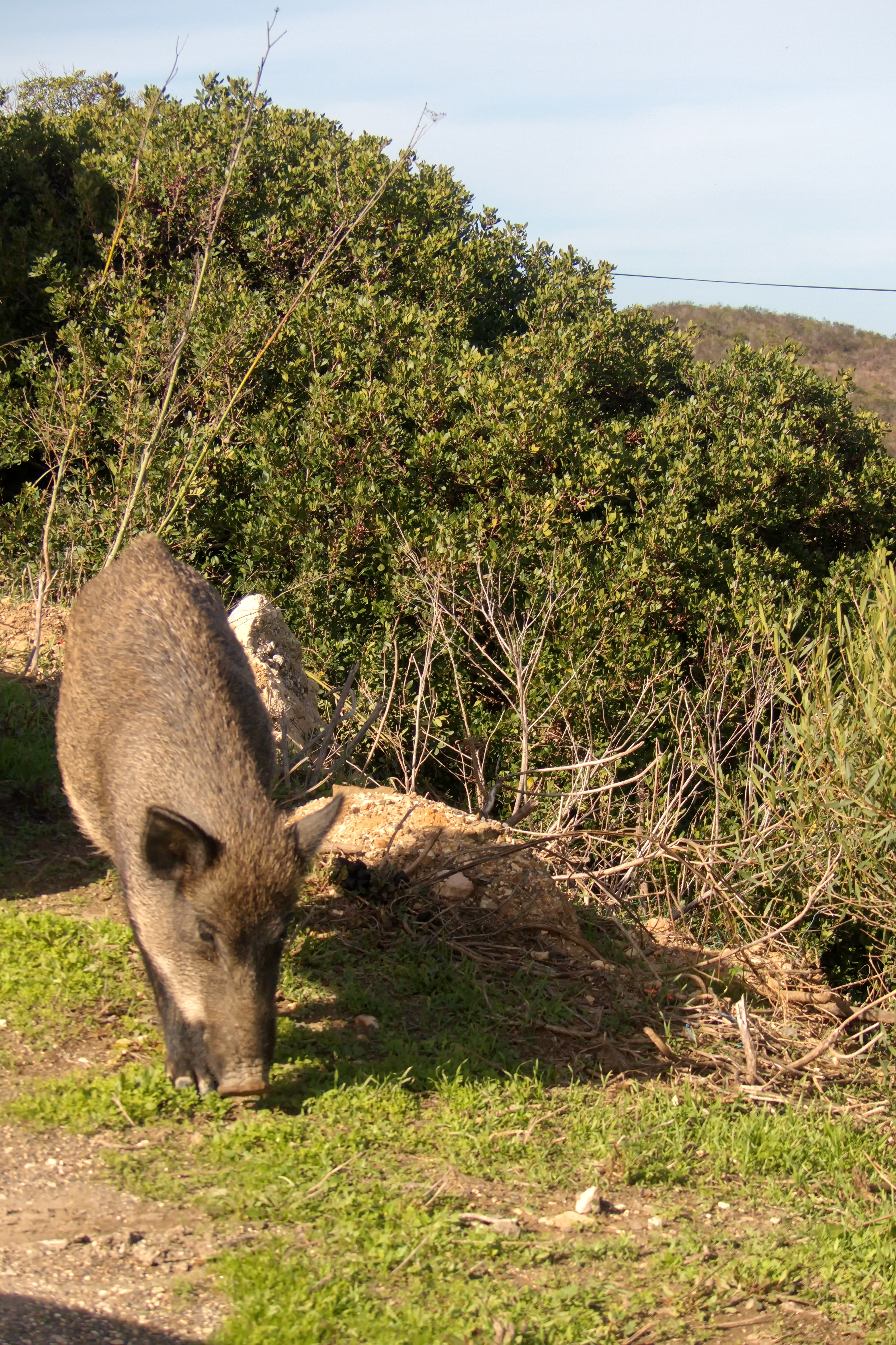
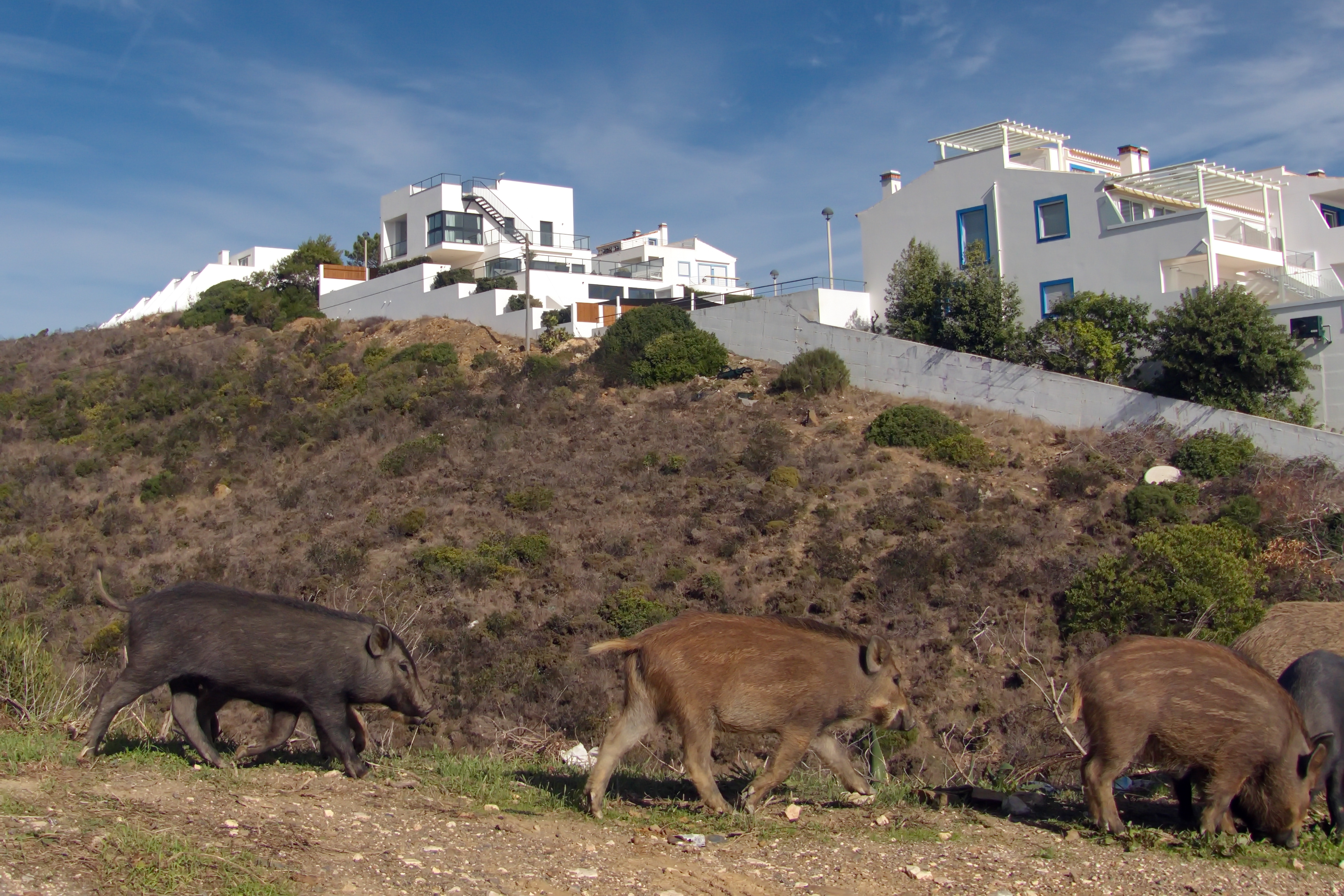
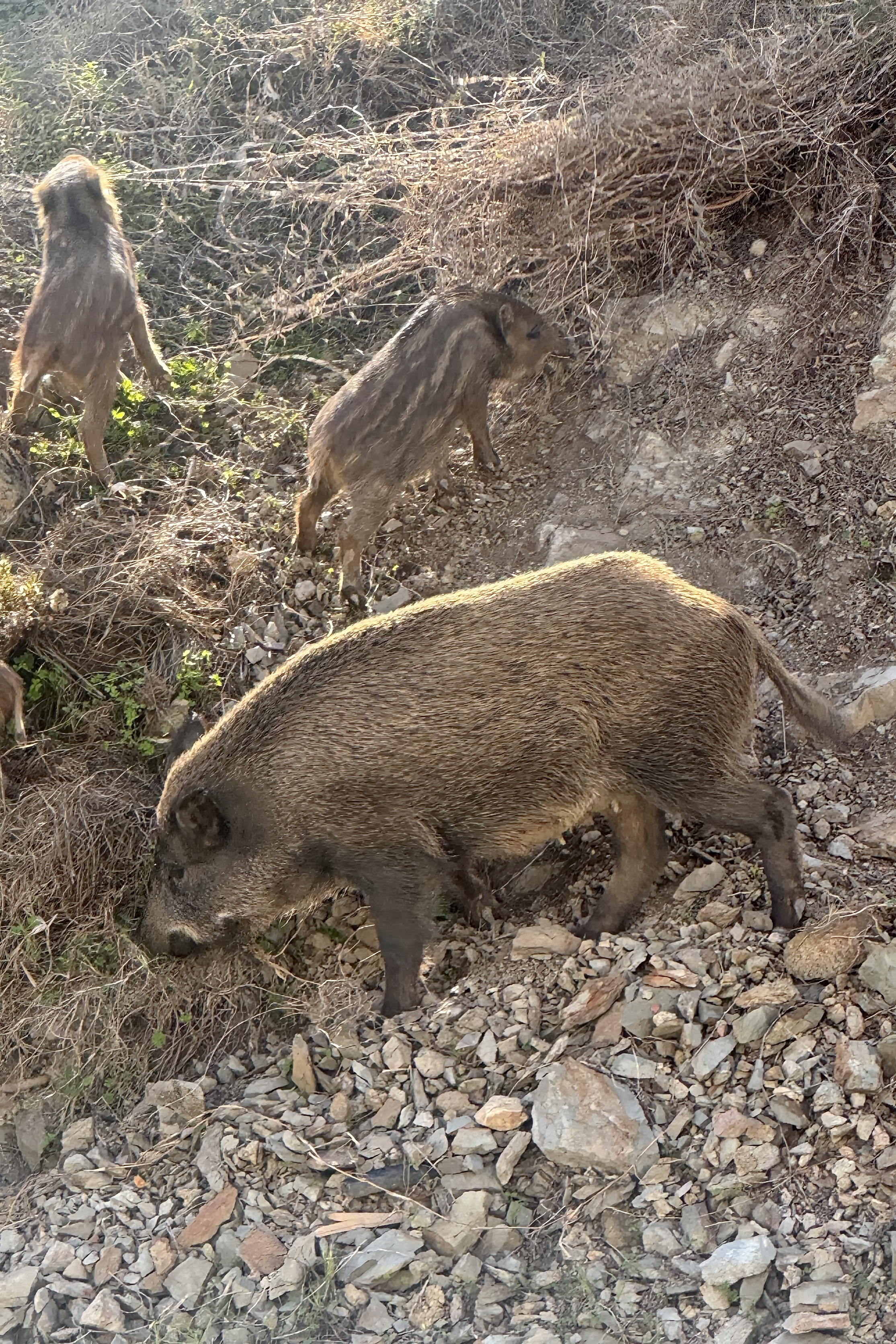
As we tucked into lunch on the way back into the village along a road lined with food shacks and surf shops, a family of wild pigs wandered past, rooting around in the scrub as if they were part of the daily entertainment—a surprise ending to our brief stop here.

Pontal da Carrapateira – The Showstopper
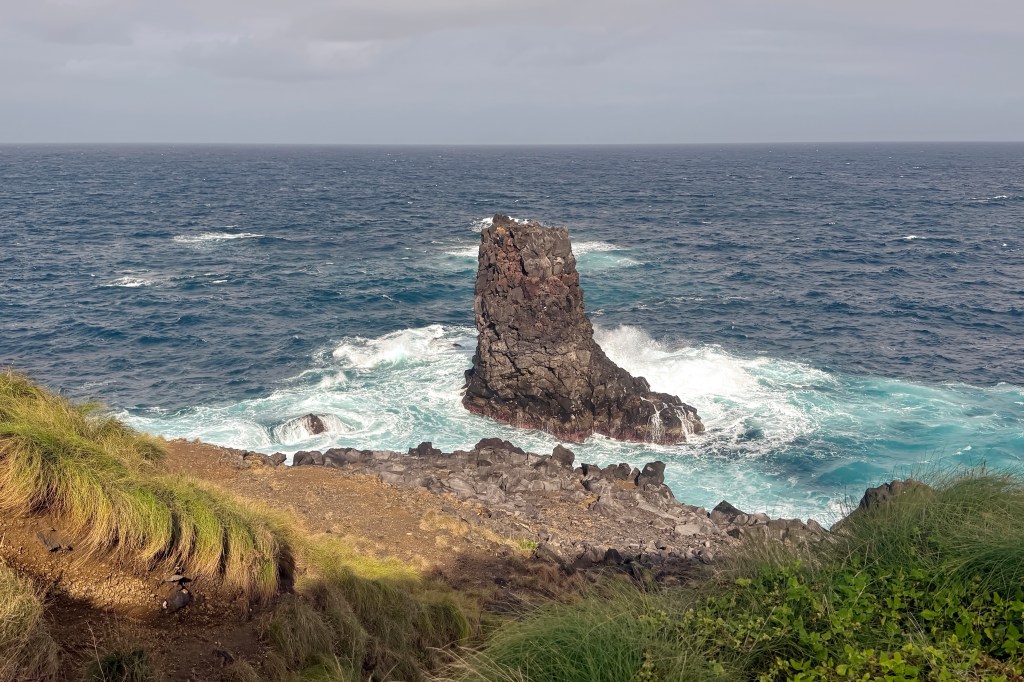
If anywhere stole the show, it was this place, no contest. Pontal da Carrapateira is where the Atlantic revealed its rawest power, rolling surf slammed into the cliffs, salty spray burst high into the air, and endless surges of energy crashed into every rocky inlet.
This rugged headland is crowned by Bordeira Beach, its vast dunes stretching so far inland that they look like a mini desert. A calm lagoon had formed where the river meets the tides, but honestly? The beach felt like a beautiful sideshow. The real star here is the coastline itself, wild, jagged, and breathtaking.


With a gravel road twisting along the clifftops and wooden boardwalks reaching out toward the very edge, this landscape showcased the rugged coastline at its best. From these finger-like viewpoints, the Atlantic put on a thunderous performance: rolling waves smashing into rock, spray shooting into the air, and the horizon stretching endlessly away.

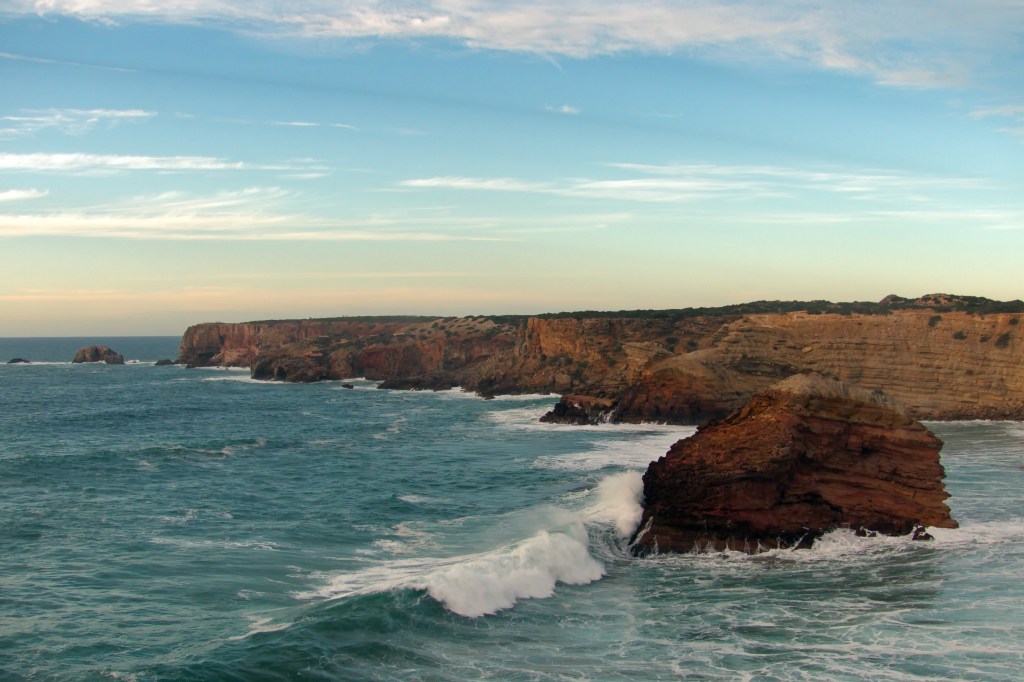

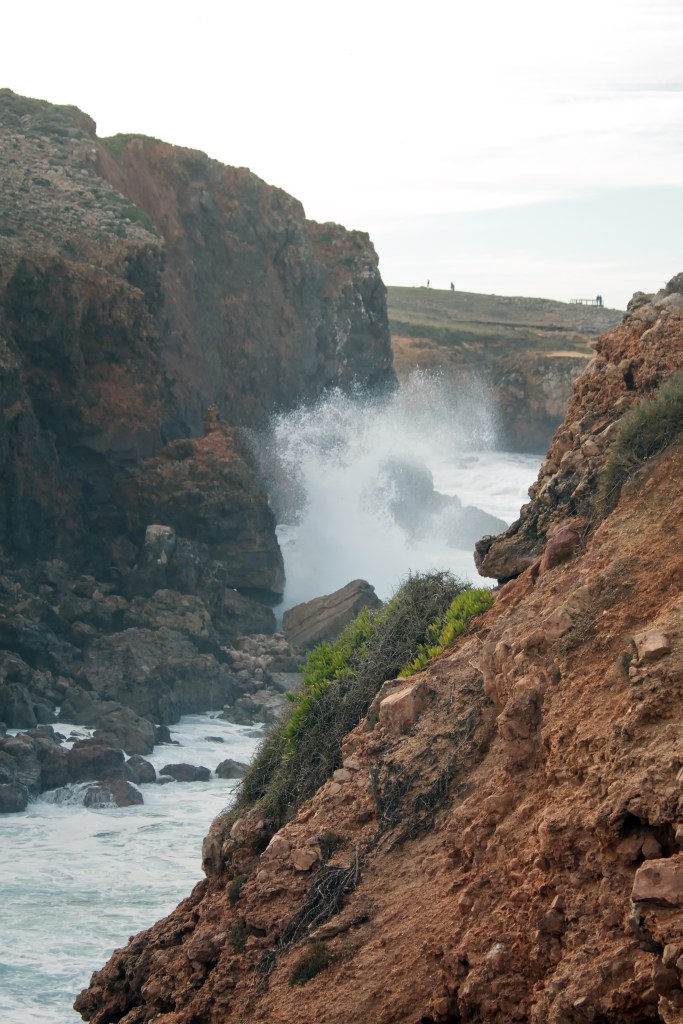
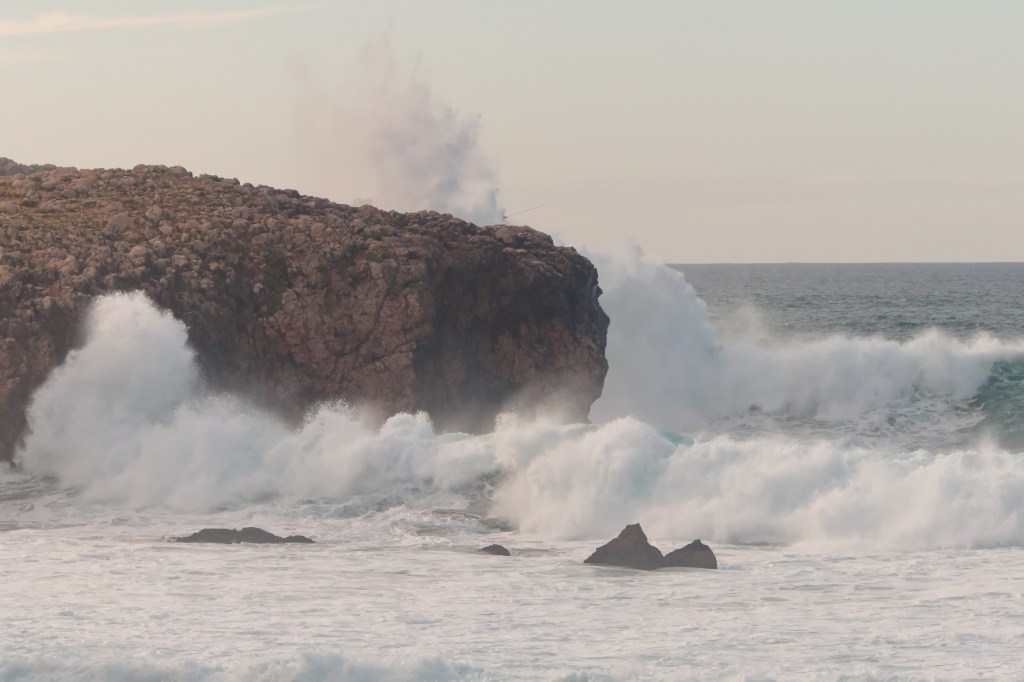

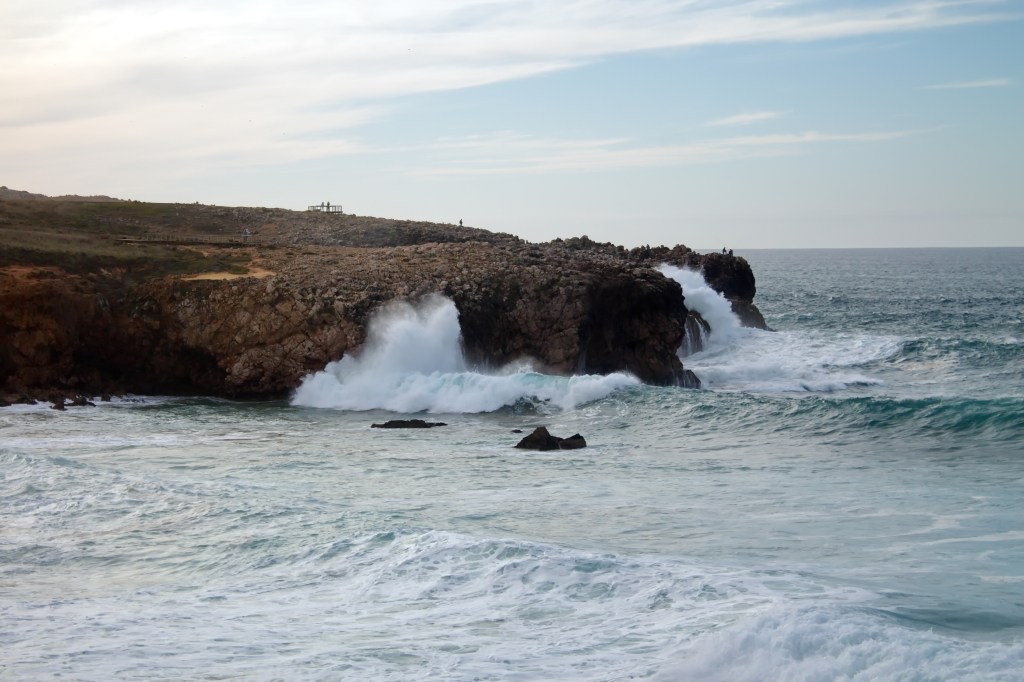

We lingered here for ages, simply watching the surf hammer the cliffs below. It was one of those places that makes you feel small, in the very best way.
Cabo de São Vicente – The Final Glow
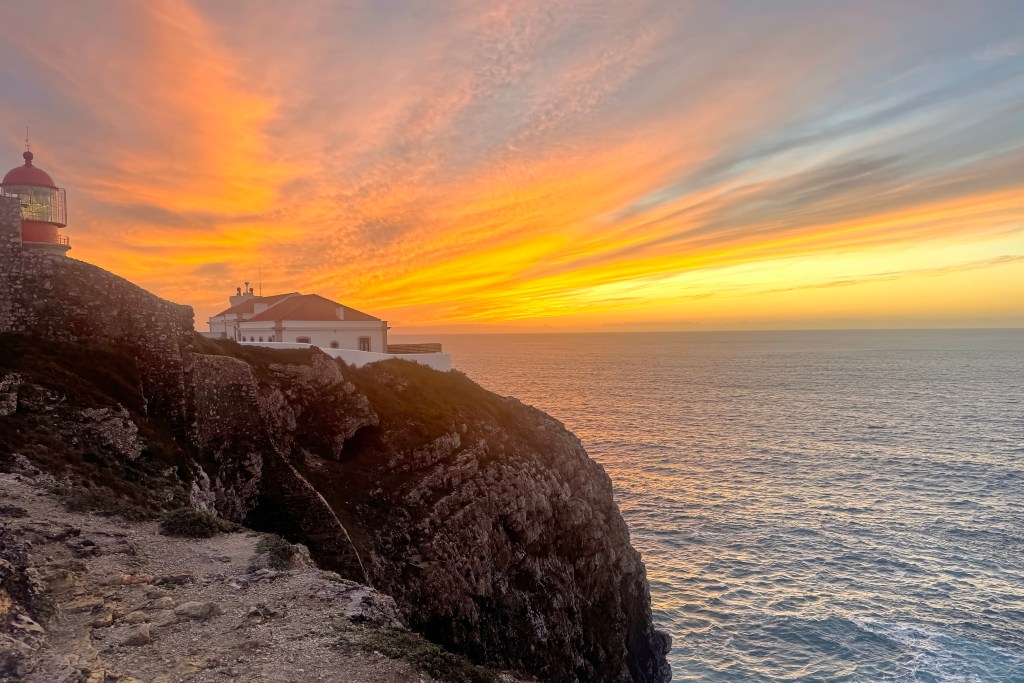
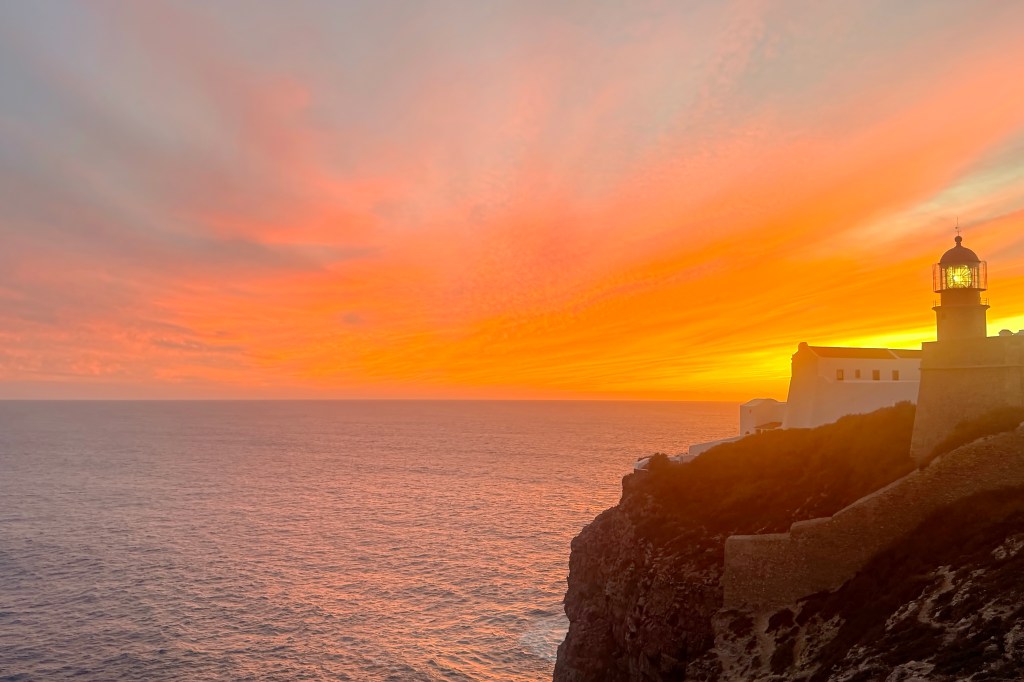
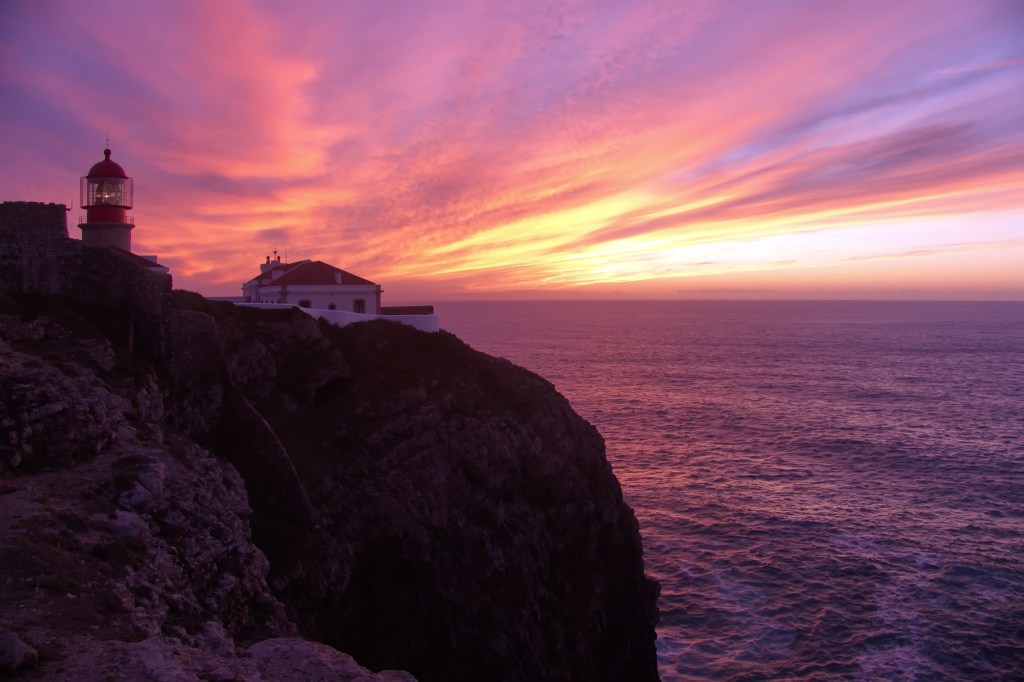
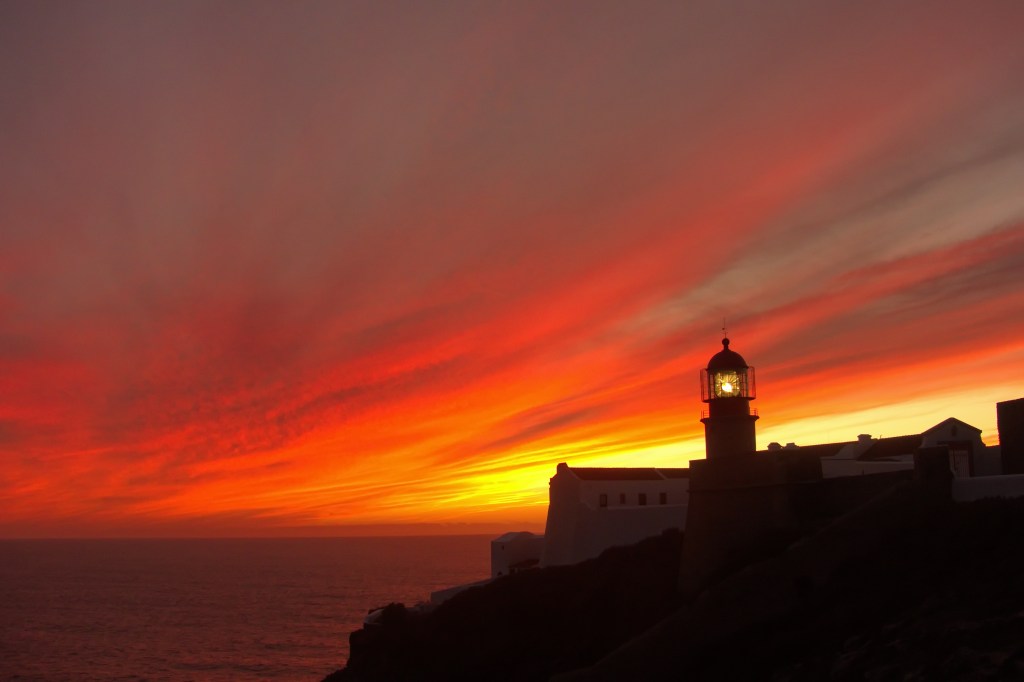
As daylight faded, our last stop was Cabo de São Vicente, the windswept peninsula at the southwesternmost point of mainland Europe. Here, the lighthouse sits steadfast atop towering cliffs, still guiding ships through these wild waters. With no land in sight to the west, it is famous for its sunsets, and now we know why.
As the sun slipped lower, the sky morphed through an artist’s palette, warm gold, fiery orange, calming violet, then intense red. The light silhouetted the cliffs and the lighthouse in dramatic contrast, creating one of those “stop talking and just watch” moments. A perfect ending to a day spent chasing waves and wild beauty.

The Algarve’s West Coast: Untamed, Understated, Unforgettable
This coastline isn’t polished, curated, or resort-heavy. The isolated villages are full of charm and character. The beaches stretch wide and quiet. Trails wind along cliffs that feel like they belong at the edge of the world. And always—always—the soundtrack of the Atlantic follows you, waves crashing in and pulling pebbles across the shoreline in its steady, relentless rhythm.
It’s a place where nature still calls the shots. And honestly? That’s exactly why we loved it.

 Mapgirl Adventures
Leave a comment