The Algarve region isn’t just golden beaches and sun-soaked resort towns—step away from the loungers, and a whole different world opens up. Think rugged cliffs, turquoise coves, and quiet mountain valleys stitched together by some of Portugal’s most unforgettable hiking trails.
On our recent trip, we laced up our hiking shoes and explored three wildly different routes: a clifftop section of the Fishermen’s Trail, the dramatic Seven Hanging Valleys Trail, and a mountain surprise tucked deep into the Serra da Picota—the Passadiços do Barranco do Demo (Devil’s Gorge).
Each trail revealed a new side of the Algarve, from salt-sprayed coastlines to peaceful inland ravines. Here’s how our adventure unfolded.
Fishermen’s Trail: Salema to Lagos
Windswept cliffs, secret beaches, and the rhythm of the Atlantic
The Fishermen’s Trail stretches for 226 km along Portugal’s southwest coast—far more than we planned to tackle—but even the smallest section feels like stepping into a world shaped by wind and waves. Over three separate days, we wandered around 30 km of the trail in portions near our rental accommodation, hopping on local buses to reach our start points and letting the sea guide us back.
Burgau to Praia da Luz: A First Taste of the Coast
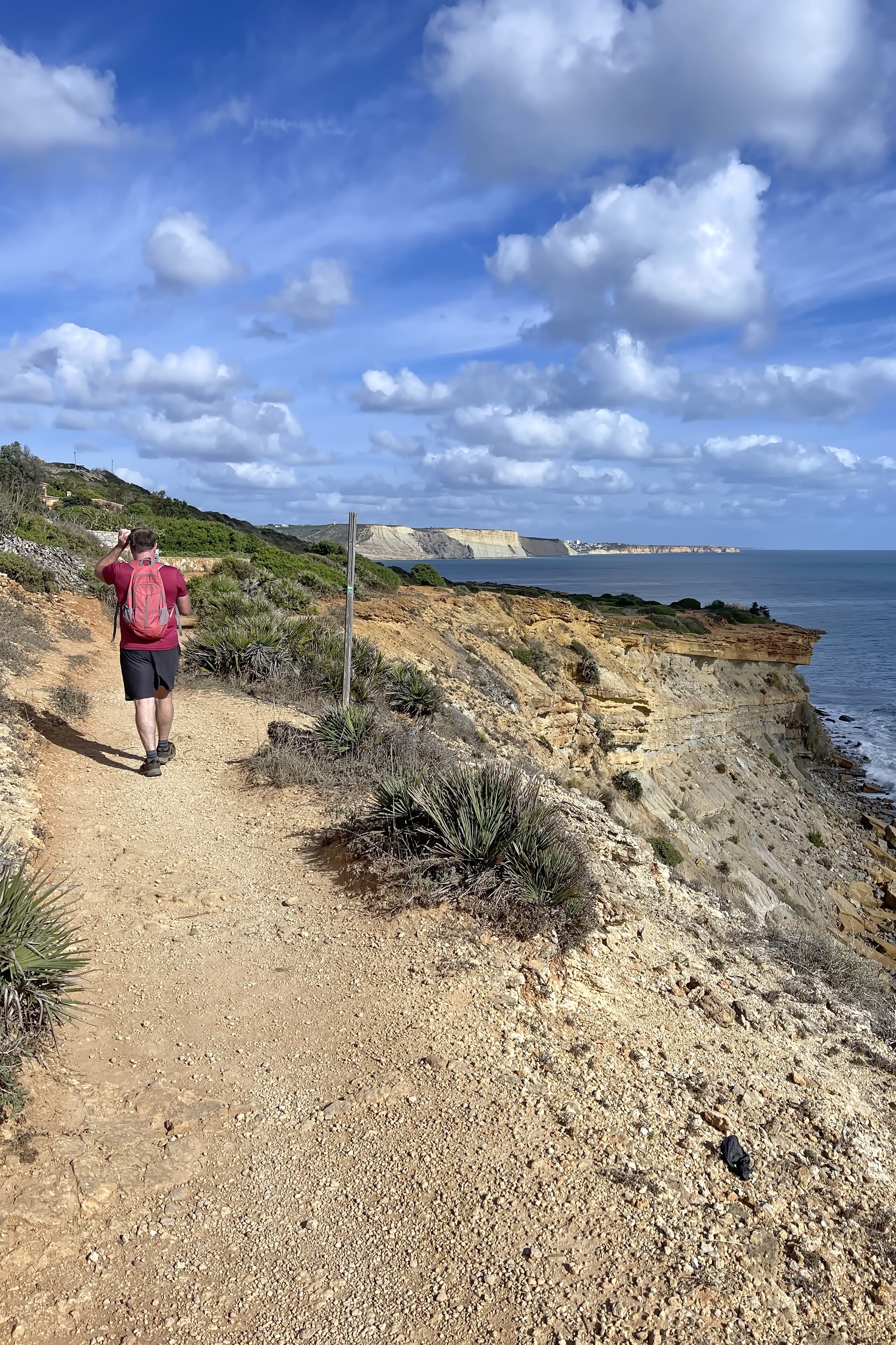
From the moment we stepped off the bus in Burgau and climbed to the first headland overlooking the village and beach, we realized this wasn’t a neat, single trail at all—it was a tangle of sandy paths crisscrossing the cliffs. Blue-and-green markers kept us on track, leading us along the cliff edges and threading us through low shrubs and coastal scrub.

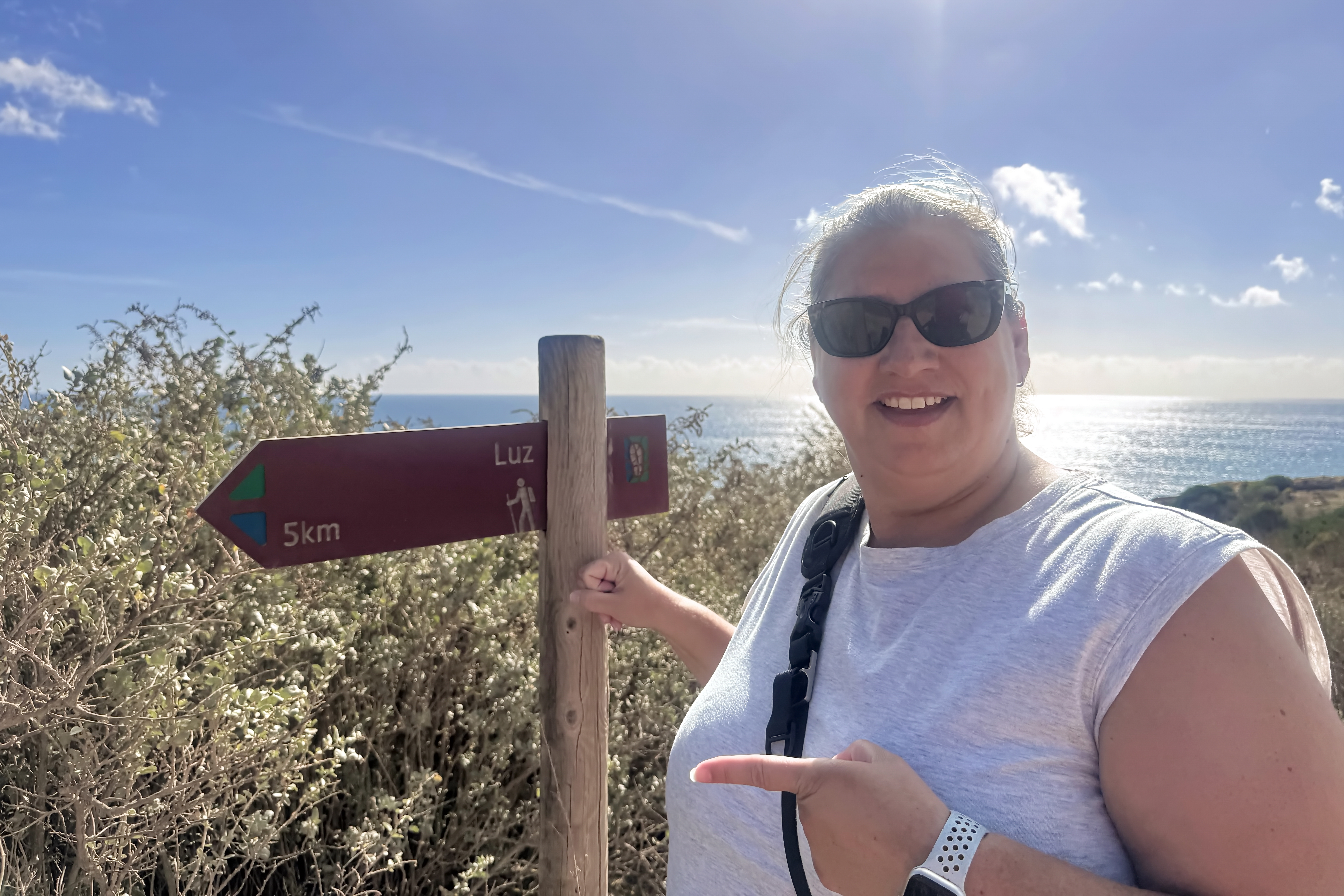

Rocky steps carved into the soft limestone carried us up and down between hidden coves, and along the clifftop the route edged startlingly close to the sheer drop, waves rushing far below.
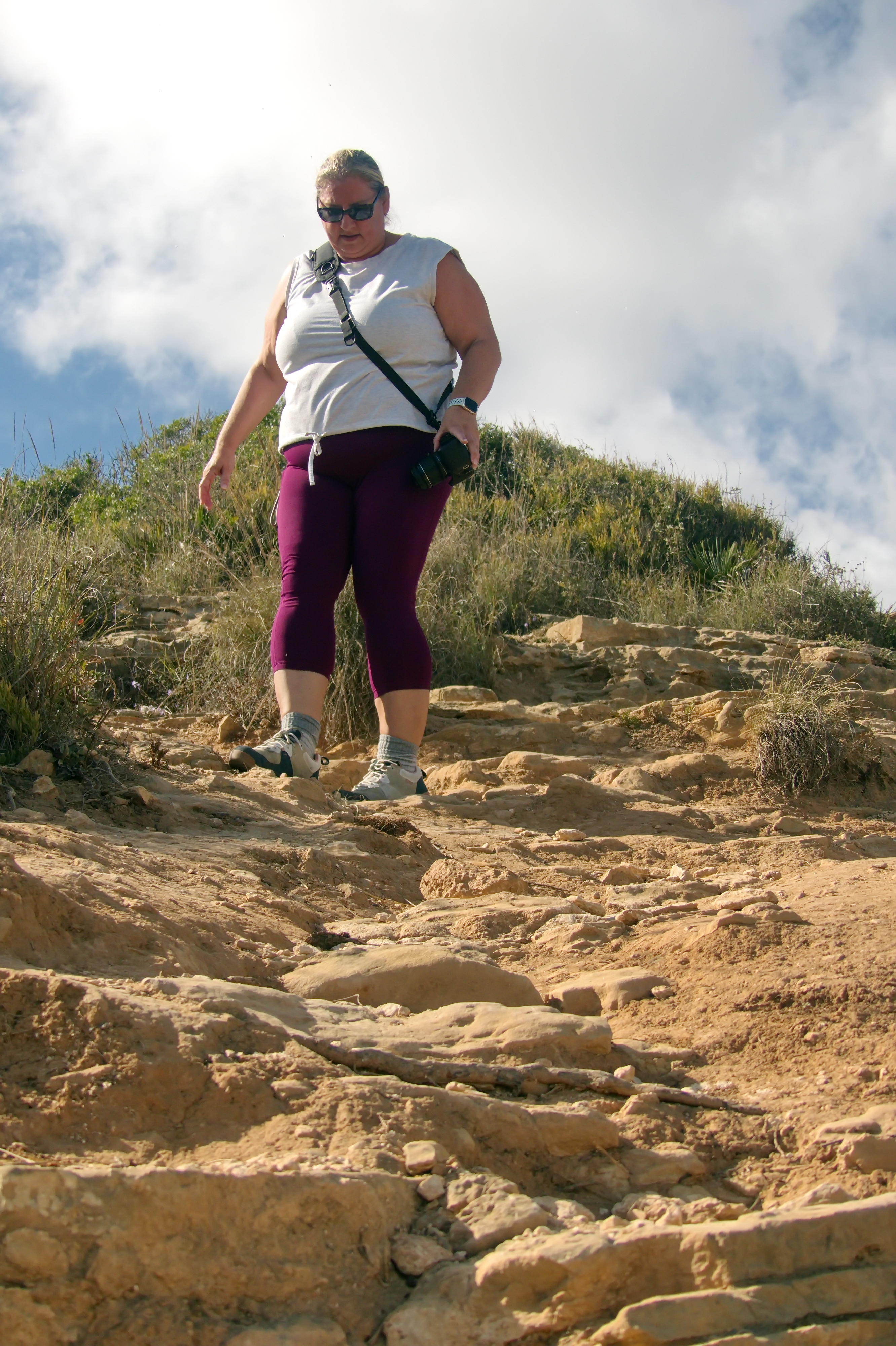

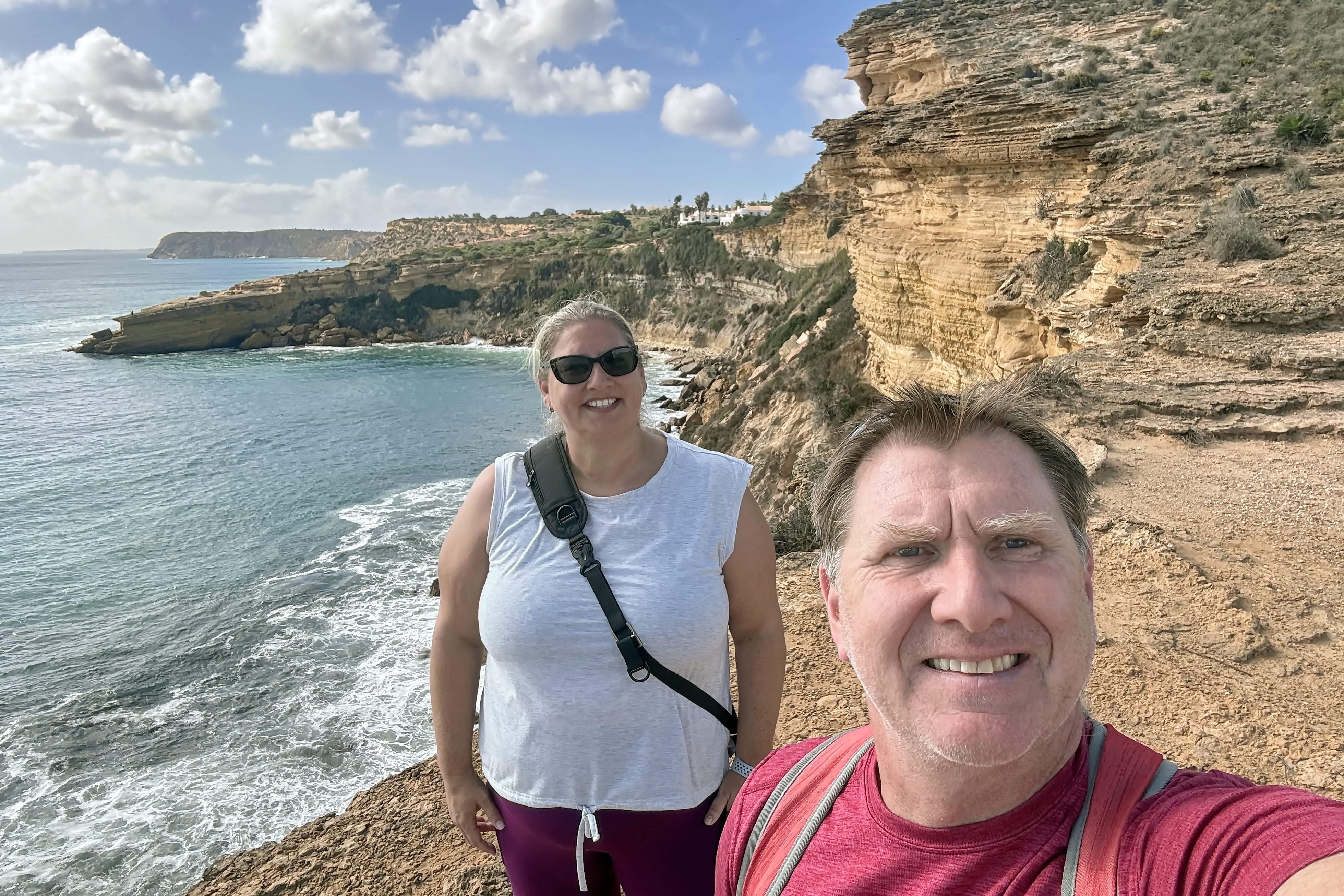
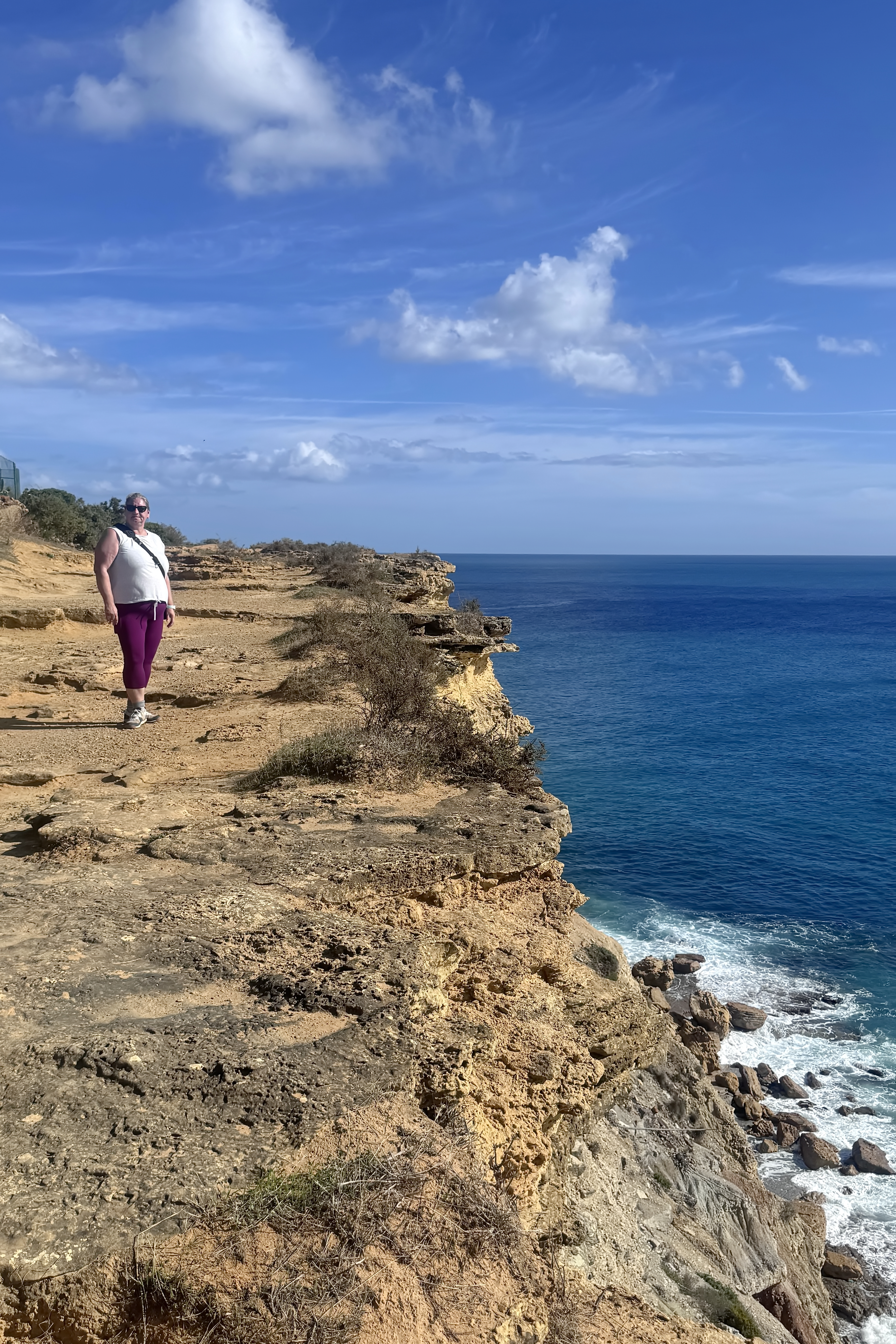
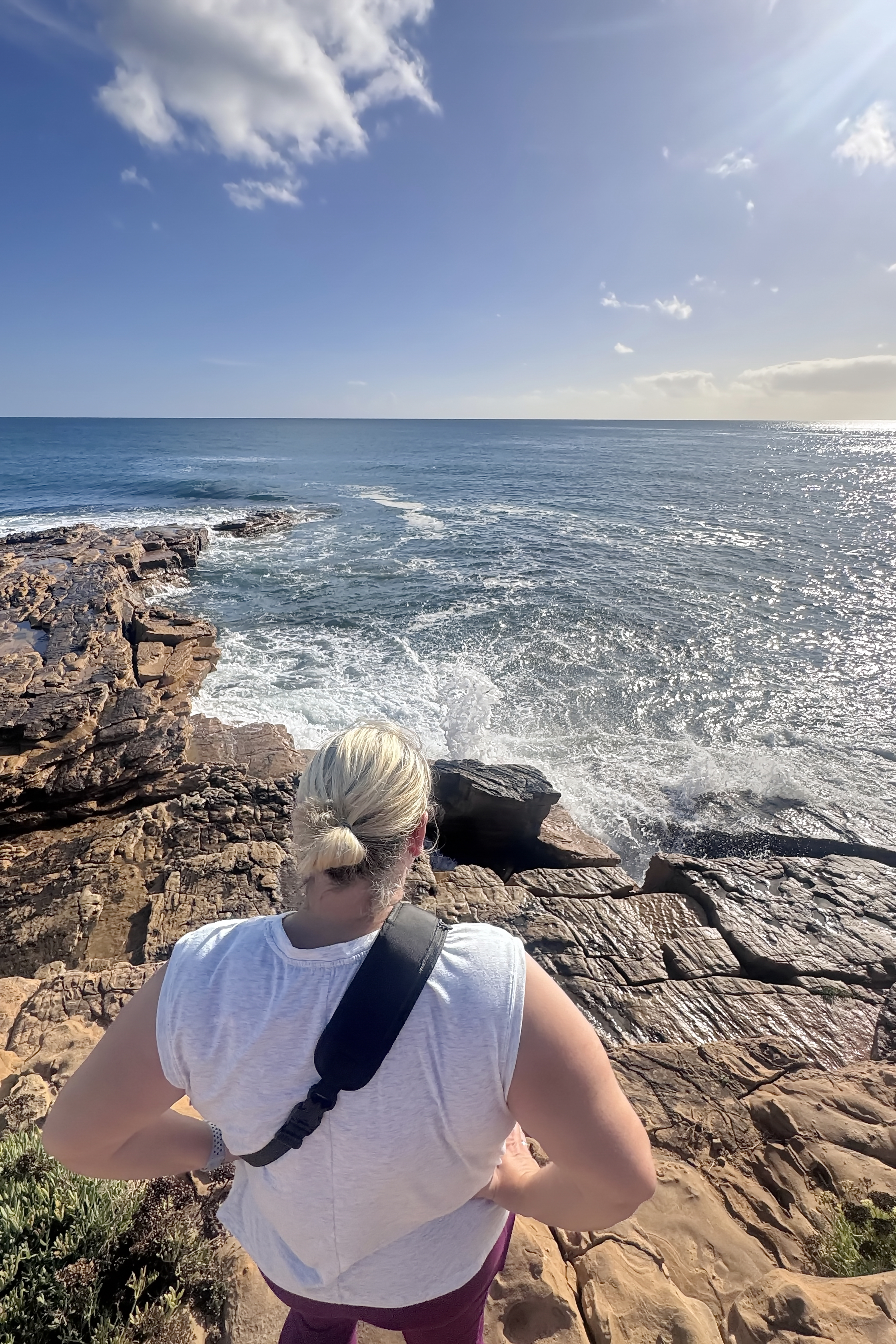
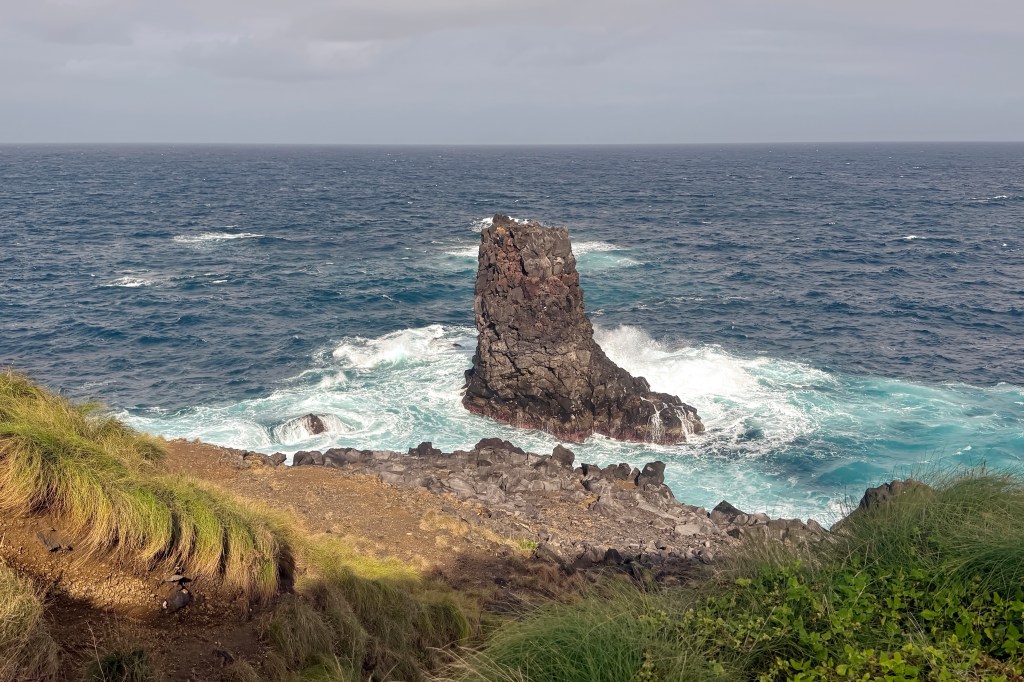
As we approached the first buildings of Praia da Luz, the path dipped toward shoreline level. We paused on a windswept headland to watch the waves pulse against the rocks, each crash sending up a burst of salty mist—a perfect introduction to the trail.

Burgau to Salema: Forts, Cliffs & a Lagoon Detour
Heading the opposite direction another day, we climbed out of Burgau’s whitewashed streets and rejoined the clifftop edge. The views were endless, with the turquoise coves and narrow ravines visible along the shoreline while the waves ebbed onto the rocky grey beaches below.


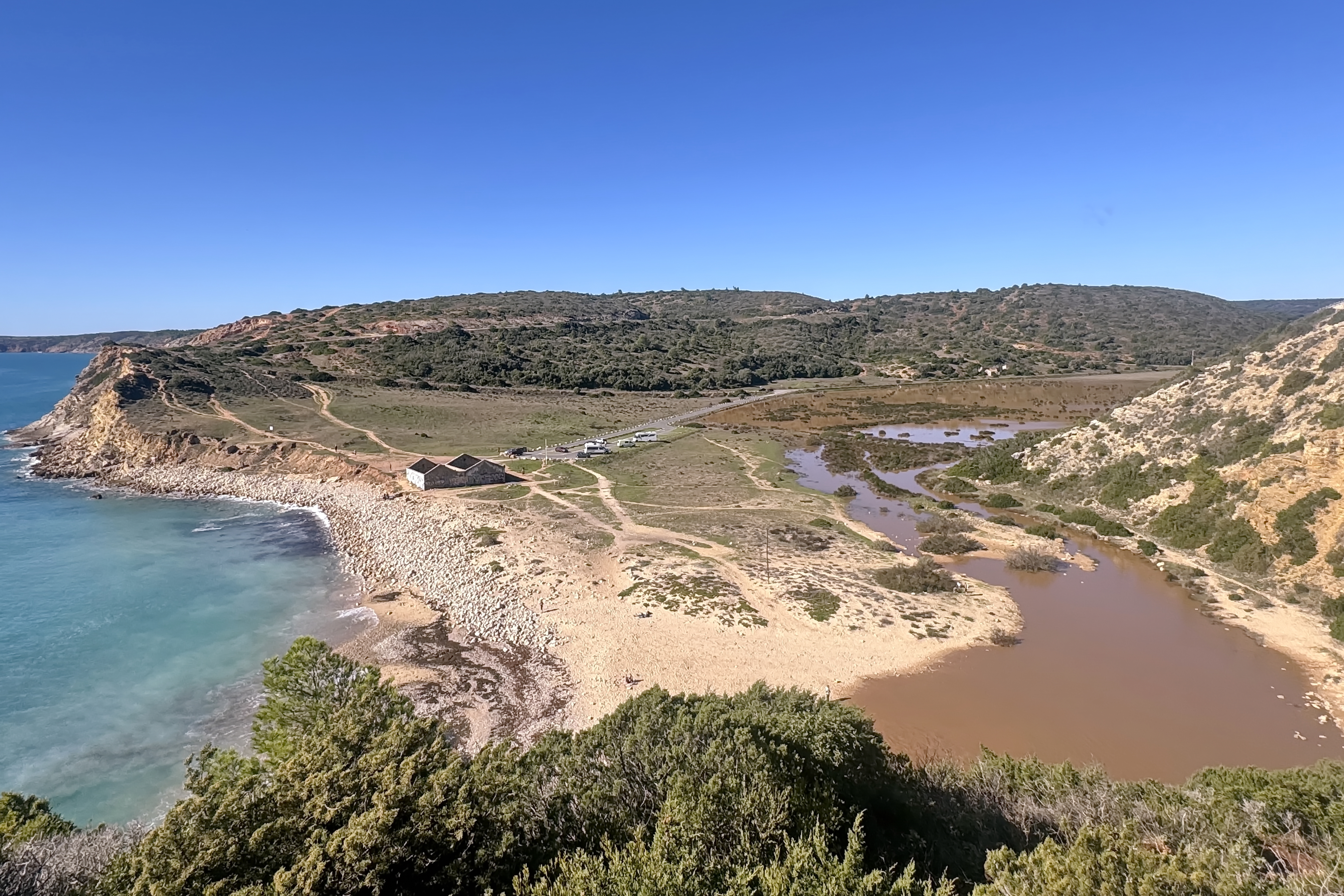
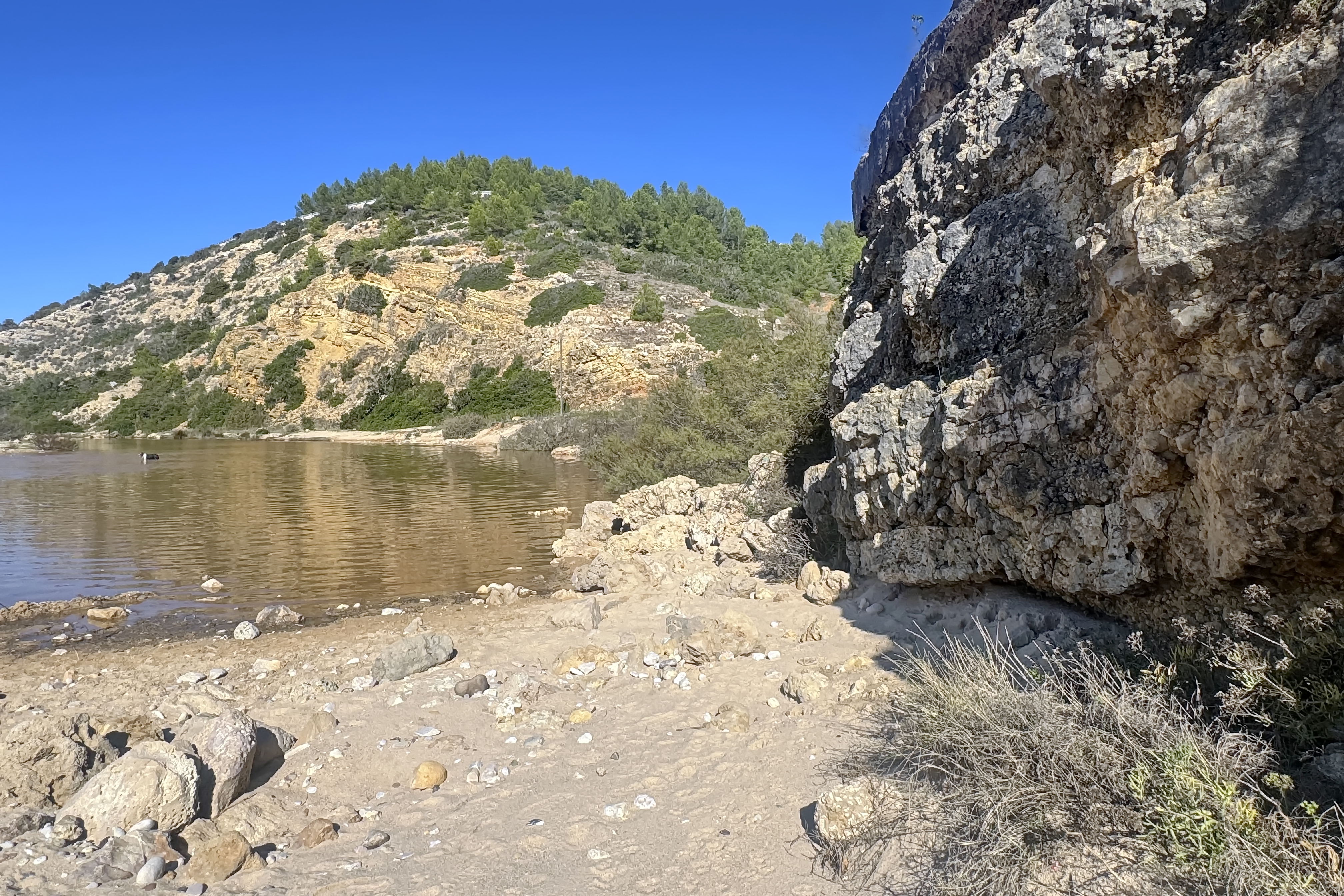
Reaching the low-lying Boco do Rio nature reserve, a lagoon nearly cut off access, and we found ourselves tiptoeing along the narrowest gap to reach the pebbled shoreline, using footholds and handholds to skirt the edge. A little adventure never hurts.

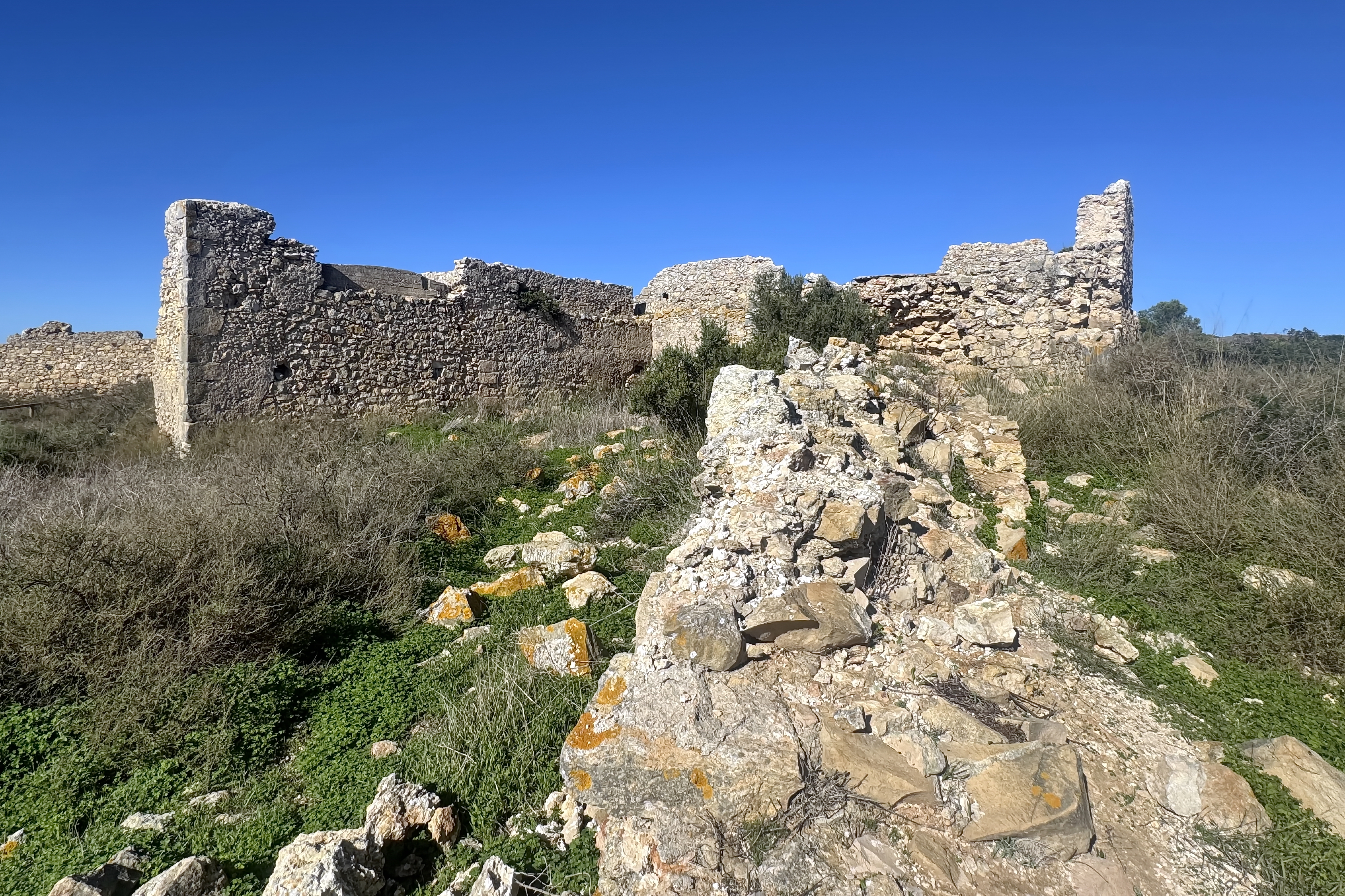
Climbing back up to the next headland, the Fort of Almádena appeared—its weathered stone walls perfectly positioned above the coastline it once protected. Although it has been restored over the years, the fort retains its authenticity and original charm and offered a chance to feel immersed in its history as we explored its walls and towers.


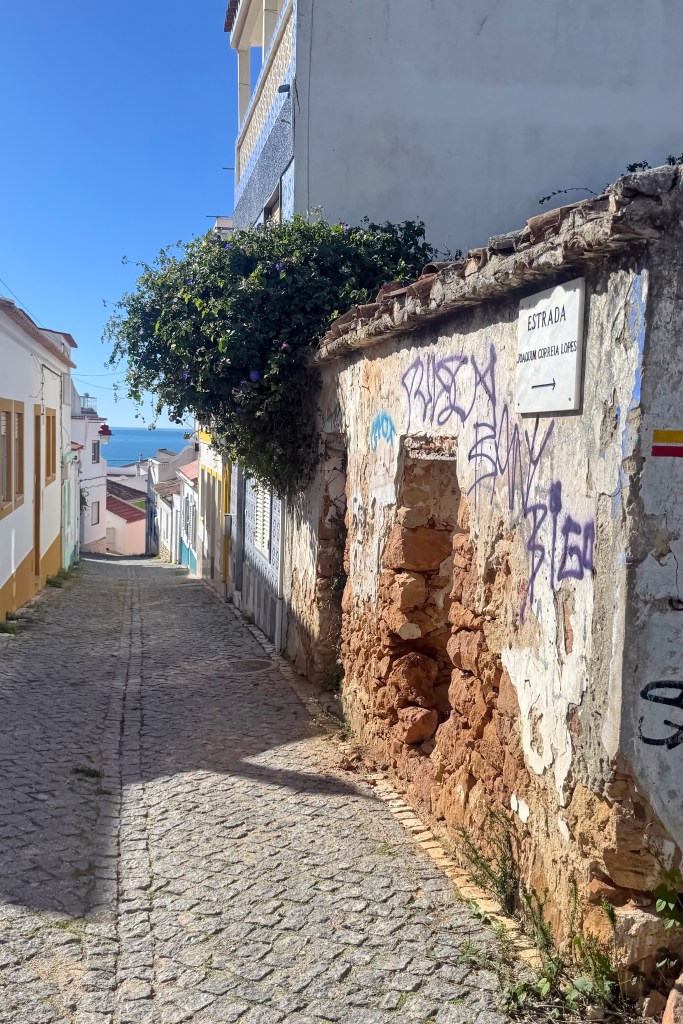
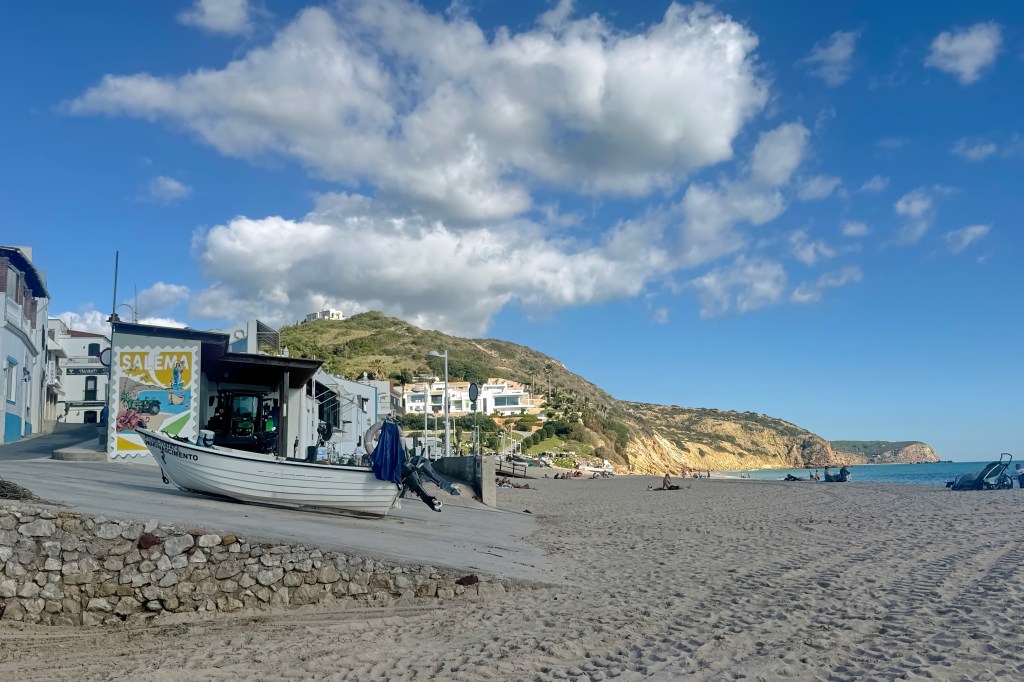
Soon after, the long sweep of Salema’s beach came into view—appearing in teasing, ever-closer glimpses as we made our way along the clifftop trail. A final steep zigzag down a narrow, winding street led us into town, spilling us out onto the promenade.

Praia da Luz to Lagos: Saving the Best for Last
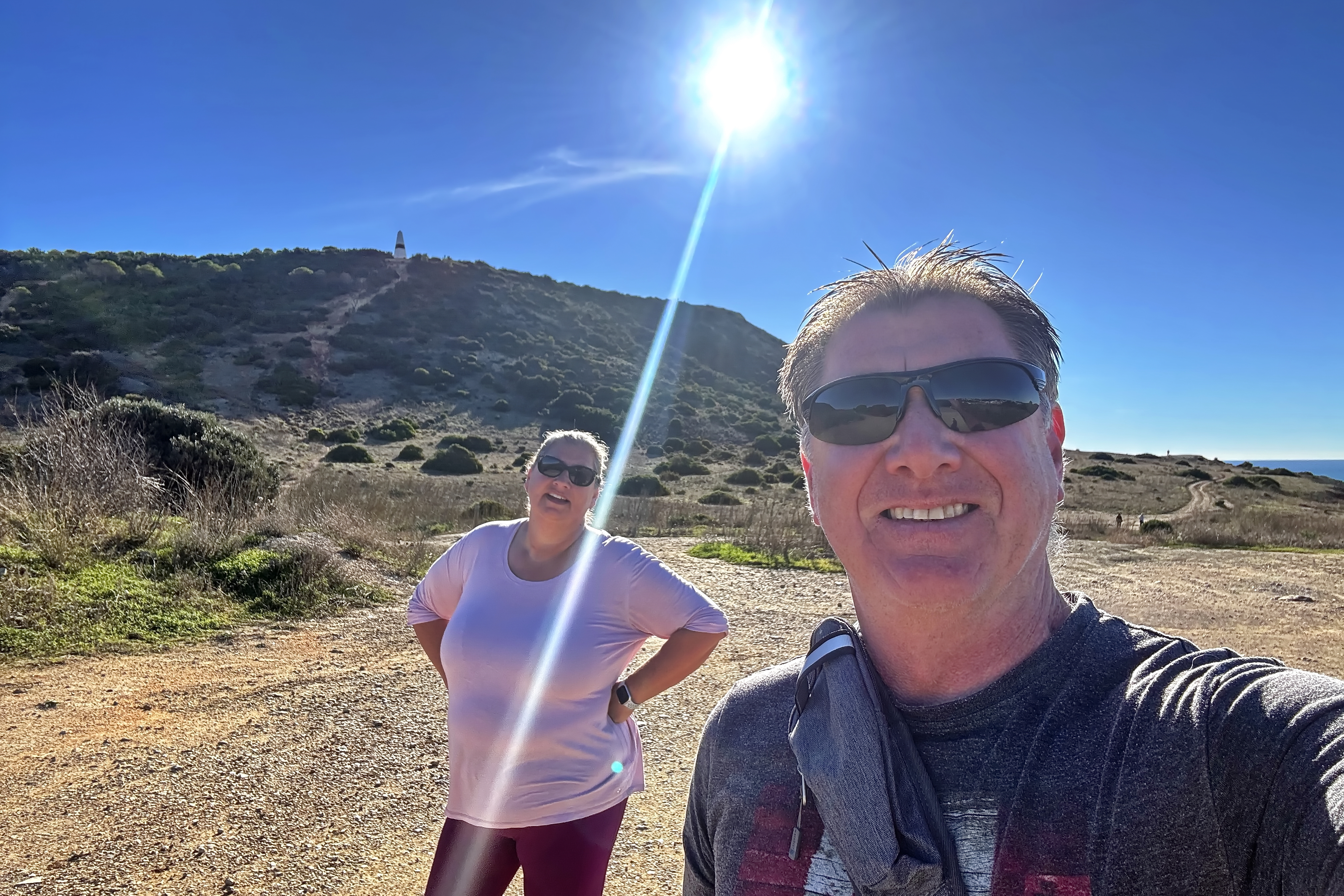
Our favourite stretch of the Fishermen’s Trail happens to be the final section for those completing the entire route. It begins with a steep climb out of Luz to a trig point on a broad plateau, where we were rewarded with sweeping views back over the long curve of beach and the dramatic black-rock outcrop of ‘Rocha Negra’ rising starkly from the headland against the pale cliffs.
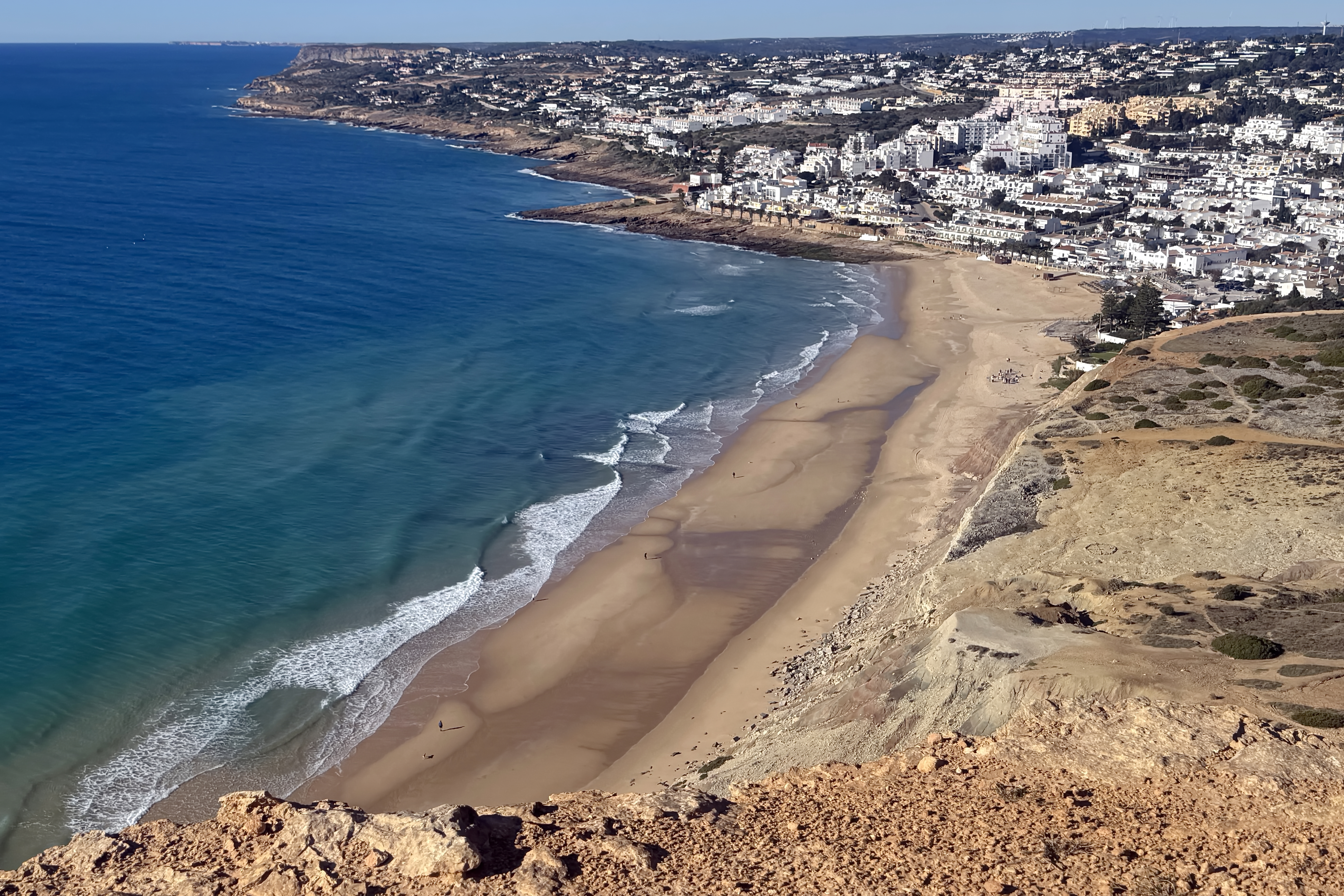


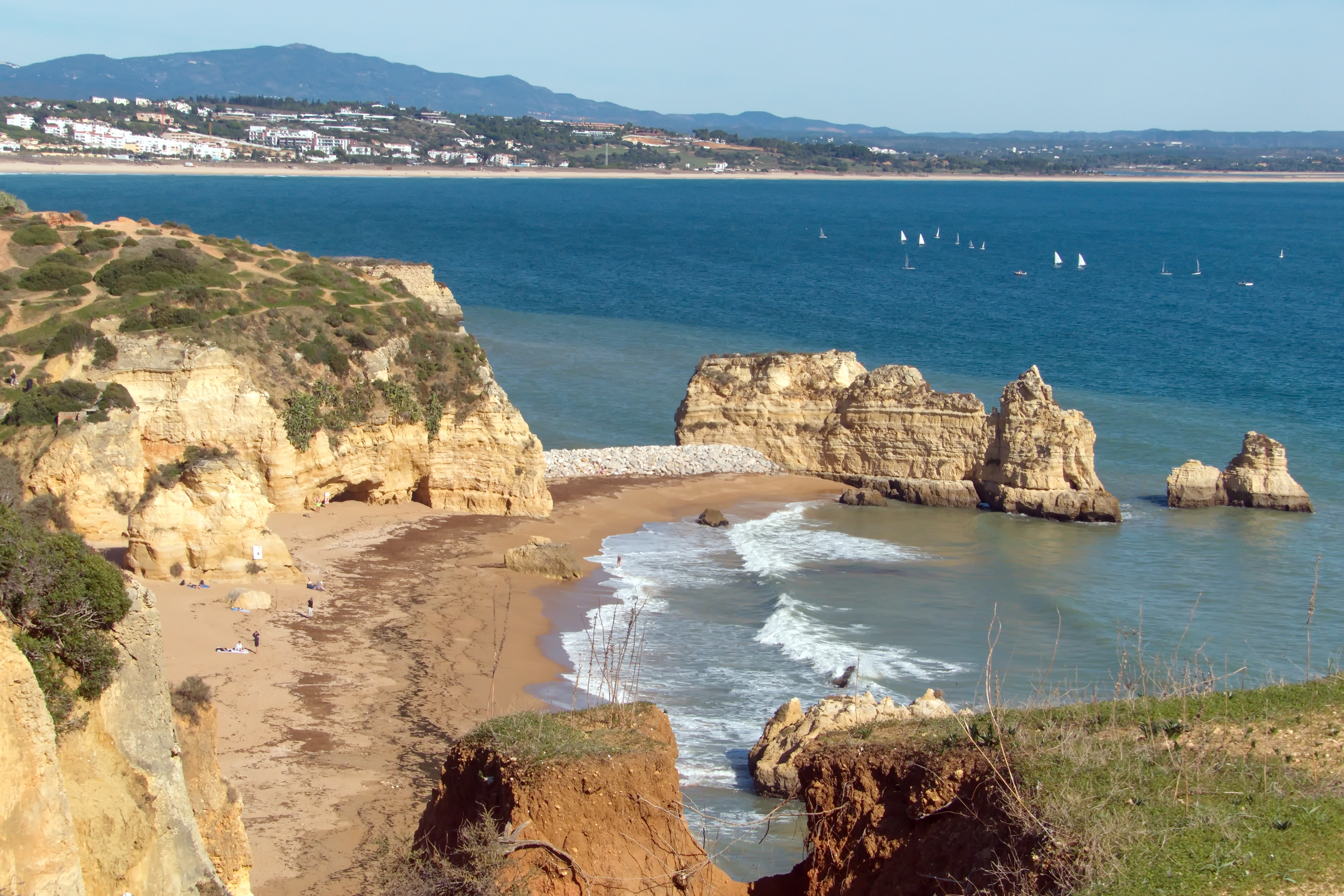
From there until we descended onto the smooth golden sands of Praia da Porto Mós, it was pure coastal magic. The path rolled gently along high ochre cliffs, with deep blue ocean spilling endlessly to the horizon. Crumbling crags dropped sharply to the rocky shoreline below, and safety fencing guarded the most unstable edges. It was serene and effortless walking—just us and the views.
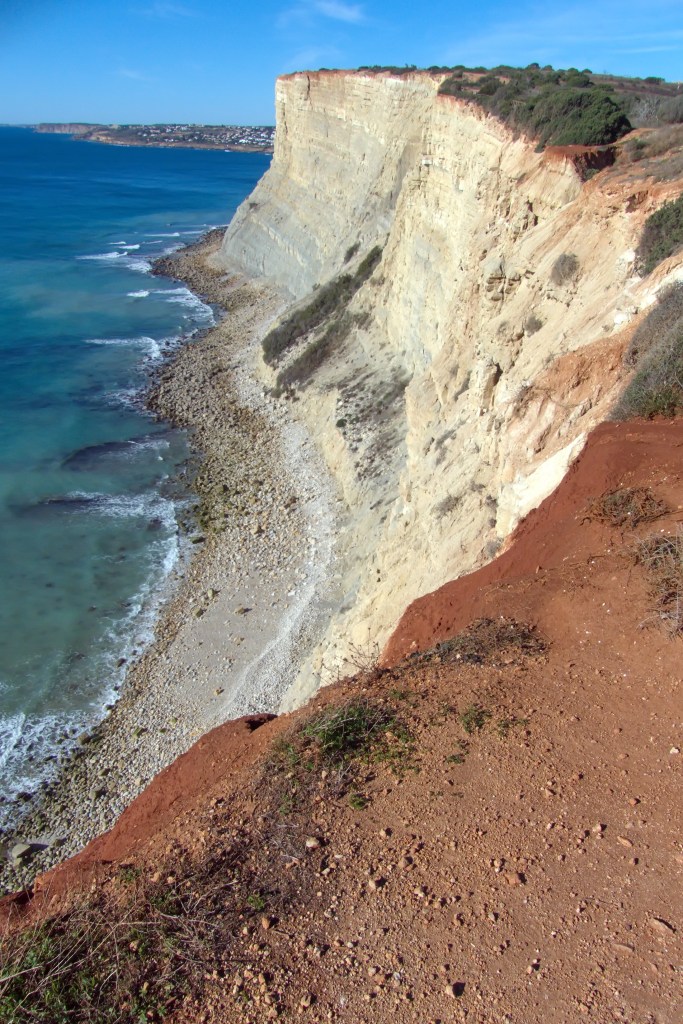
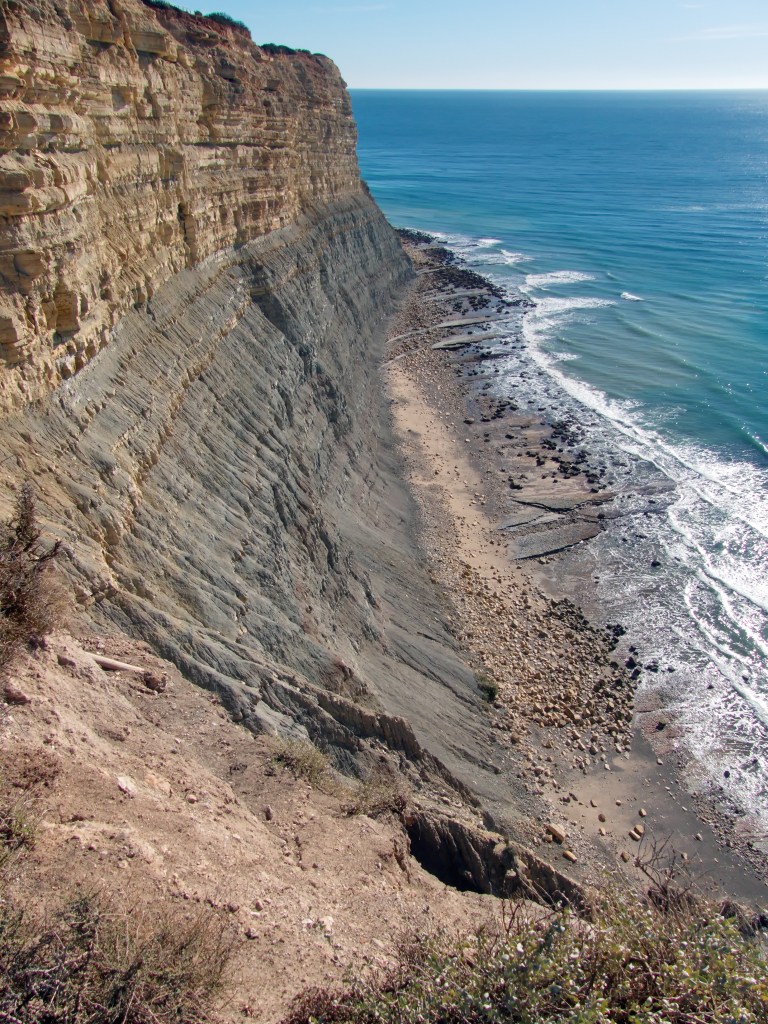
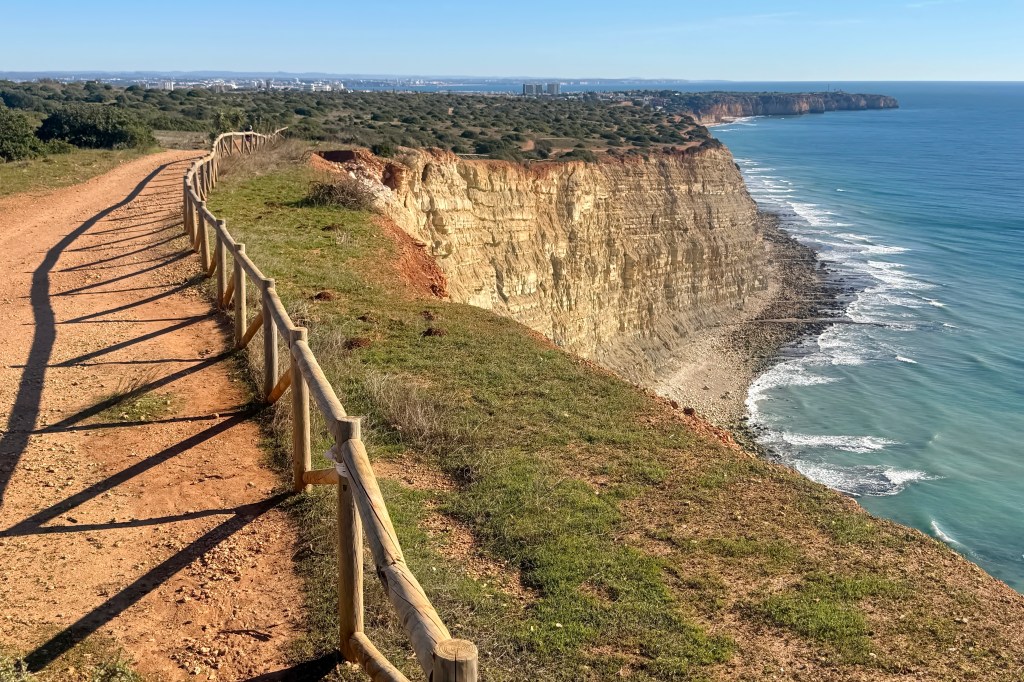

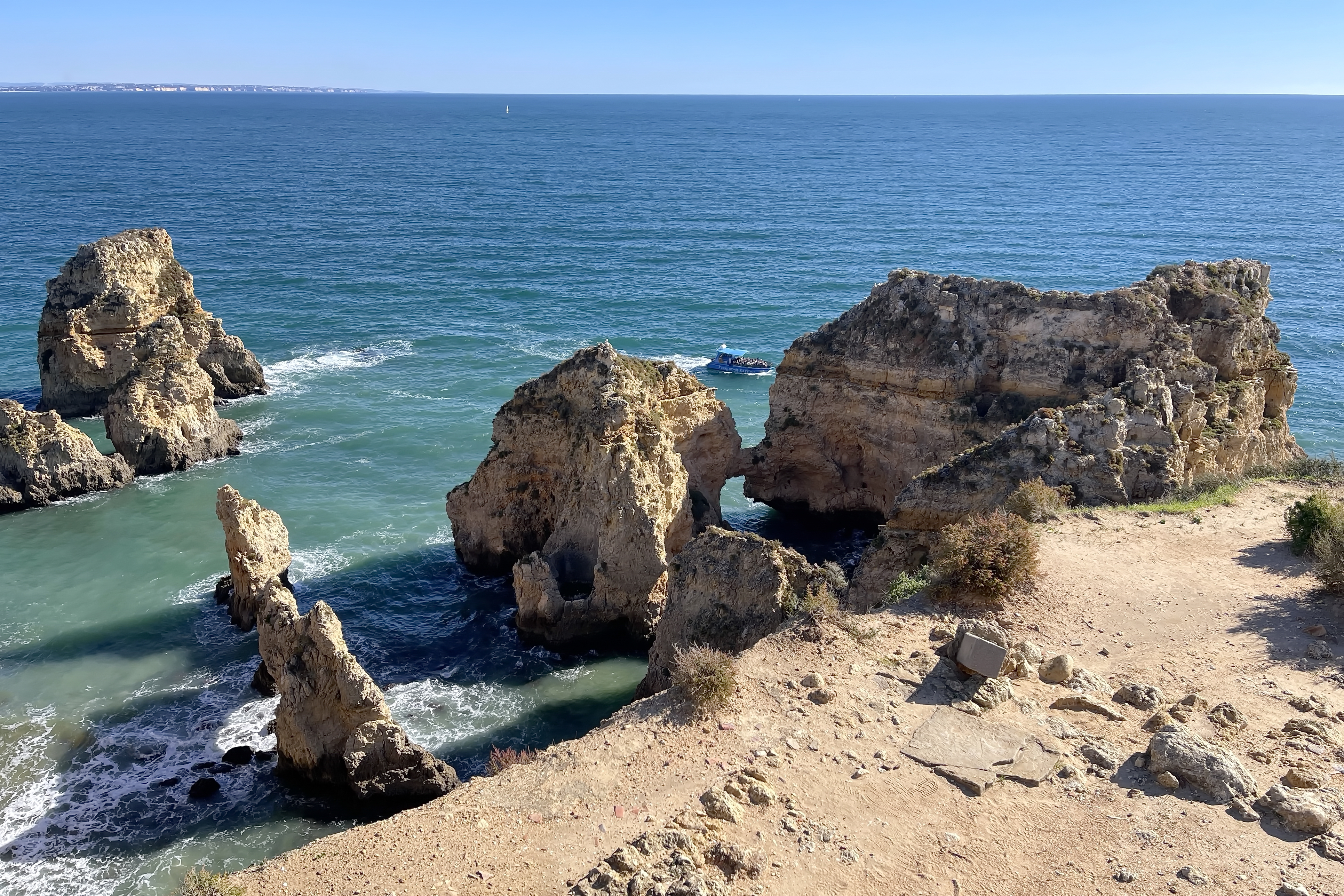
Another short climb gave us one last look all the way back to where we’d started in Praia da Luz before the lighthouse on the distant headland came into sight. Sea stacks and natural arches glowed in the sun, clinging to the shoreline as if ready to break free, while tour boats drifted in and out of hidden coves and grottos.

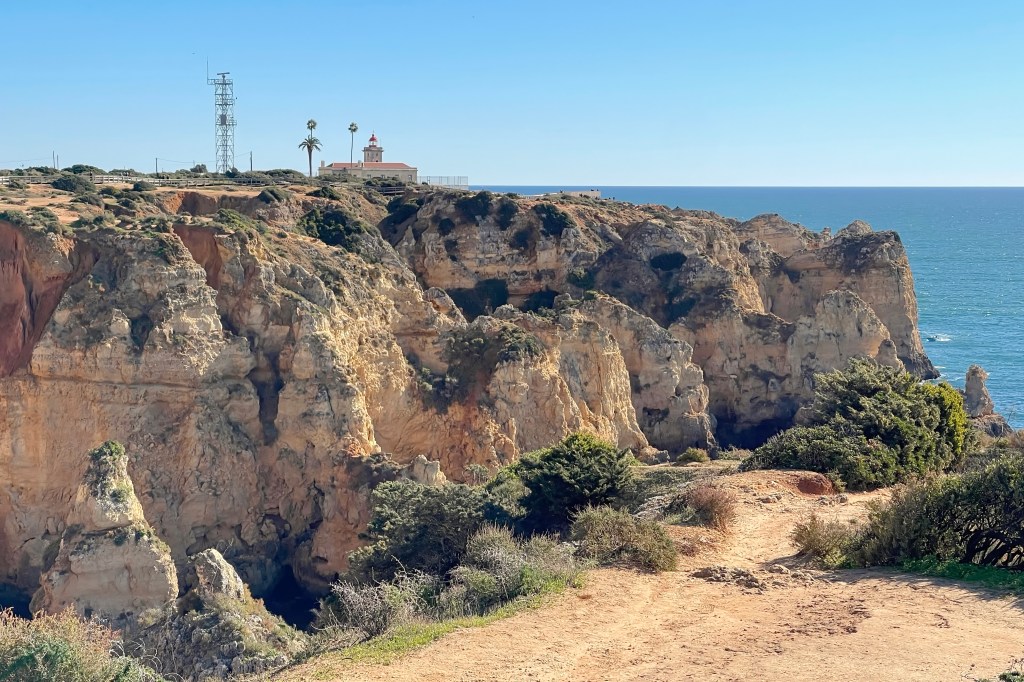


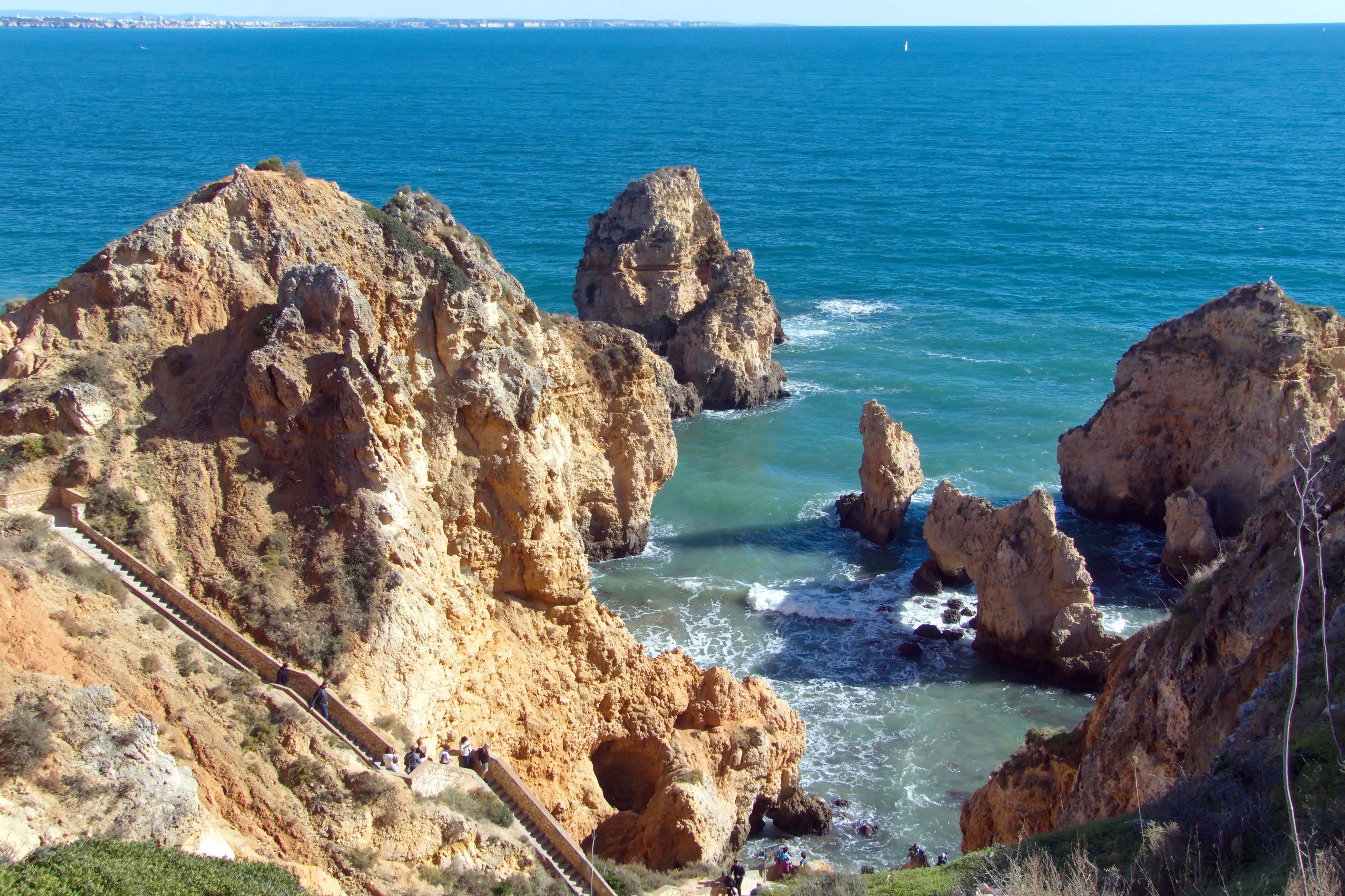
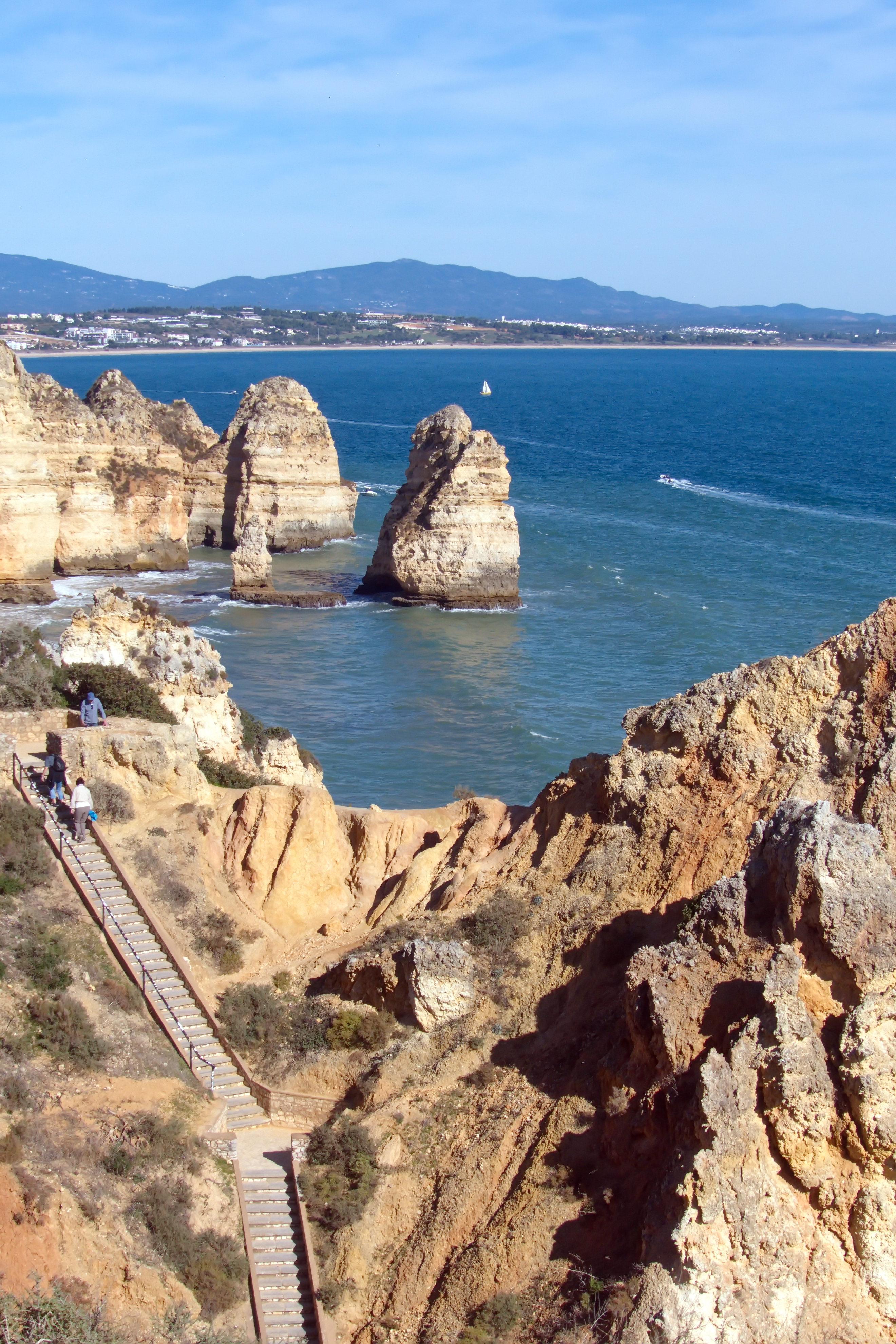
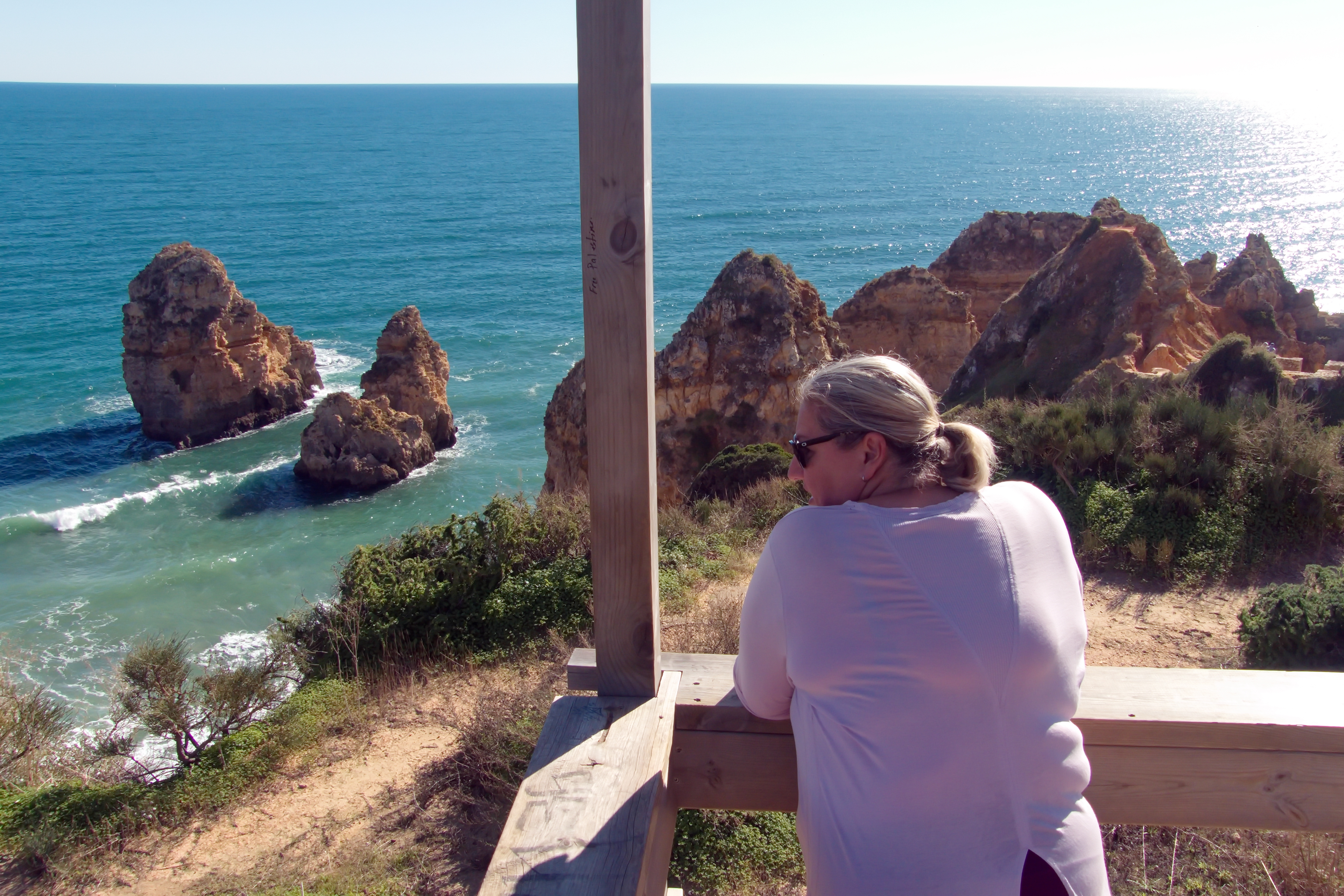
The final stretch into Lagos delivered a true grand finale: the iconic Ponta da Piedade, where jagged pillars of rock frame a landscape that no photo ever fully captures. Each viewpoint along the boardwalk revealed another jaw-dropping scene. Steep steps wound down to quiet, sheltered beaches, and yachts floated lazily in the calm offshore waters. It felt like the Algarve distilled into a single moment—sun, salt, cliffs, and the constant whisper of the Atlantic.

Seven Hanging Valleys Trail
A classic for a reason
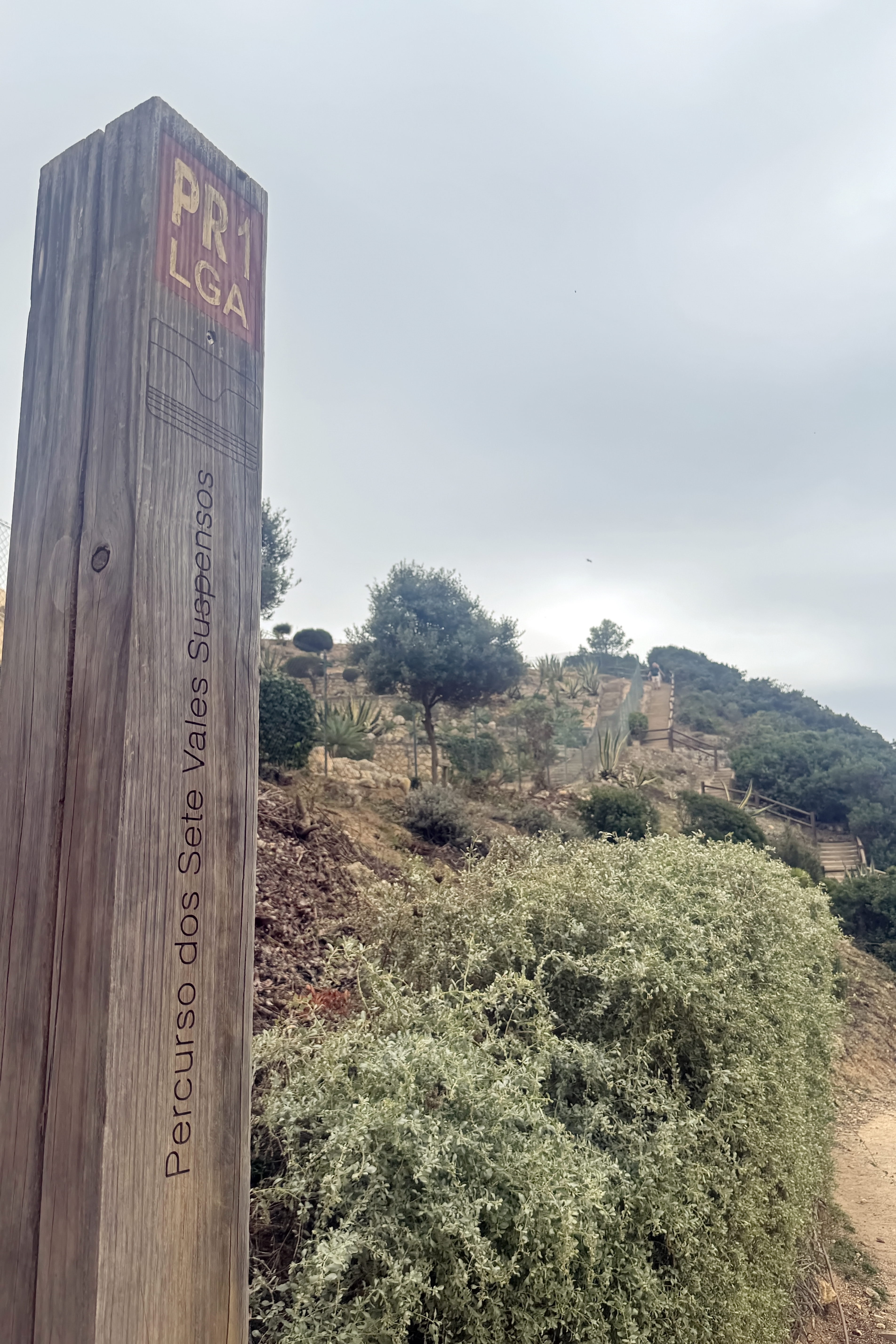
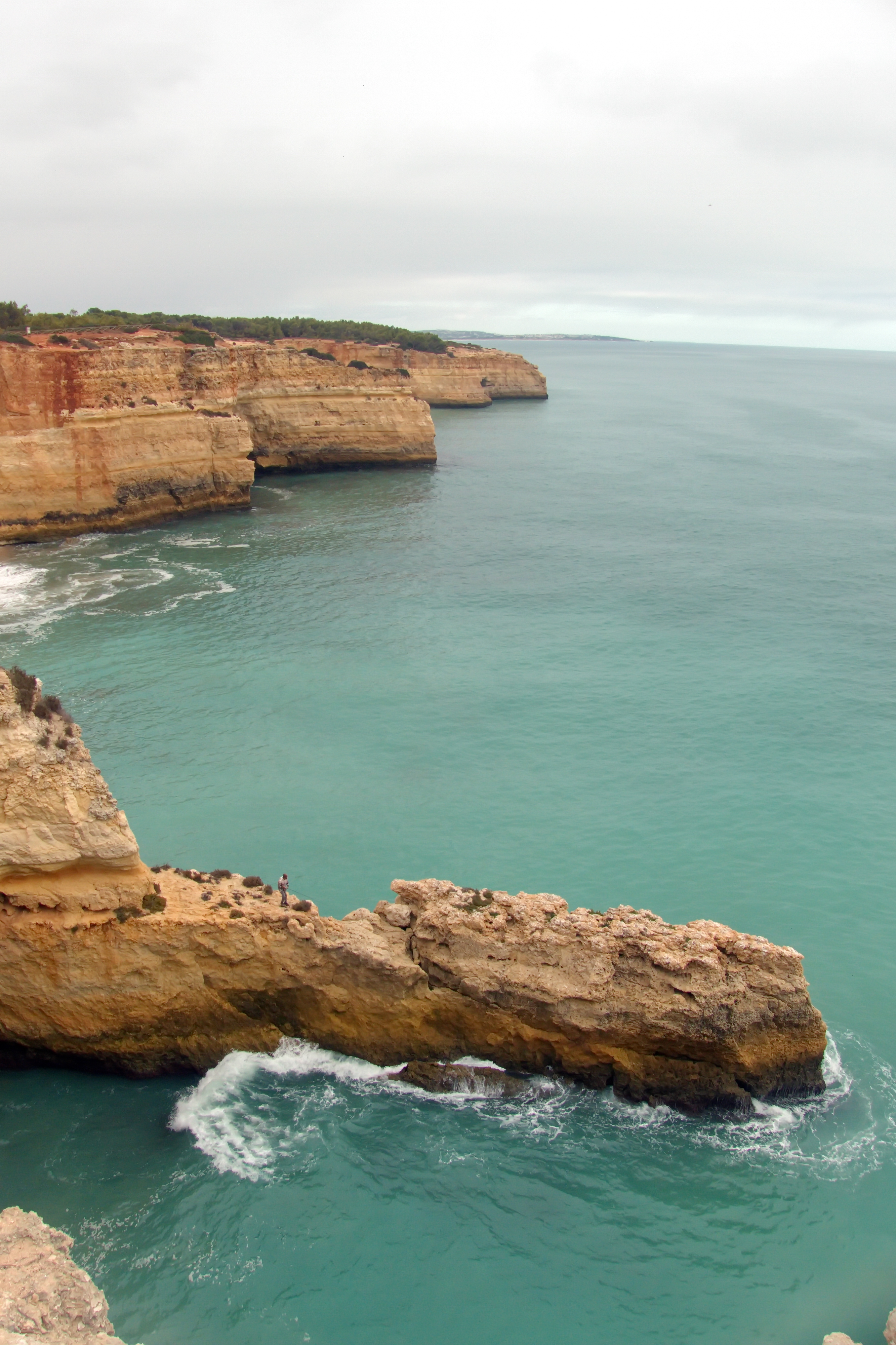
If the Fishermen’s Trail feels wild and raw, the Seven Hanging Valleys Trail is the Algarve’s showstopper—famous, photogenic, and absolutely deserving of its reputation. Even under a cloudy sky, the warm, salty air felt invigorating as we left the shoreline at Praia do Vale Centeanes and immediately climbed a steep staircase that set the tone for the day. This trail doesn’t believe in gentle warm-ups; it throws you straight into the drama. We traced the contours of the cliffs, the path lined with wildflowers and wind-twisted shrubs. Ochre limestone headlands rose and fell beside us, carved by centuries of Atlantic power into natural arches, rugged ridges, and layered rock shelves stretching toward the sea.


Before long, the Alfanzina Lighthouse came into view, standing proudly on its cliff top and offering widescreen views of the coastline in both directions. Below, waves funnelled into a cove and exploded against the rocks, filling the air with spray. A nearby sinkhole, surrounded by low shrubs, hinted at the region’s underground world of caves and collapsed chambers.
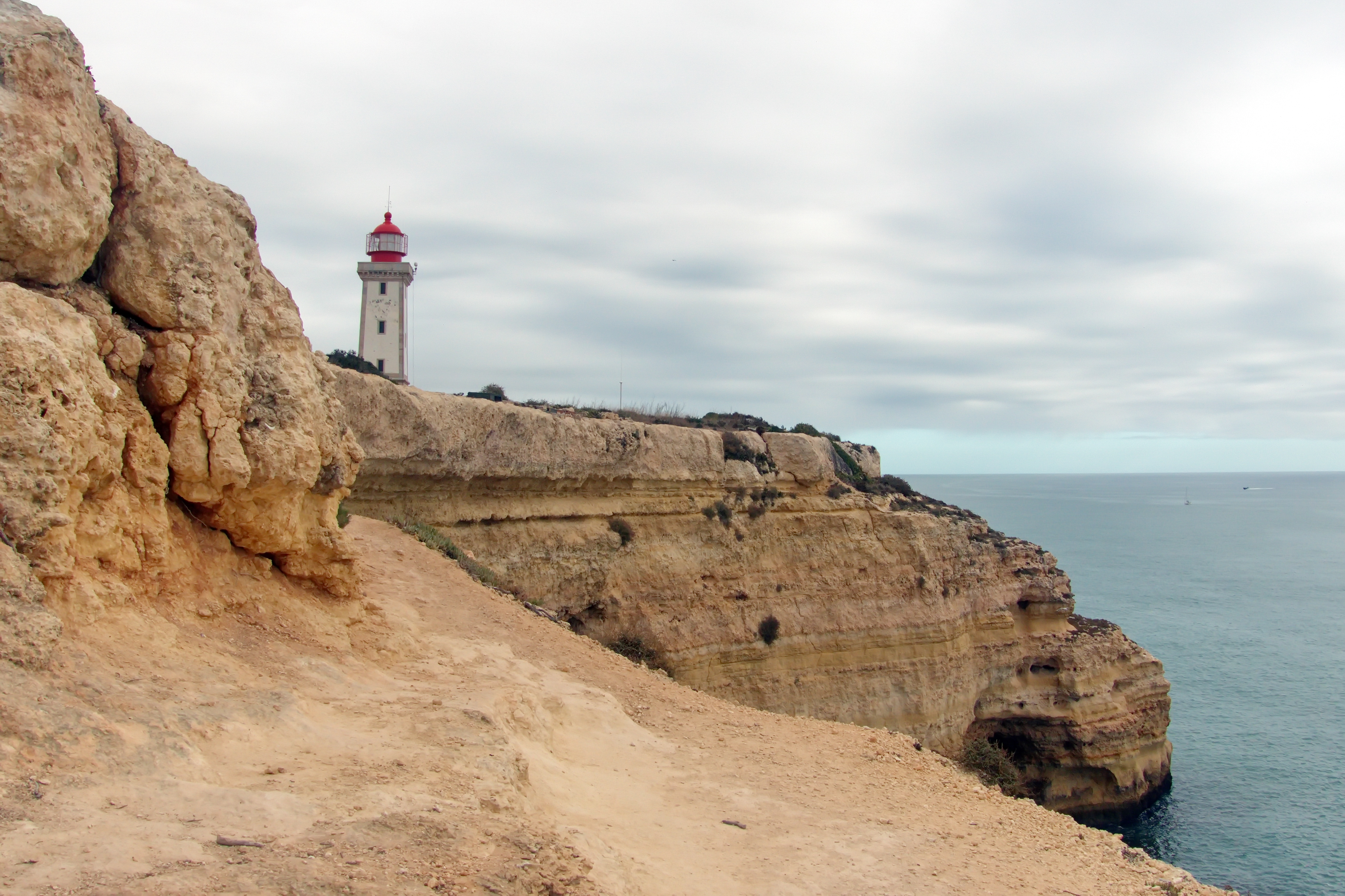

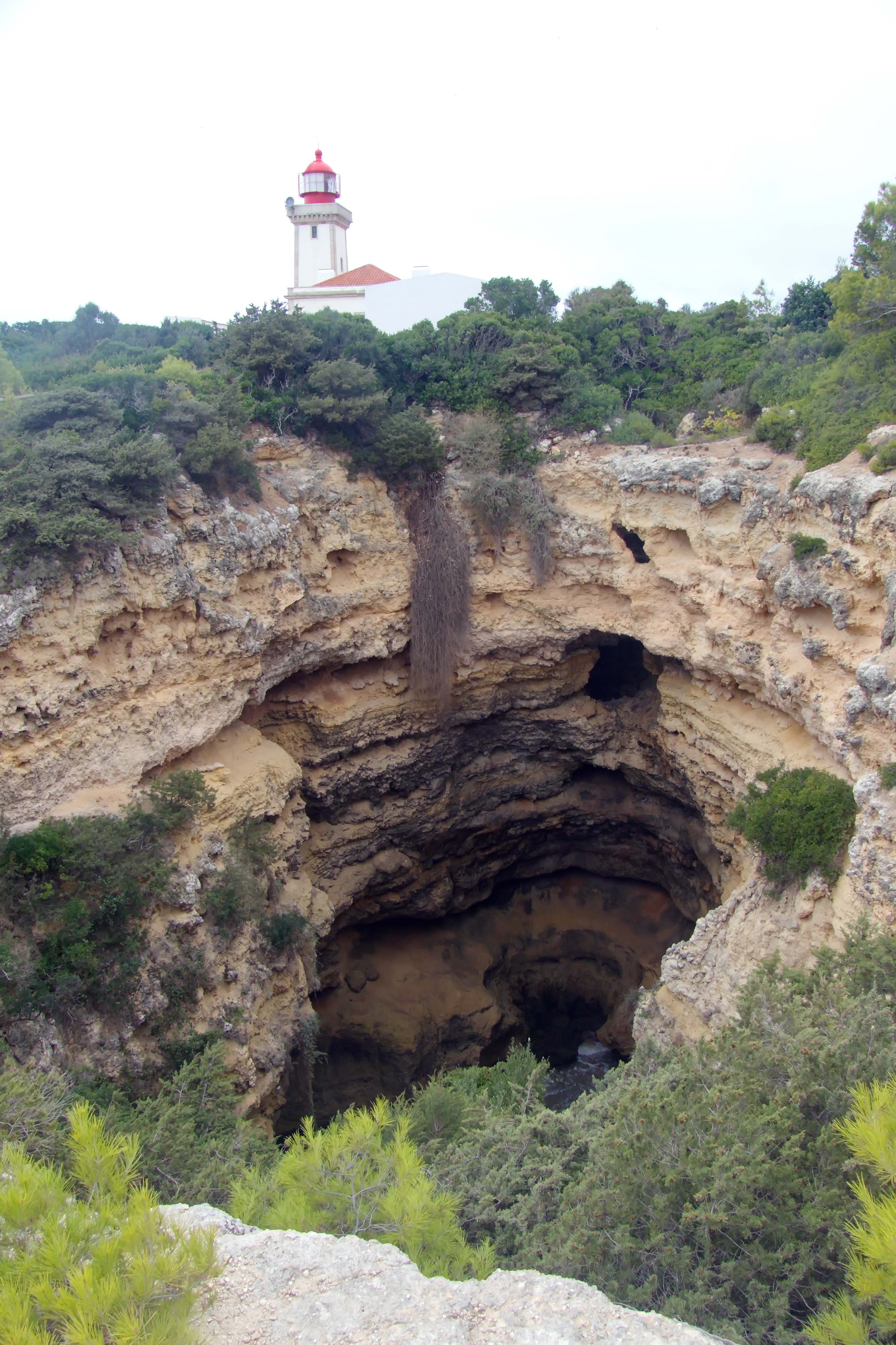
Each of the trail’s famous “hanging valleys” marks where an ancient river once carved its way toward the ocean, leaving behind bowl-shaped cliffs that now shelter tiny beaches far below. One of the most memorable was Praia do Carvalho, reached through a hand-carved tunnel in the cliff. Stepping out of the darkness into a secluded cove was like walking onto a hidden movie set.
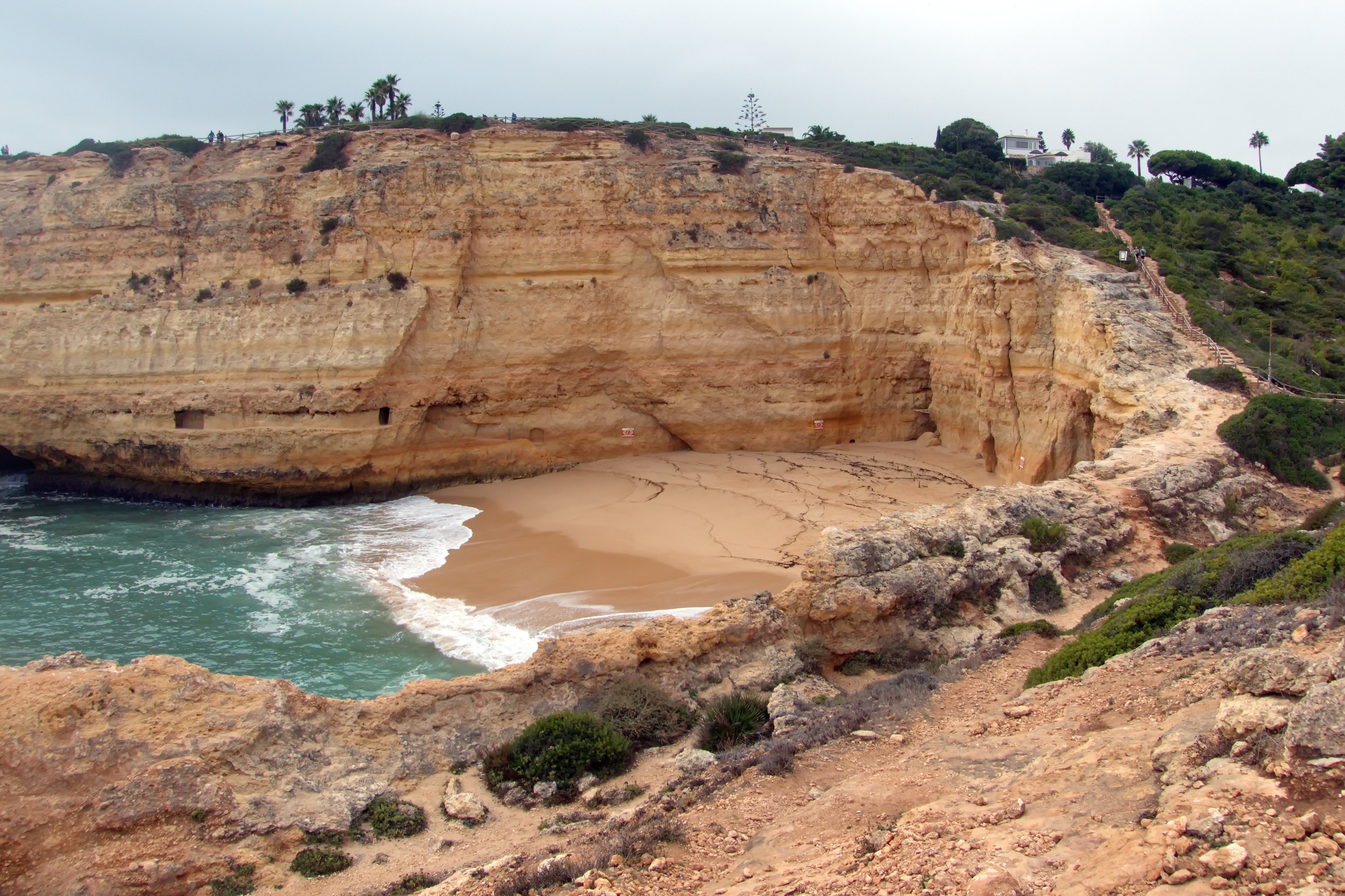
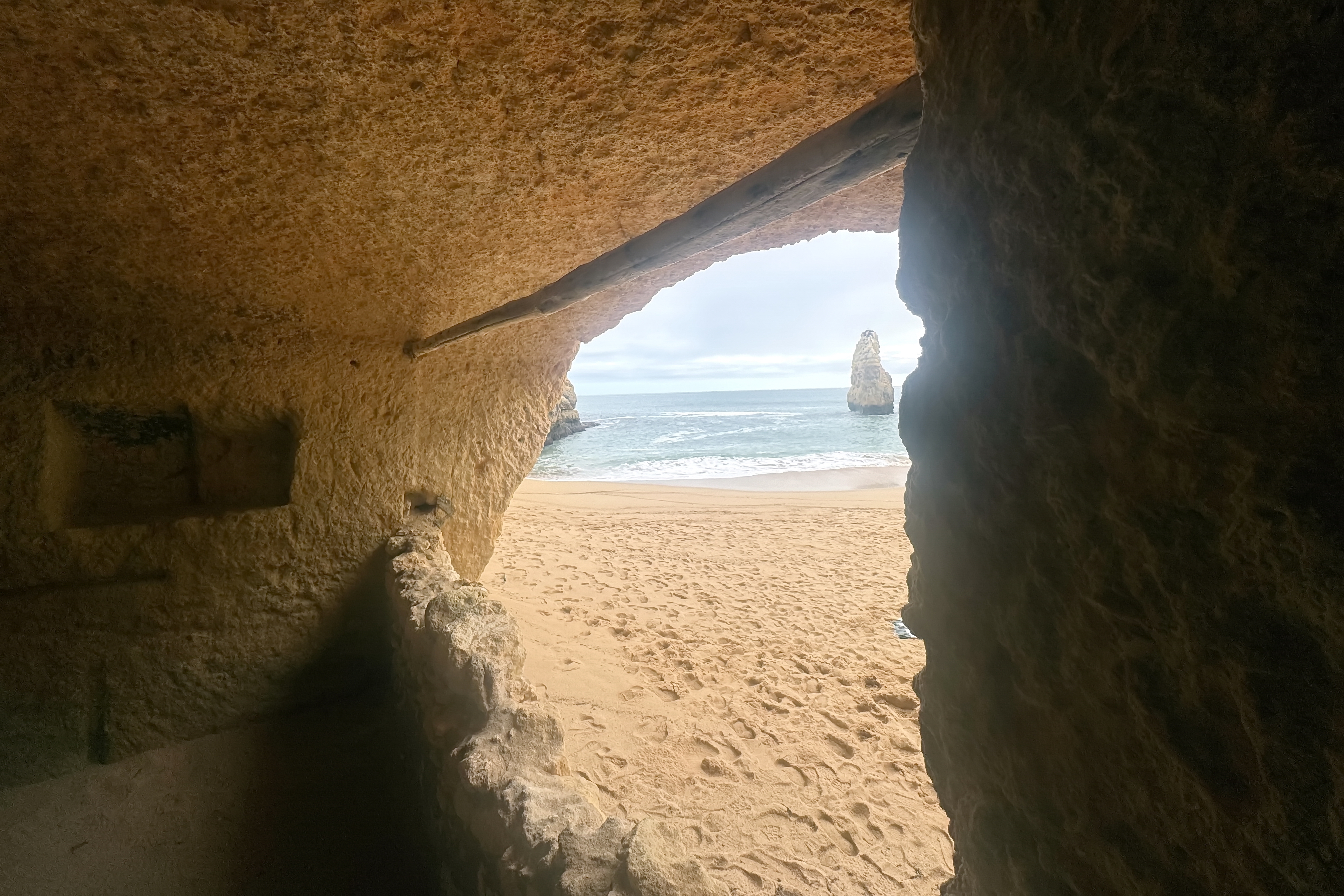

The walk unfolded like a highlight reel: sweeping headlands gave way to open-roofed caves, then to slender sea arches and rock strata stacked like pages in a geological storybook. Ochre cliffs and the moody, dark-turquoise sea beneath the grey sky made every scene feel even more dramatic.
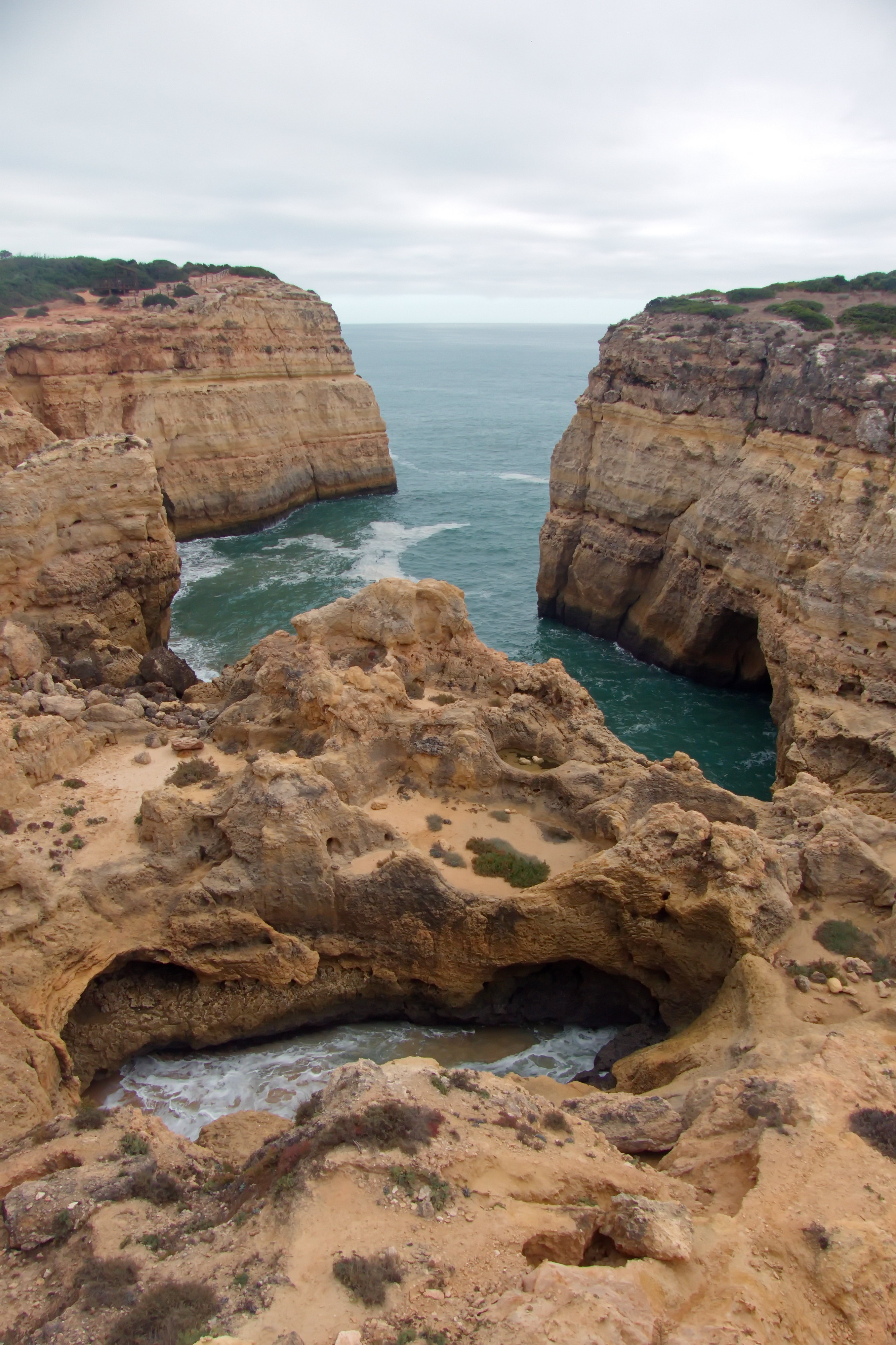
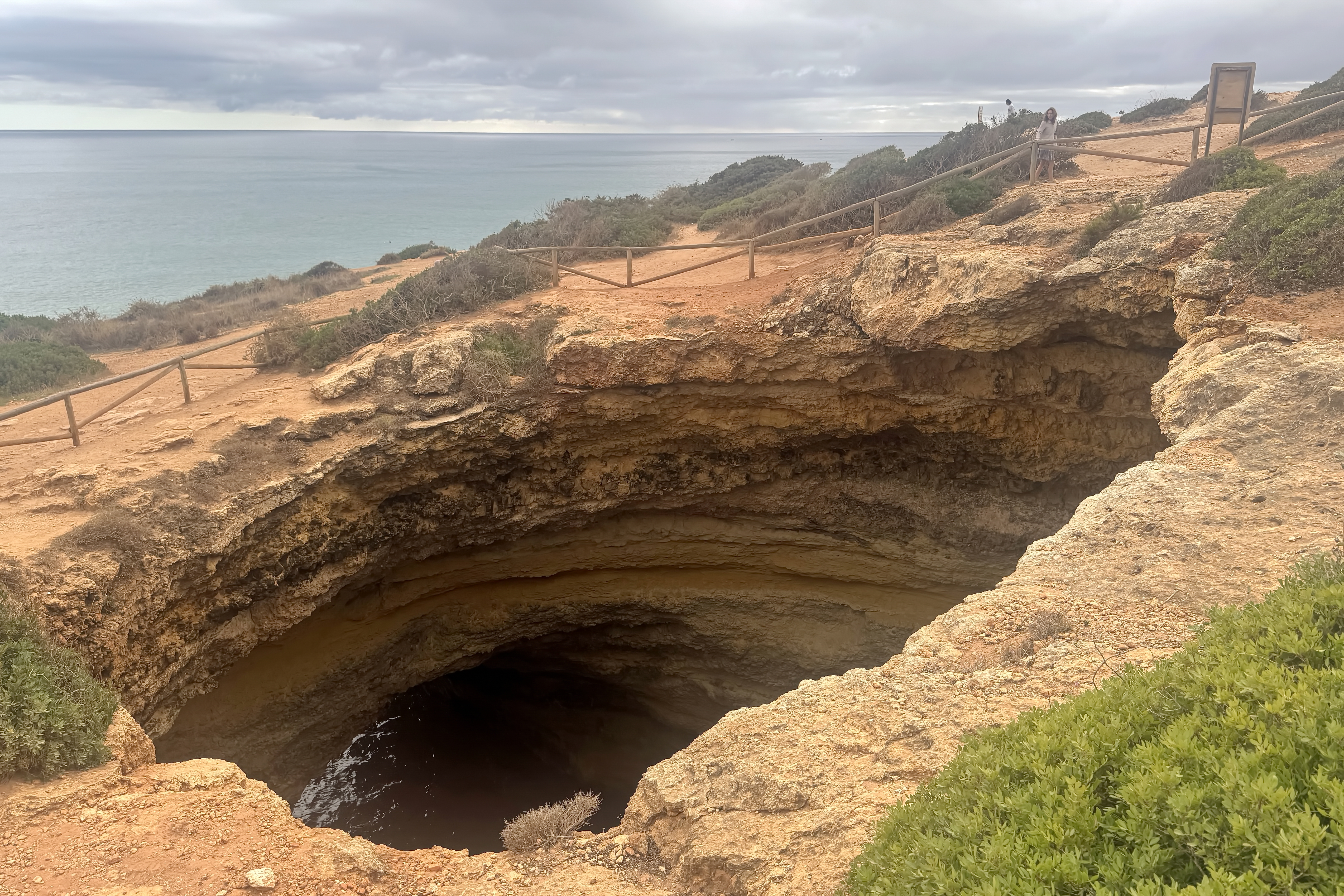
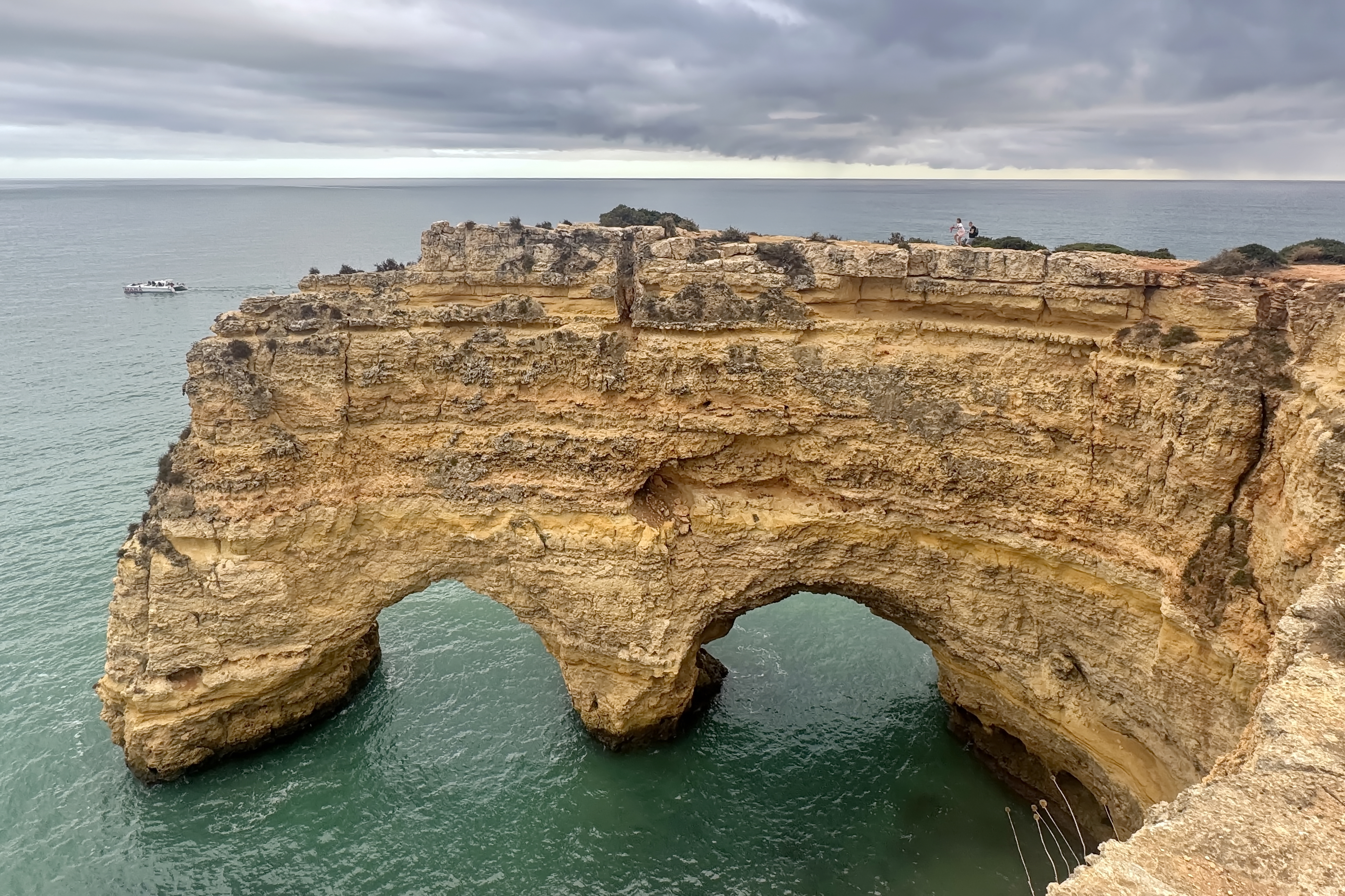
By the time we reached Praia da Marinha—one of the Algarve’s most photographed beaches—we were tired in the best possible way, our camera rolls bursting and hearts completely full. The scale of the cliffs, the impossible turquoise water…no photo really prepares you for seeing it with your own eyes.

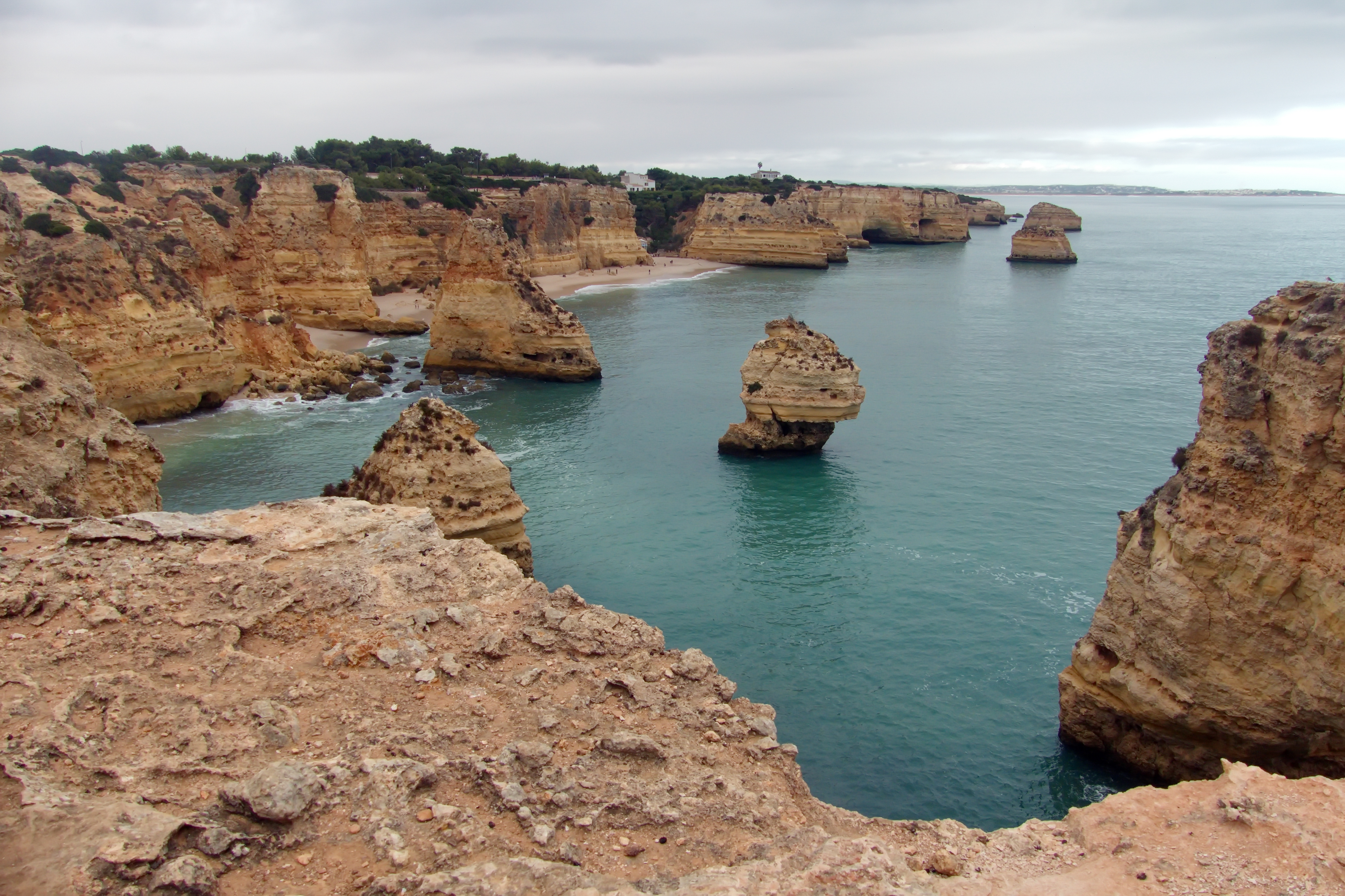

Crowded? Yes. Worth it? Absolutely.
Barranco do Demo
A peaceful mountain walkway—and a welcome change of pace
After days along the coast, we traded ocean views for mountain air and drove north into the Monchique region, where the Barranco do Demo felt like stepping into an entirely different world. Translating to Devil’s Gorge, the valley carries an almost mythical weight—early settlers believed its steep, shadowy walls were terrain only the devil himself could cross. Thankfully, the trail is far more welcoming today.
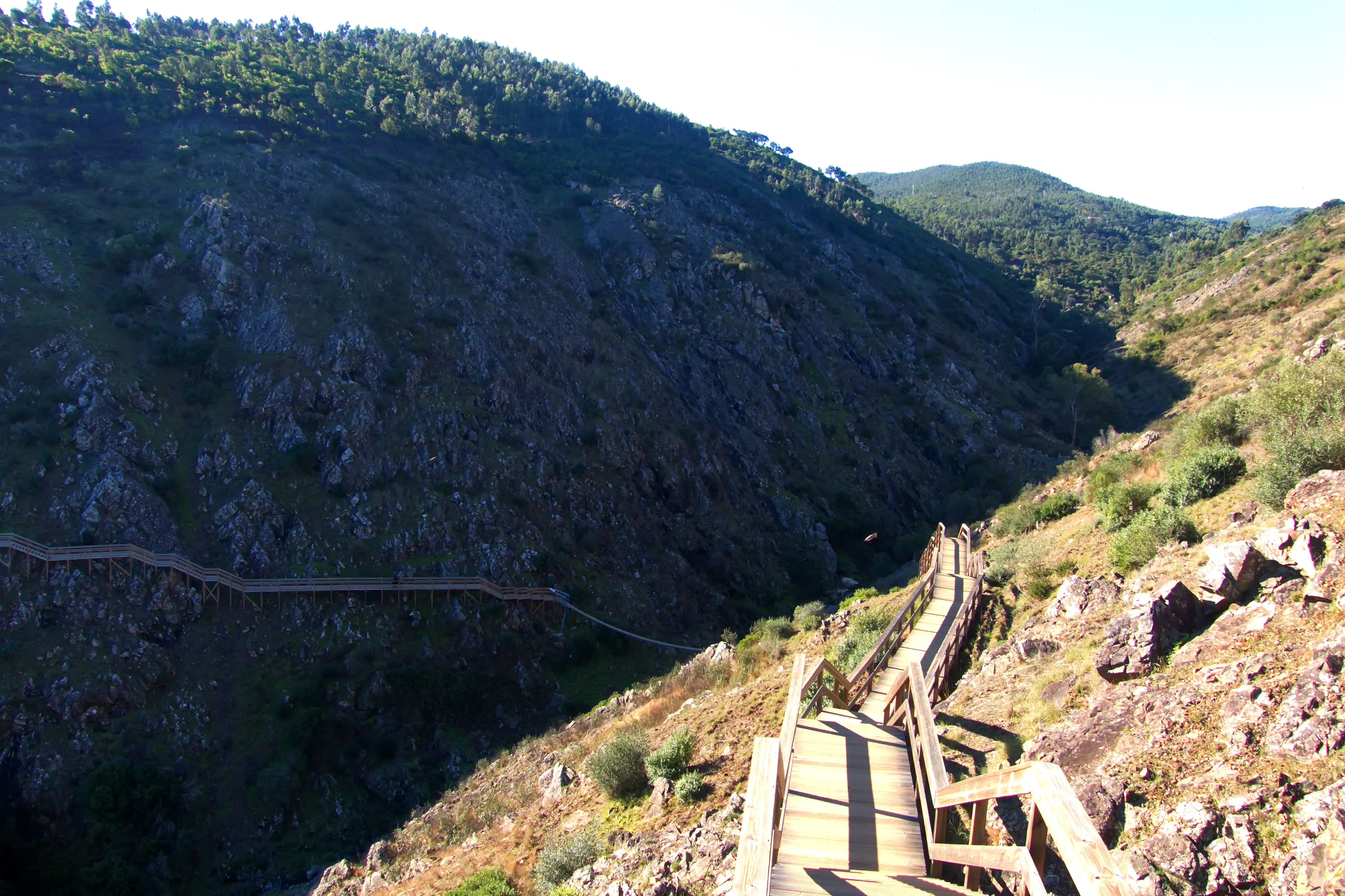
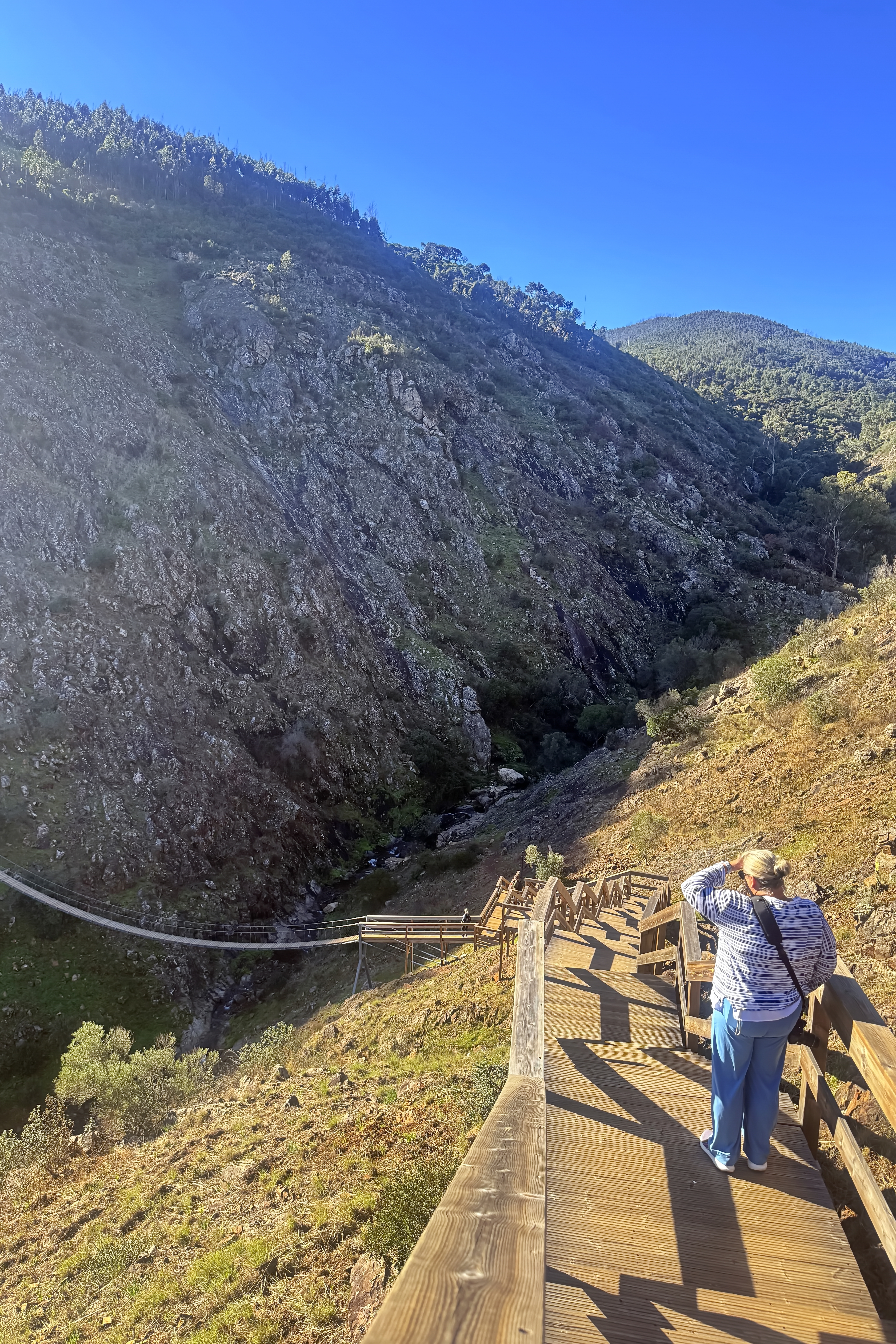
A series of wooden boardwalks now winds down one side of the gorge and back up the other, transforming what was once a daunting scramble into a peaceful, meditative walk—though the 500-plus steps and platforms still make your legs earn it. Set deep in a quiet gully, the walkway looks over a crystal-clear stream threading through a lush ravine, the air scented with eucalyptus and pine. Instead of waves, we listened to birdsong; instead of crowds, just the soft rustle of leaves.
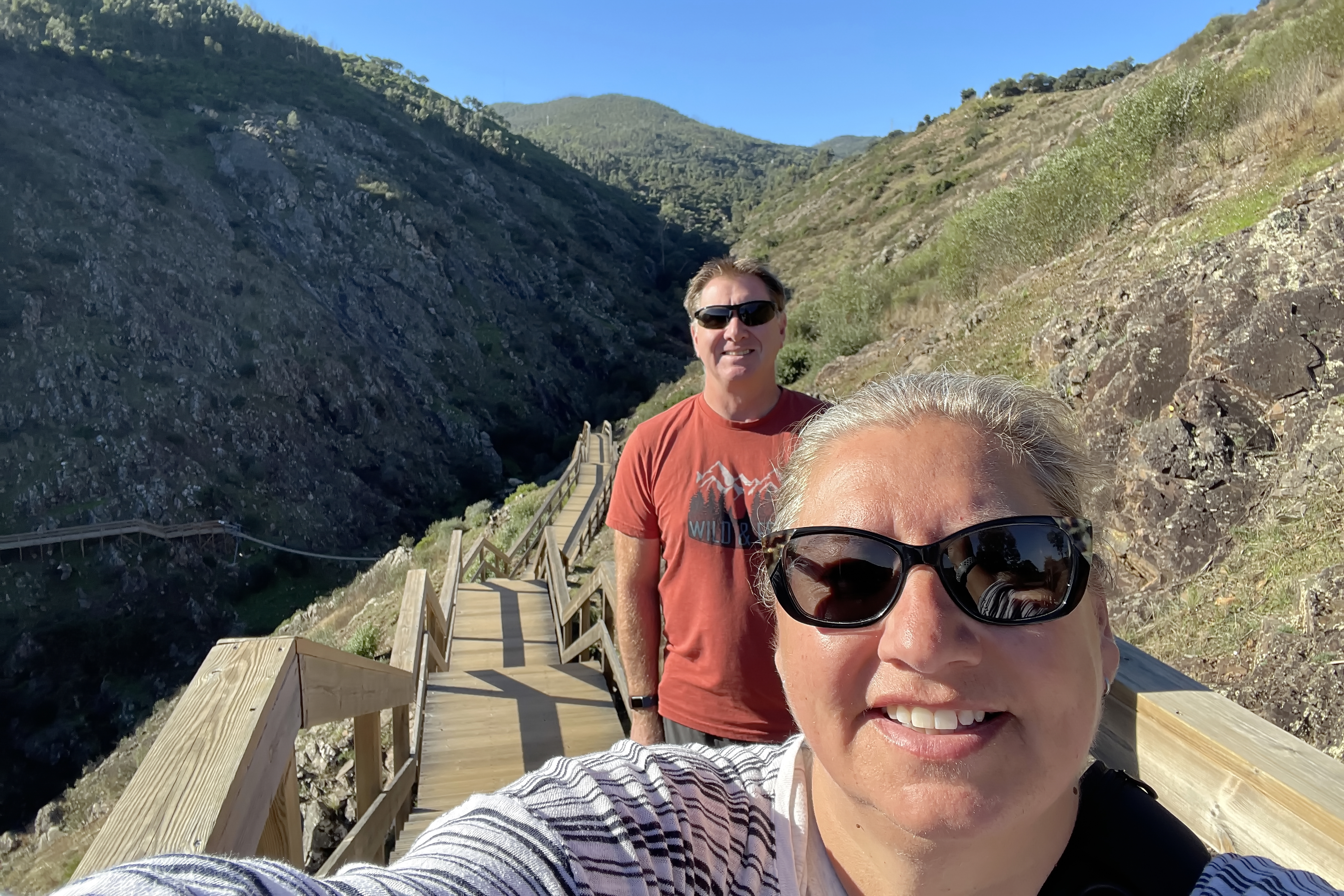
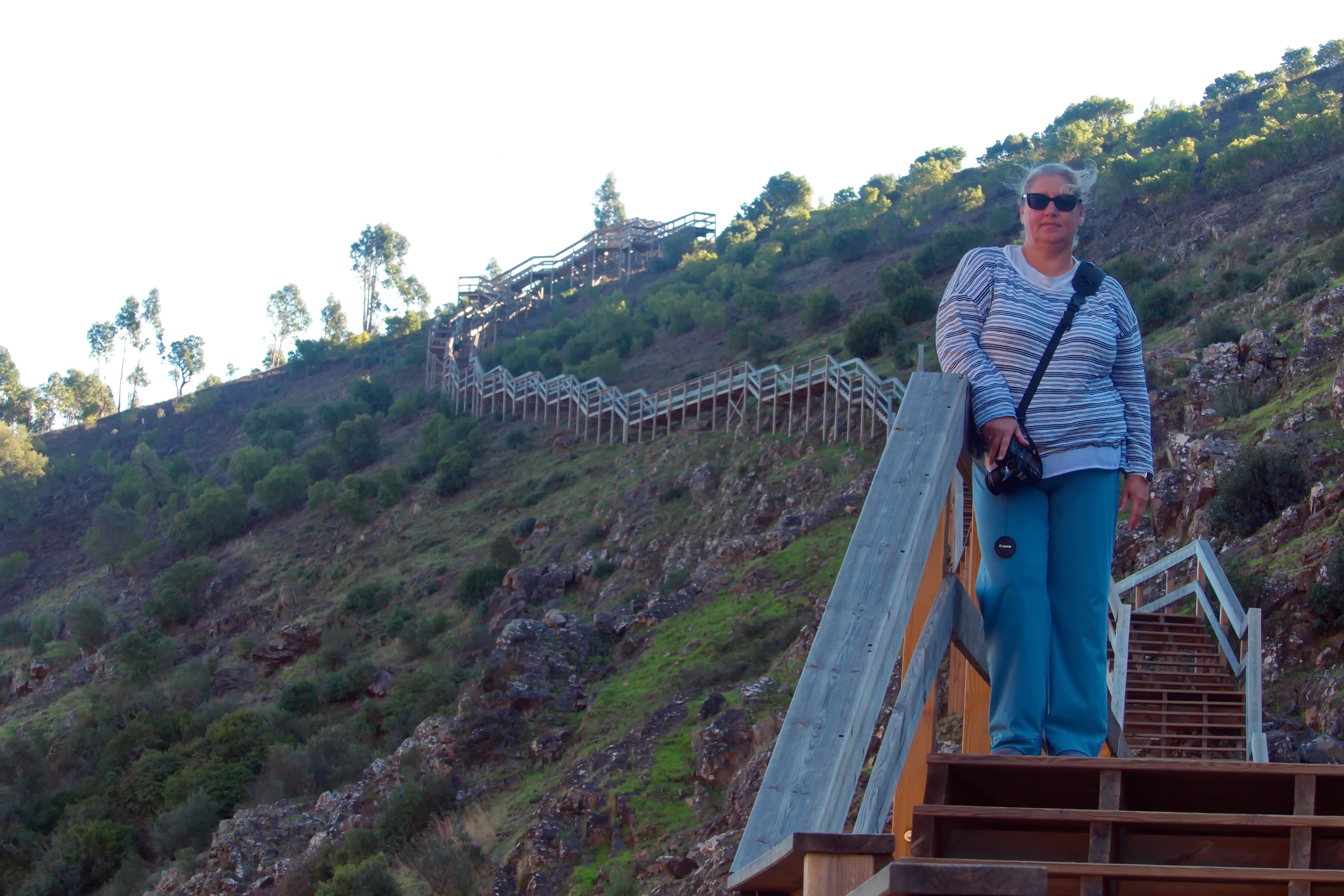

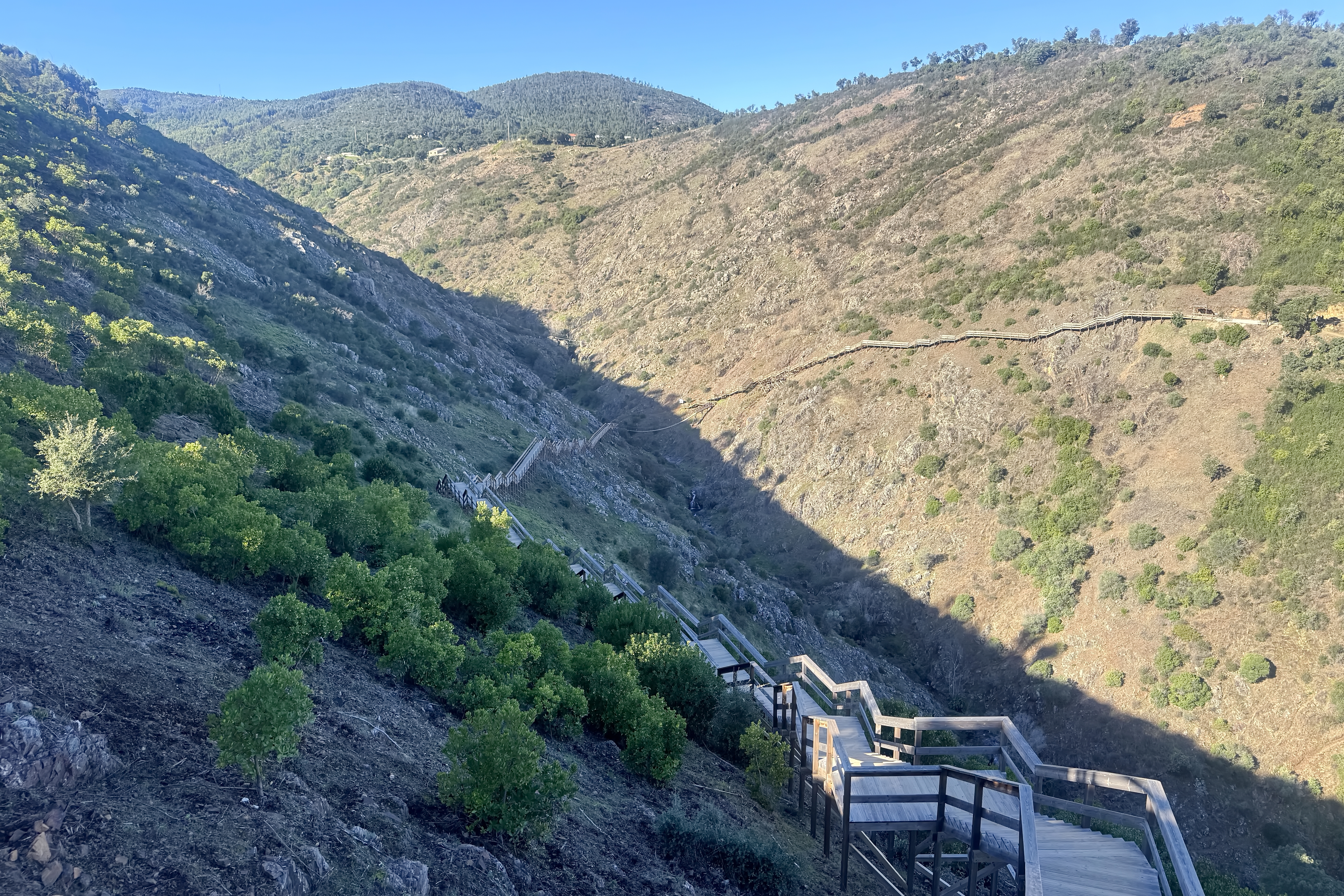

At the valley floor, a hanging suspension bridge spans the gentle creek, adding a little thrill before the climb begins again. From here, you can’t help but marvel at the work it took to build the trail—and at all the steps still waiting on the other side!

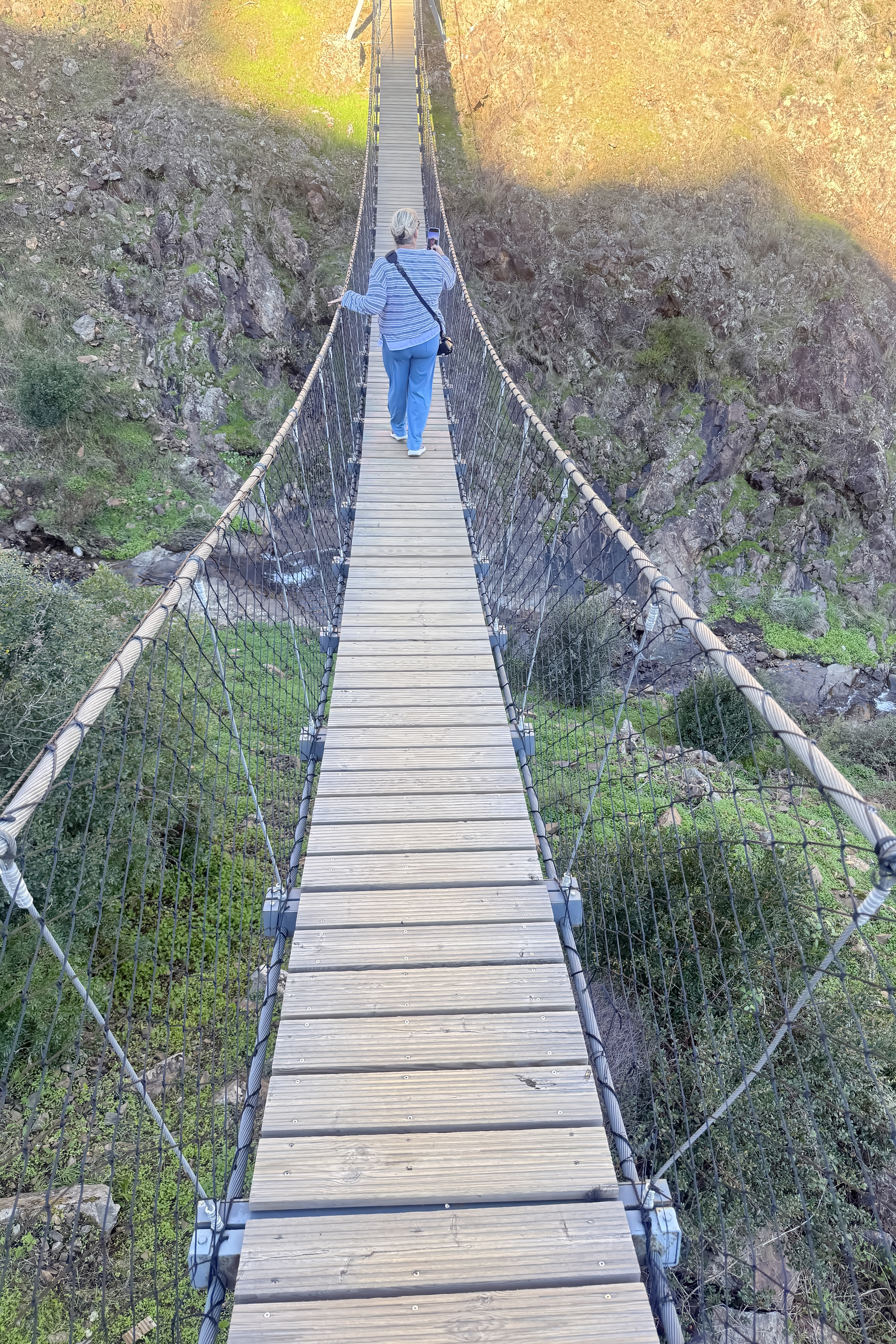
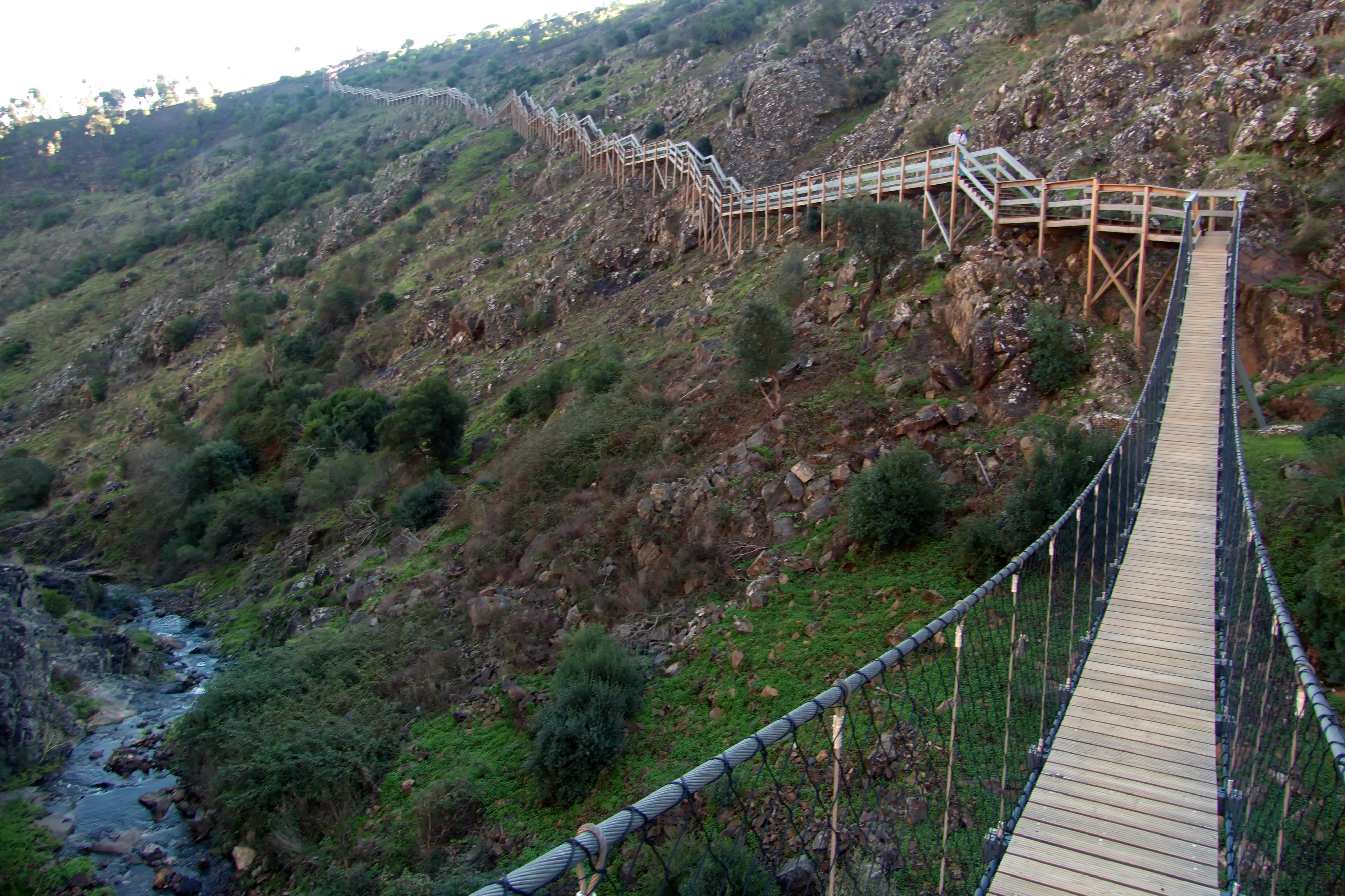

When we finally reached the far viewpoint, the ridge of the Serra da Picota stretched out in soft blues and greens, terraced farmland climbing its lower slopes. The tranquility invited us to pause, breathe in the silence, and admire the majesty of the high peaks—some of the tallest in this part of Portugal.


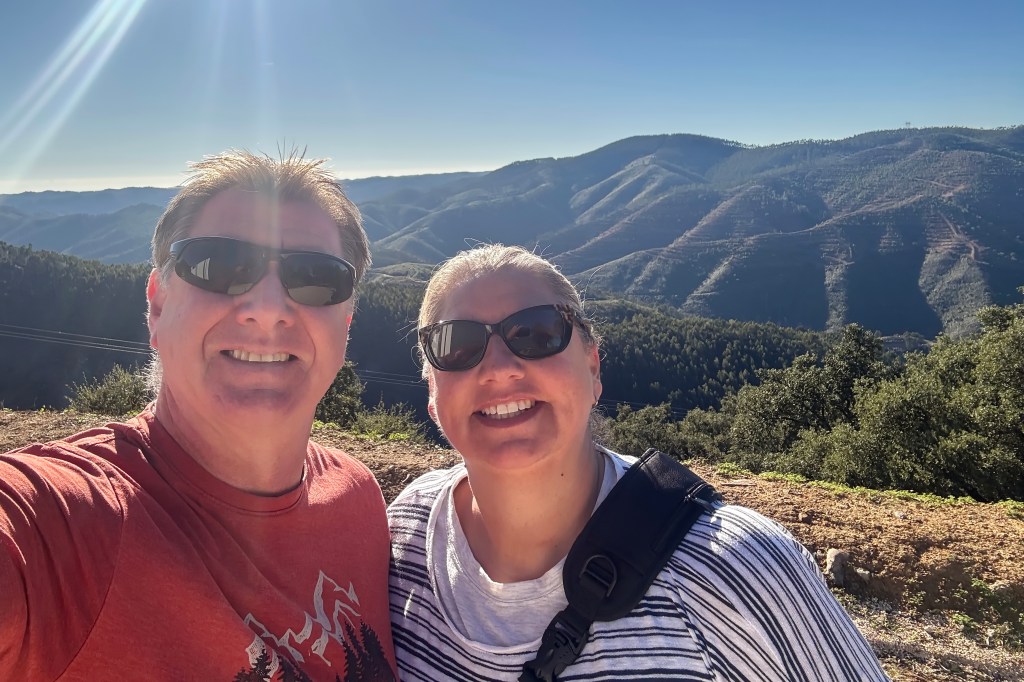
This walk truly felt like uncovering one of the Algarve’s best-kept secrets.
A Region of Contrasts
Hiking these three trails showed us just how varied the Algarve truly is:
- The Fishermen’s Trail gave us wild Atlantic cliffs and an endless skyline.
- The Seven Hanging Valleys dazzled with classic, postcard-perfect beauty.
- Barranco do Demo revealed a serene, untouched mountain valley worlds away from the coast.
Together, they felt like viewing the Algarve through three lenses: coastal, iconic, and unexpected. If you love a good viewpoint and a better story, these trails offer a richer, deeper look at southern Portugal—one we were so glad we walked.

 Mapgirl Adventures
Leave a comment