Wandering Through Time: Exploring Corfu Old Town
Nestled on Greece’s northwest coast in the Ionian Sea, Corfu Old Town, or Kerkyra, as it’s known locally, is a captivating blend of history, culture, and timeless beauty. While the rest of the island offers dramatic mountain scenery and sun-soaked resorts, Corfu Old Town stands apart with its distinctive character and enduring legacy. Recognized as a UNESCO World Heritage Site, the town is a living mosaic of Mediterranean civilizations.
Founded in ancient times, the Old Town has been shaped by a remarkable succession of cultures: Greek, Roman, Byzantine, Venetian, French, and British. Each left its mark in the architecture, the layout of the streets, and even the rhythm of daily life. Wandering through the narrow, cobbled alleys where sunlight spills through fluttering laundry and the scent of espresso drifts from tucked-away cafés where you feel like you’re walking through layers of time.
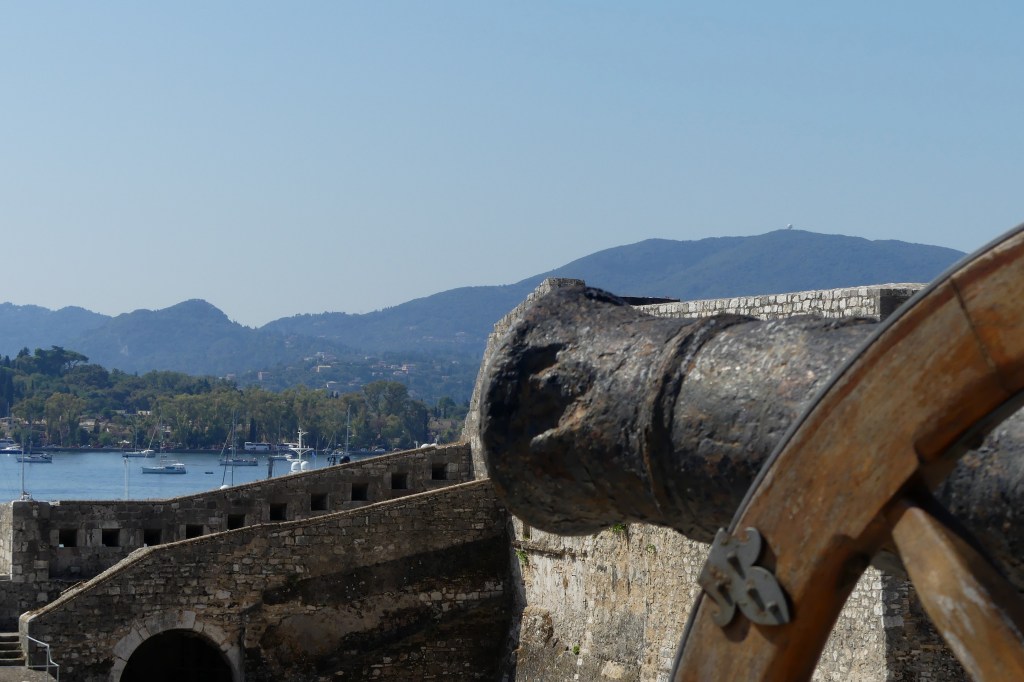
The fortified walls and commanding Old and New Fortresses are more than just impressive landmarks; they tell the story of Corfu’s strategic importance in protecting Venetian maritime trade from the Ottoman Empire. Built by renowned Venetian engineers and later restored by the British in the 19th century, these fortifications have seen centuries of conflict, adaptation, and resilience. Today, they serve as dramatic reminders of the island’s complex past and offer some of the best panoramic views of the city and sea.
What makes Corfu Old Town so enchanting isn’t just its architecture. Here, ancient stone buildings house modern boutiques, churches stand quietly behind busy squares, and every corner seems to tell a story. This is a place where history isn’t just preserved; it’s lived in.
The Old Fortress: A Place of Strength, History, and Quiet Reflection
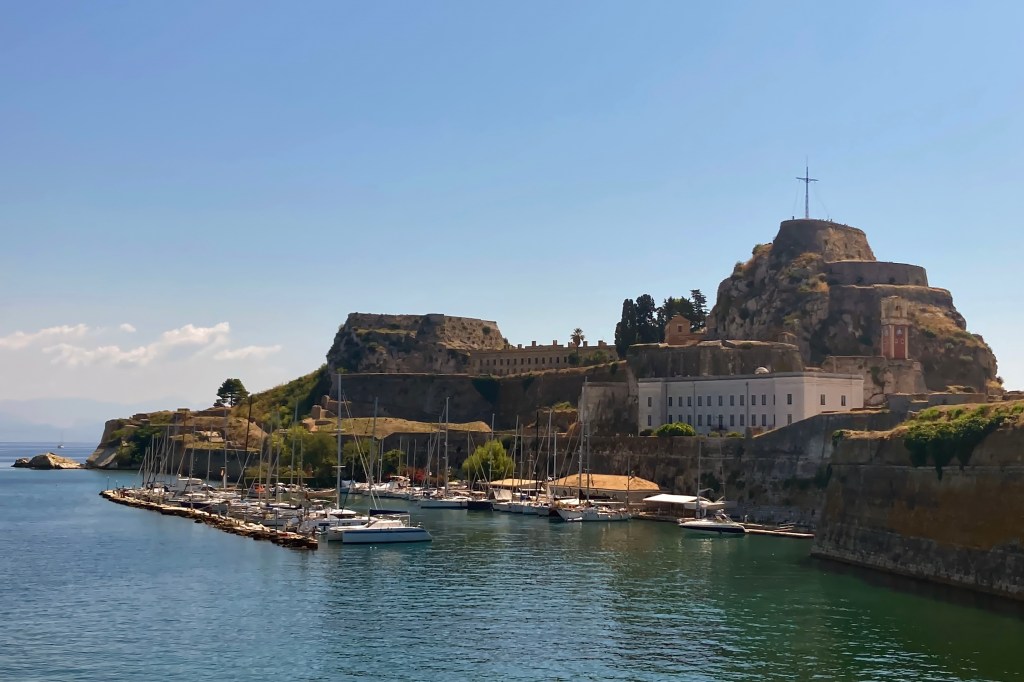
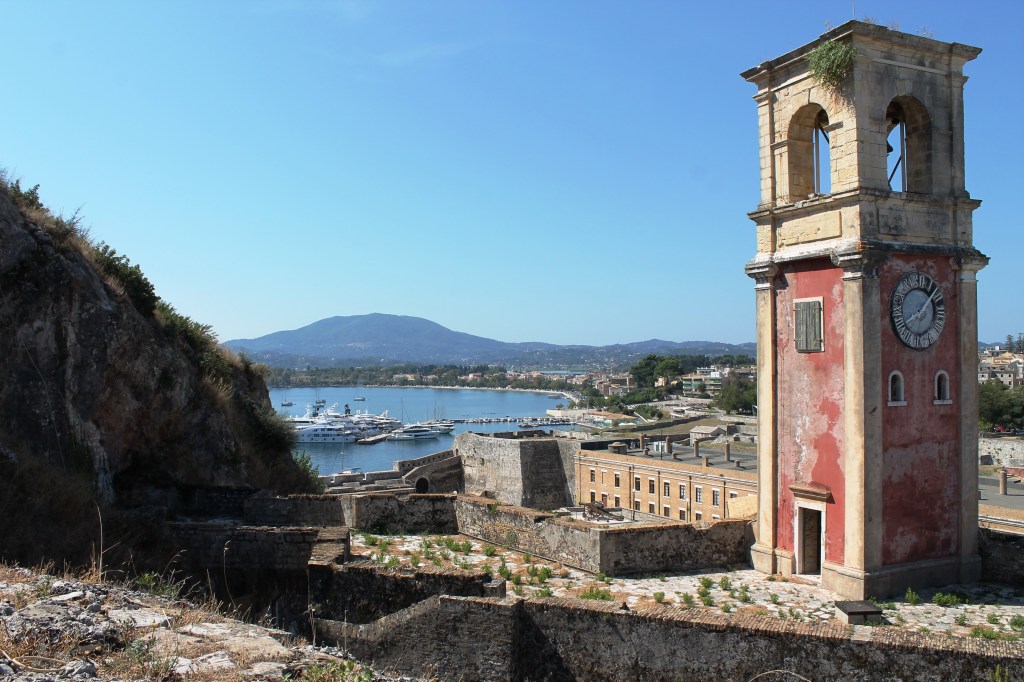
Perched dramatically on a rocky peninsula that juts into the Ionian Sea, Corfu’s Old Fortress is one of the town’s most iconic landmarks. Originally built by Byzantine hands and later strengthened and expanded by the Venetians, the fortress served as the island’s primary defense against countless invasions. From its towering bastions and hidden tunnels to the commanding lighthouse and sweeping views over the sea, the Old Fortress is both a symbol of resilience and a breathtaking place to explore.
Climbing up the stone paths and through the arched gateways, I couldn’t help but feel a deep sense of stillness amid the ancient walls. The sea breeze whispered through the ruins, and the sound of distant church bells from the town drifted in the background. This is where I took a quiet moment, not just to absorb the history around me, but to leave something of my own behind.
I found a peaceful spot overlooking the glittering water, where the sunlight danced and the world felt suspended for just a while. And in that moment, I left a memory of my niece Emilie, a gentle, joyful soul taken too soon, but never forgotten. It felt like the right place: strong, beautiful, enduring, just like her spirit. It was my small way of saying, you were here with me, even in this faraway place.
The New Fortress: Layers of Stone, Layers of Time
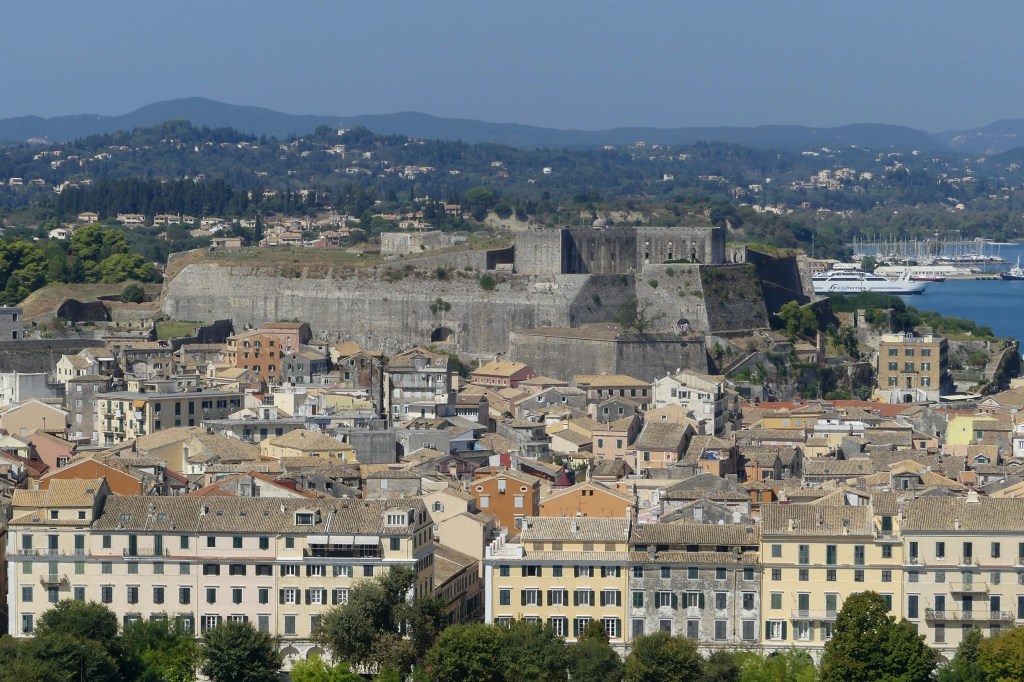
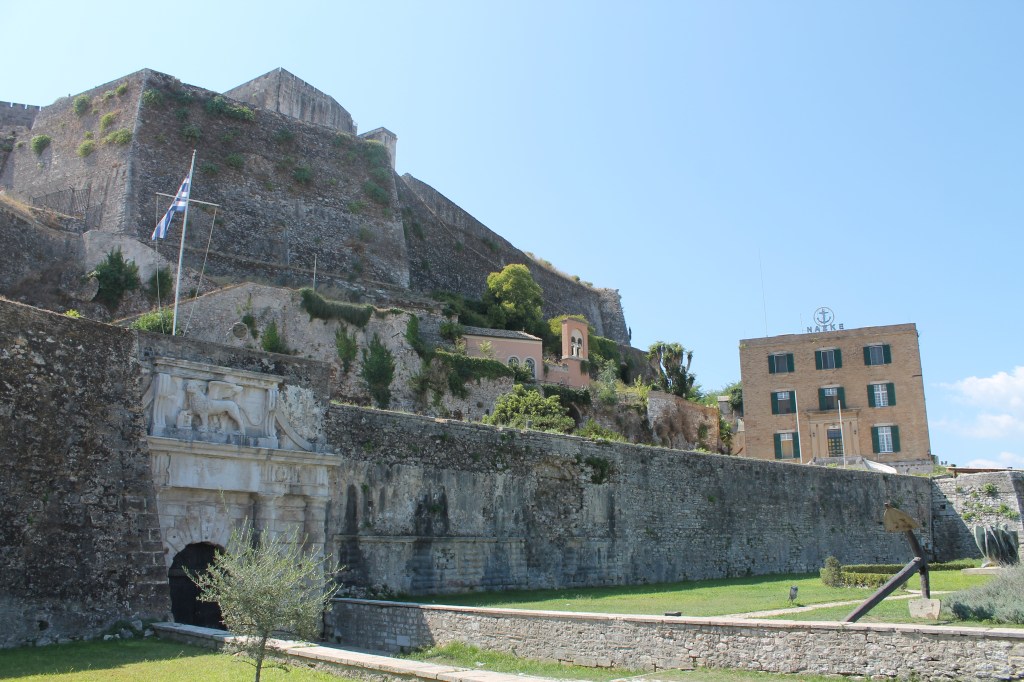
Despite its name, the New Fortress of Corfu isn’t exactly new, it was constructed by the Venetians in the late 1500s, just after the Old Fortress was completed. Built high on the hill of St. Mark to defend the growing town, the New Fortress is a massive stone complex of walls, tunnels, and lookout points that still dominates the skyline above the harbor.
Wandering through its thick ramparts and vaulted chambers, you feel less like a tourist and more like an explorer peeling back layers of time. The fortress seems quieter than the Old Fortress, with fewer crowds and more open space to let your imagination roam. From the top, you’re rewarded with sweeping views of the Old Town’s terracotta rooftops, the glittering sea beyond, and ferries drifting in and out of the port below.
What struck me most was how this place feels both abandoned and alive at the same time. Crumbling walls and scattered ruins are softened by tufts of grass and wildflowers, while cats nap in the shade and swallows dart through the ancient corridors. It’s a place where nature and history coexist.
While the New Fortress might not be as polished or as well-known as its older sibling across the bay, it is still worth a visit.
The Campiello District: A Sun-Dappled Maze of Stories
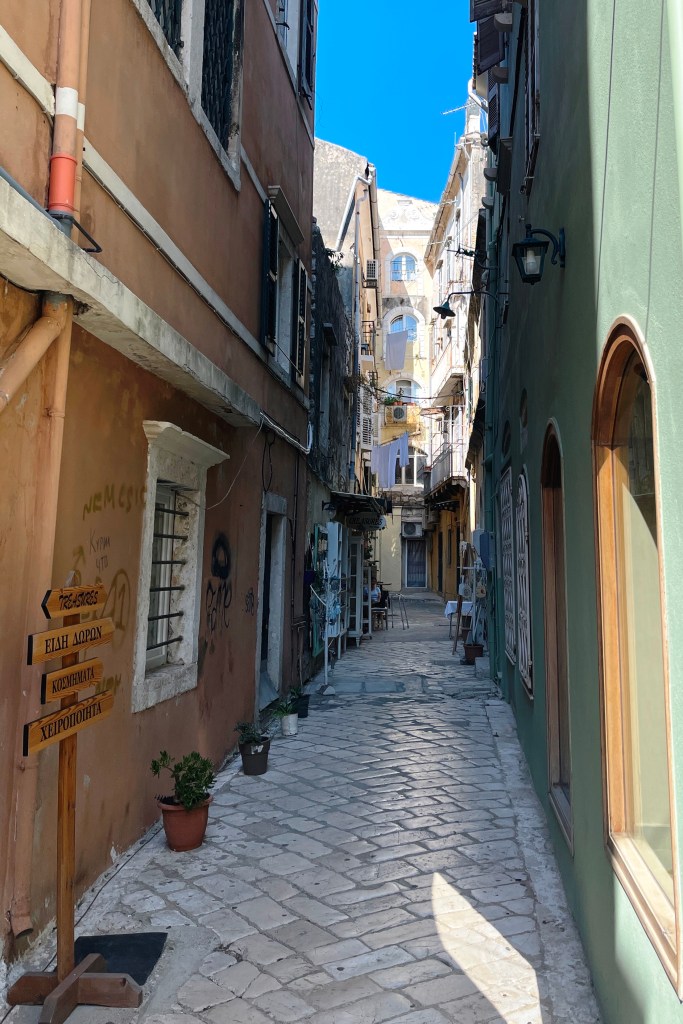
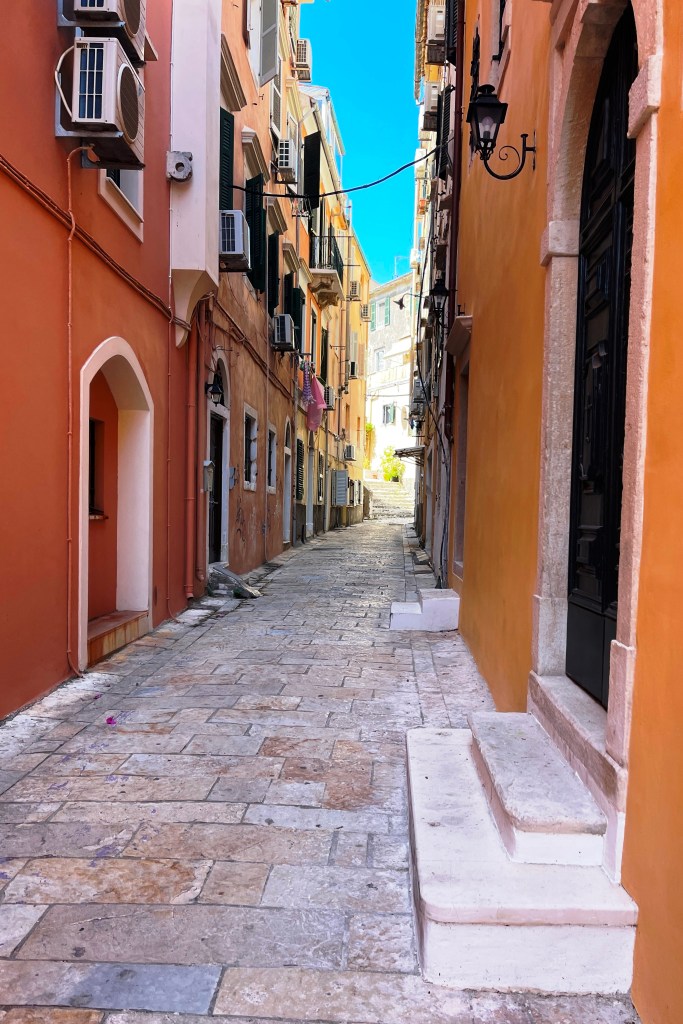
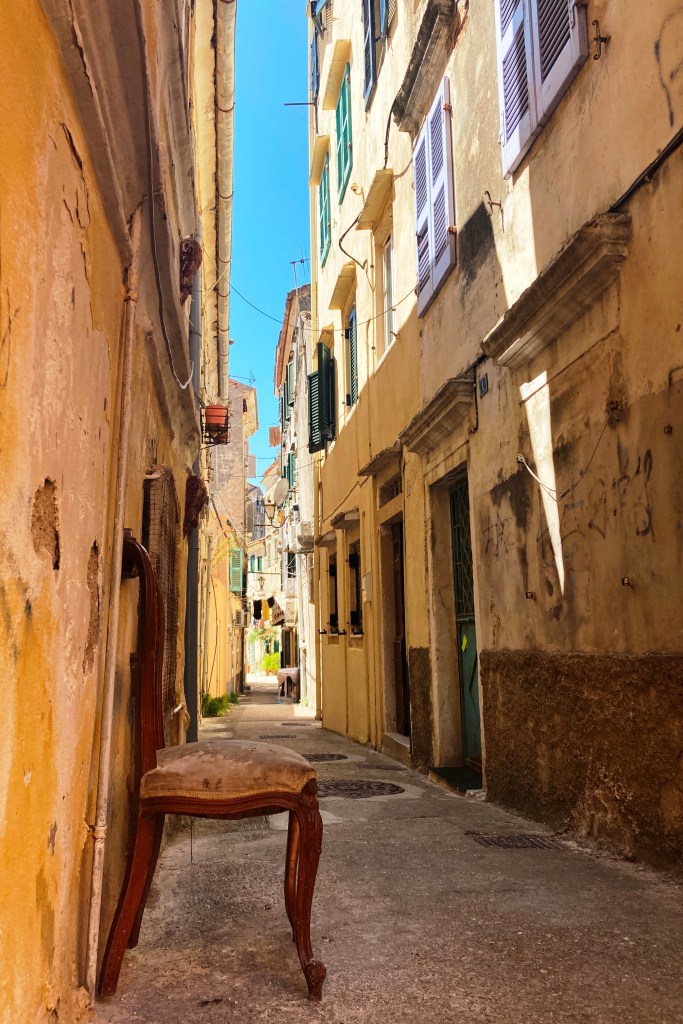
The Campiello district of the Old Town is a charming, medieval-style area known for its narrow streets, where you can easily get lost (in the best possible way) among labyrinthine alleyways, secret courtyards, and tucked-away shops. The mainly neoclassical architecture, heavily influenced by the Venetian period, is both elegant and timeworn, with faded shutters, wrought-iron balconies, and crumbling stone steps. Many of the buildings are painted in soft, sun-warmed shades of ochre, peach, and golden yellow, which seem to glow under the afternoon light.
As the day deepens and the sun climbs high, the neighborhood slows to a hush. Many shops close for siesta, and the usual bustle of chatter and footsteps fades into stillness. That’s when the soul of Campiello seems to speak loudest.
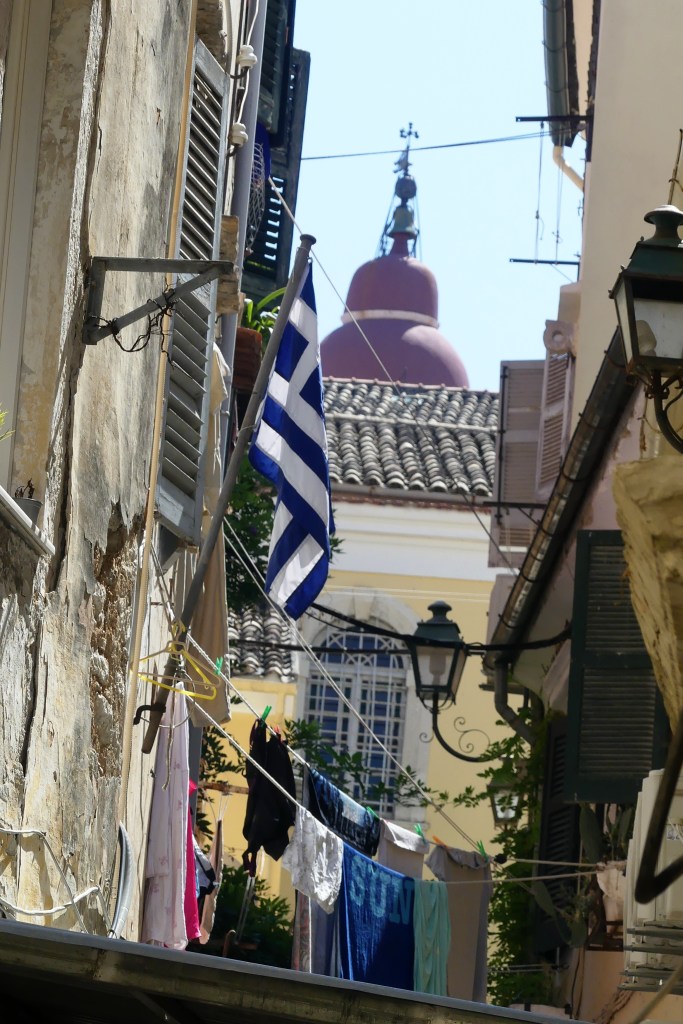
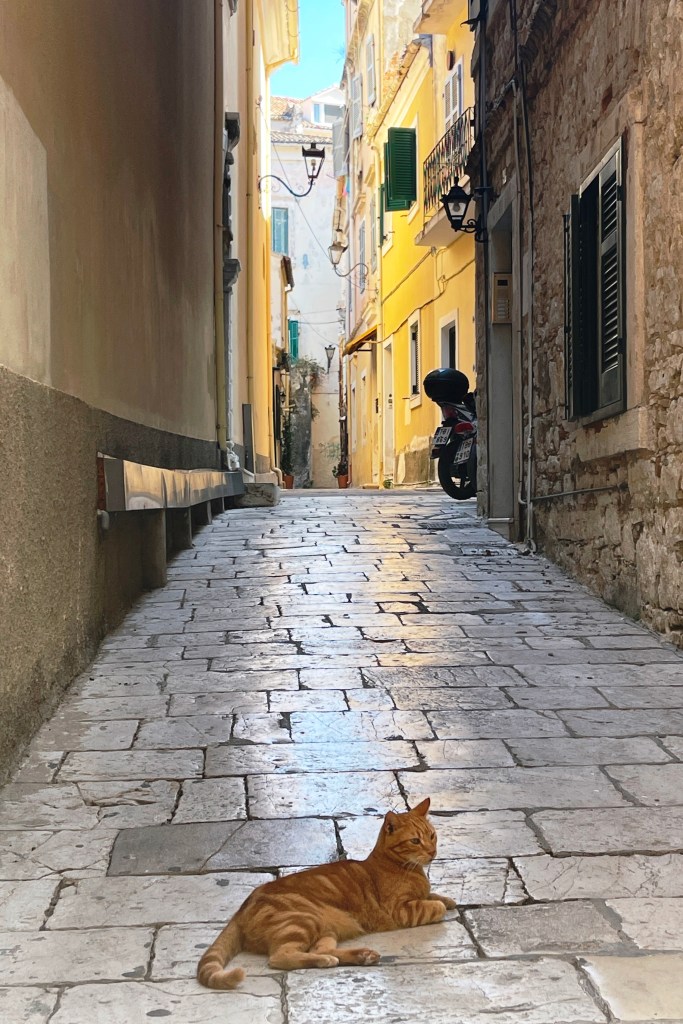
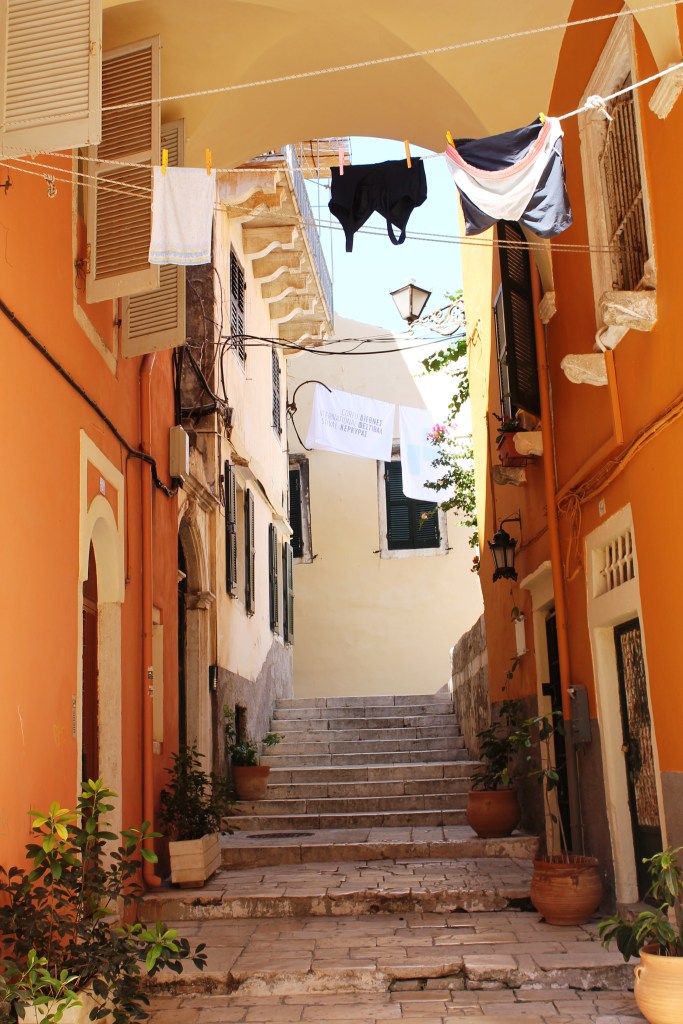
In a quiet corner, I spotted an orange cat relaxing in the shade of a narrow alley, utterly content in the sleepy calm of the afternoon. Just a few streets away, laundry danced on clotheslines strung between balconies, catching the late afternoon breeze that rustled through the alleyways. Sheets and shirts swayed gently above the cobblestones, brushing against light and shadow as locals moved about behind shuttered windows.
This contrast, the stillness of one street and the gentle rhythm of life on the next — is what makes Campiello so special. You don’t come here to tick sights off a list; you come to feel the heartbeat of the place.
Spianada Square & the Palace of St. Michael and St. George:
At the edge of the Old Town, just a short stroll from the sea, Spianada Square unfolds like a green breath of fresh air. As the largest square in Greece, it’s more than just a public space it’s the social and cultural heart of Corfu. Flanked by stately buildings and shaded by leafy trees, the square blends laid-back charm with old-world elegance.
In the afternoon, children play near the fountains, and couples linger on benches under the plane trees. You might hear the soft crack of a cricket ball being bowled, yes, there’s a cricket pitch right in the middle of the square, a charming leftover from British rule. It’s little surprises like this that make Corfu feel so layered and unique.
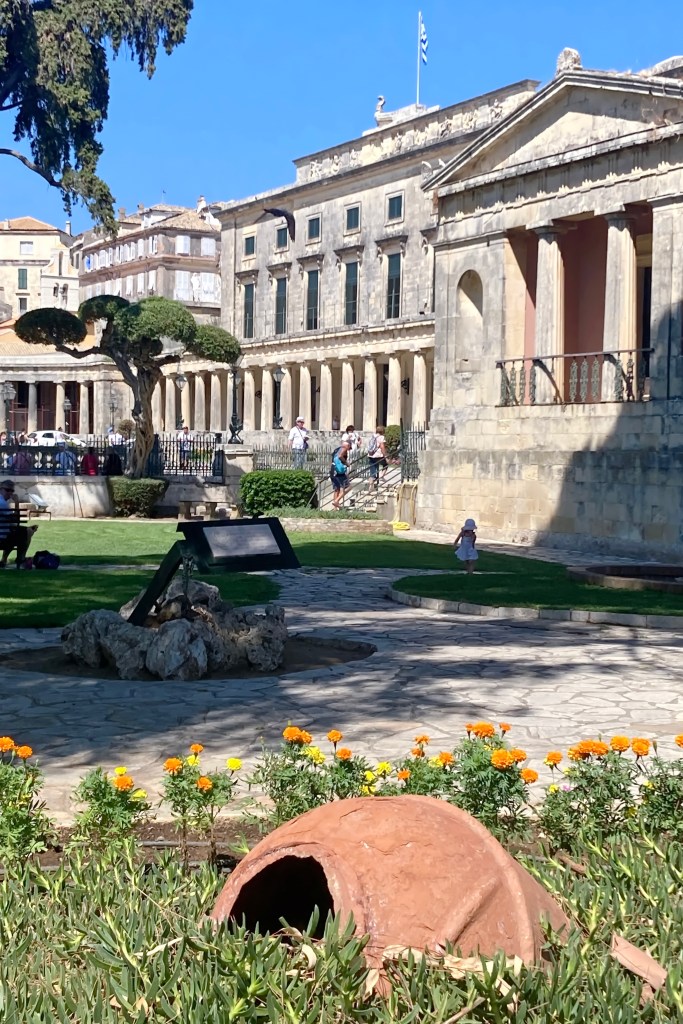
At the northern end of the square, the Palace of St. Michael and St. George rises with regal restraint. Built by the British in the early 1800s, it once housed the colonial governors of the Ionian Islands. Today, its grand colonnades and pale stone façade make it one of the finest neoclassical buildings in all of Greece.
Inside, the palace is home to the Museum of Asian Art, with an unexpectedly beautiful collection of Chinese, Japanese, and Indian works a surprising contrast to the Mediterranean setting, but a fitting reminder of Corfu’s role as a crossroads of cultures.
Standing here, looking out over the square and the Ionian Sea just beyond, I felt like I had reached the elegant finale of my journey through the Old Town. The Spianada is not only a place to gather, rest, and reflect it’s where the threads of Corfu’s history and beauty come together in one unforgettable scene.
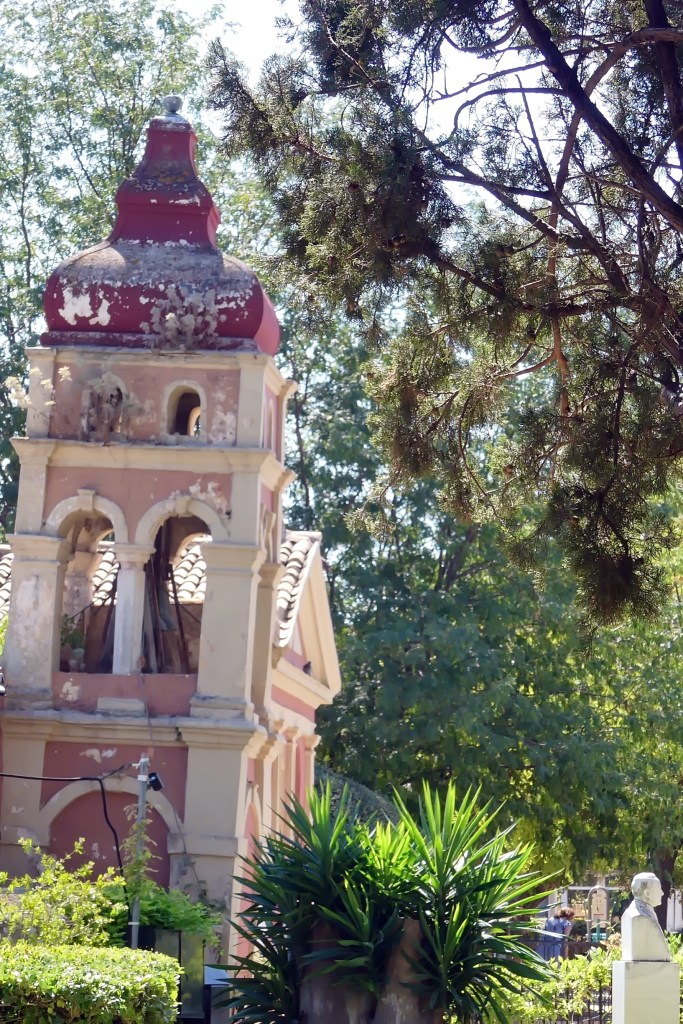
View all our Corfu pictures here.

 Mapgirl Adventures