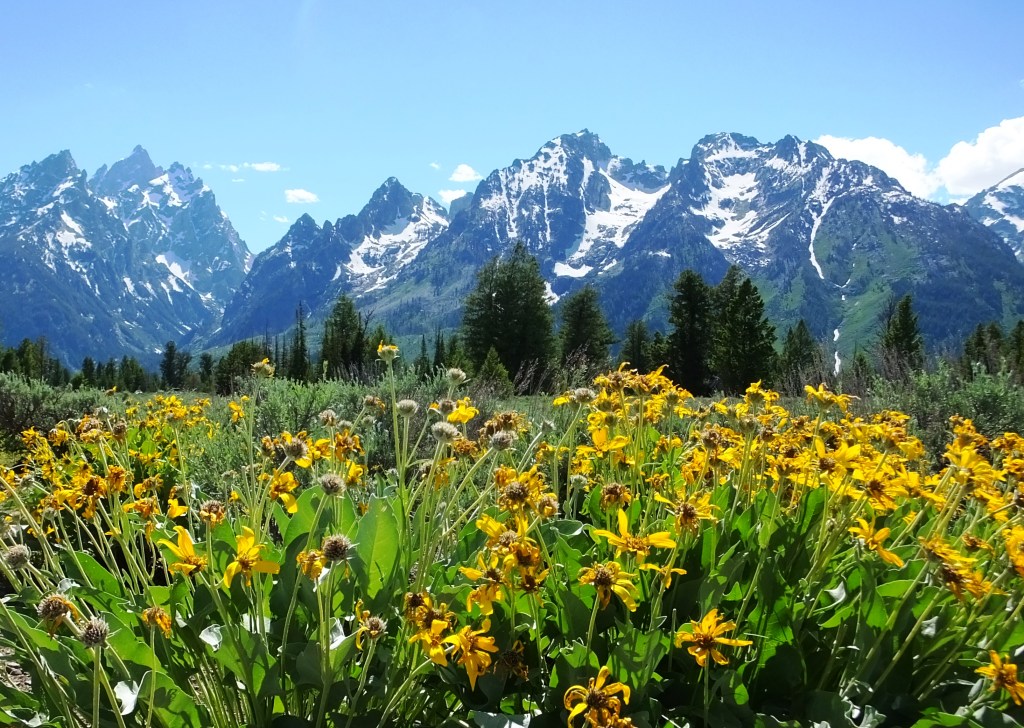
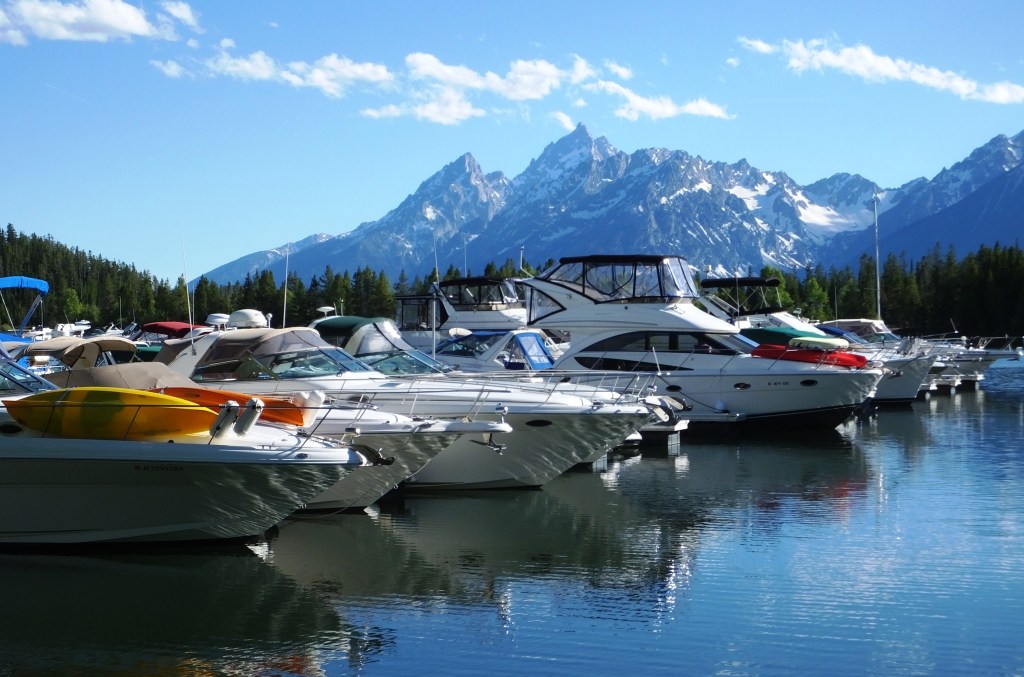
Grand Teton National Park offers up some of the most breathtaking scenery in the American West with sharp, jagged peaks that rise suddenly from the valley floor, mirrored in still lakes and framed by open skies. The park’s crown jewel is, of course, the Teton Range, but there’s so much more to explore.
We took in the views from the 42-Mile Scenic Loop Drive, a route packed with picture-perfect pullouts and plenty of chances to spot wildlife. Jenny Lake, with its crystal-clear waters and iconic backdrop, is a must-see, though it can get busy. A boat ride across the lake leads to Hidden Falls and the short hike up to Inspiration Point, which more than lives up to its name. If you’re like us and enjoy finding a quieter corner, just wander a little off the main trail or visit early in the day, peace can still be found, even in a park this popular.
While the main townsite of Jackson and many of the better-known stops tend to fill up fast, we found that just slowing down and taking our time helped us connect with the landscape in a more meaningful way. Whether you’re watching bison graze in the distance or standing in awe of those sharp peaks glowing in the golden hour, Grand Teton has a way of leaving its mark on you.
The Teton Range is visible at every turn, rising like a jagged spine from the valley floor, impossible to ignore and always a little bit awe-inspiring. Whether you’re driving, hiking, or just pulling over for a picnic, those peaks seem to follow you, shifting with the light, changing colour with the time of day, and anchoring the whole experience of being in the park. They’re the kind of mountains that make you stop mid-sentence just to stare.
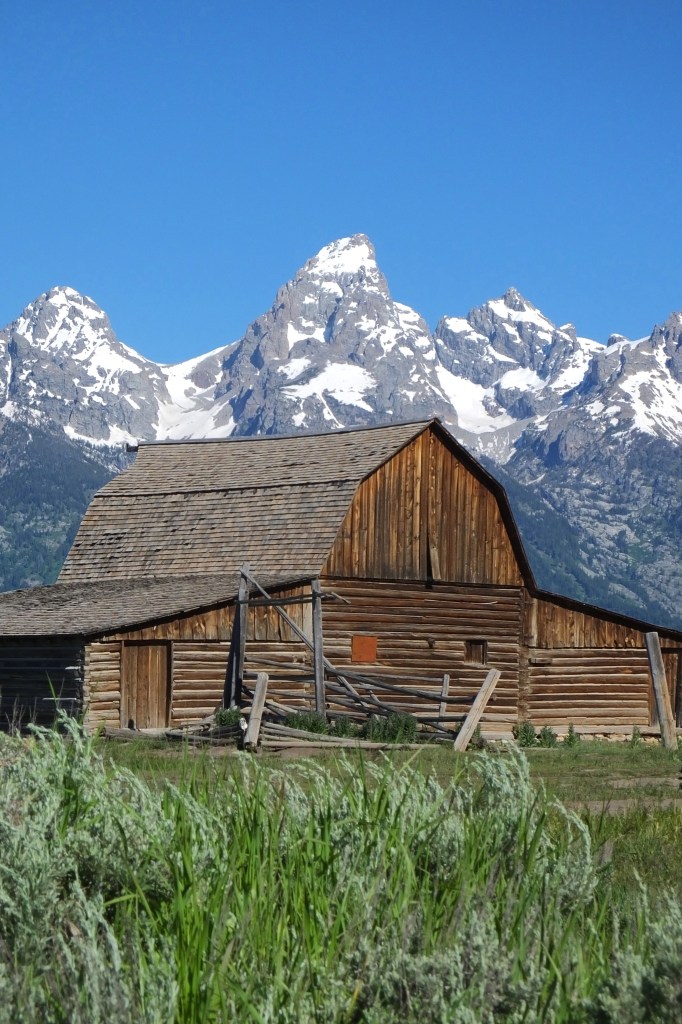
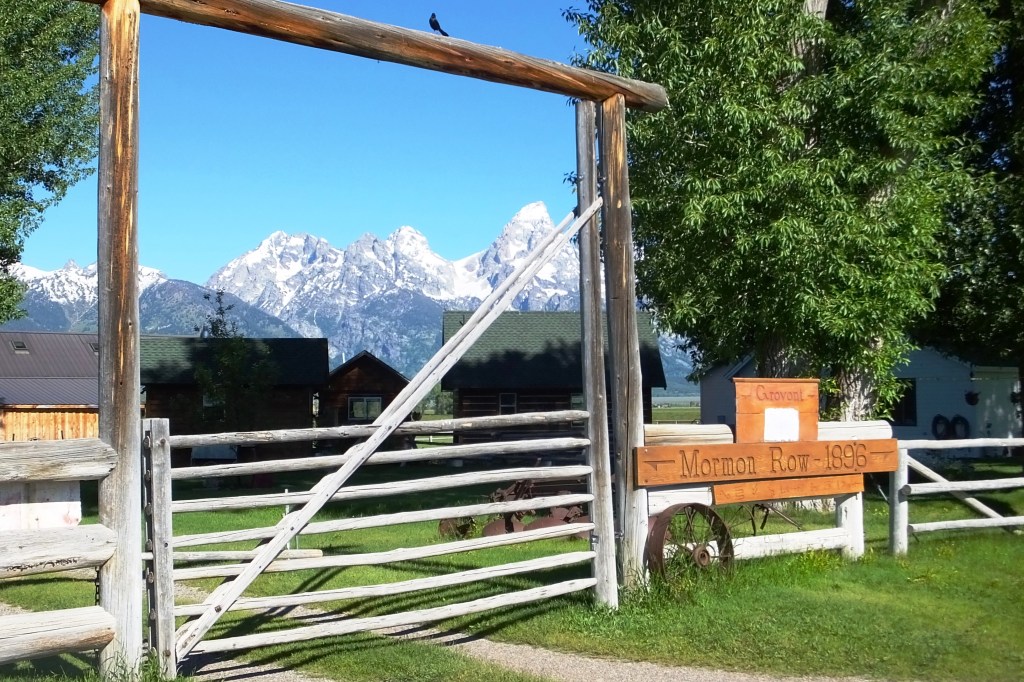
No visit to Grand Teton would be complete without a stop at Mormon Row Historic District, home to the famously photogenic Moulton Barn. We arrived early in the morning, just as the first light hit the Tetons, an unforgettable sight. The weathered wood of the barn, with the dramatic peaks rising behind it, looked like something out of a painting.
Originally settled in the late 1800s by Mormon homesteaders, this area gives a real sense of what life was like for the early pioneers. The old homesteads, barns, and fences scattered across the sagebrush flats tell quiet stories of resilience, faith, and hard work. Even with other visitors around, there’s a peacefulness to the place, a stillness that invites you to slow down and take it all in.
If you’re lucky, you might spot bison grazing nearby or catch a dusting of snow on the mountains. Either way, it’s one of those spots that just stays with you.
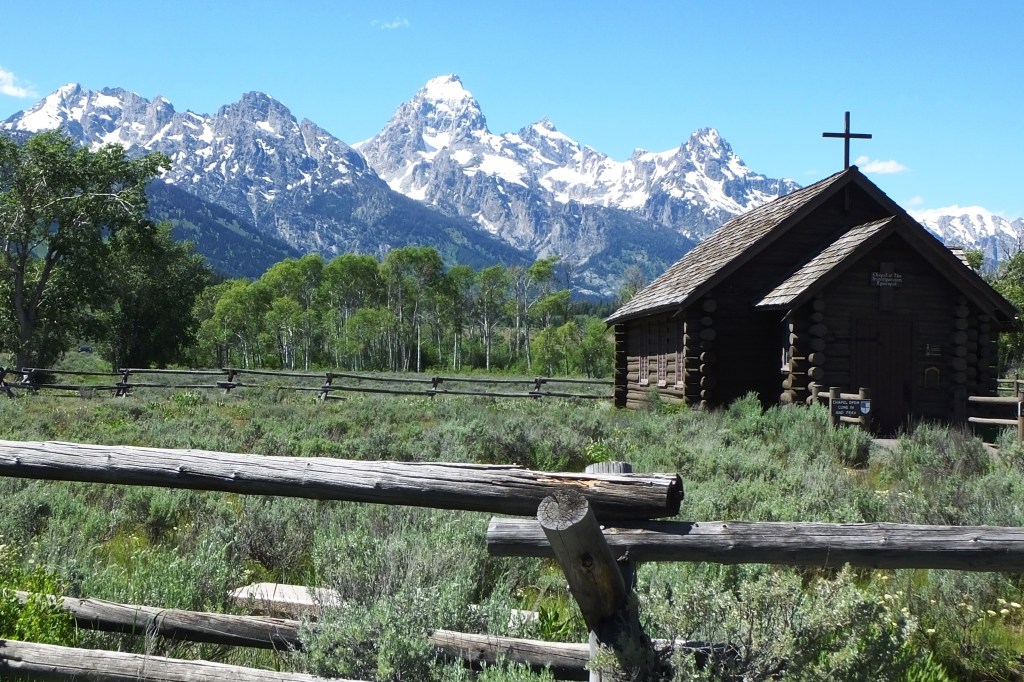
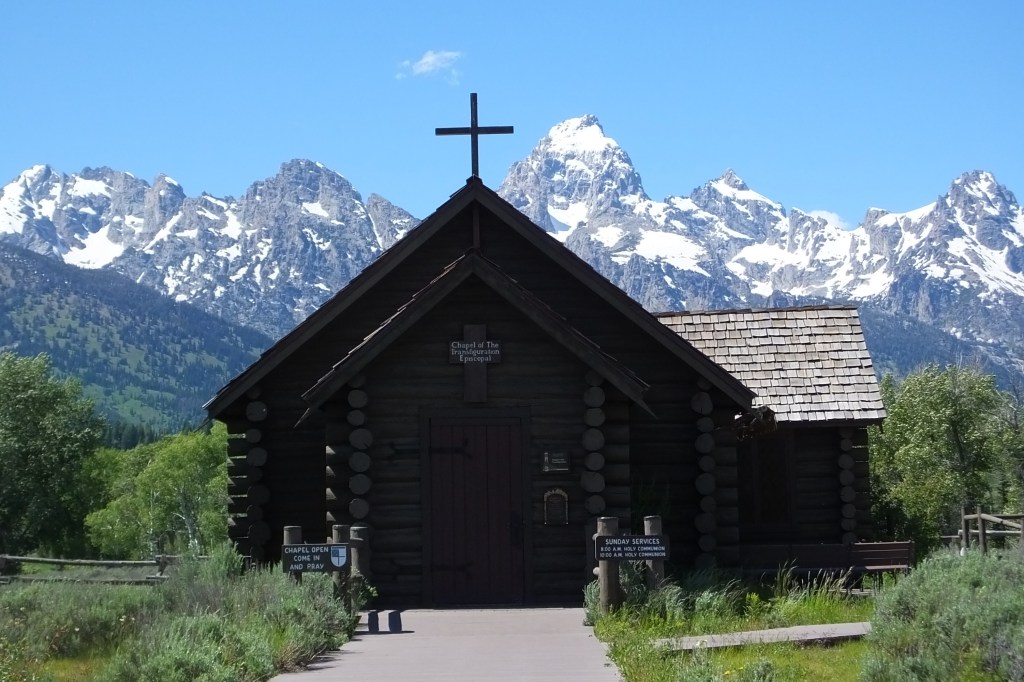
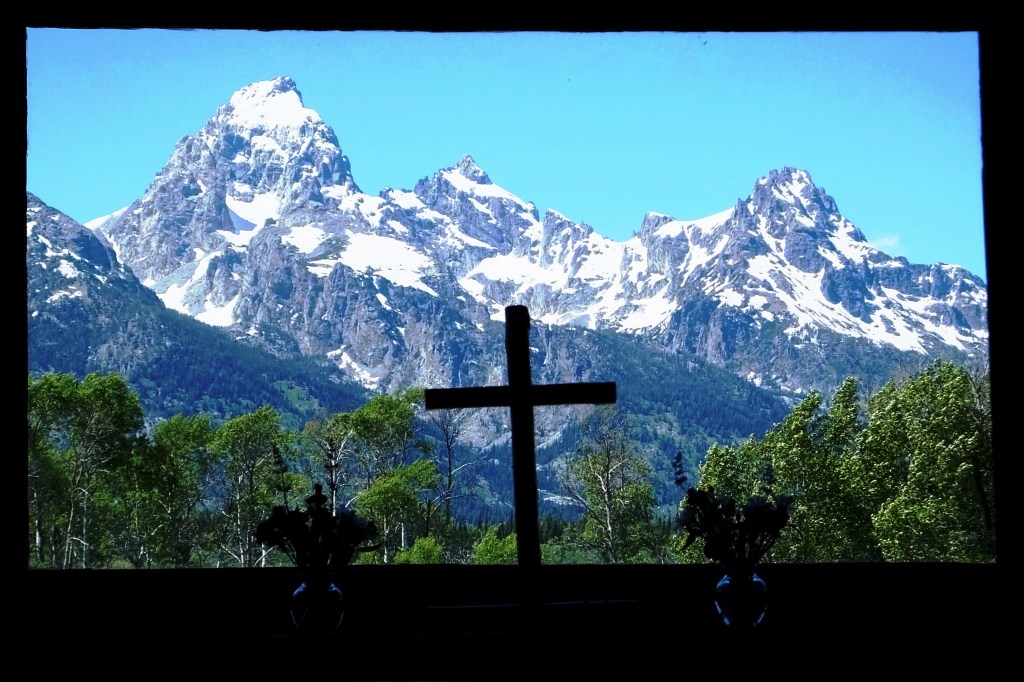
Tucked away in the trees near Moose, the Chapel of the Transfiguration is one of those quiet gems of the park. This tiny log chapel, built in 1925, was designed to frame the Teton Range right through a large window behind the altar. And it absolutely delivers. Sitting on one of the wooden pews, looking out at those towering peaks, it felt like nature and spirituality were perfectly woven together.
We arrived in the late morning when the light was just right, casting a soft glow through the windows. There were a few other visitors, but everyone seemed to instinctively whisper or fall silent, as if the space asked for reverence. Even if you’re not religious, it’s impossible not to feel something here. It’s peaceful, grounding, and deeply beautiful.
The surrounding area is just as scenic—open meadows, rustic fences, and the slow flow of the Snake River nearby. It’s the kind of place where you linger a little longer than planned, just soaking in the view.
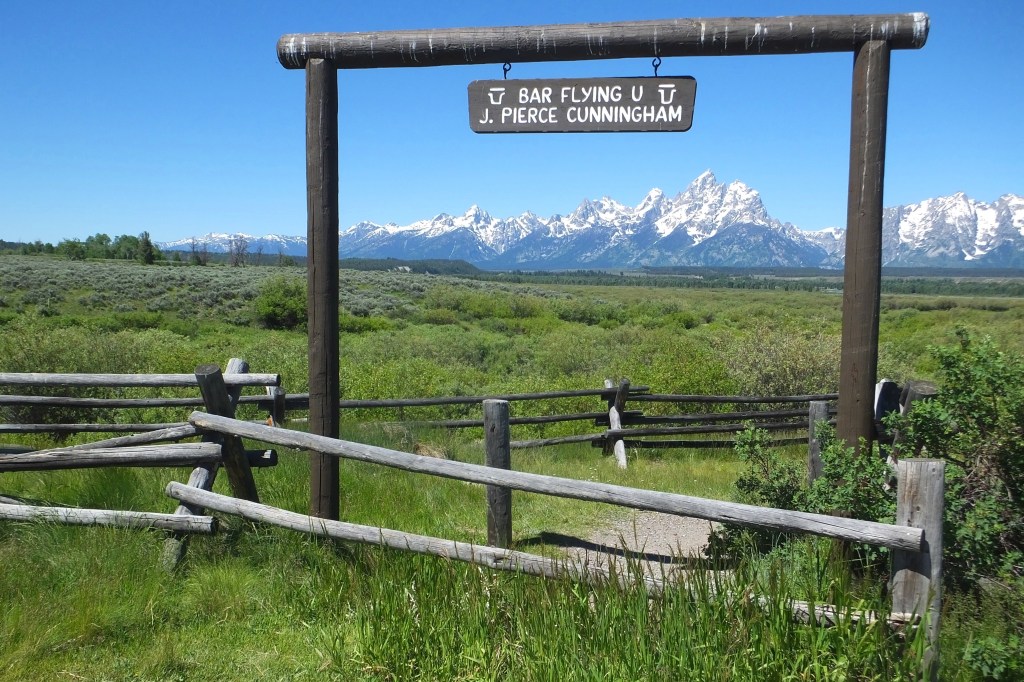
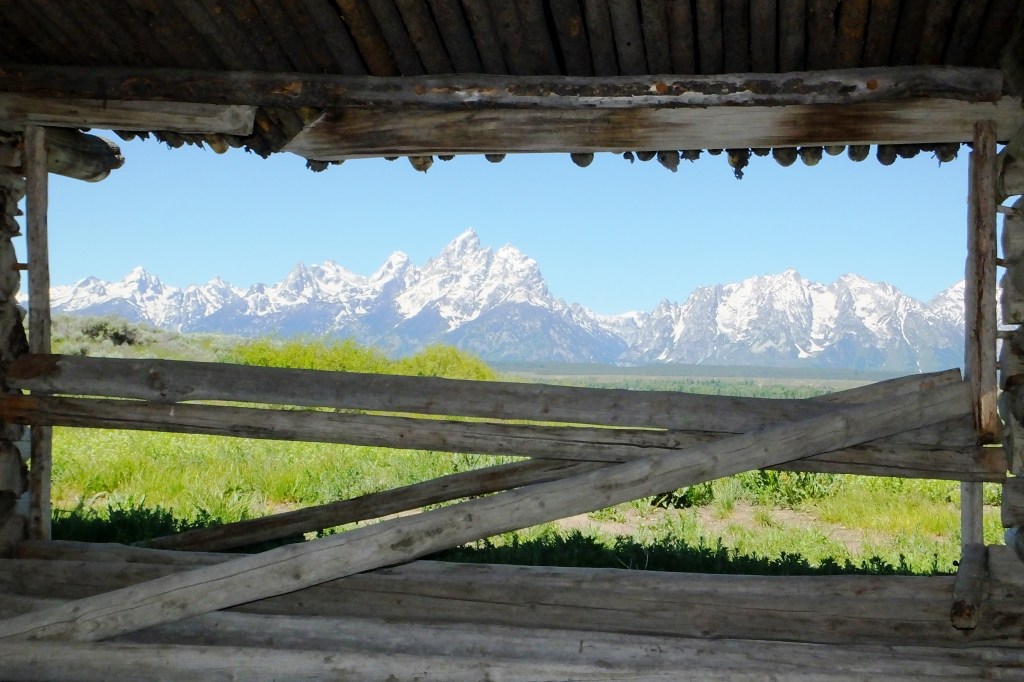
Just off the road, with the Tetons standing tall behind it, sits the Cunningham Cabin (Homestead), a simple log structure that gives a rare, authentic glimpse into the life of early settlers in Jackson Hole. Built in the 1880s by J.P. Cunningham, it’s one of the few remaining examples of a double-pen log cabin in the area.
We stopped here on a quiet afternoon, and it felt like stepping back in time. The wind whispered through the grasses, and there were hardly any sounds except for birds and the occasional far-off rustle. Looking through the open doorway of the cabin and out to the mountains beyond, it’s easy to imagine what drew homesteaders here, despite the challenges they must’ve faced.
There’s not much left inside, but somehow that makes it more powerful. You’re left to fill in the blanks with your imagination. It’s a peaceful stop, and a reminder of just how connected people used to be to the land and the landscape.
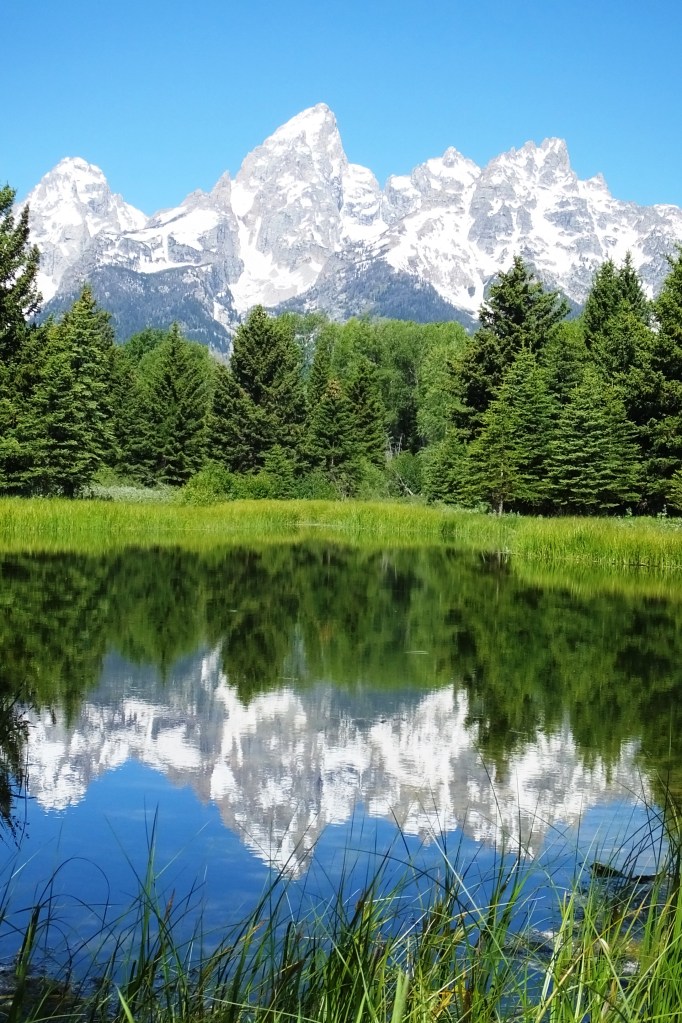
Schwabacher Landing quickly became one of our favourite spots in Grand Teton. We got up early to photograph in the soft morning light, and it was so worth it. Just a short drive down a gravel road, the landing opens up to a scene that feels almost too perfect to be real—calm, mirror-like water winding through beaver ponds and golden meadows, with the jagged Teton Range perfectly reflected in the calm waters of the meandering Snake River, it looks absolutely stunning.
The light was golden, casting that warm, dreamy glow photographers chase. It was peaceful and quiet, with only the sound of birds waking up and the occasional splash from something in the water (maybe a beaver?). There’s something about this place that slows you down. We found ourselves just standing there, not rushing, just soaking it all in.
The Snake River, which carves its way through much of the park, feels especially magical here. It’s easy to see why Ansel Adams chose this very area to capture one of his most iconic photographs.
Whether you’re into photography, birdwatching, or just want a serene moment to yourself, Schwabacher Landing delivers. It’s one of those places that makes you feel small.
View all our pictures from Grand Teton National Park here.

 Mapgirl Adventures