Rising from the middle of the Atlantic Ocean, the Azores feel like a place imagined rather than found. This remote Portuguese archipelago of nine volcanic islands is a world of dramatic coastlines, emerald-green hills, mist-filled crater lakes, and steaming hot springs—where nature is always centre stage. We had just one week here but somehow managed to pack it full of unforgettable moments.
Our time was spent exploring São Miguel, the largest of the islands, where we quickly fell into its slower rhythm of life. From wandering coastal villages and gazing across cloud-covered lakes to tasting flavours we still dream about, this (almost) A-to-Z guide captures the highlights, surprises, and small details that made our Azorean adventure so memorable.
A – Arnel
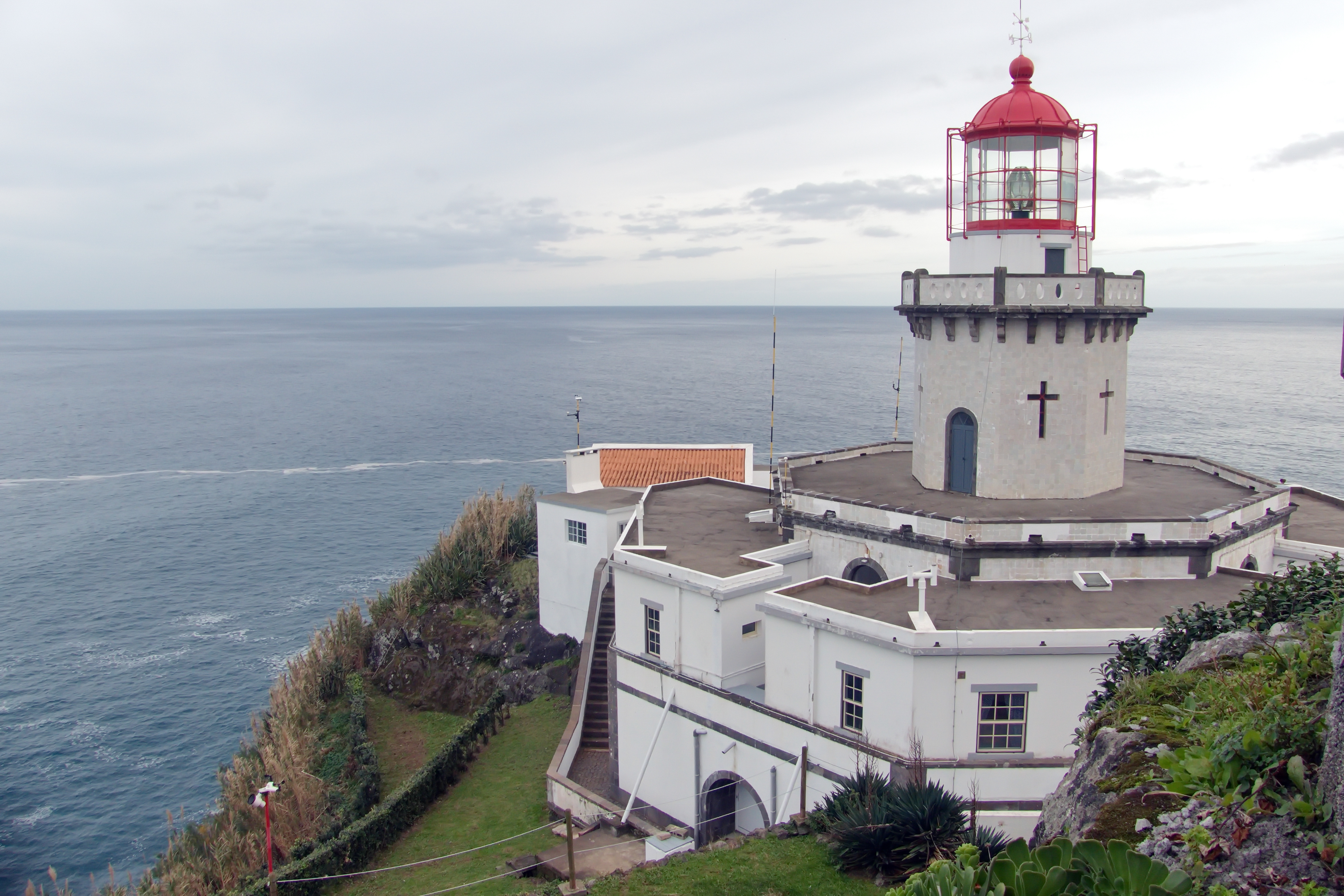
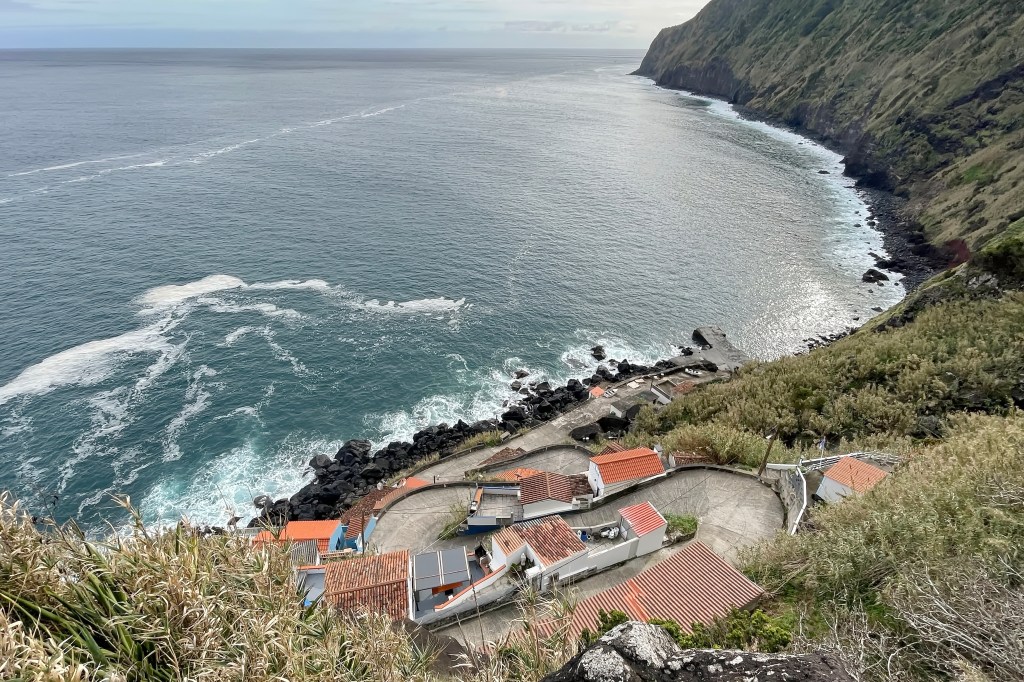
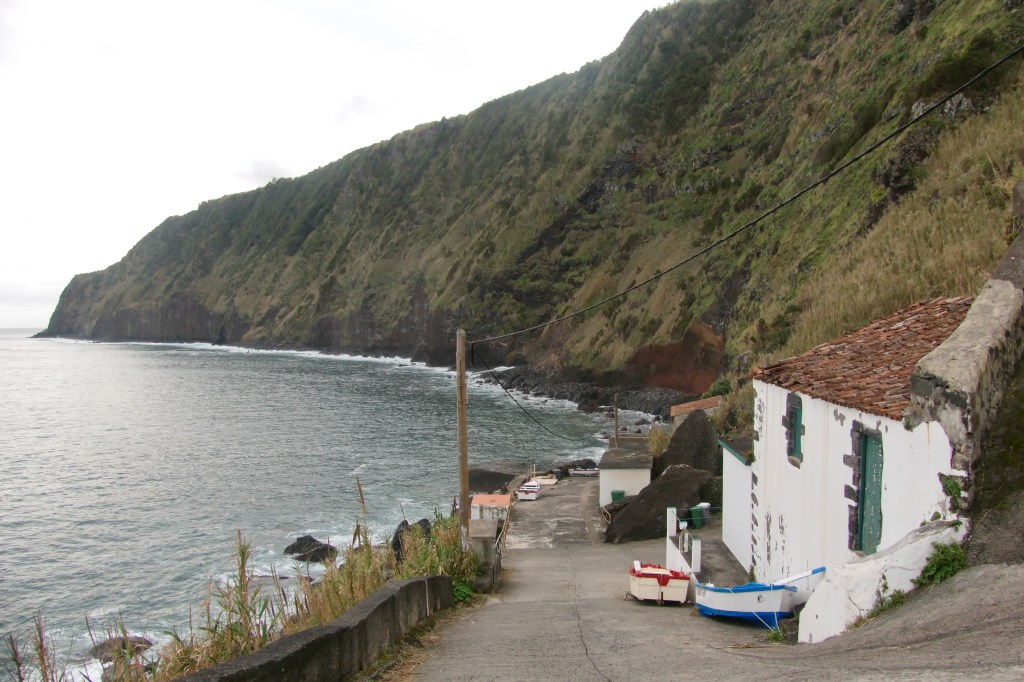
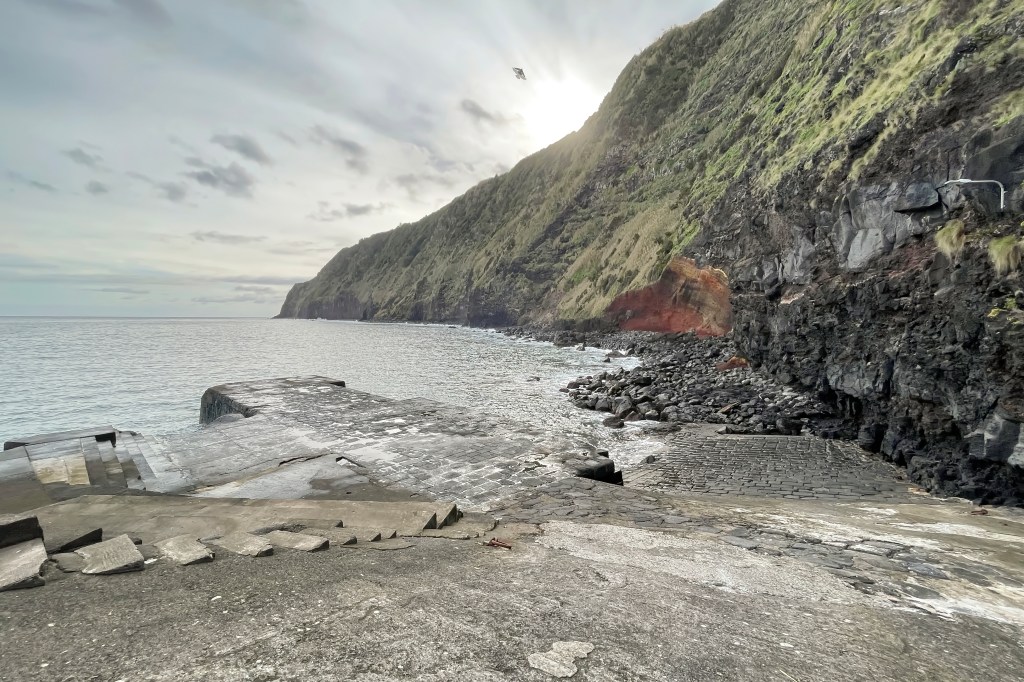
Perched on a windswept point (Ponta do Arnel) along the northeastern coast, Arnel Lighthouse rewards the effort it takes to reach it with sweeping views of rugged cliffs, the vast Atlantic, and a tiny fishing port far below. Getting there is an adventure in itself. A notoriously steep access road plunges toward the lighthouse—and continues even further down to the village—with gradients reaching an eye-watering 35%. Although it’s technically an official road, we decided our nerves (and brakes) would be happier if we left the car in the viewpoint parking lot along the main road and tackled the descent on foot instead. It was a tough walk, but one that immediately made the place feel earned.
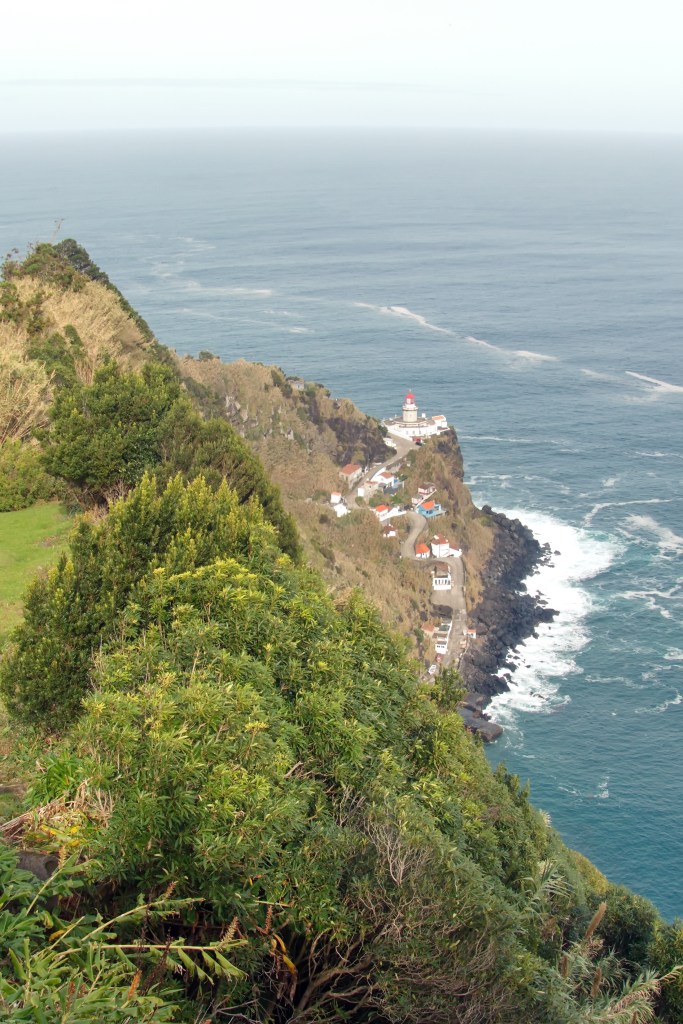
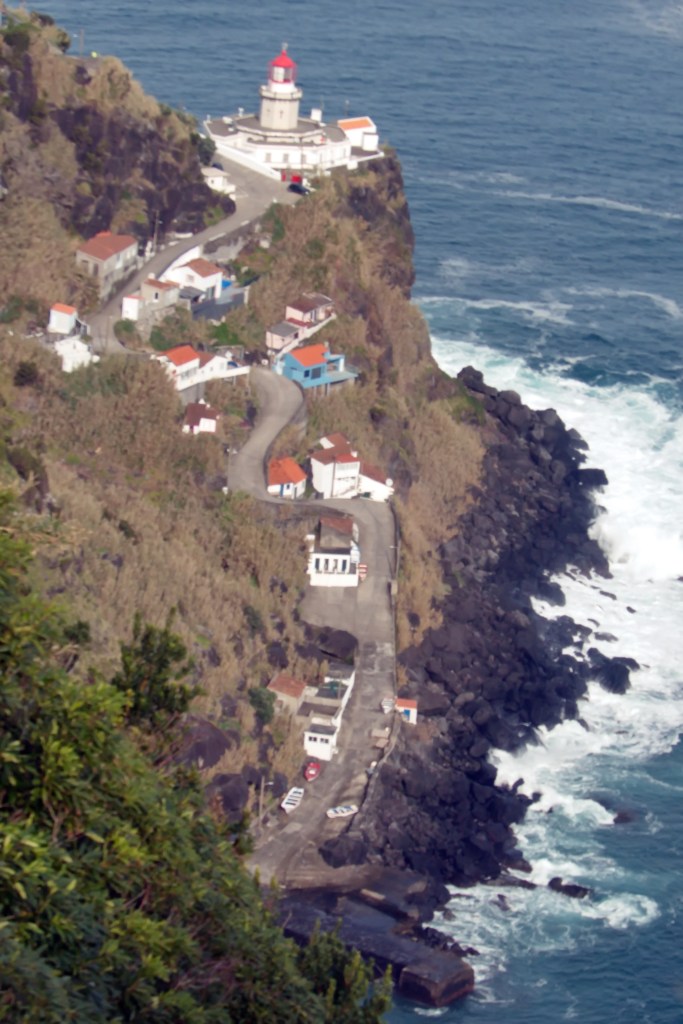
The narrow, winding road leading to the lighthouse and beyond offers rare access to the shoreline along this otherwise unforgiving stretch of coast, where sheer cliffs rise dramatically on both sides. Halfway down, the octagonal lighthouse stands proudly at the edge, perfectly positioned against the elements. Built in 1876, it was the first lighthouse in the Azores, and it still faithfully guards the coast, guiding ships through these challenging waters.
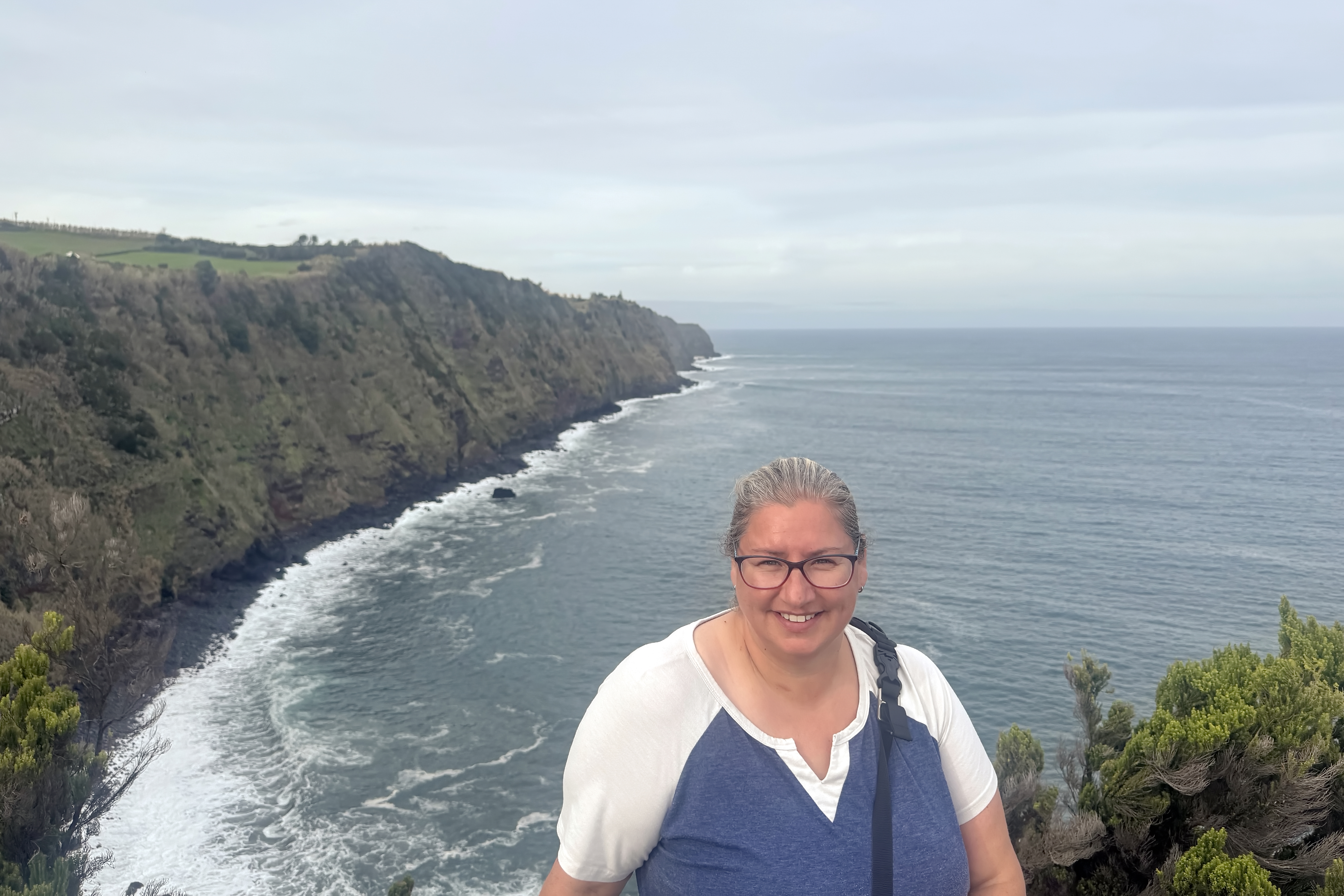
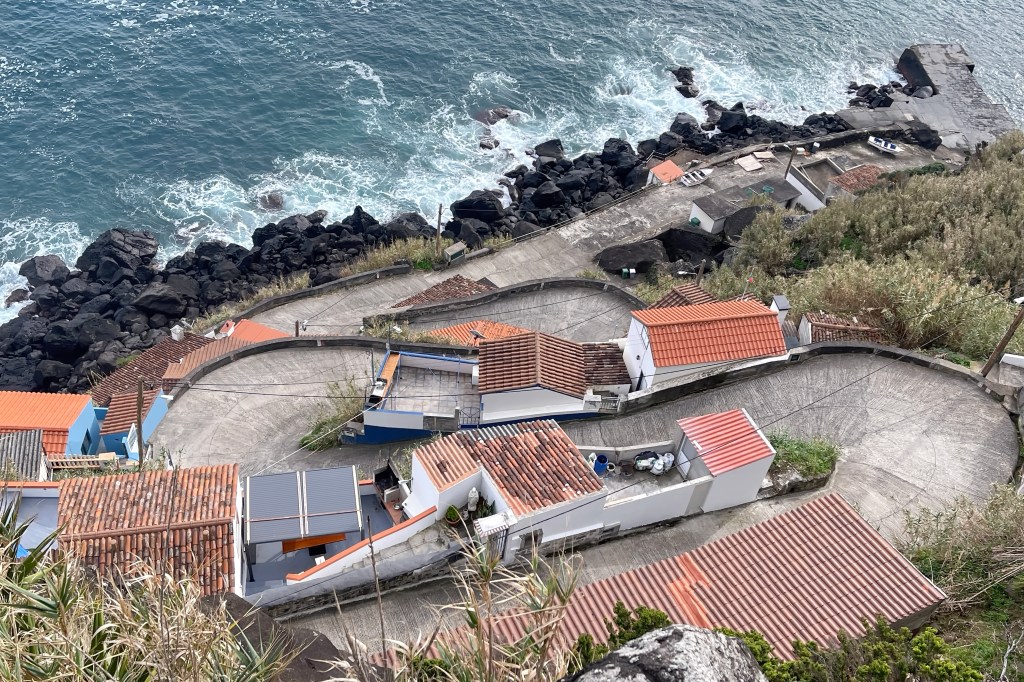
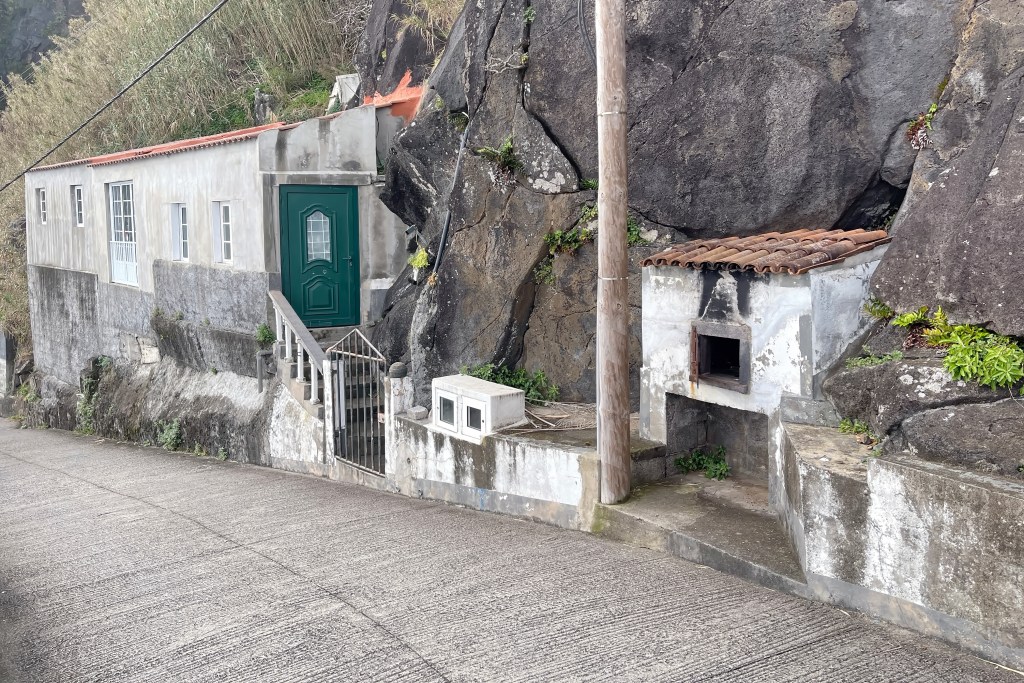
We continued down toward the slipway at the water’s edge, where a small dock serves a handful of brave local fishermen. The road twists downward in tight hairpins, passing a scattering of whitewashed, shack-like houses that seem to cling improbably to the hillside. Despite being barely a kilometre from the clifftop, the area felt astonishingly remote—quiet, rugged, and almost untouched by time.
B – Boca do Inferno
The viewpoint of Boca do Inferno—the Mouth of Hell—doesn’t quite live up to its ominous name. In fact, it’s one of Sao Miguel’s most celebrated sights, famed for its sweeping views over the Sete Cidades caldera, where twin blue and green lakes fill ancient volcanic craters and create some of the Azores’ most iconic scenery. With expectations set high, we couldn’t help but wonder: would it live up to the hype?
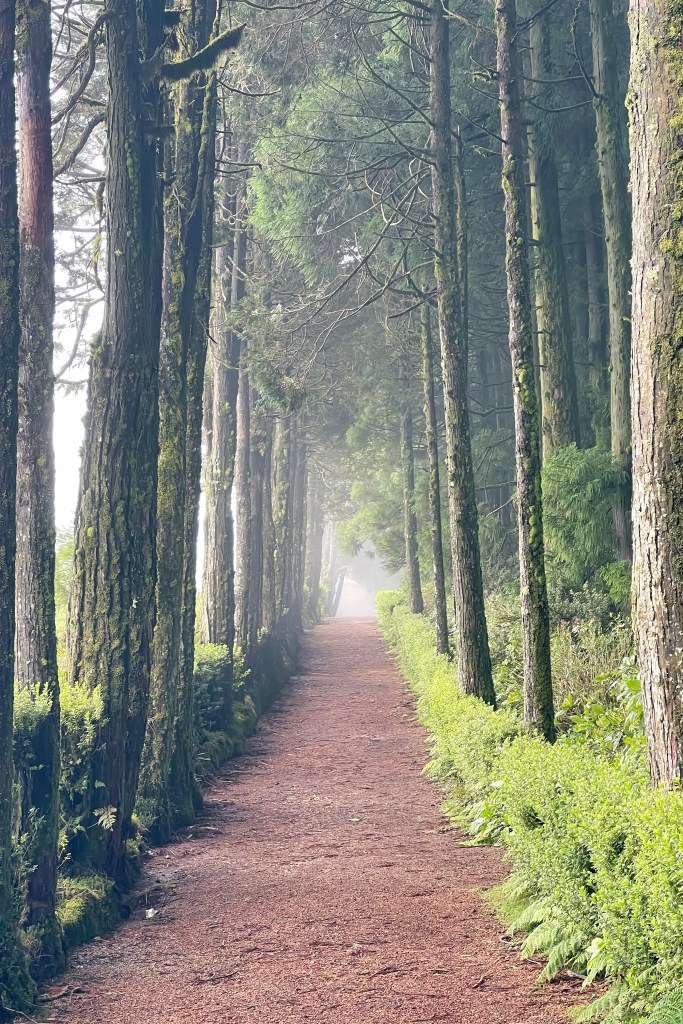
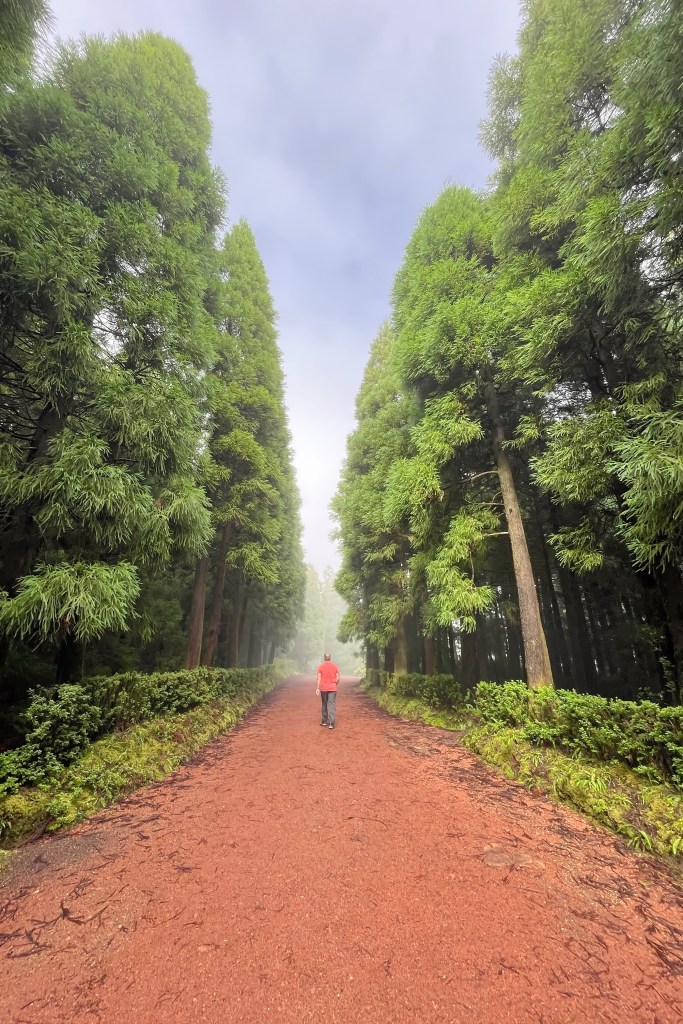
It had been a bright start to the morning, with wispy clouds revealing the rolling farmland on our drive. Still, some mist clung to the leaves and branches as we set off on the short walk through towering trees toward the stepped boardwalk. The broad, well-maintained path, surfaced with red crushed rock, crunched beneath our feet, and the sharp, clean scent of pine hung in the cool air.
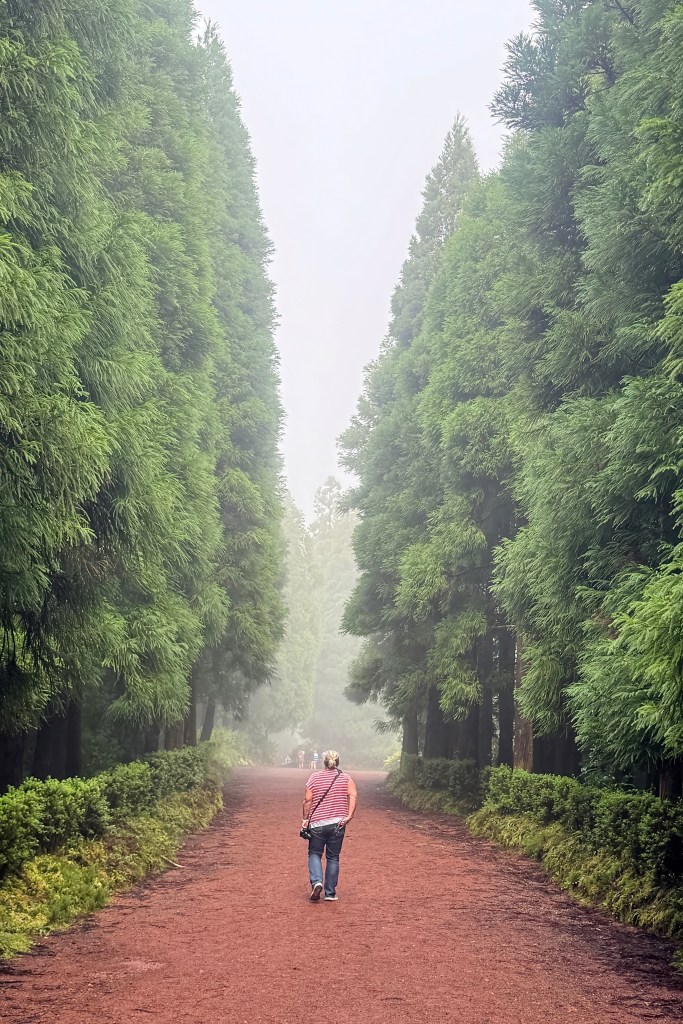
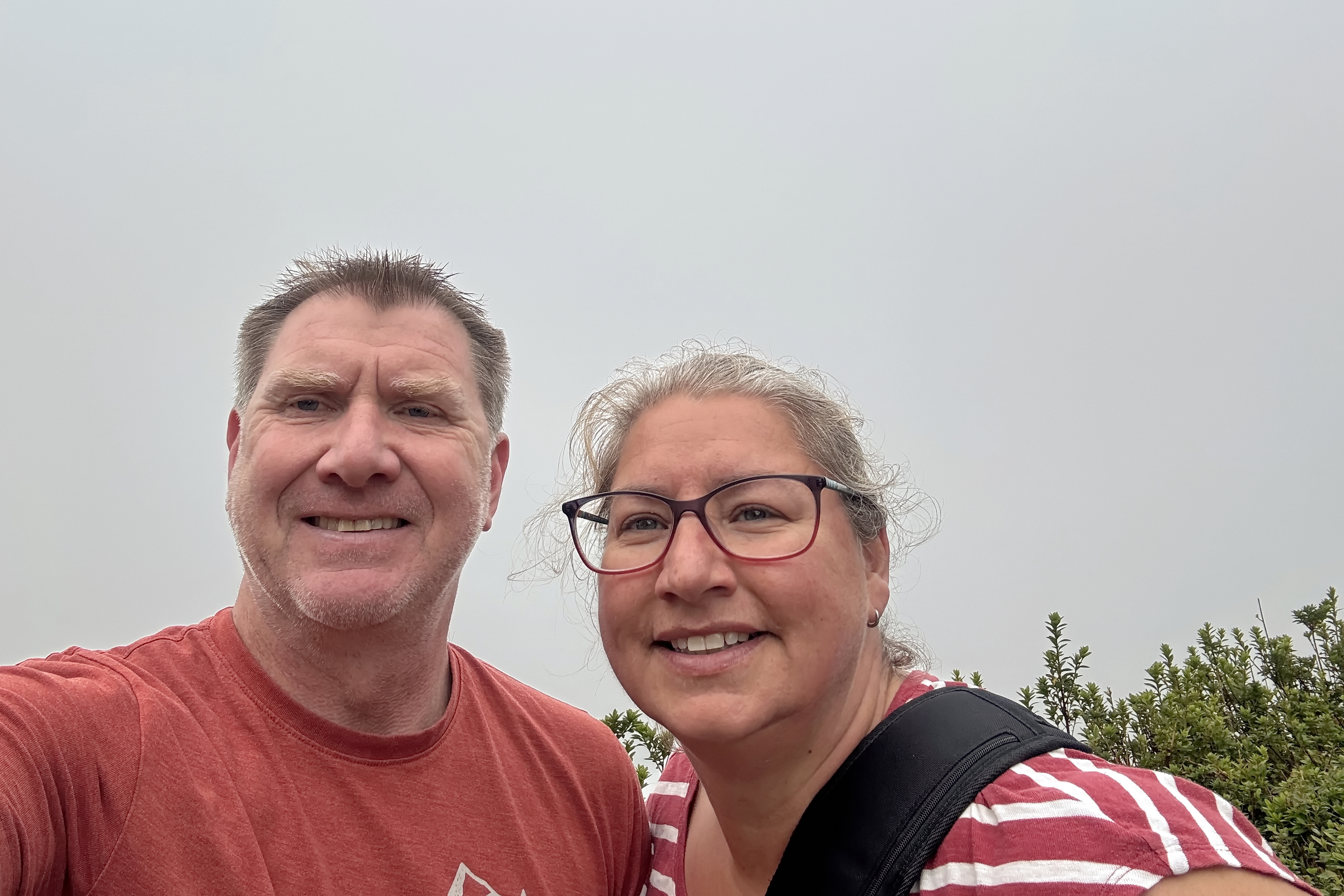
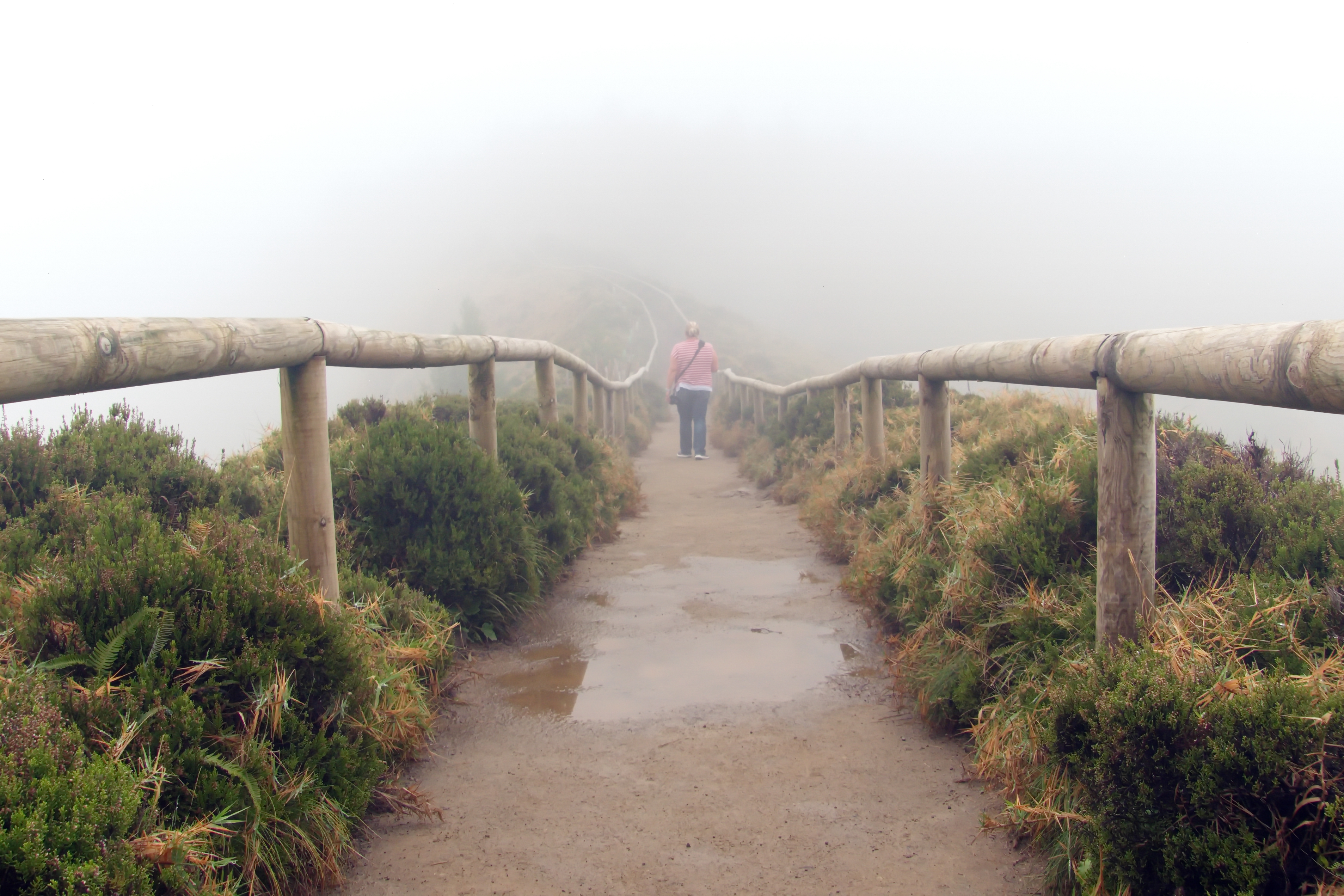
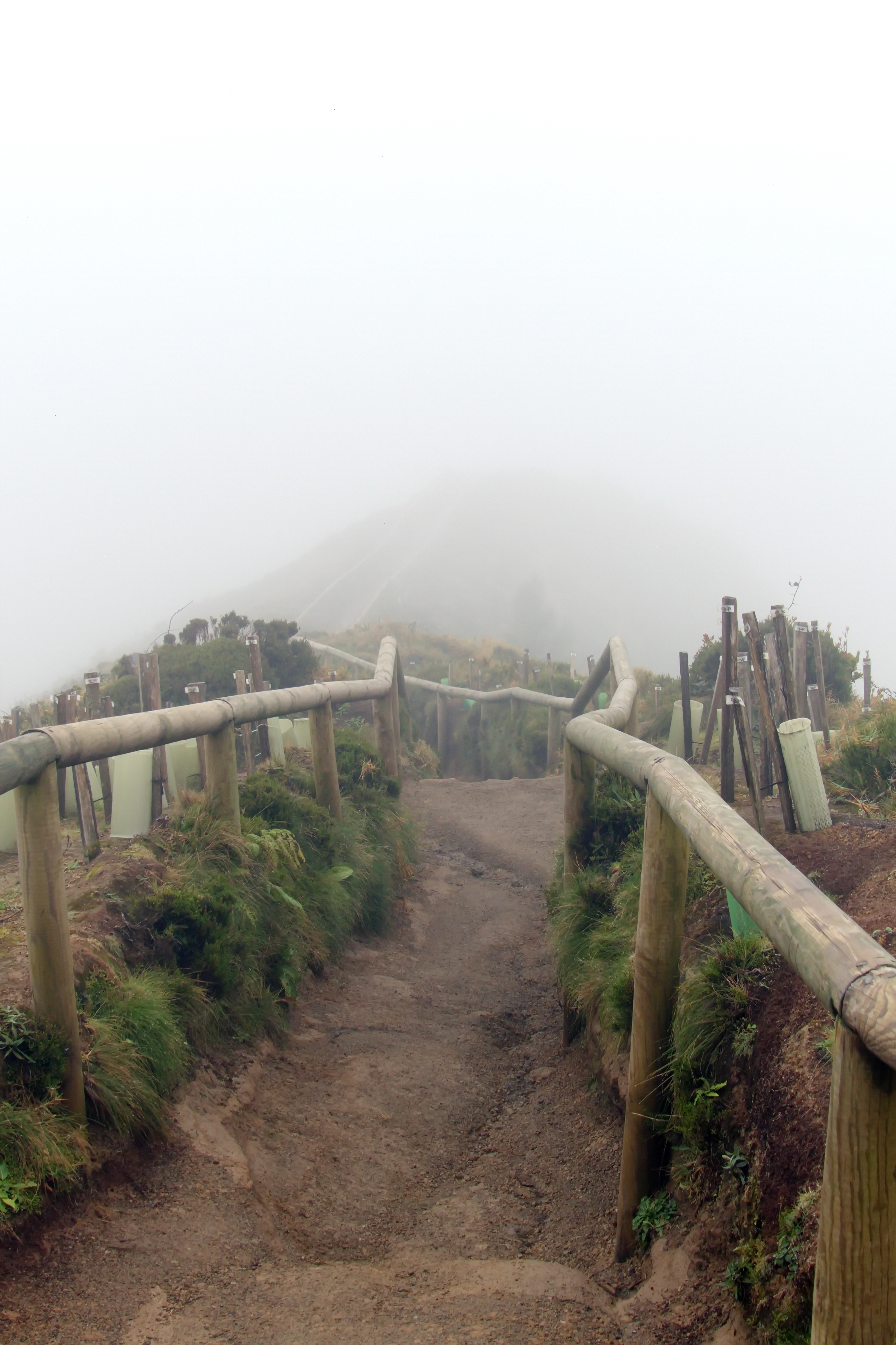
Travel has a way of reminding you that not every moment unfolds like a postcard. As soon as we stepped onto the final section of boardwalk, the clouds rolled in, wrapping us in a thick, shifting blanket of fog. The crystal-clear views splashed across Instagram (and yes, they really are spectacular) were nowhere to be seen. Instead, the only visible landmarks were the wooden rails tracing the ridge ahead of us. Standing there alone, peering into the white void, was oddly unsettling and strangely magical all at once. It felt as though we were balanced on the very edge of the world, suspended between what we knew was there—and what the island had chosen to keep hidden.


C – Coast
Sao Miguel’s coastline stretches for roughly 225 kilometres, and thanks to well-paved roads circling the island, it’s wonderfully easy to explore. Around almost every bend there’s another ‘miradouro’ (viewpoint) tempting you to pull over, camera in hand. While we’ll mention several coastal highlights elsewhere, this stop focuses on two points of interest close together along the island’s northern shore: one a curious volcanic formation, the other a quiet viewpoint overlooking a sheltered natural harbour.
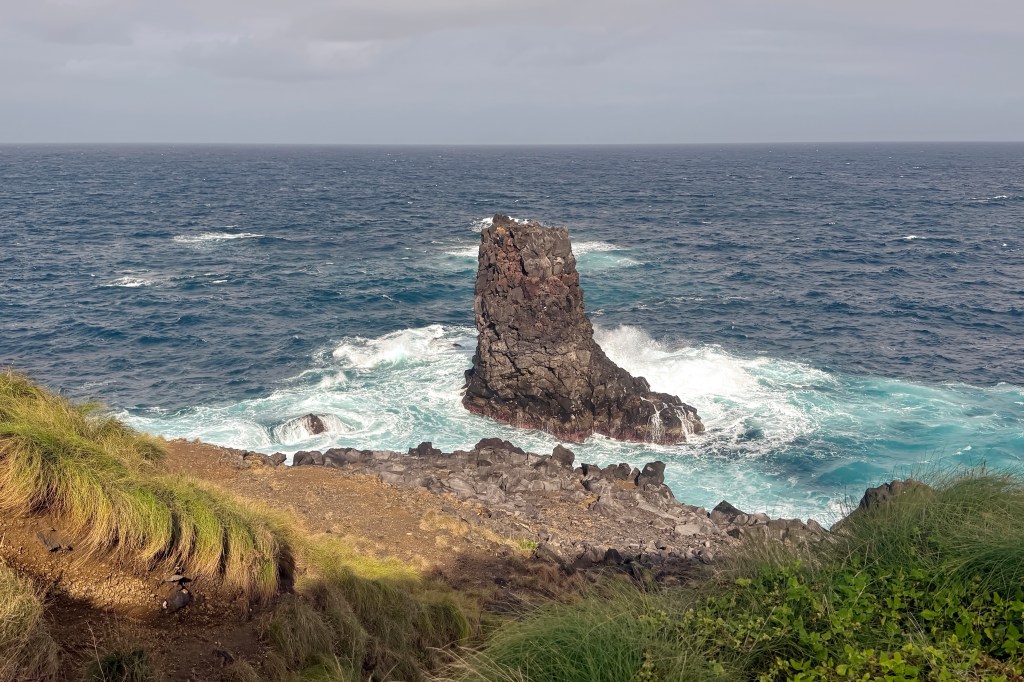
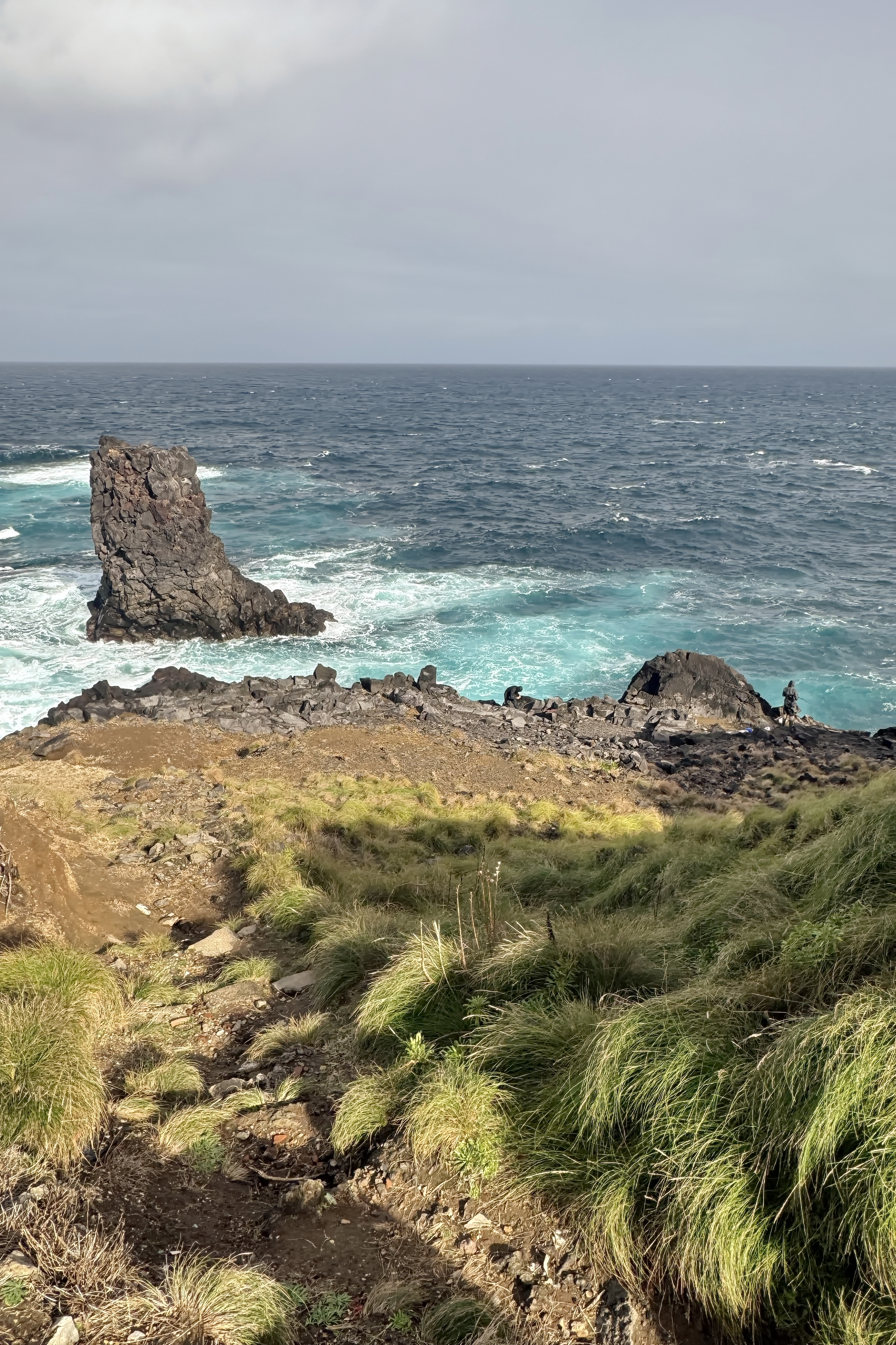
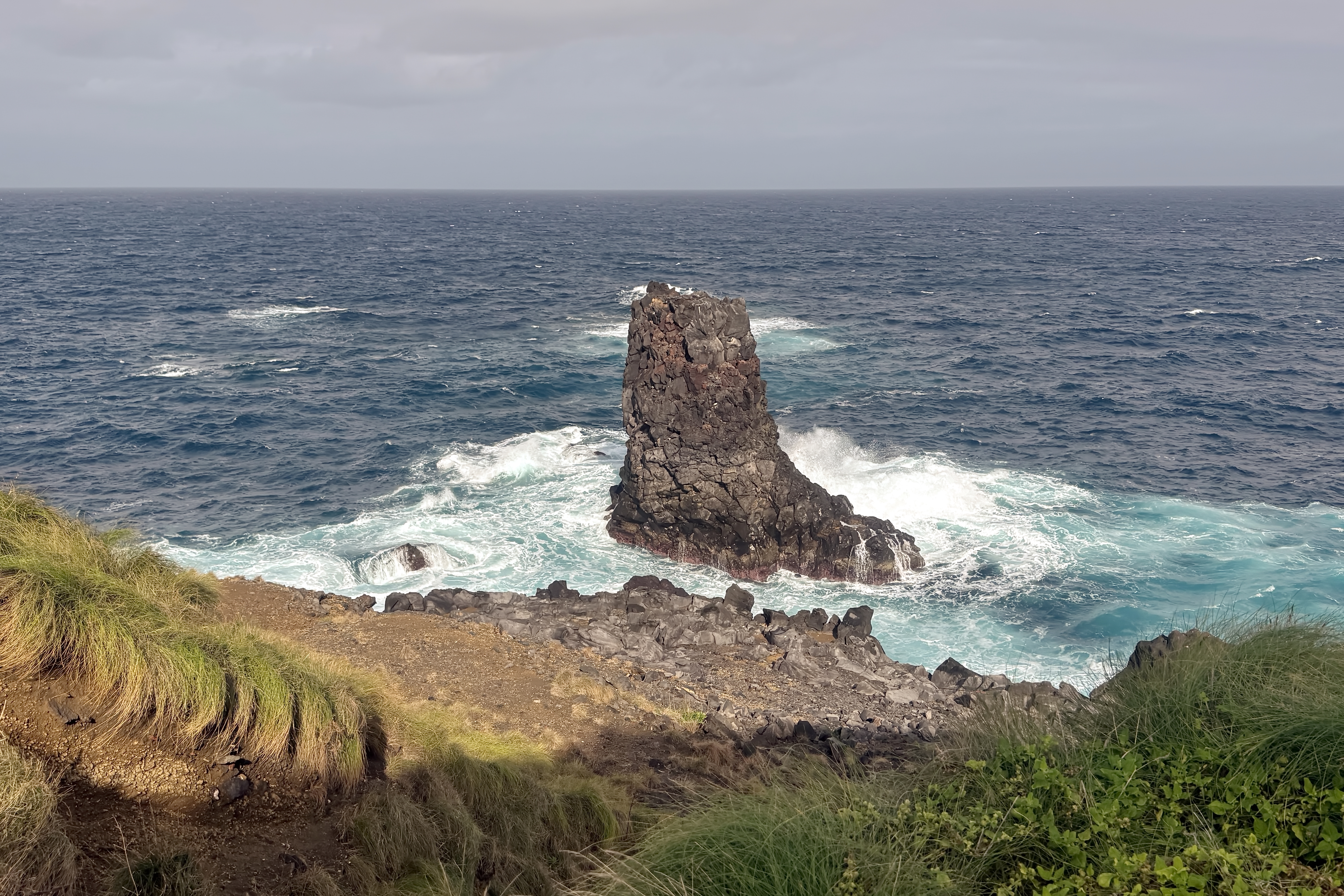
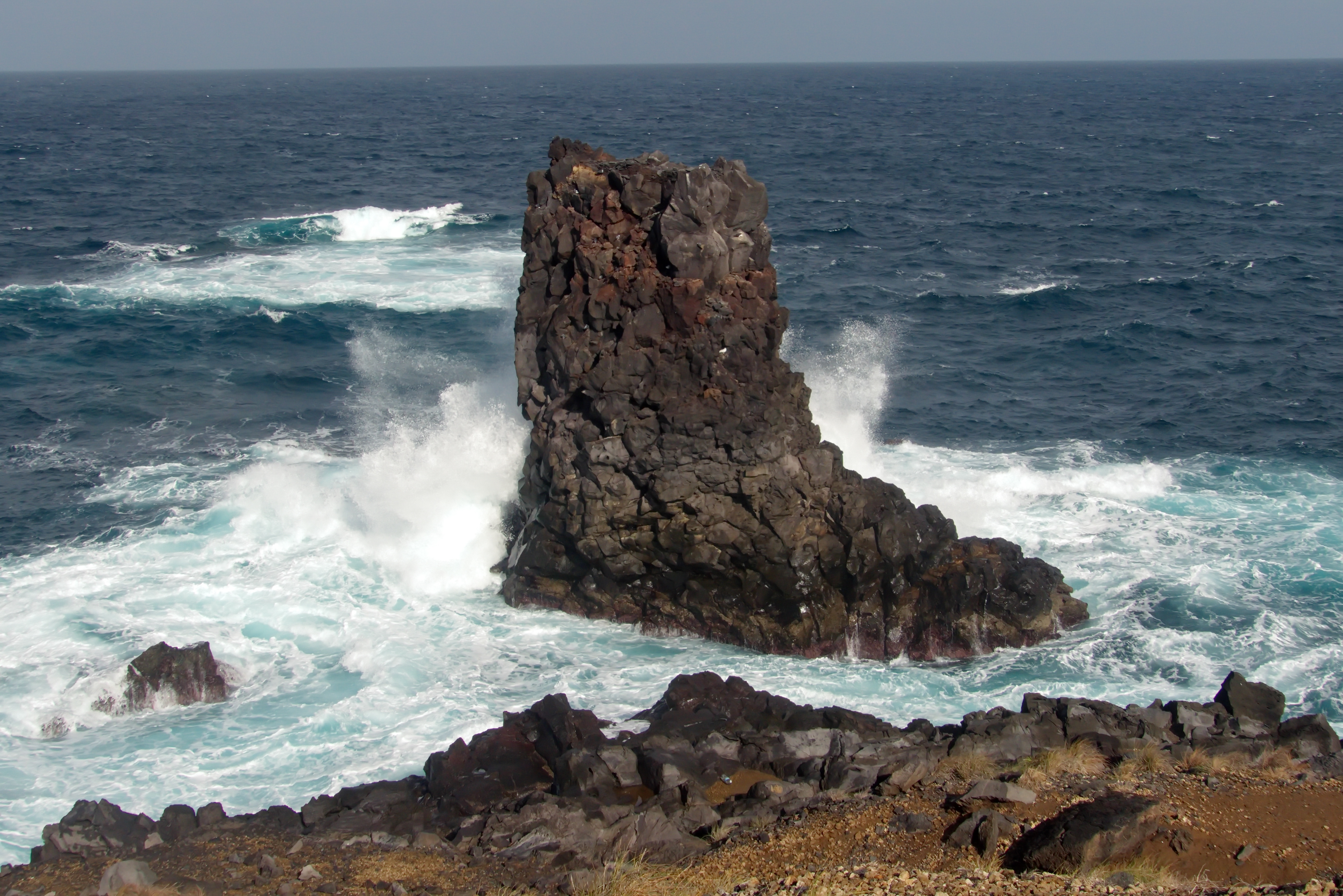
A Bota—quite literally “the boot”—looks exactly as its name suggests. This peculiarly-shaped volcanic outcrop rises from a rugged landscape of black basalt, where the coastline feels raw and untamed. Here, waves don’t gently lap at the shore; they crash and surge against the rocks. Standing at the cliff’s edge, we watched local fishermen carefully perch on narrow ledges shaped by ancient underwater lava flows. The scene was striking: crisp blue water colliding with frothing white crests, set against dark rocks jutting defiantly from the sea.
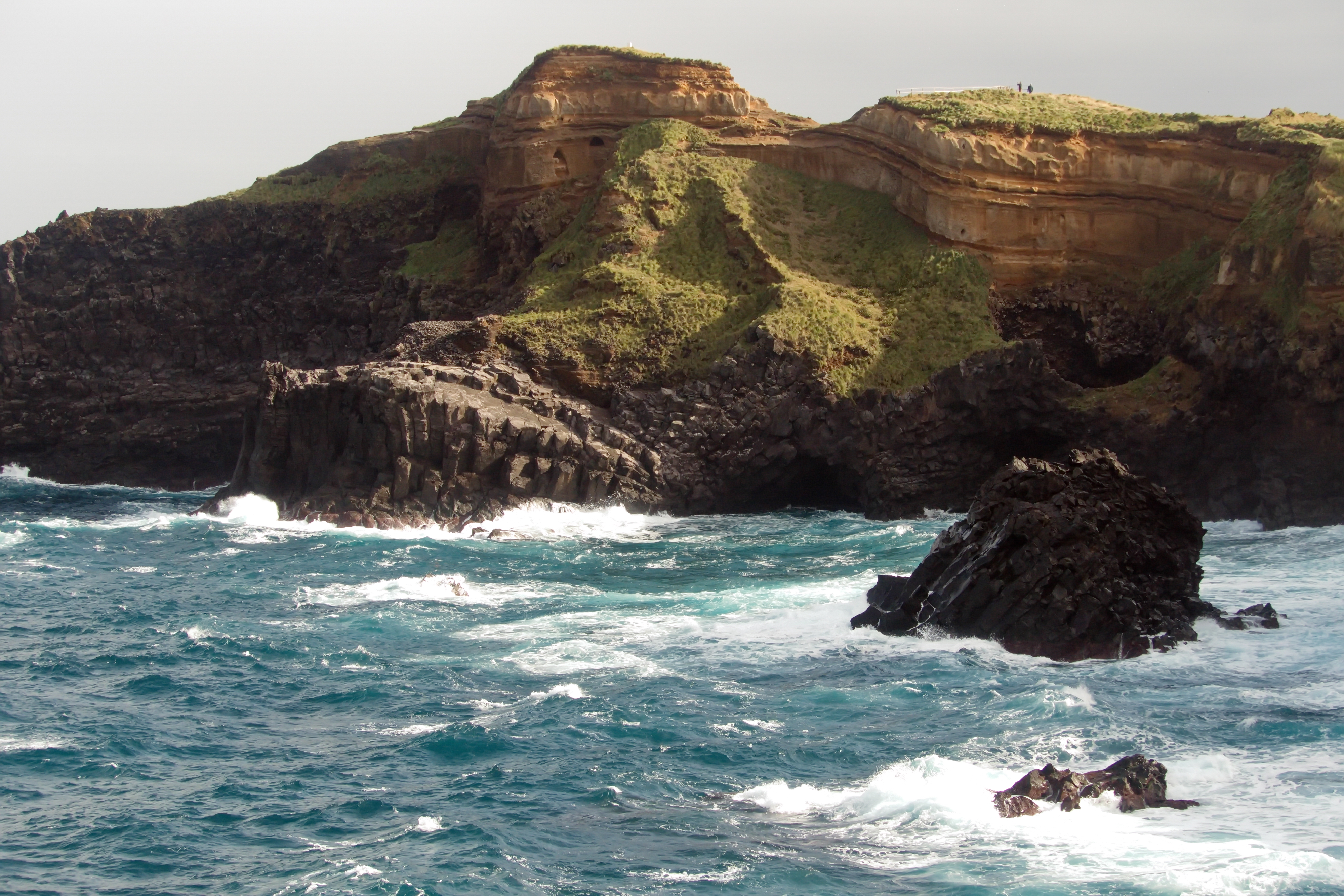
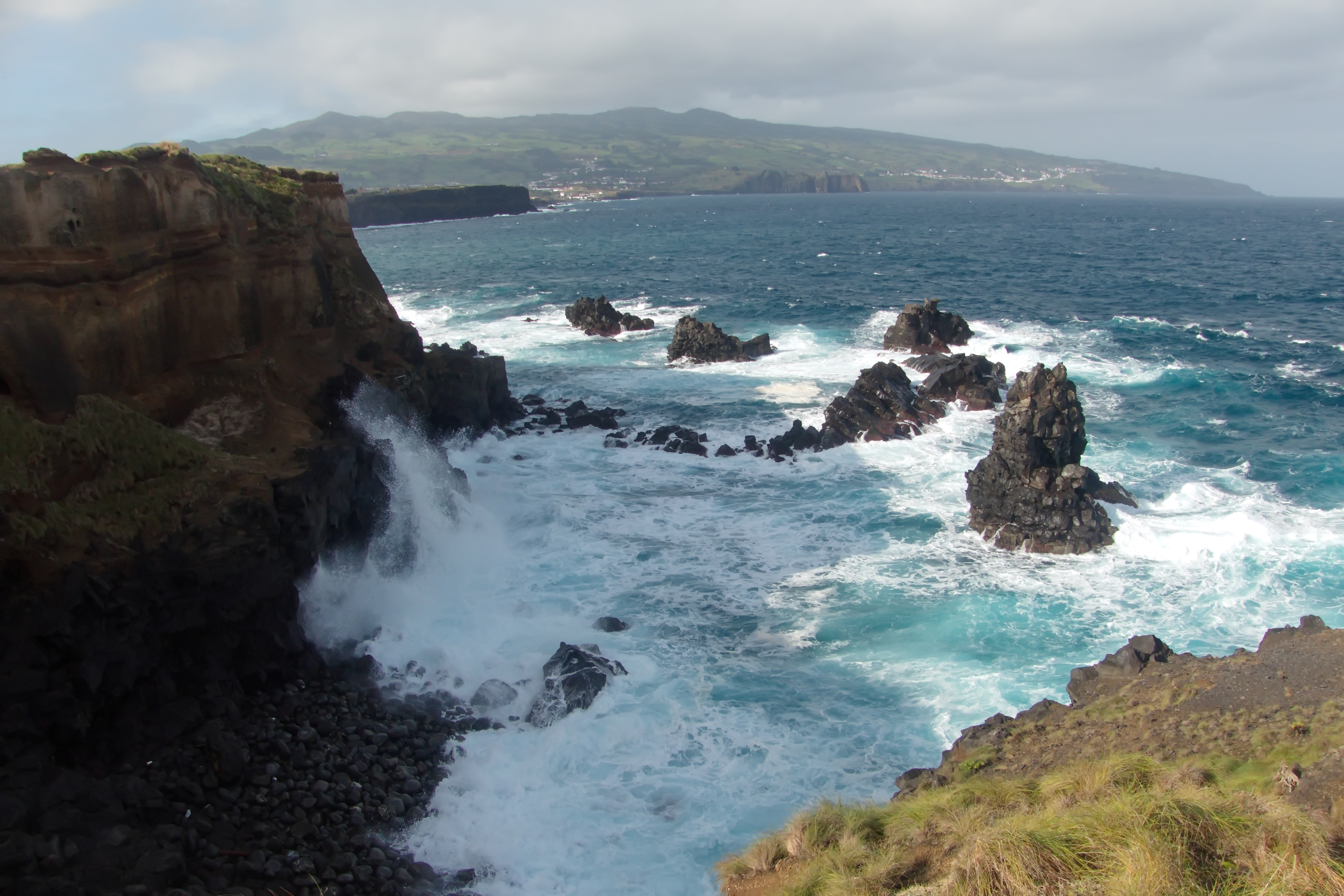
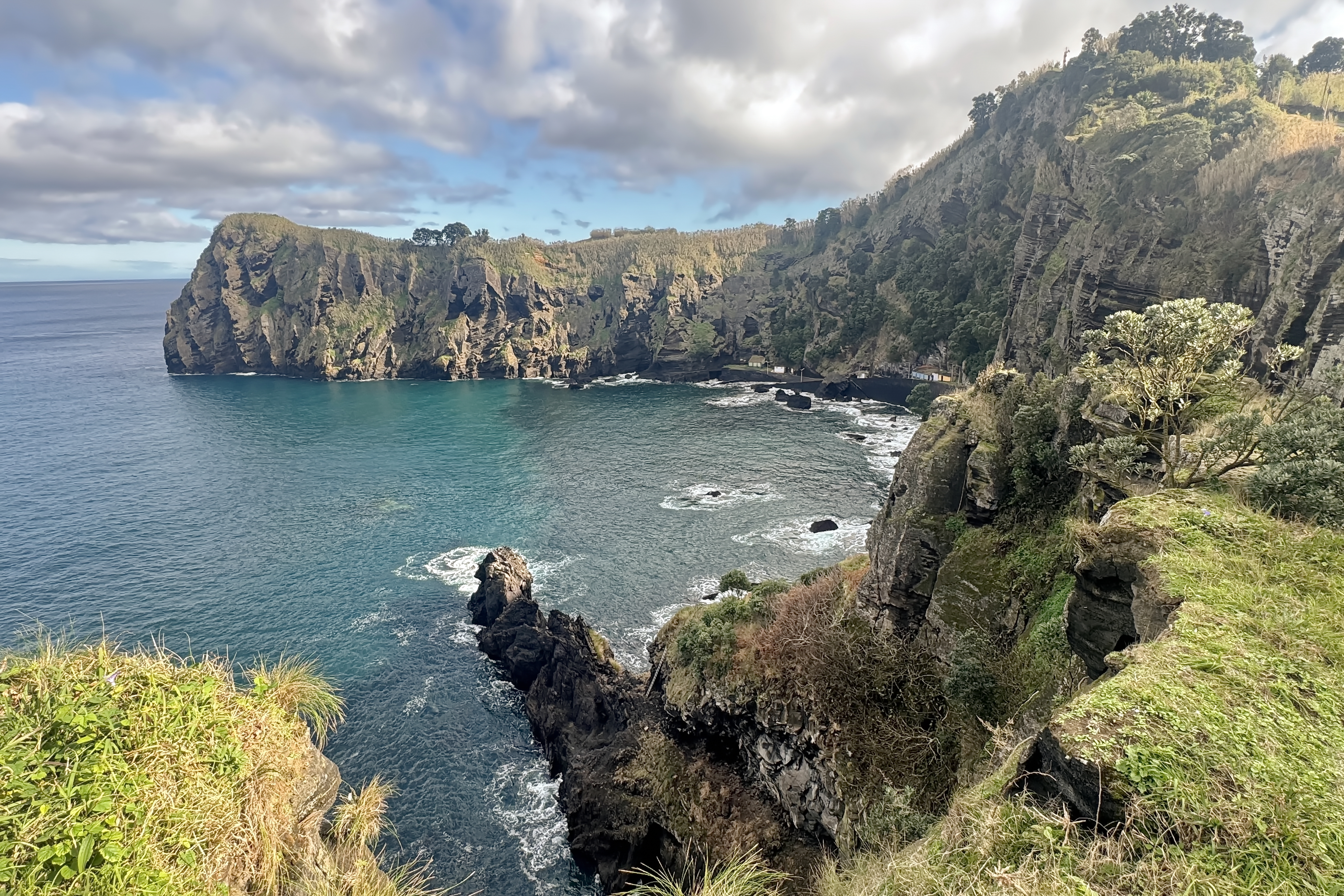
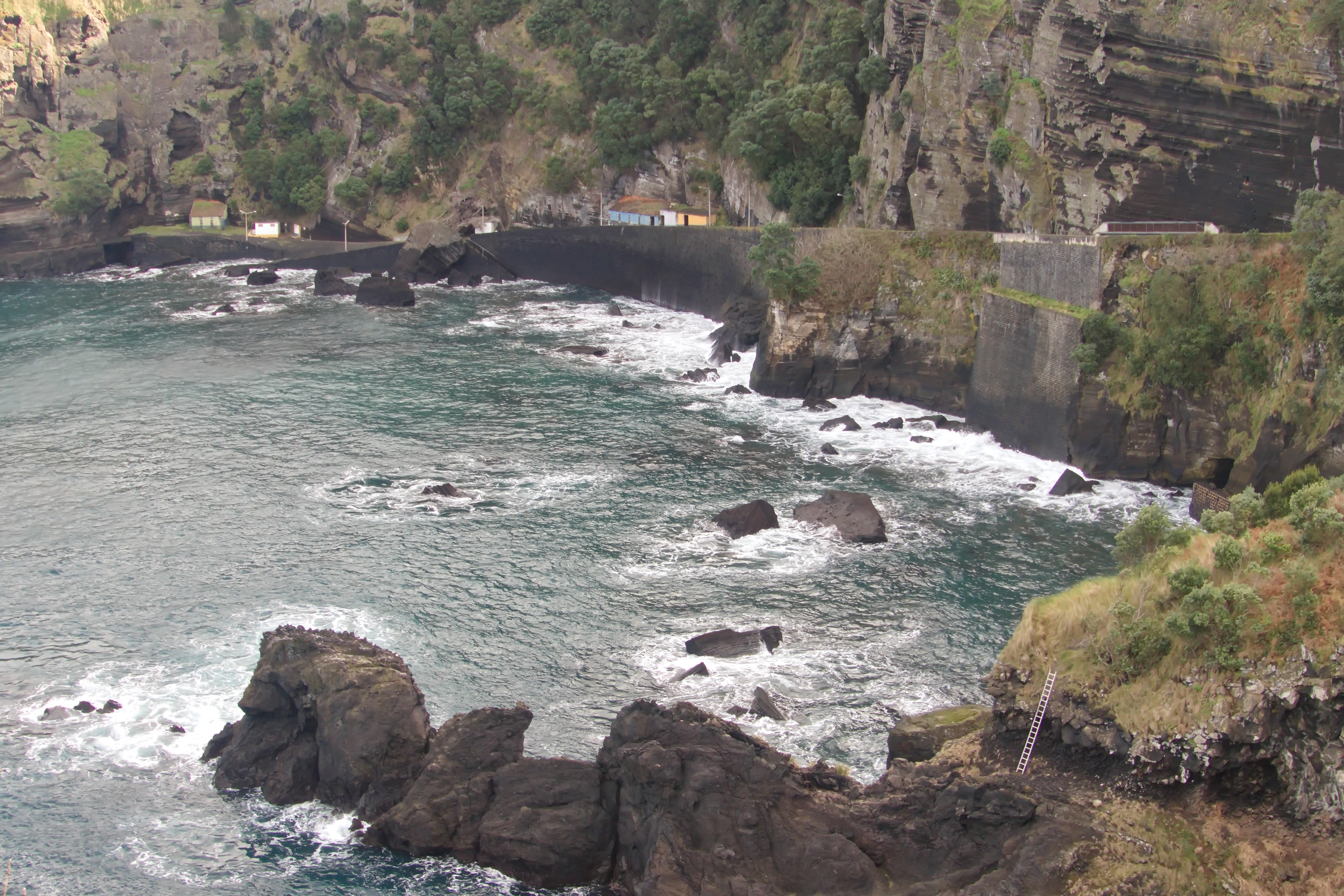
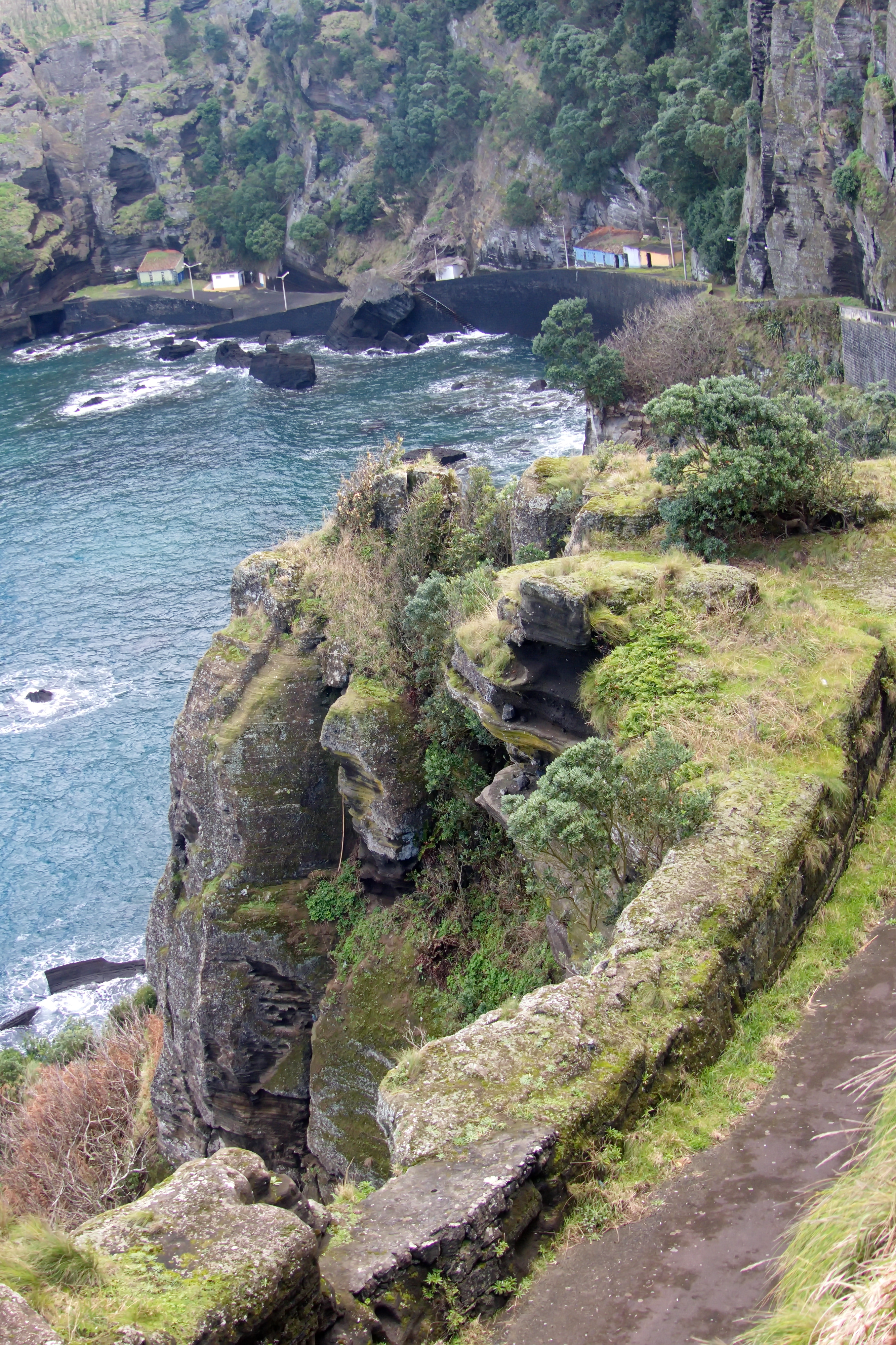
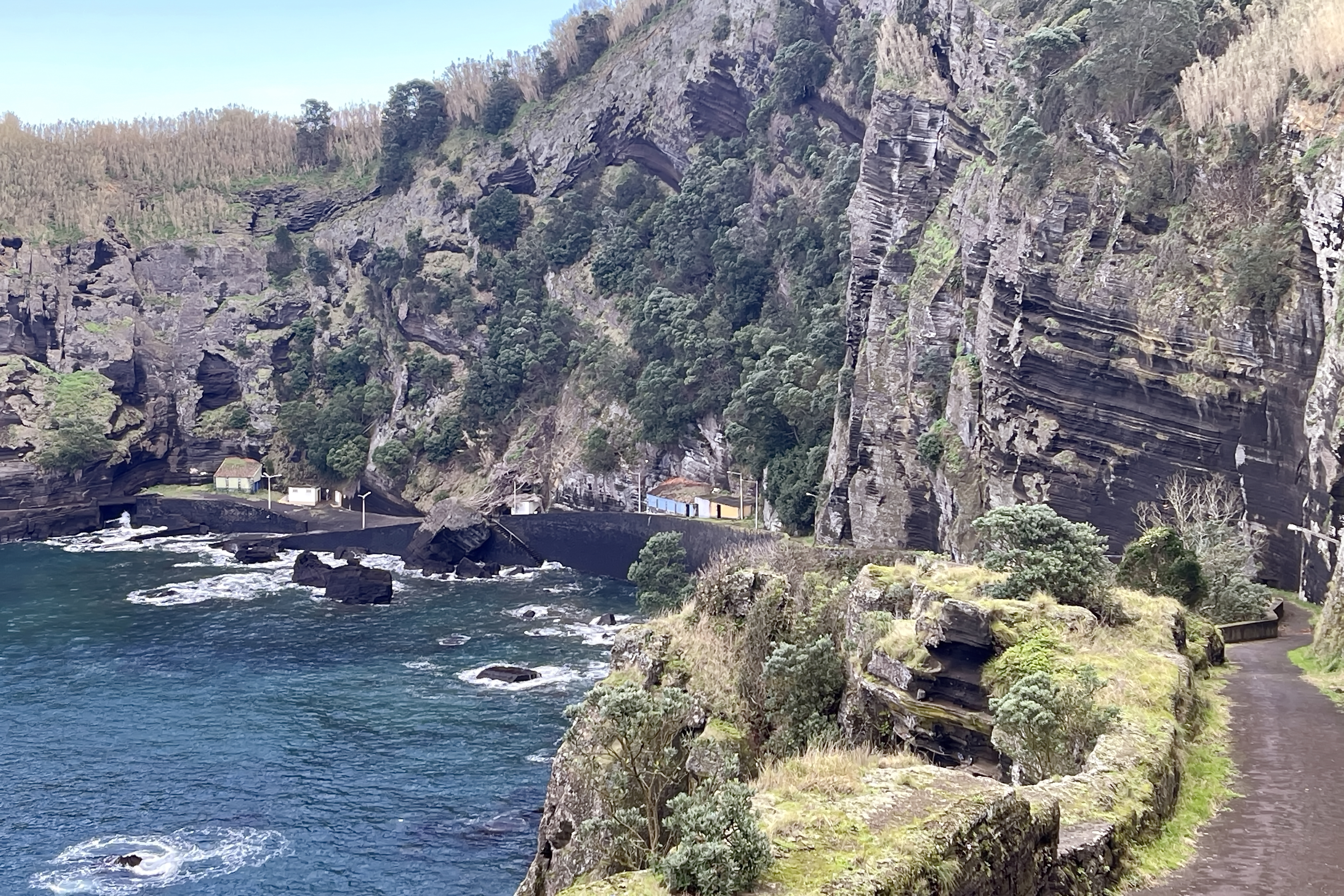
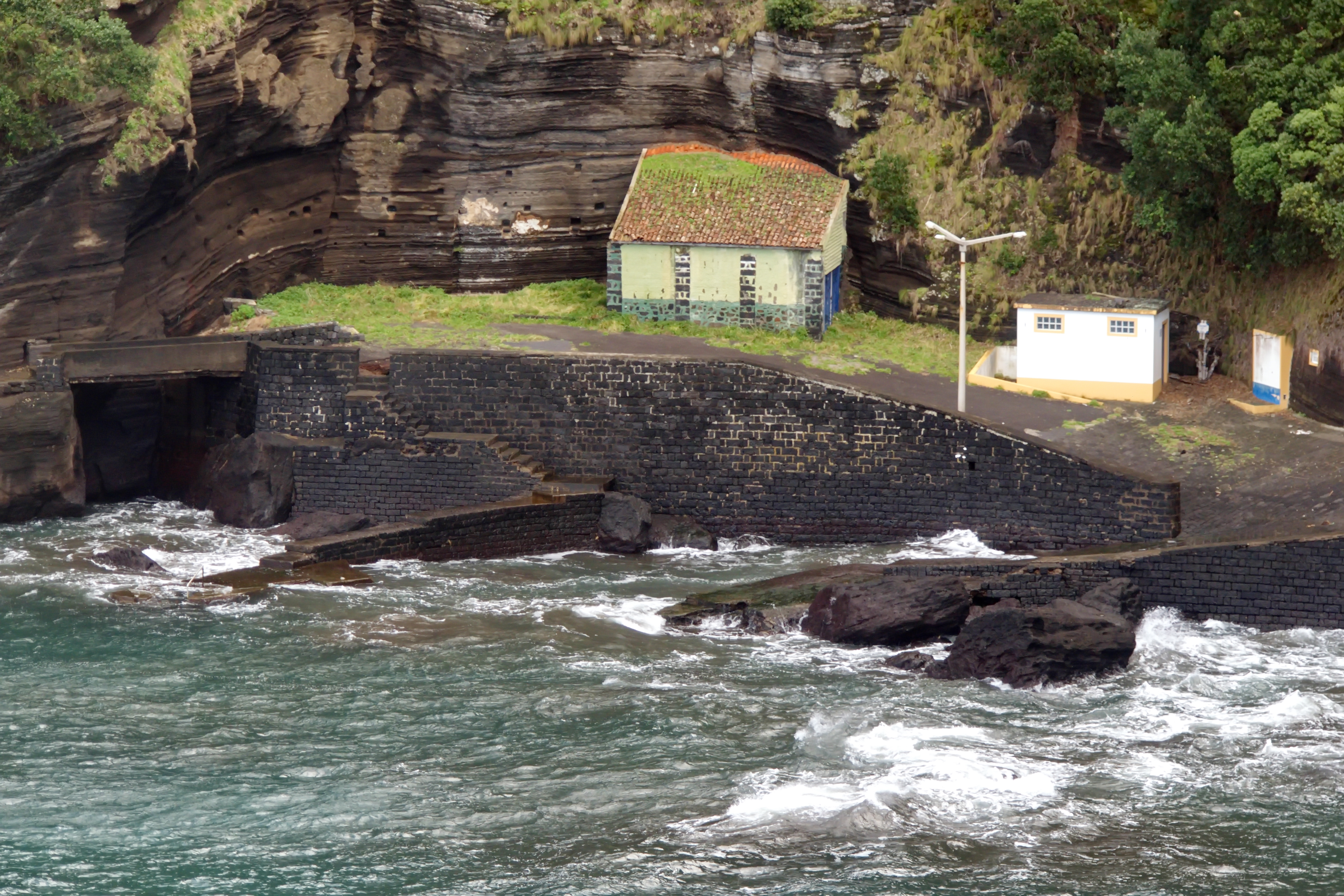
Just a few kilometres farther west, the mood shifts at Miradouro de Pesqueiro, or Fisherman’s Viewpoint. From above, the lookout offers a beautiful view over a small, sheltered port tucked into a protected maritime zone—once an important whaling hub. Steep cliffs cradle the harbour, shielding the handful of remaining shoreline buildings from the open Atlantic. Today, the area feels calm and almost forgotten, but standing there, it was easy to imagine the noise and movement that once filled this cove, when the harbour was alive with boats, workers, and the rhythms of daily coastal life.
D – (Ponta) Delgada
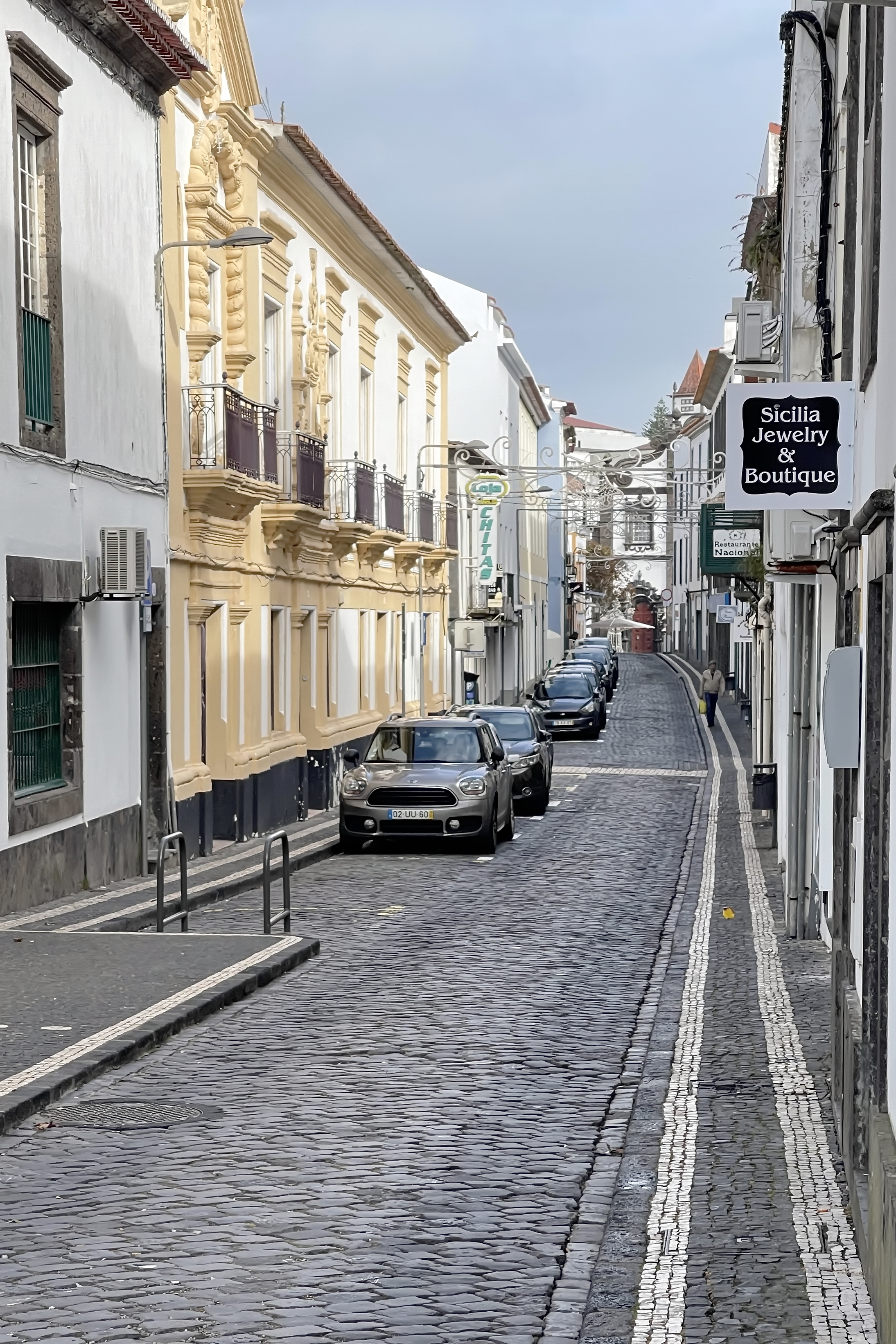
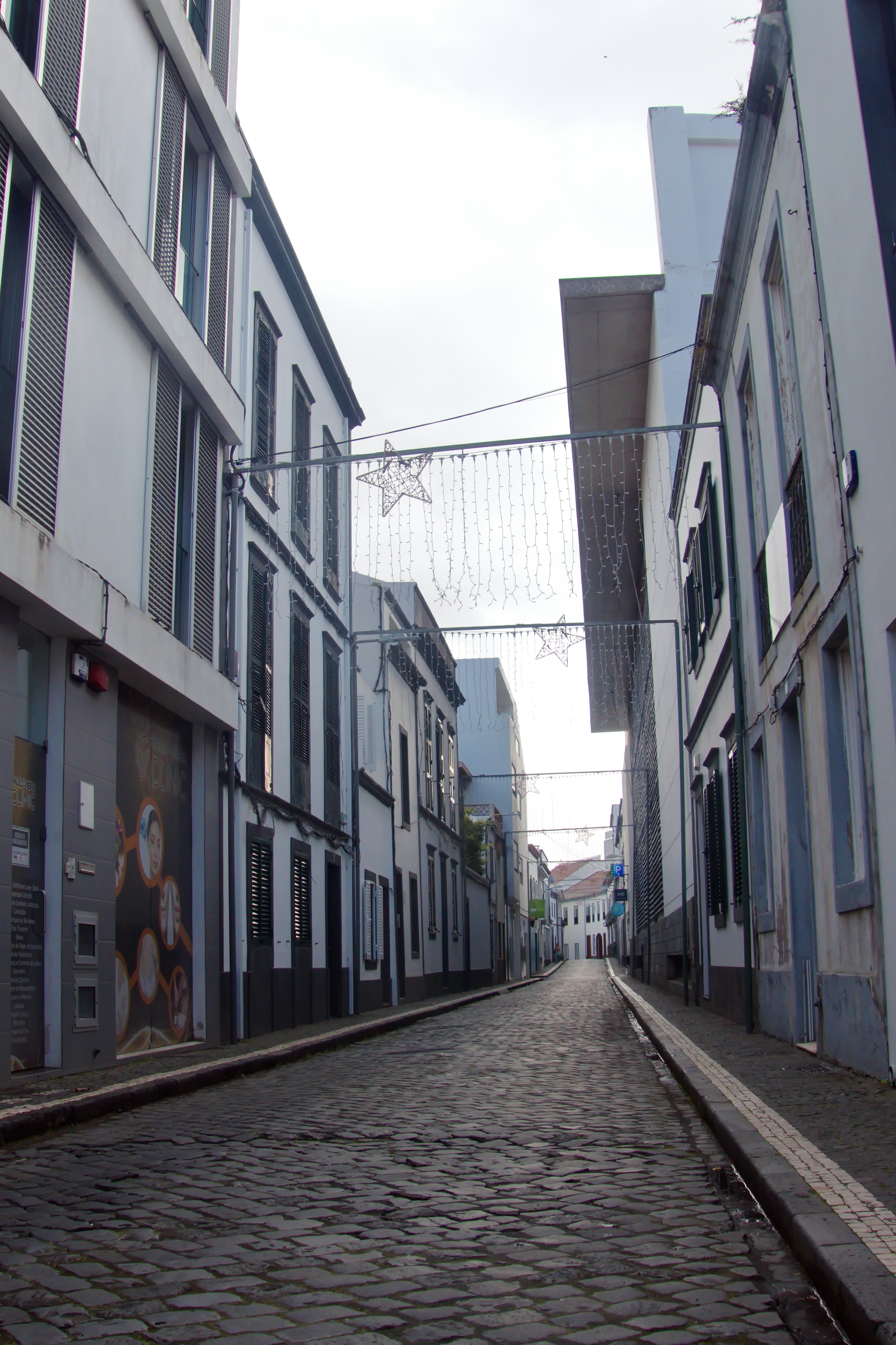
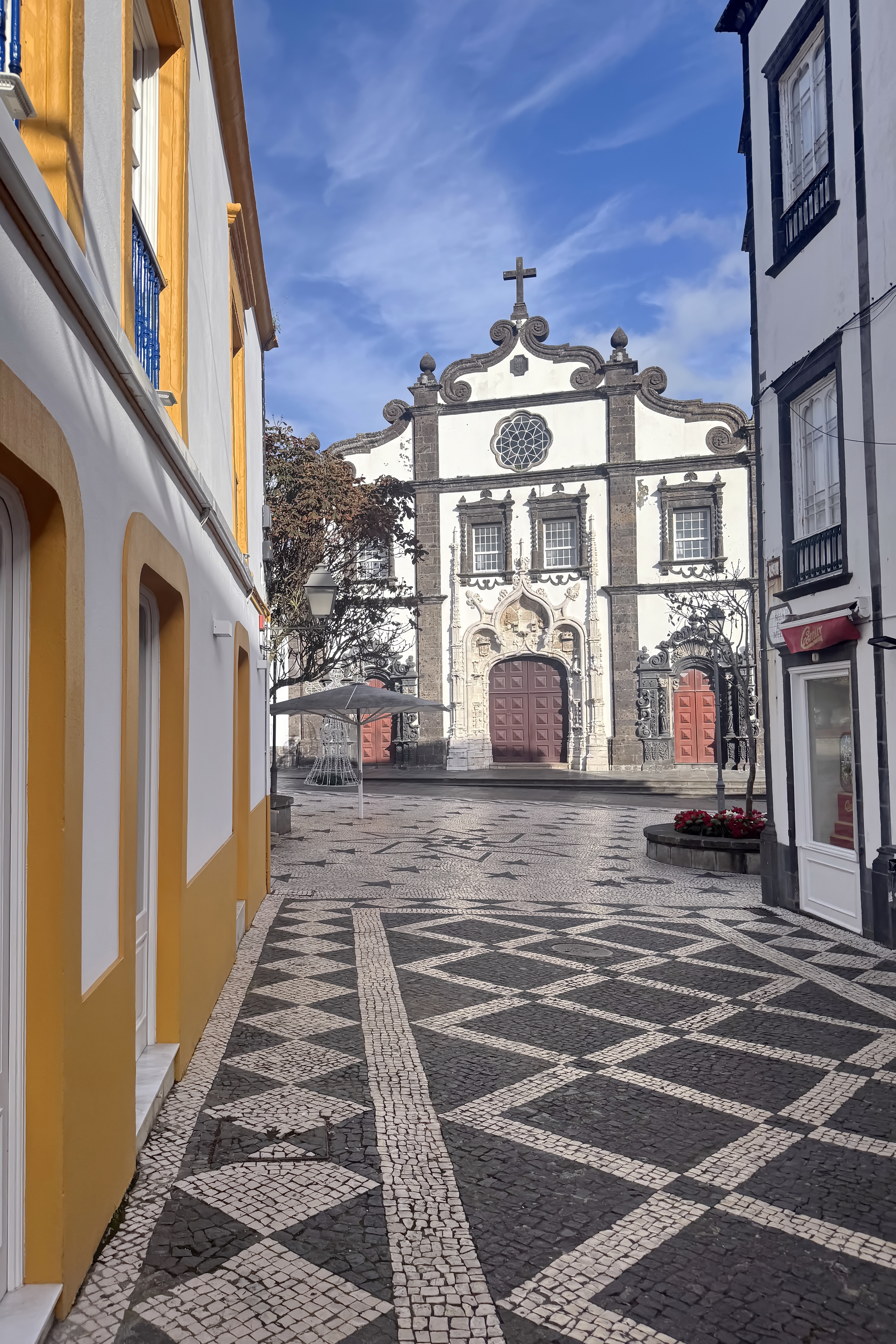
Ponta Delgada, the cosmopolitan and historic capital of the Azores, blends modern life seamlessly with old-world colonial character. The city centre has held tightly to its charm, and as we wandered its narrow streets, the pace of life felt calmer and more gentle. Dark, distinctive stone buildings framed quiet plazas and open spaces, while underfoot, volcanic slabs and black-and-white mosaic cobblestones led us past pastel façades and wrought-iron balconies. We found ourselves slowing down, lingering at corners and doorways, each turn revealing something quietly beautiful.

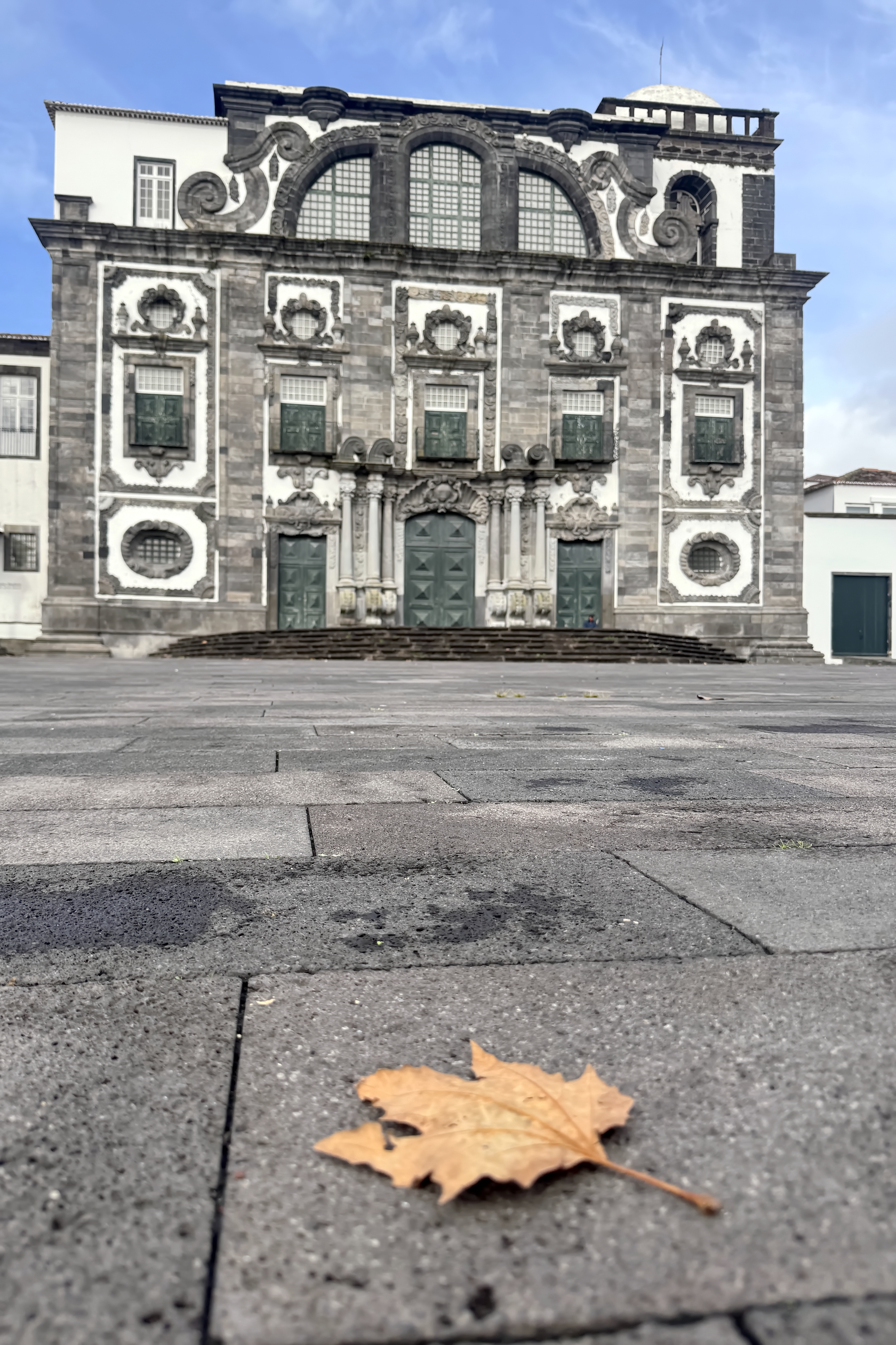
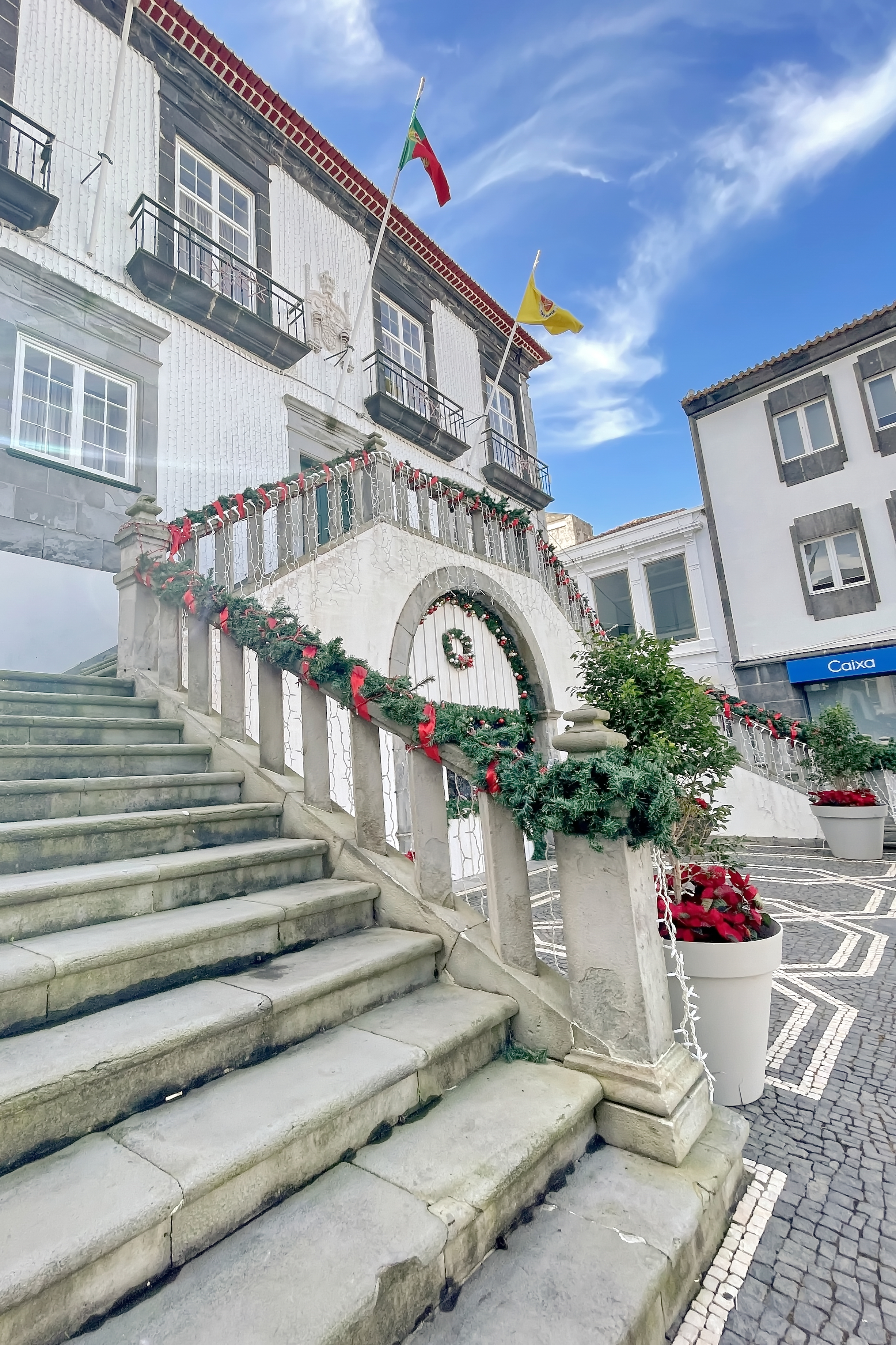
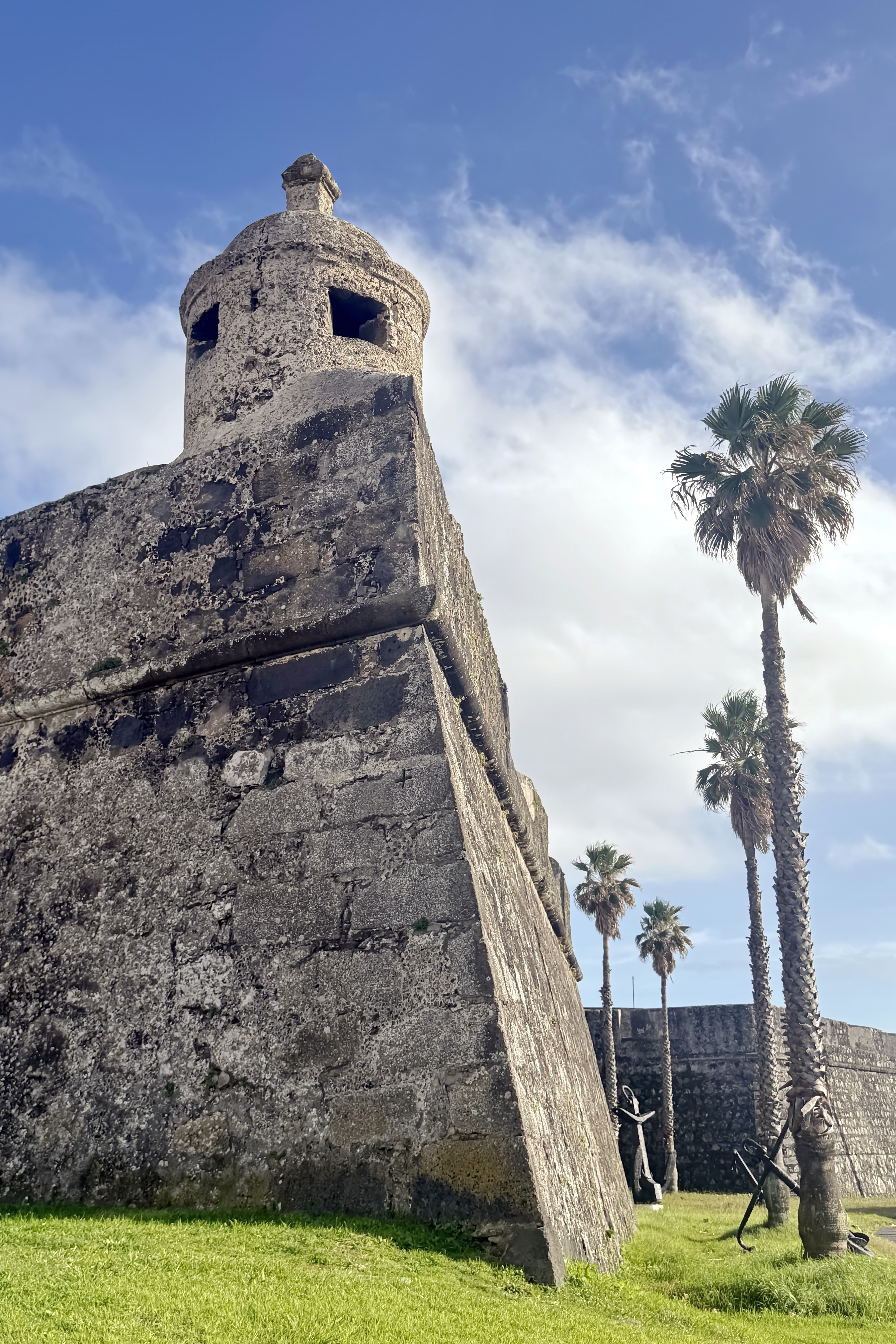
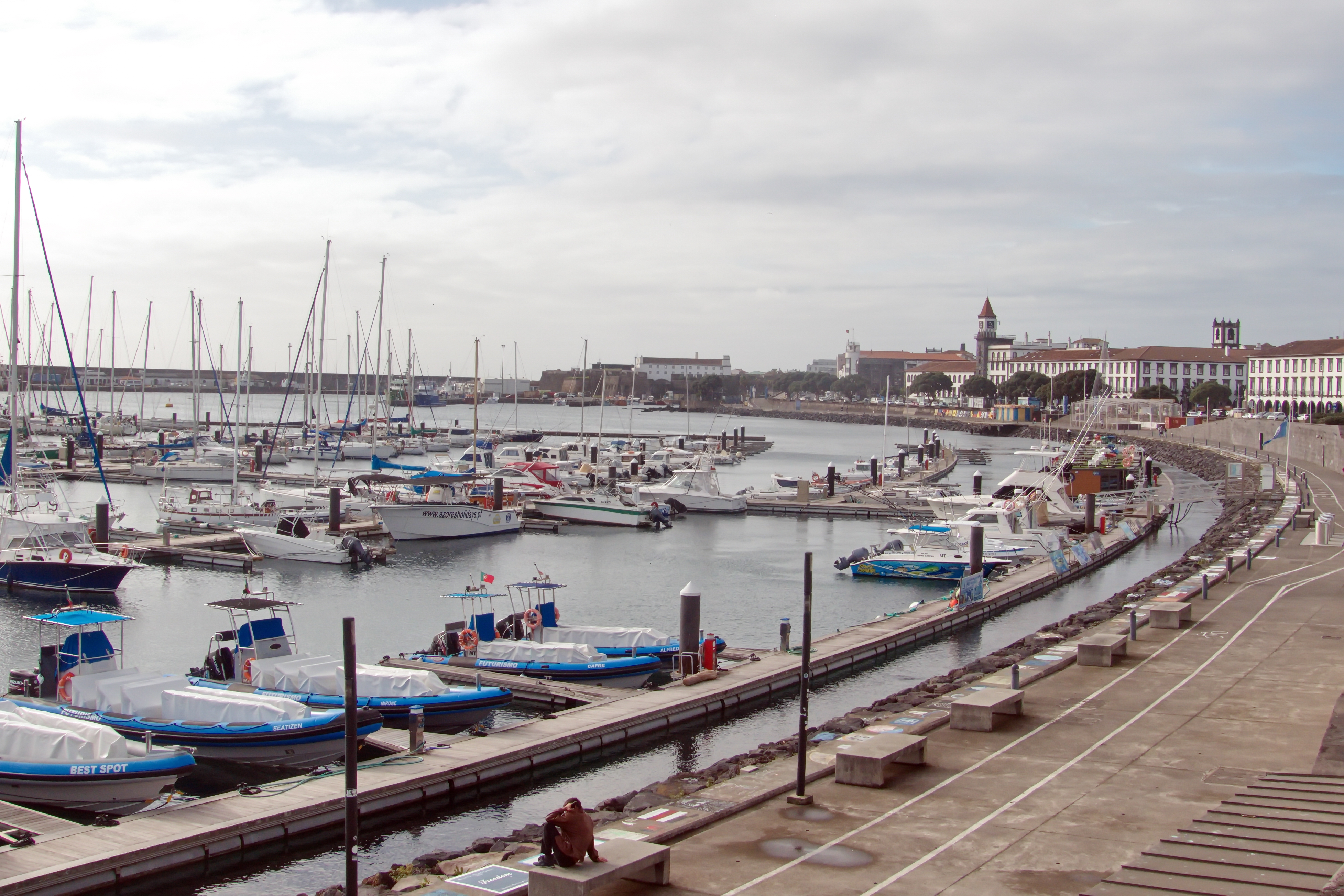
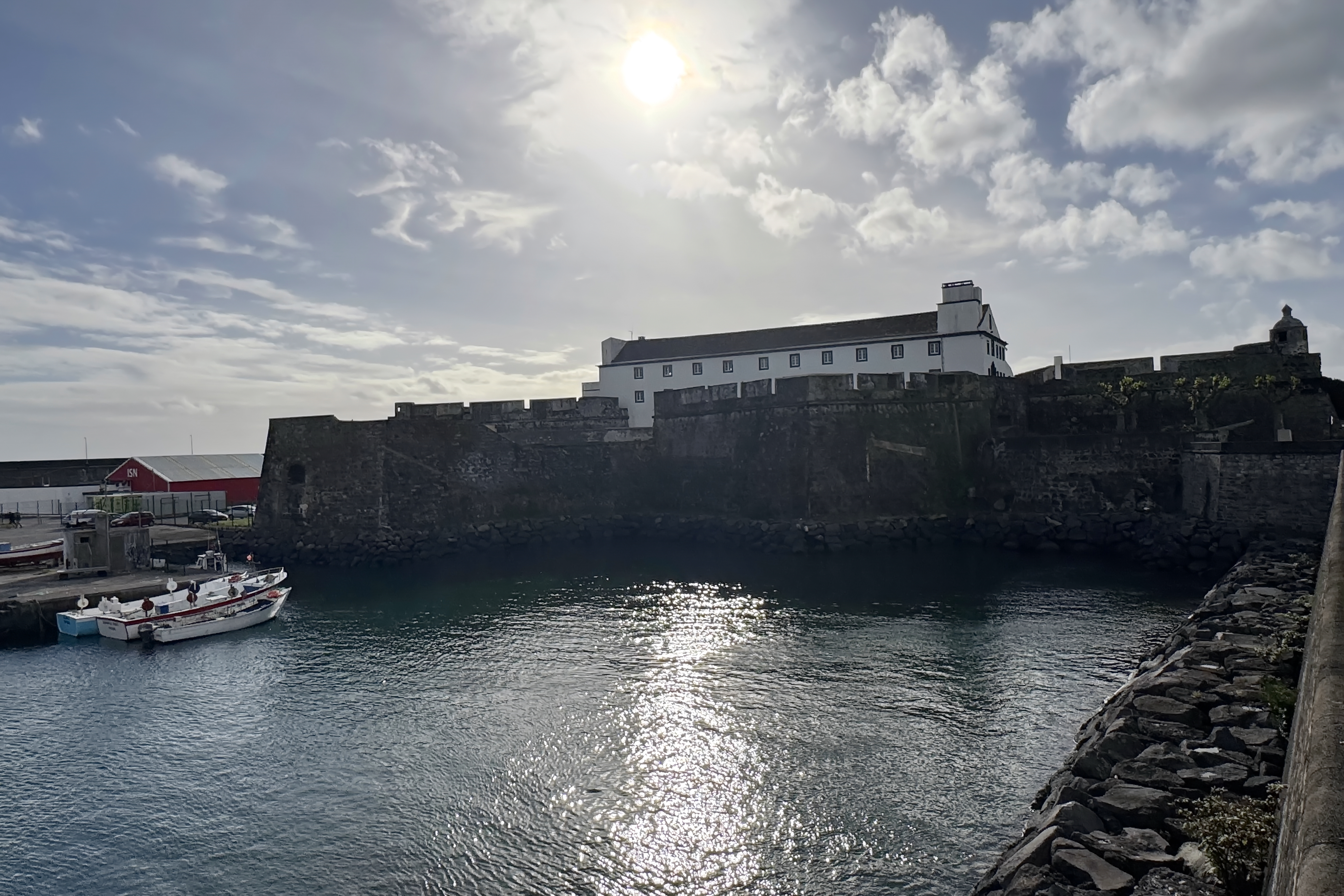
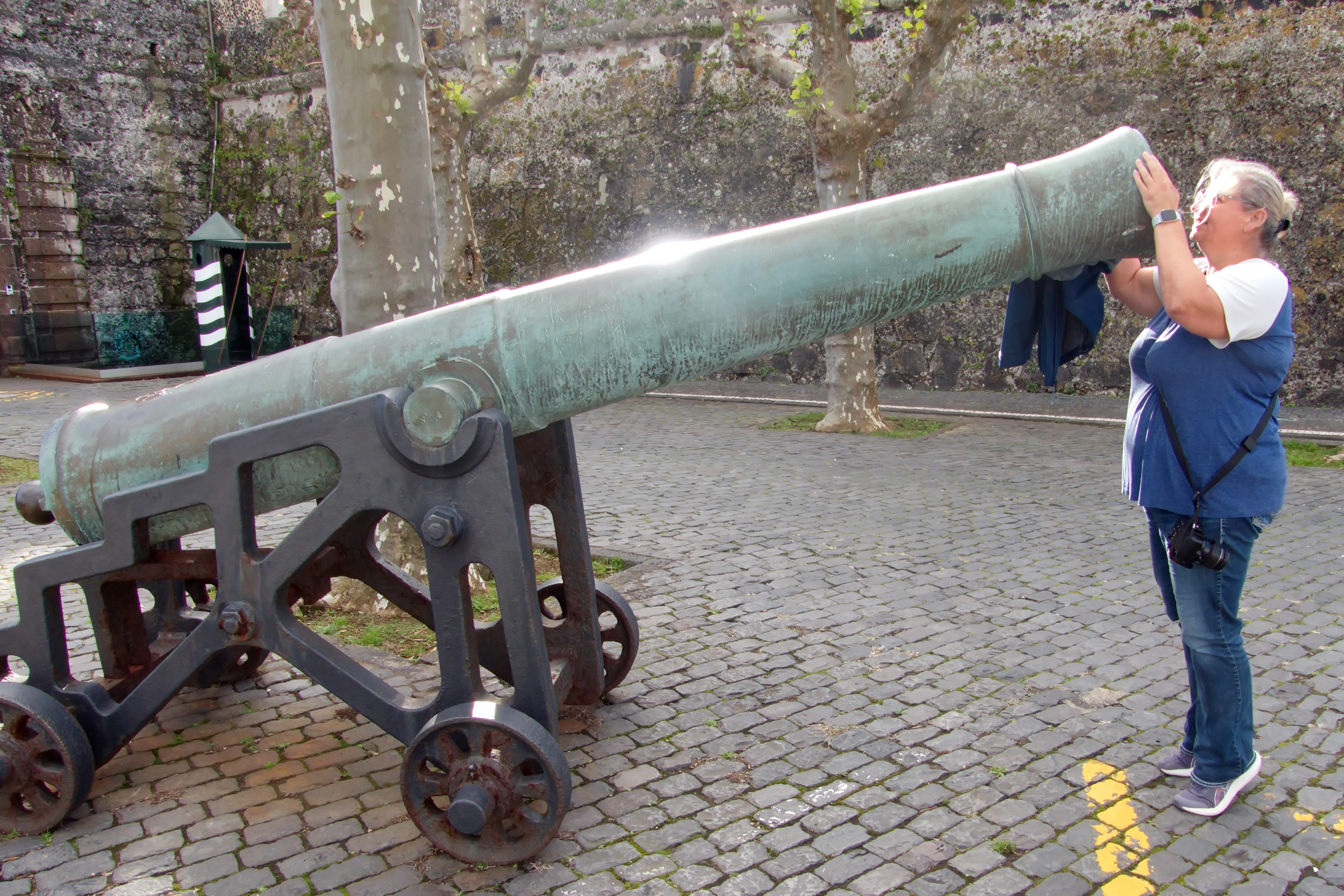
We eventually made our way toward the waterfront, strolling along the promenade past the marina and the calm harbour waters. Dominating this stretch is the completely enclosed 16th-century Forte de São Brás, its thick stone walls standing solid and unyielding against the Atlantic winds. Today, the fortress houses a military museum, but as it was a national holiday in Portugal, the doors were closed. Even so, standing outside and tracing the lines of the well-preserved bastions and ramparts, it was impossible not to be impressed by its formidable presence and sense of history.
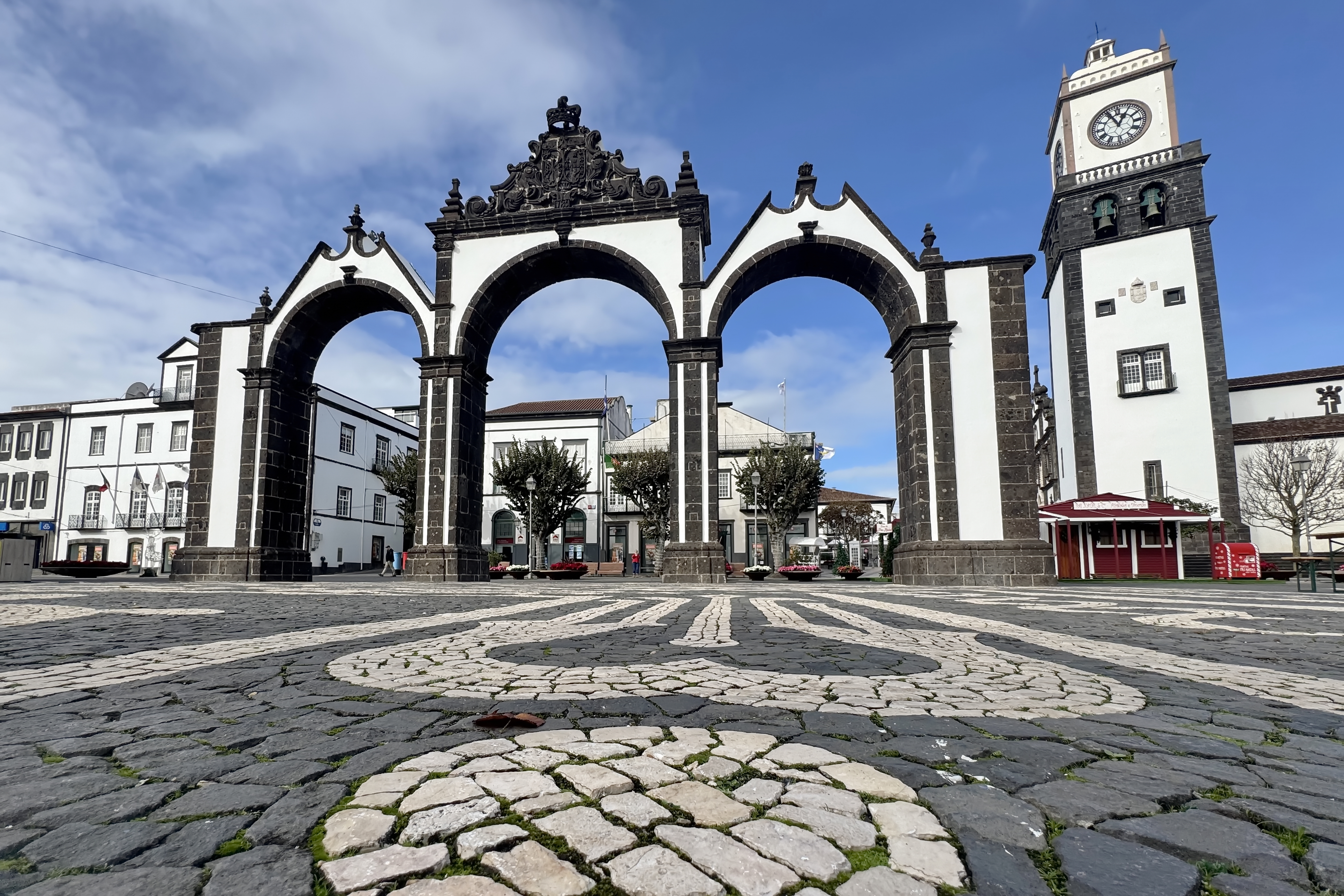
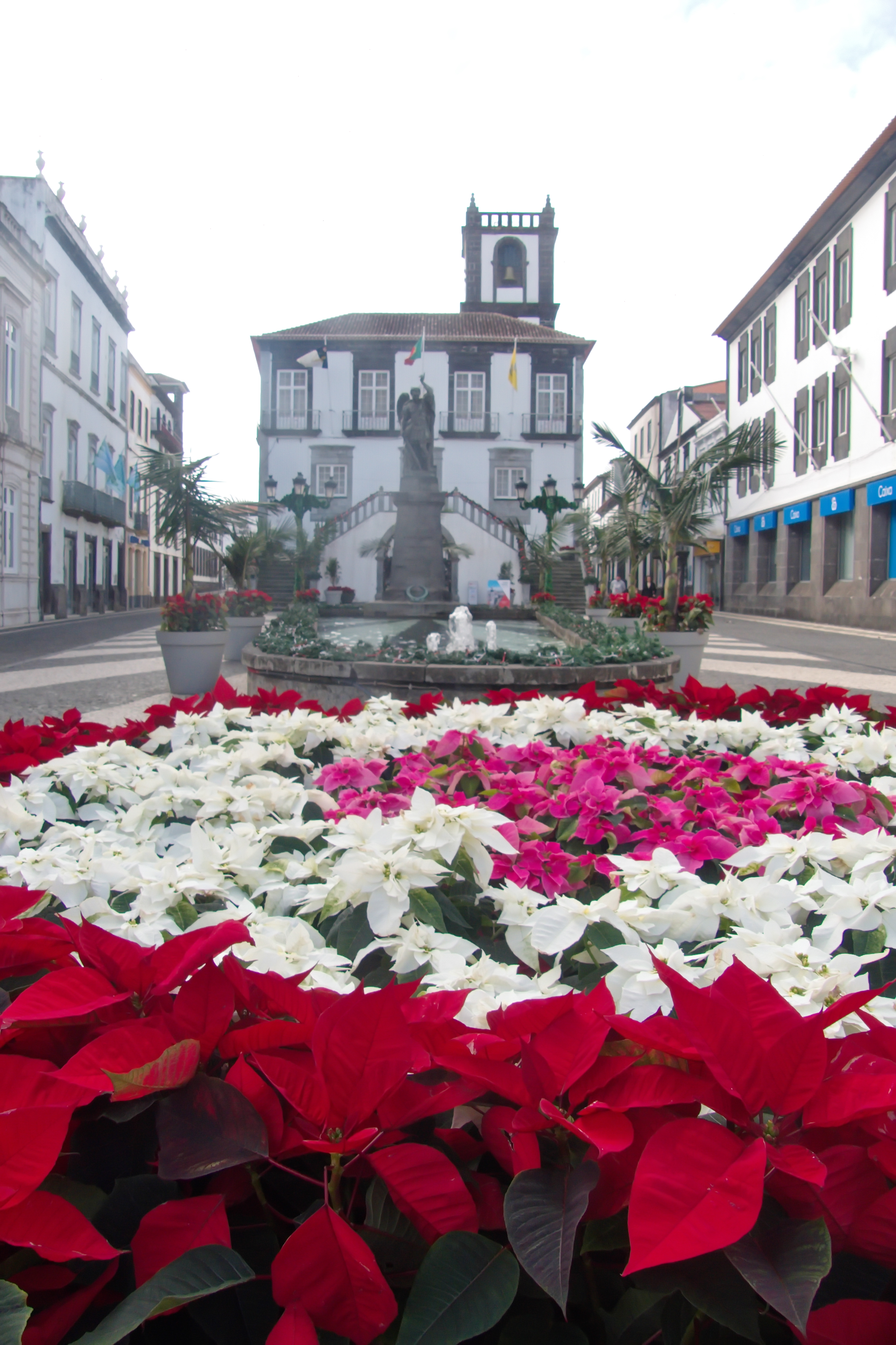
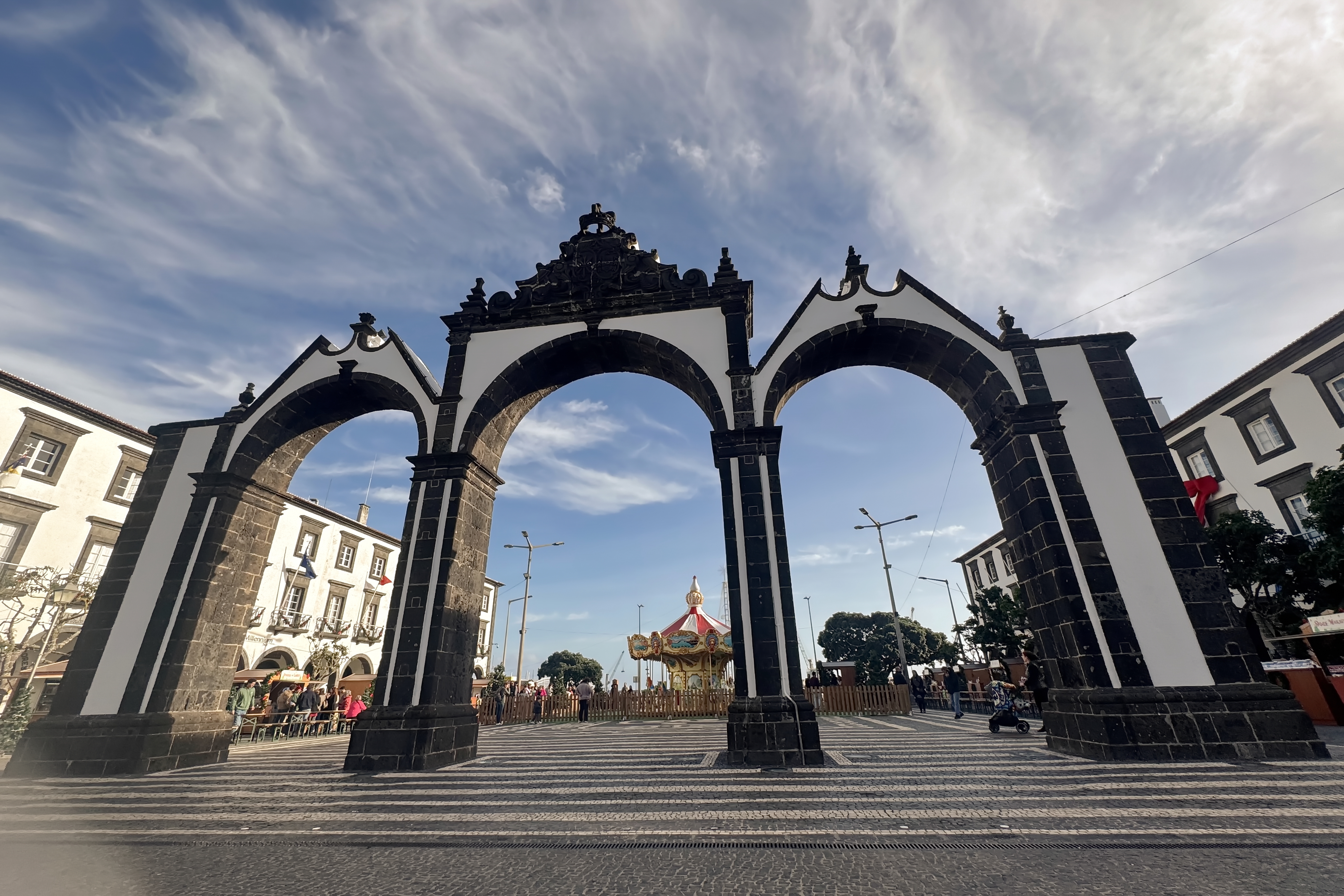
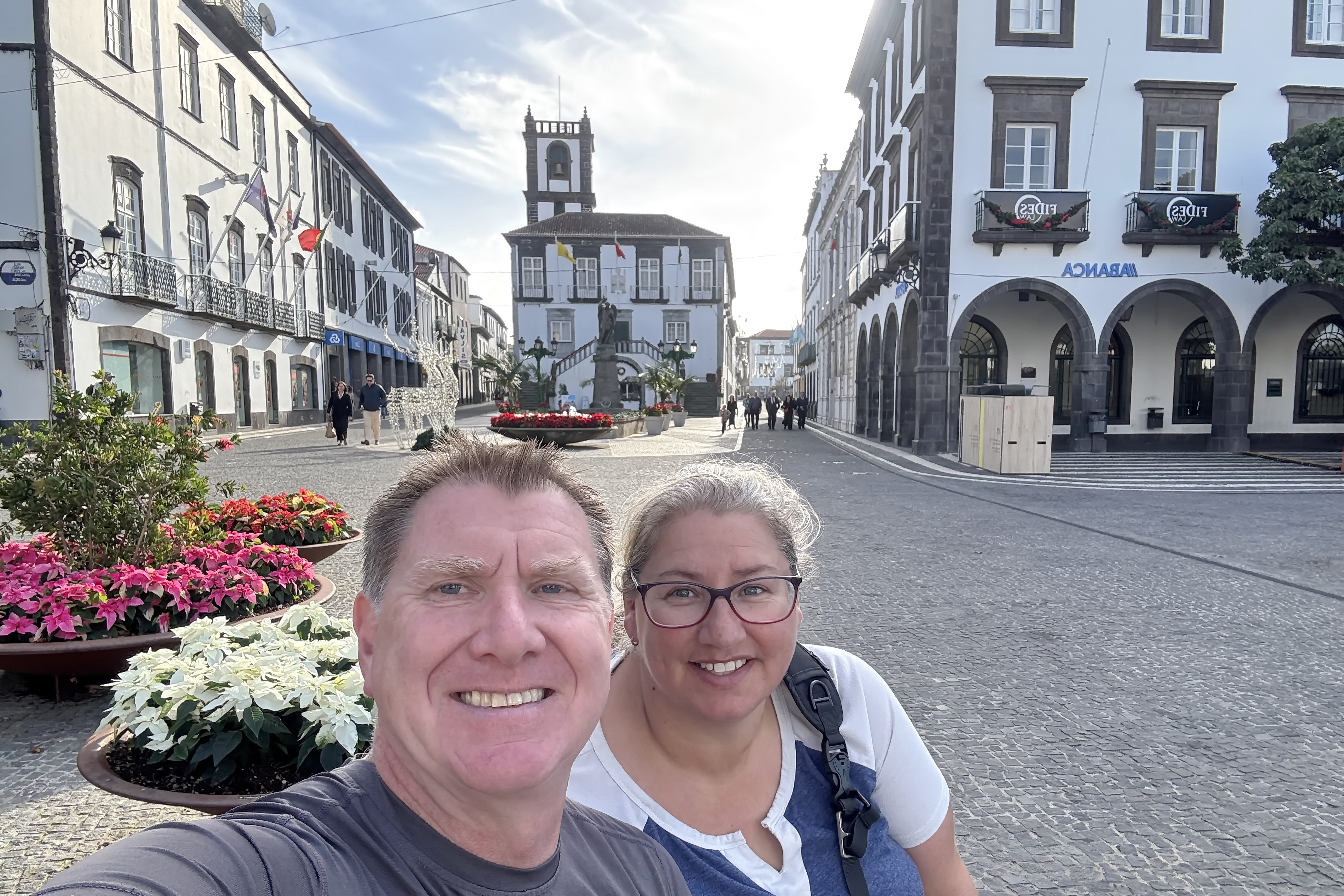
After lunch, we lingered around the city’s main landmarks, all clustered near the central square named after Gonçalo Velho Cabral, the navigator credited with discovering the Azores. We rested beneath the iconic three-arched City Gates, taking in how their black-and-white basalt trim echoed the patterned cobblestones beneath our feet. The gates are flanked on one side by the grand Baroque Church of San Sebastian and on the other by the Municipal Building and its historic bell tower—a striking ensemble that feels both stately and welcoming.
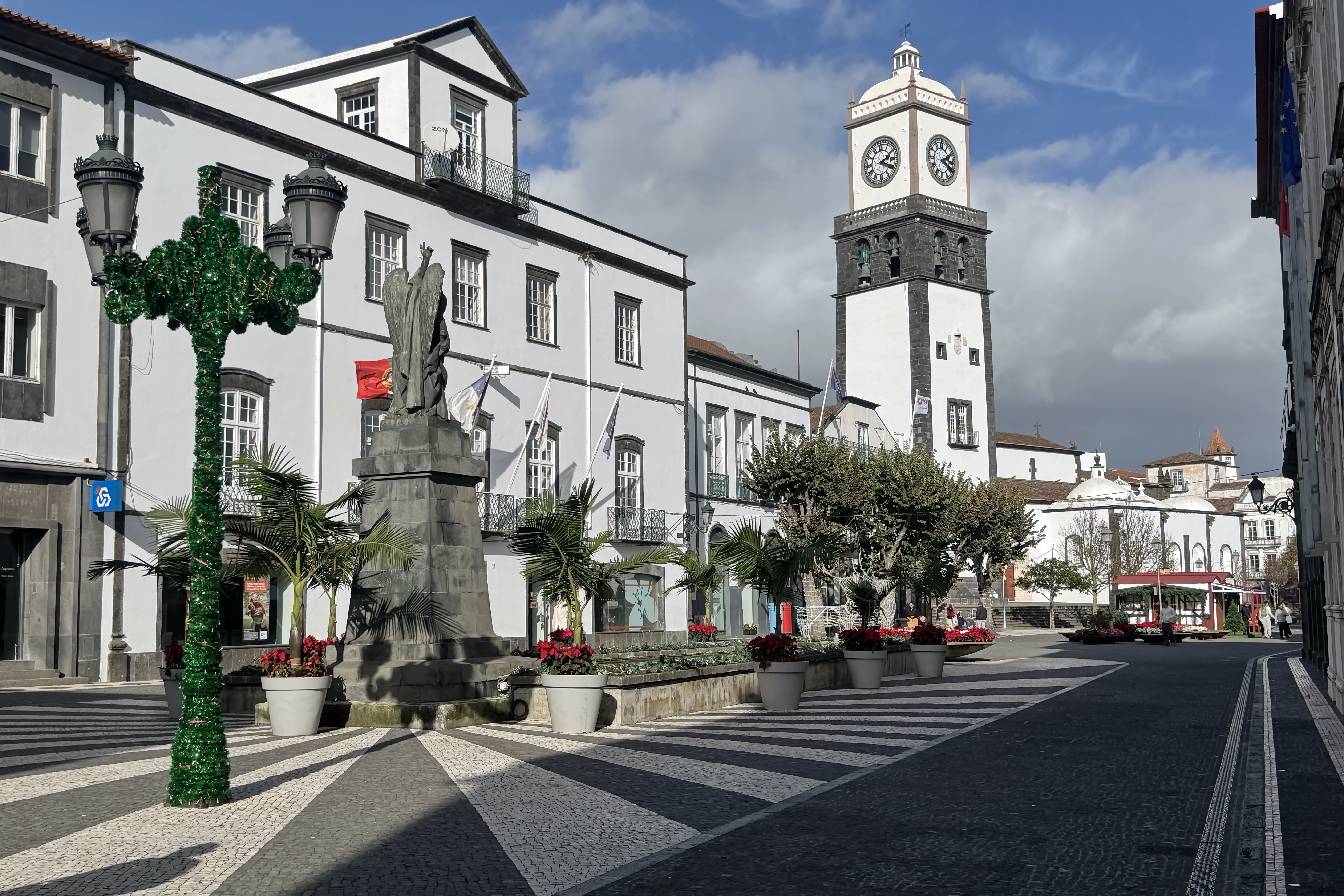
When we visited, the square was hosting a Christmas fair, and the air was filled with the comforting scents of roasted chestnuts and freshly fried pastries. We sat for a while on a bench beside the fountain, surrounded by giant pots of bright flowers, simply watching life unfold around us. Children darted excitedly toward the carousel as parents followed at a gentler pace, while others wandered through the market stalls, sampling the treats on offer. The atmosphere was calm and unhurried—the kind of place where time seems to soften, inviting you to slow down and stay a little longer.
E – Ermida de Nossa Senhora da Paz
Rising above the town of Vila Franca do Campo, the Ermida de Nossa Senhora da Paz (Hermitage of Our Lady of Peace) is one of Sao Miguel’s most instantly recognizable—and quietly moving—landmarks. Perched on a hill overlooking the Atlantic, a dramatic Baroque staircase that zigzags its way up the slope leads to the small 18th-century chapel. As we approached the climb, we were greeted by several local feral (but clearly well-fed) cats basking in the afternoon sunshine, stretched out along the steps as if they were appointed guardians of the stairway. Their complete lack of concern for passing visitors made us smile—and somehow set the tone for the unhurried ascent ahead.
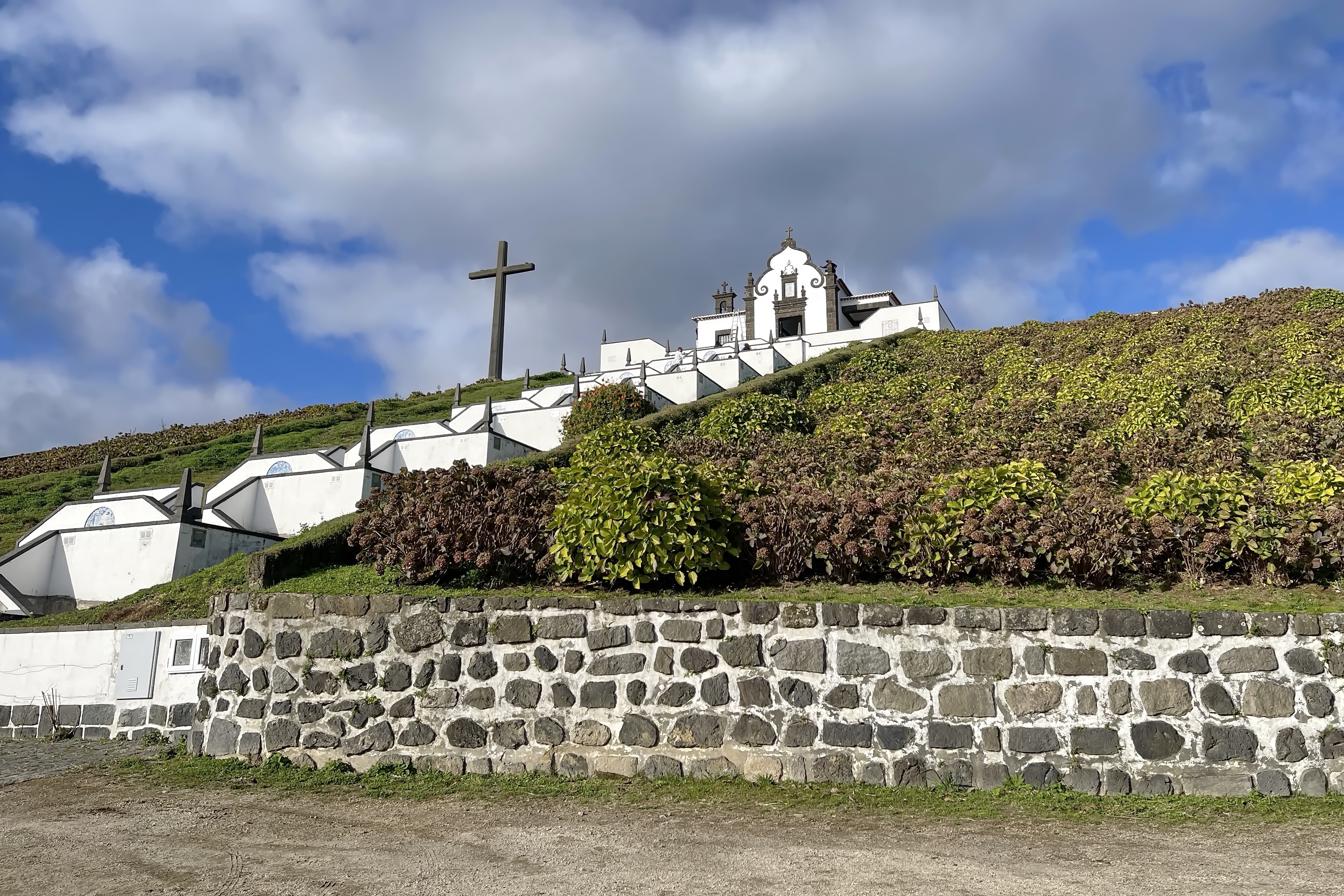
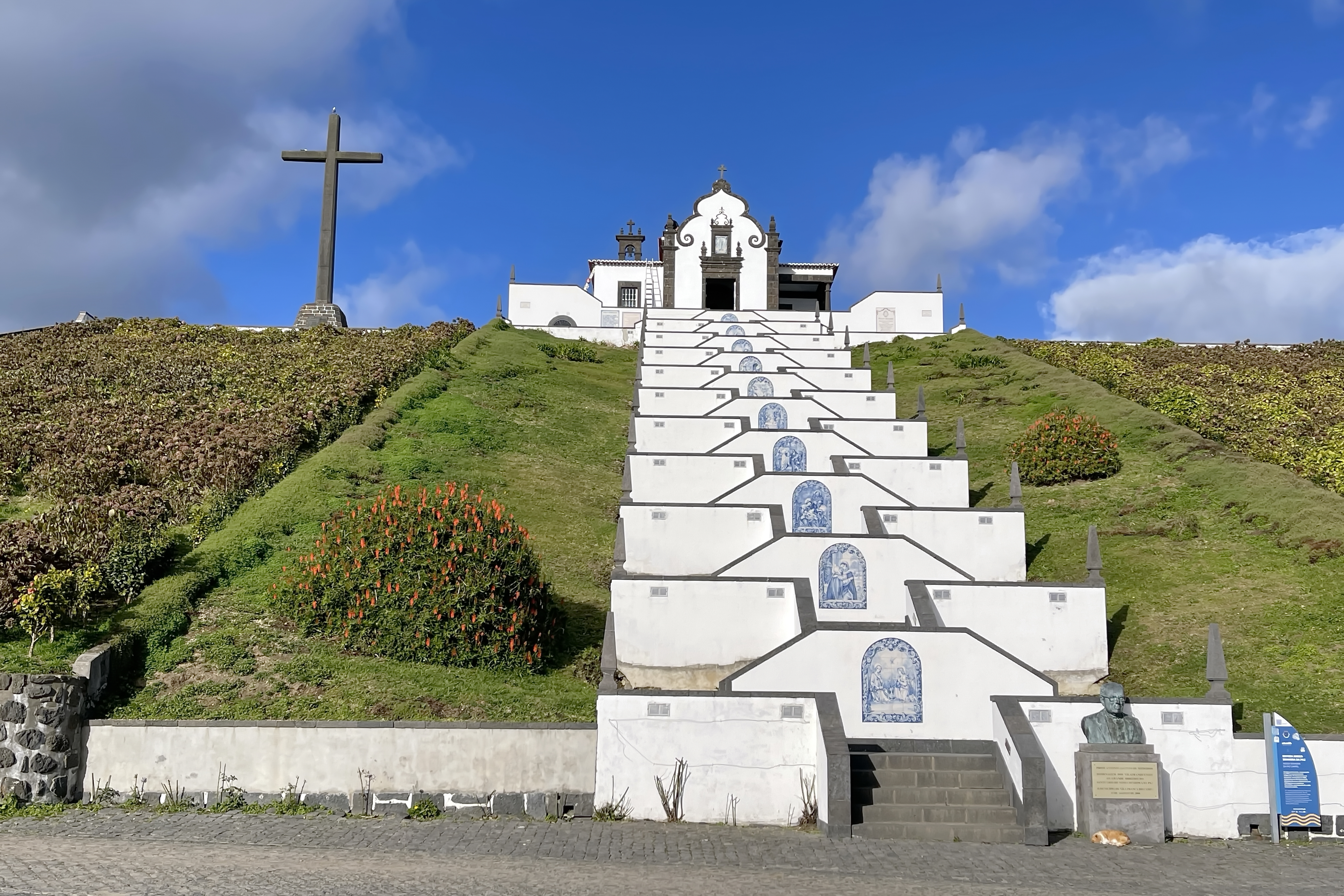
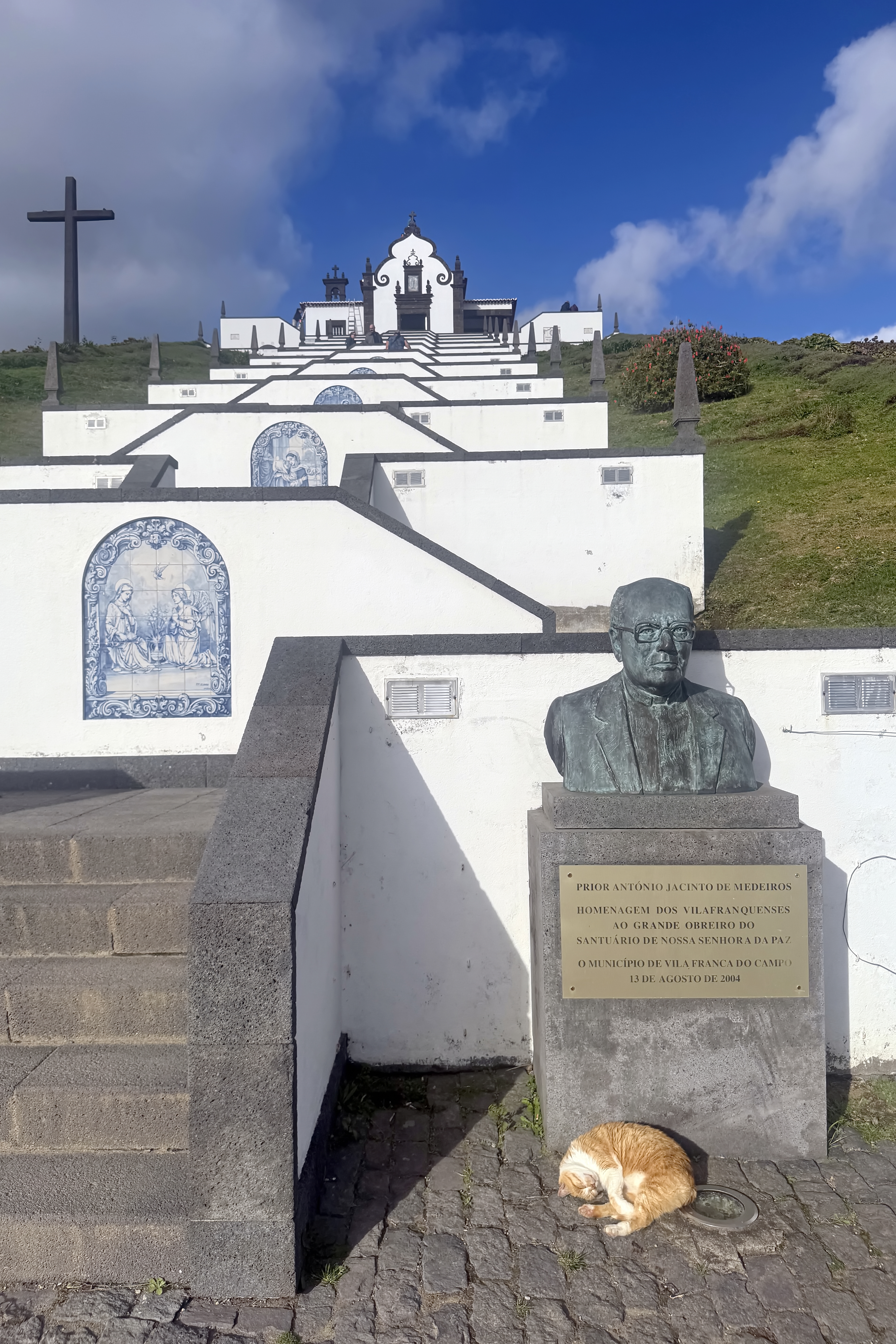
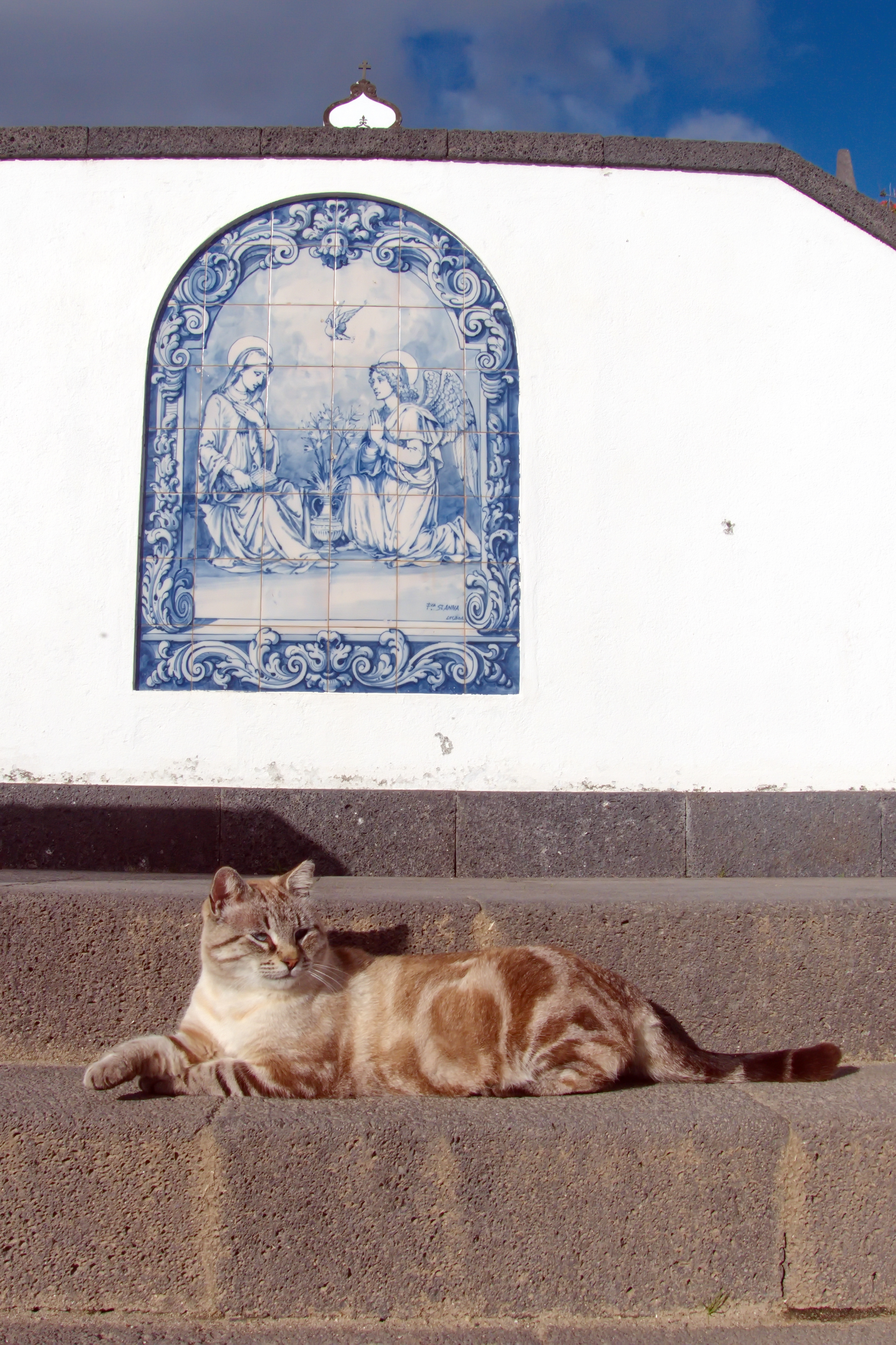
As we slowly made our way upward, the whitewashed walls, bursts of blue and yellow, and tiled azulejos depicting scenes from the life of the Virgin Mary turned the climb into something more than just a walk. It felt almost ceremonial, even as non-pilgrims, as if the journey itself was part of the experience.
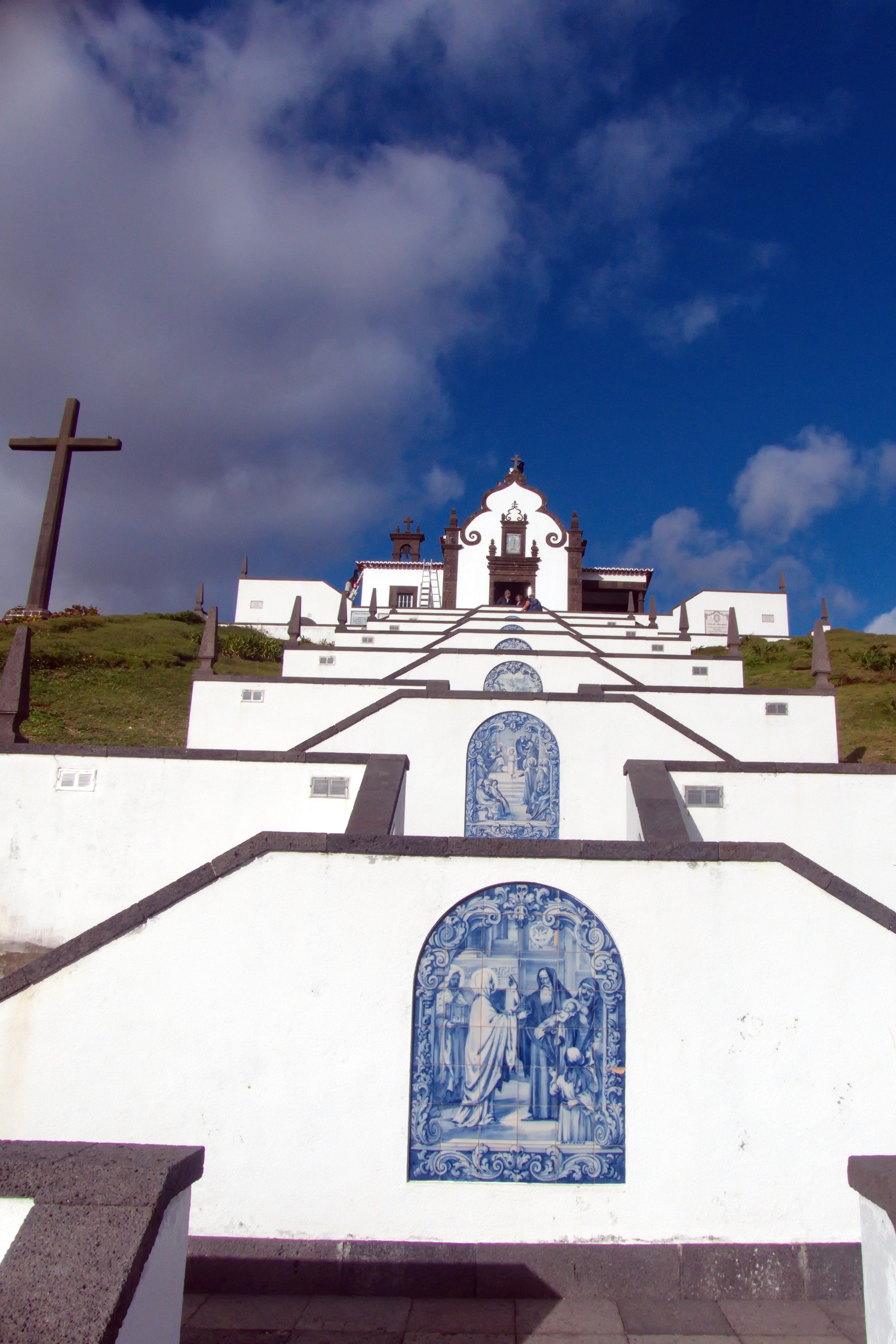
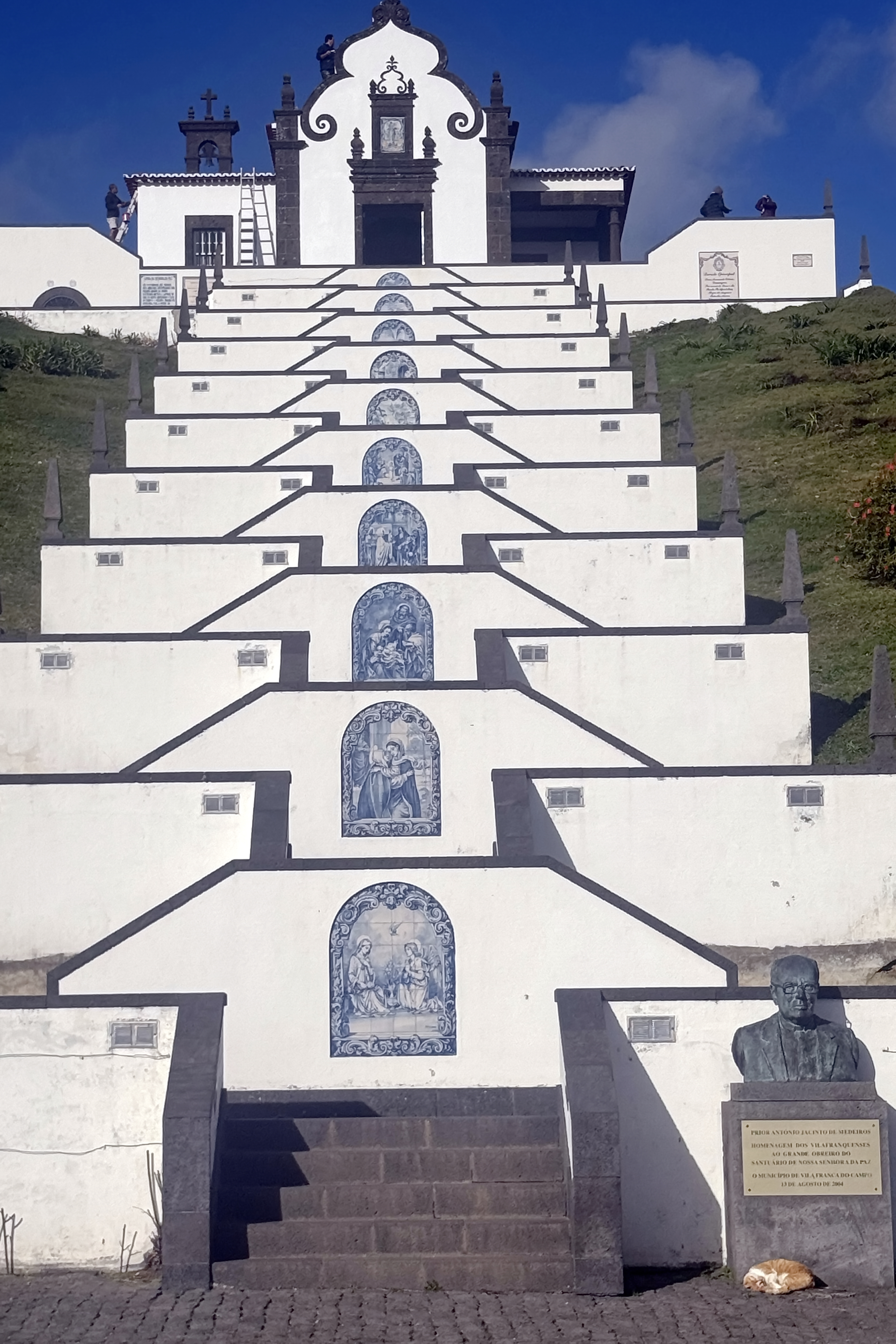
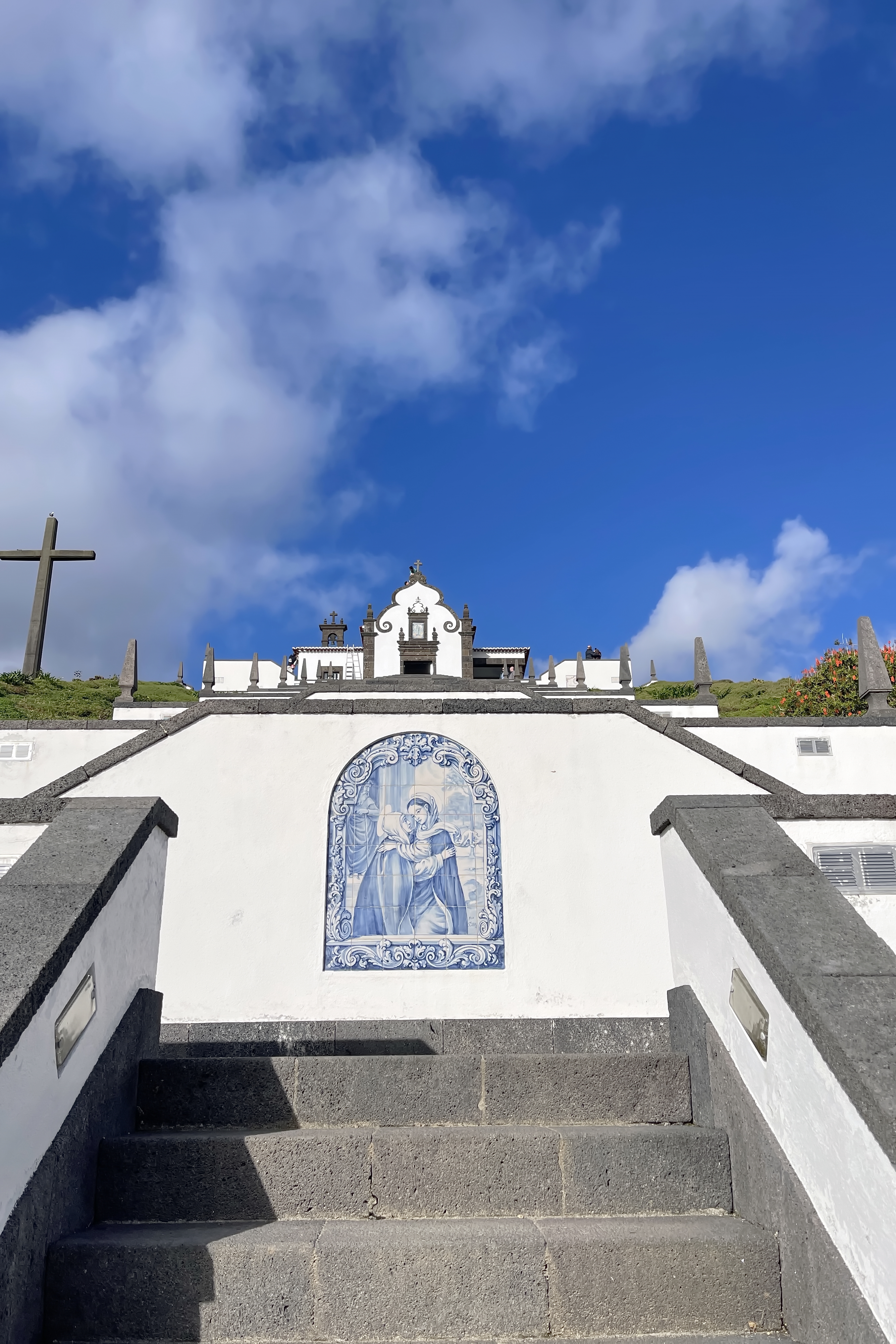
Standing on the terraces at the top, we paused longer than expected. It was easy to understand why this spot had been chosen. The panoramic view stretched across the town of Vila Franca do Campo and out to the Islet of Vila Franca, with the vast Atlantic beyond—a constant reminder of both the beauty and the raw power of nature that shapes life in the Azores. The breeze carried the sound of the ocean below, and for a moment, everything felt wonderfully still.
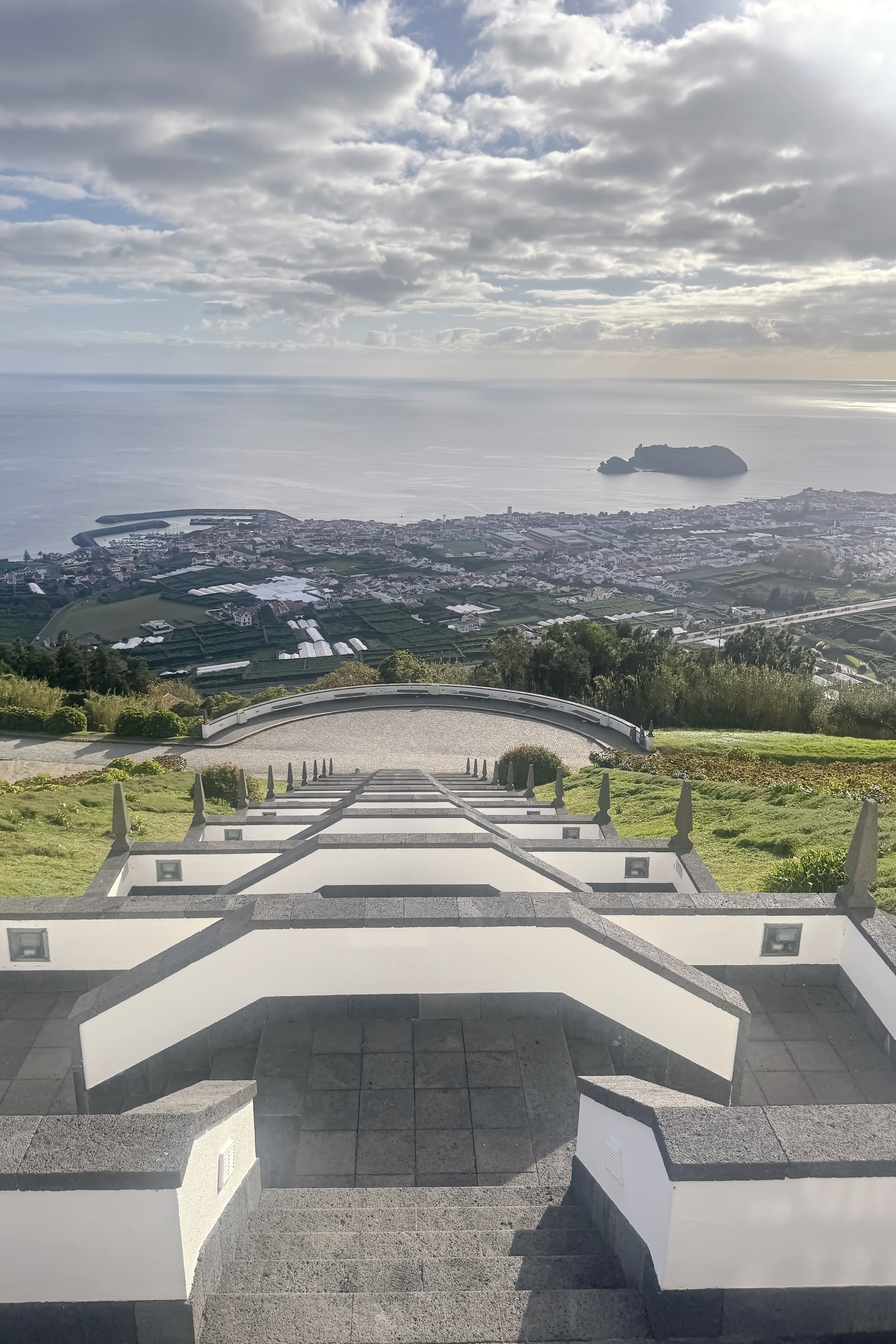
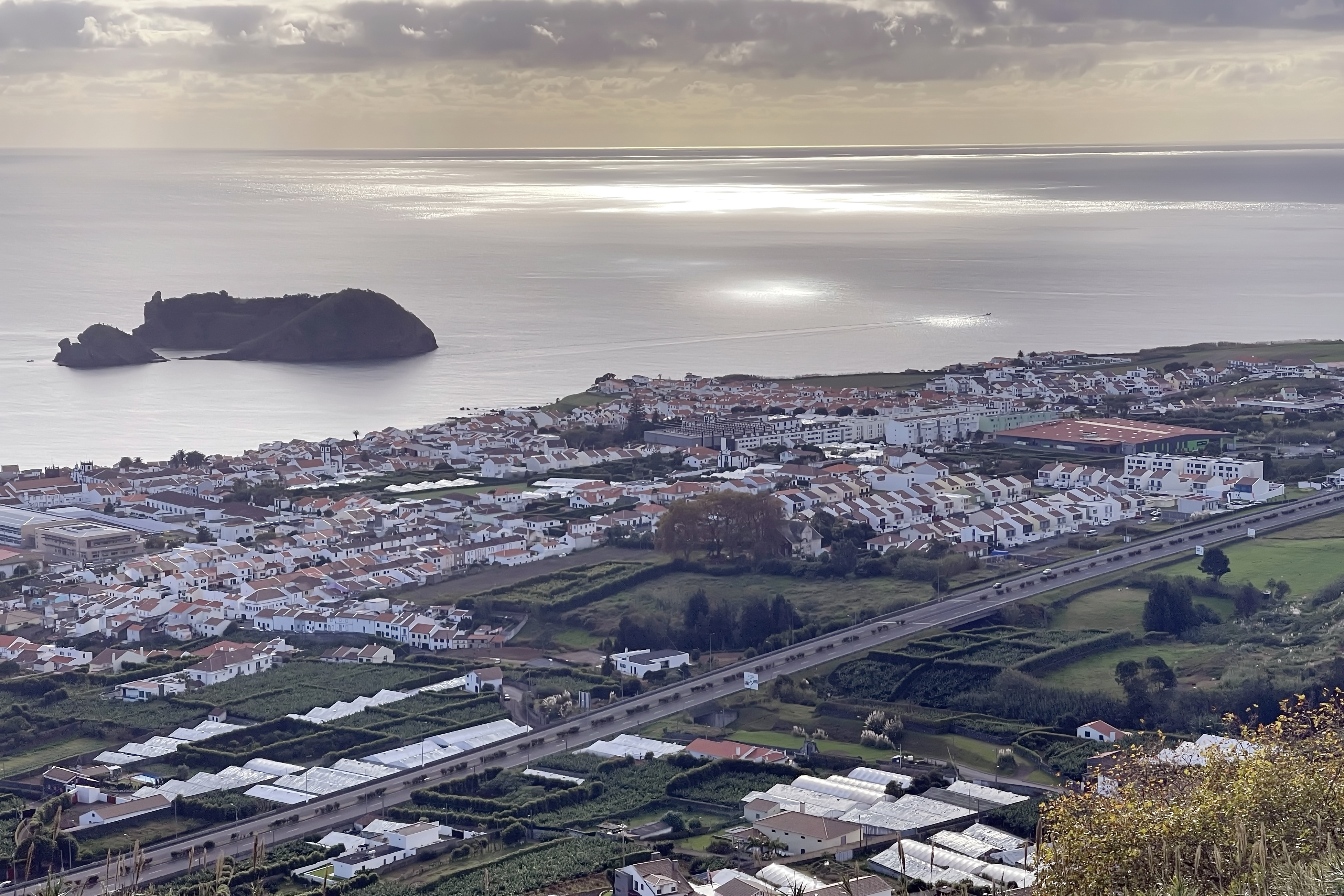
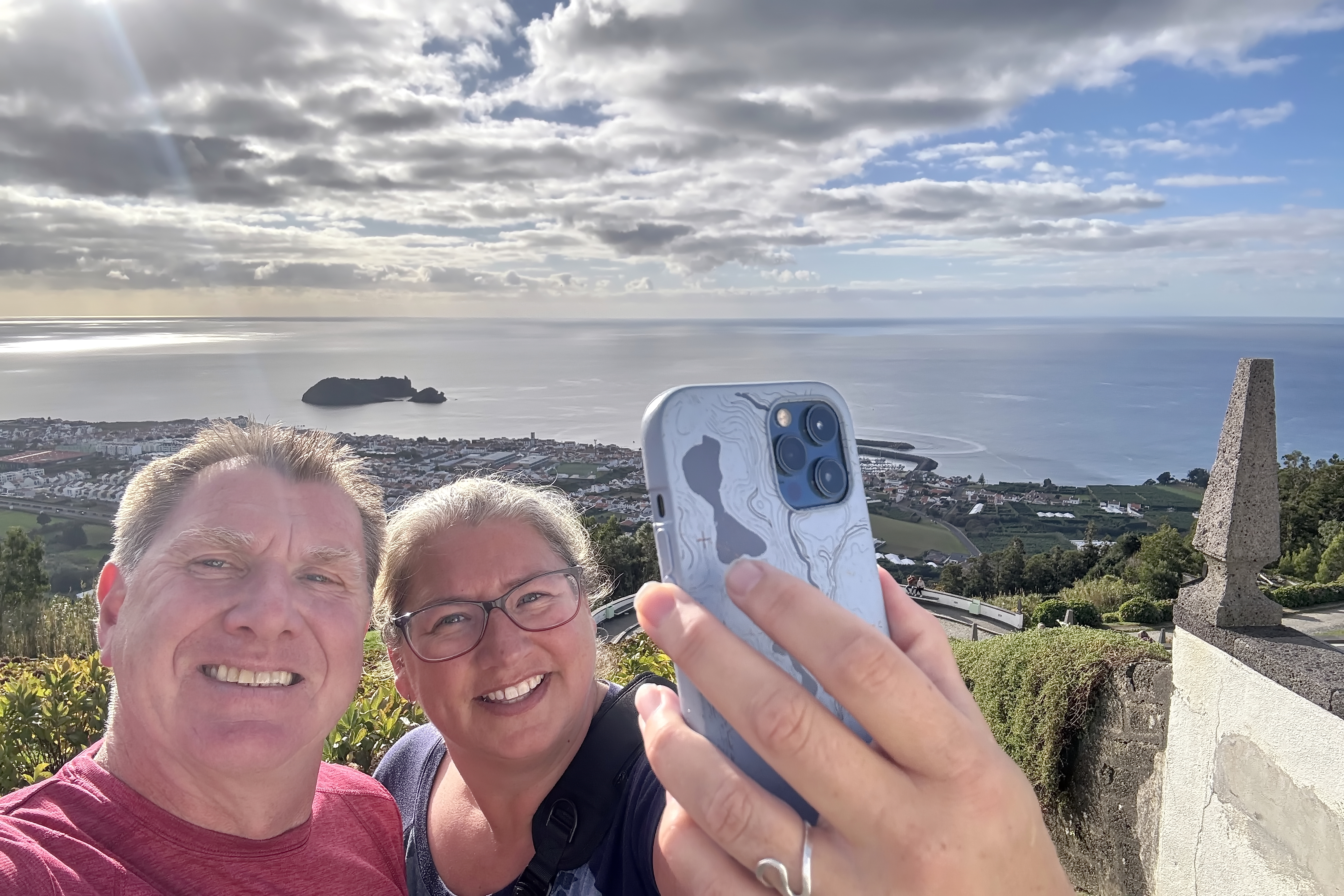
There’s a calm here that gently encourages quiet reflection, paired with one of the most photogenic vistas on the island. It’s the kind of place that stays with you long after you leave—not just for the view, but for the sense of peace that seems to settle in as you stand looking out over land and sea.


 Mapgirl Adventures
Leave a reply to The Azores: An (almost) A–Z of Island Magic Part 3 – Mapgirl Adventures Cancel reply