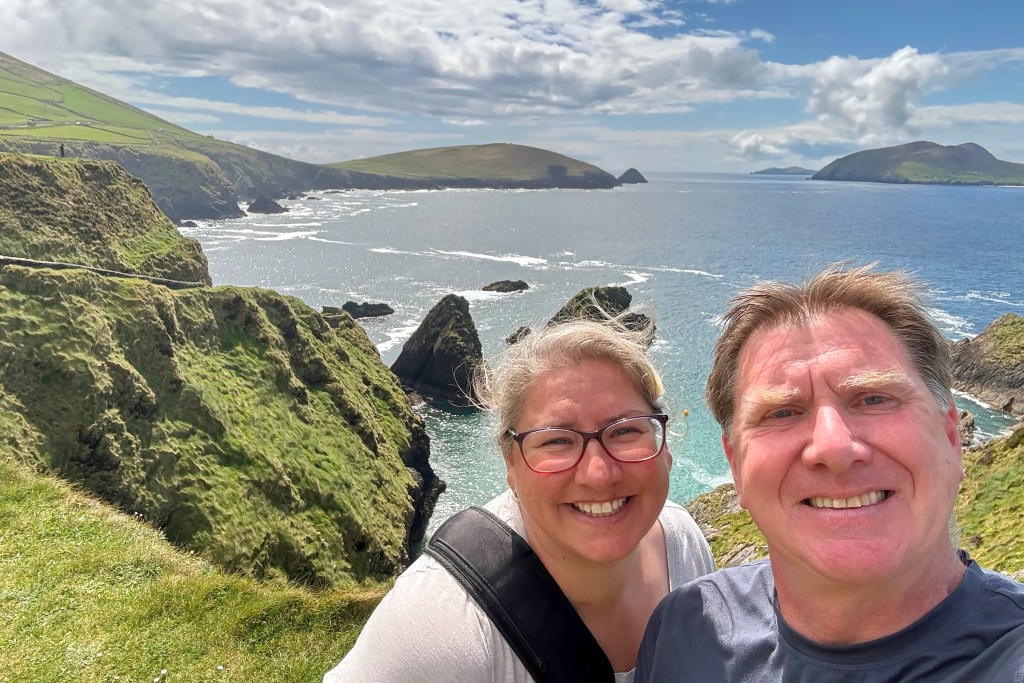
Driving sections of Ireland’s Wild Atlantic Way felt less like a road trip and more like a journey that slowly unfolded before us. Around every winding bend, the landscape revealed another breathtaking scene — rugged coastlines, windswept headlands, sweeping beaches, and quiet valleys tucked beneath distant mountain peaks. Along the way, we passed through storybook towns and sleepy coastal villages where colourful storefronts, narrow streets, and centuries-old stone buildings made it feel as though time had barely moved at all.
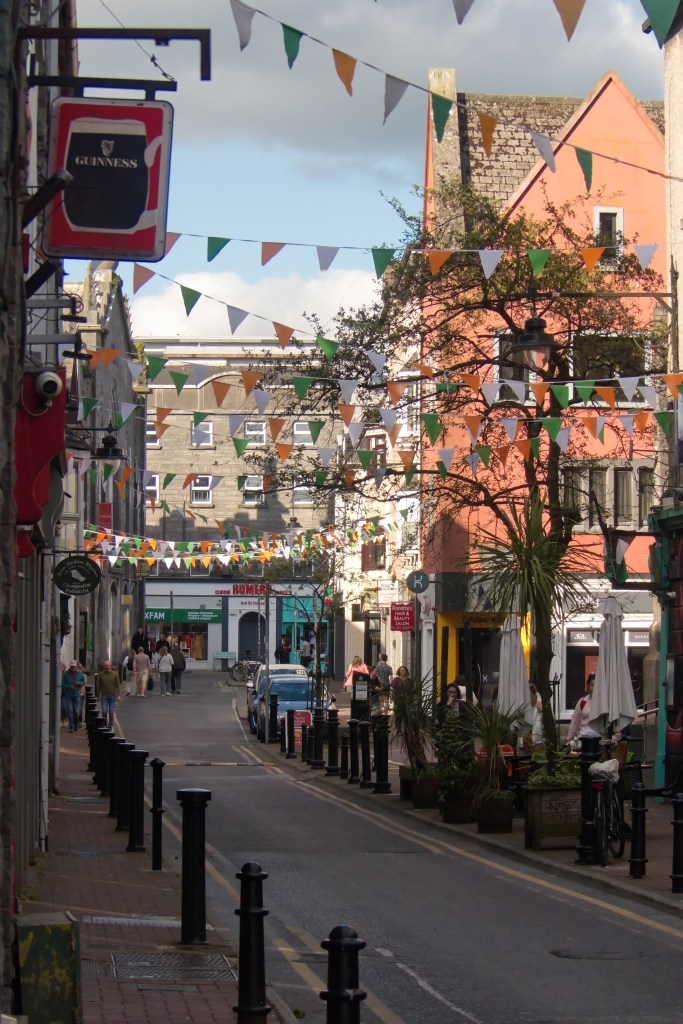
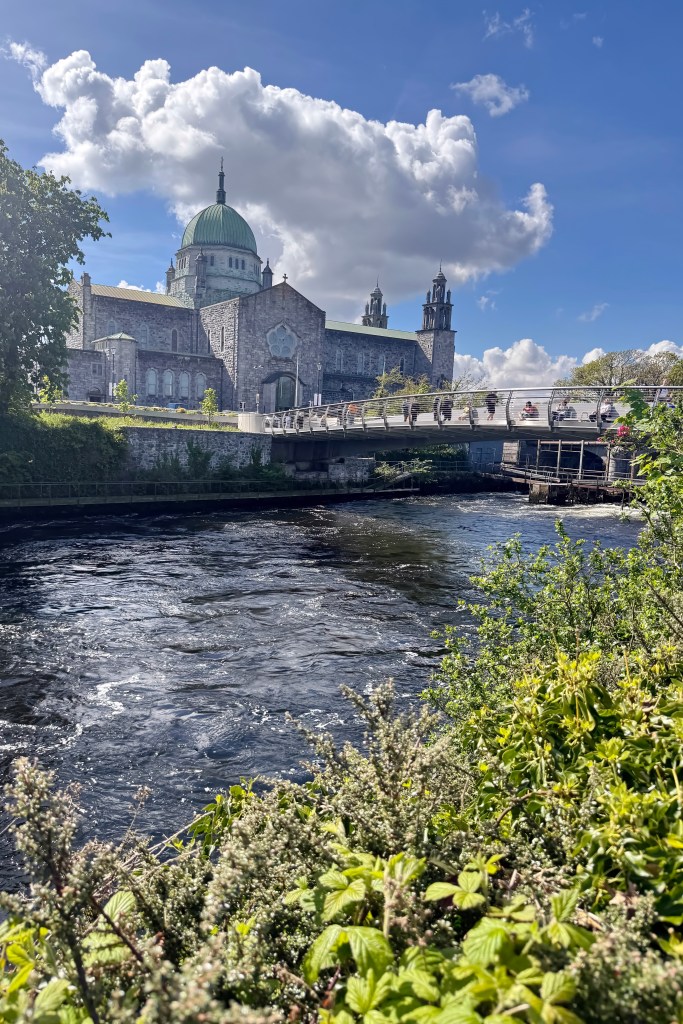
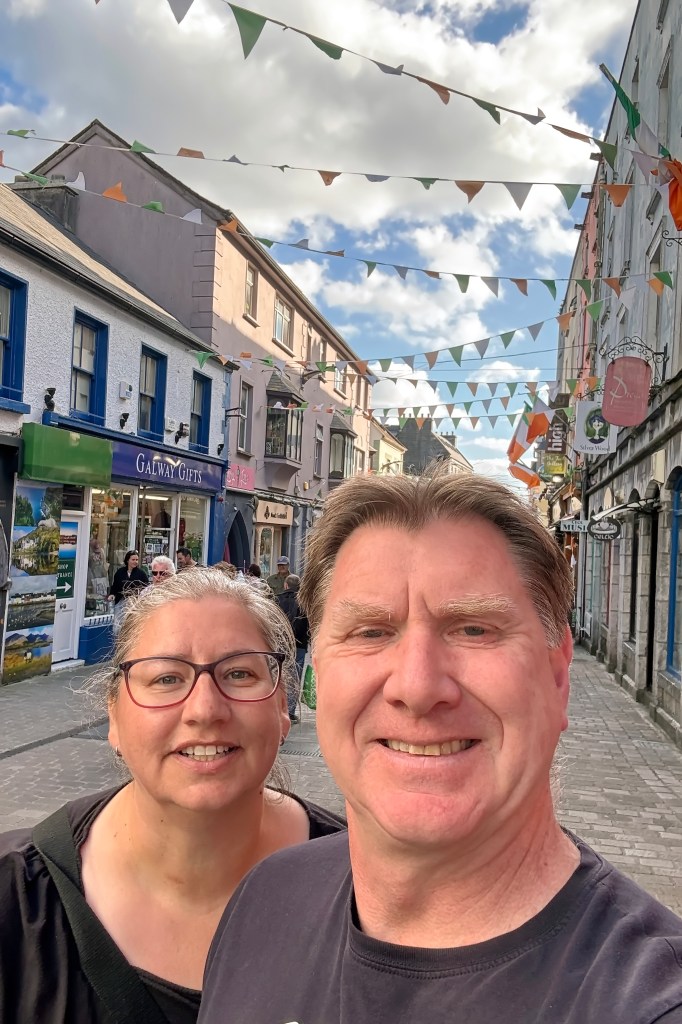
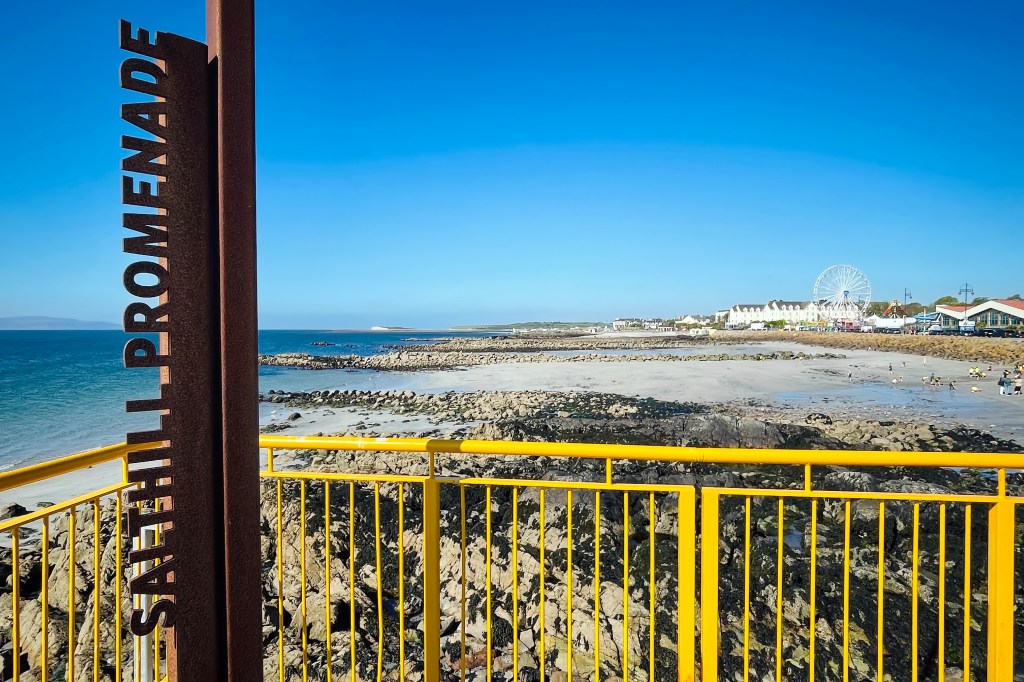
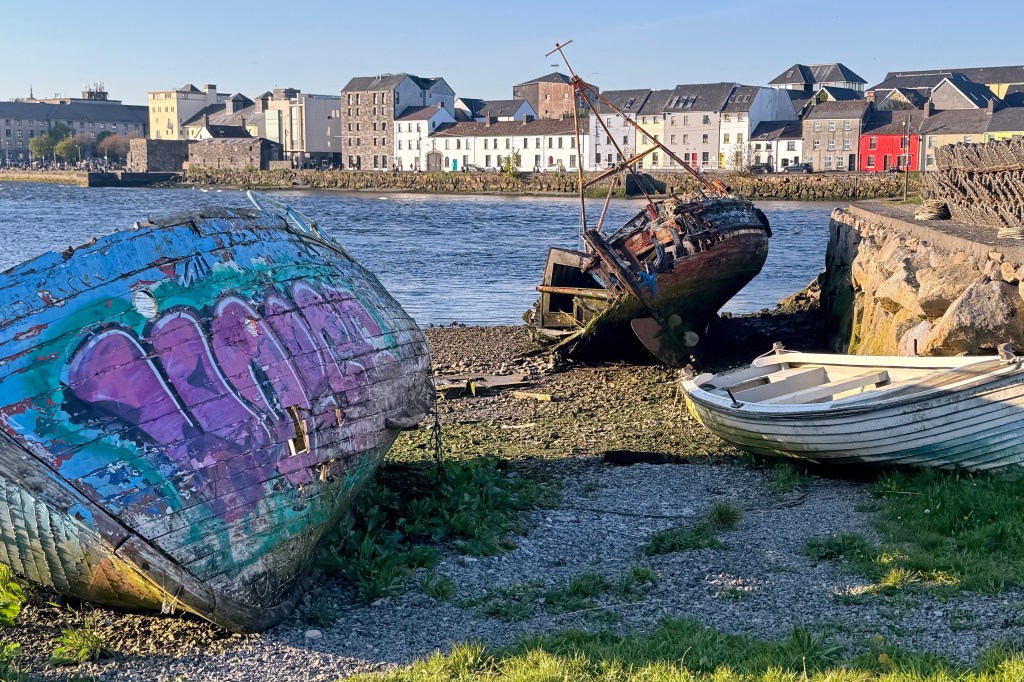
Our adventure began in the vibrant city of Galway, where colourful shopfronts lined the winding streets and traditional Irish music spilled from lively pubs late into the evening. Galway felt energetic, welcoming, and full of life. We wandered alongside couples, families, and locals enjoying the sunshine along the promenade at Salthill, soaking in the warmth of one of those rare perfect west coast days when the sky seemed impossibly blue and Galway Bay sparkled in the sunlight. Around Eyre Square and along the banks of the River Corrib leading toward the harbour, the city buzzed with laughter, conversation, and people lingering outdoors, making the most of the beautiful weather and enjoying a few well-earned pints.
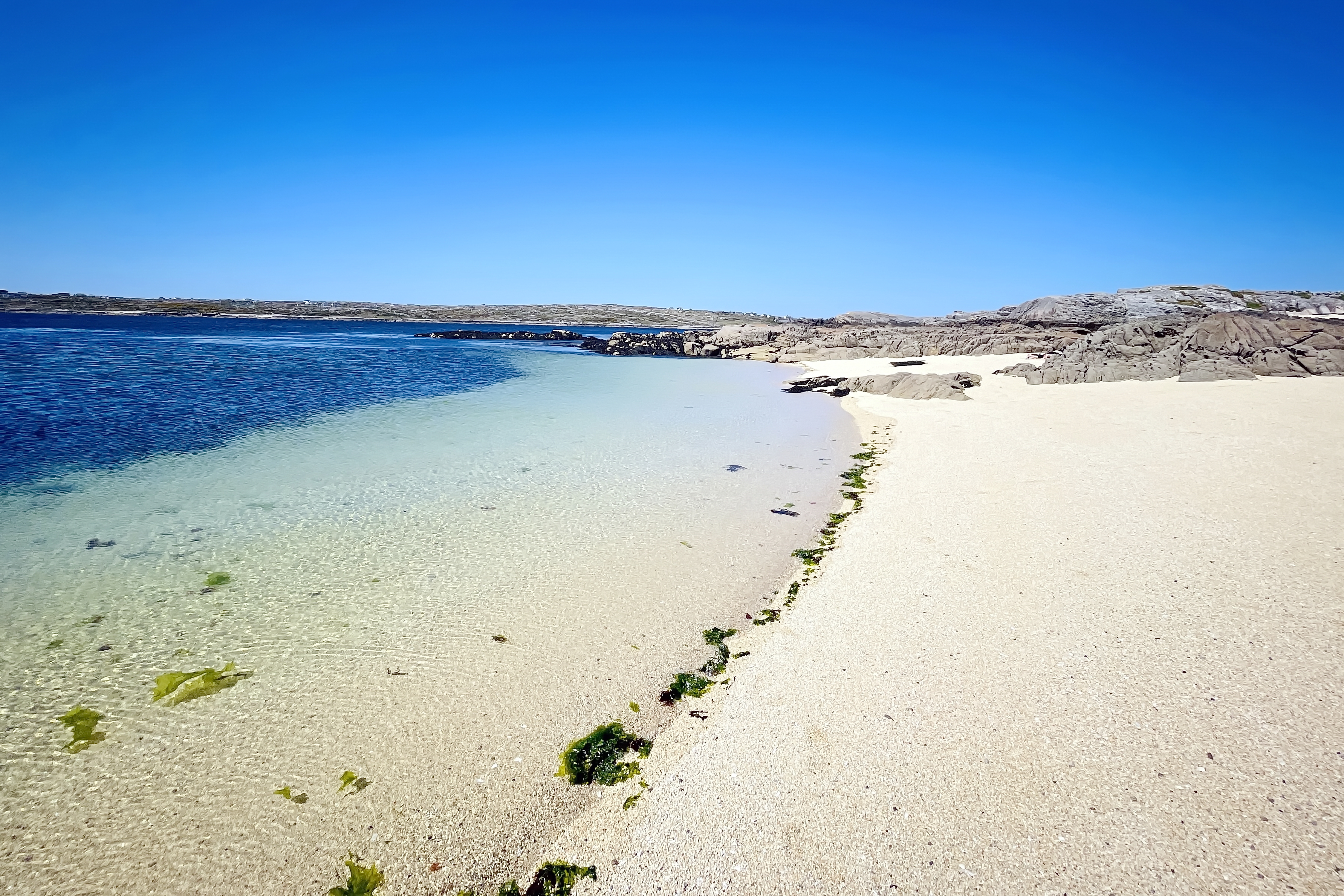
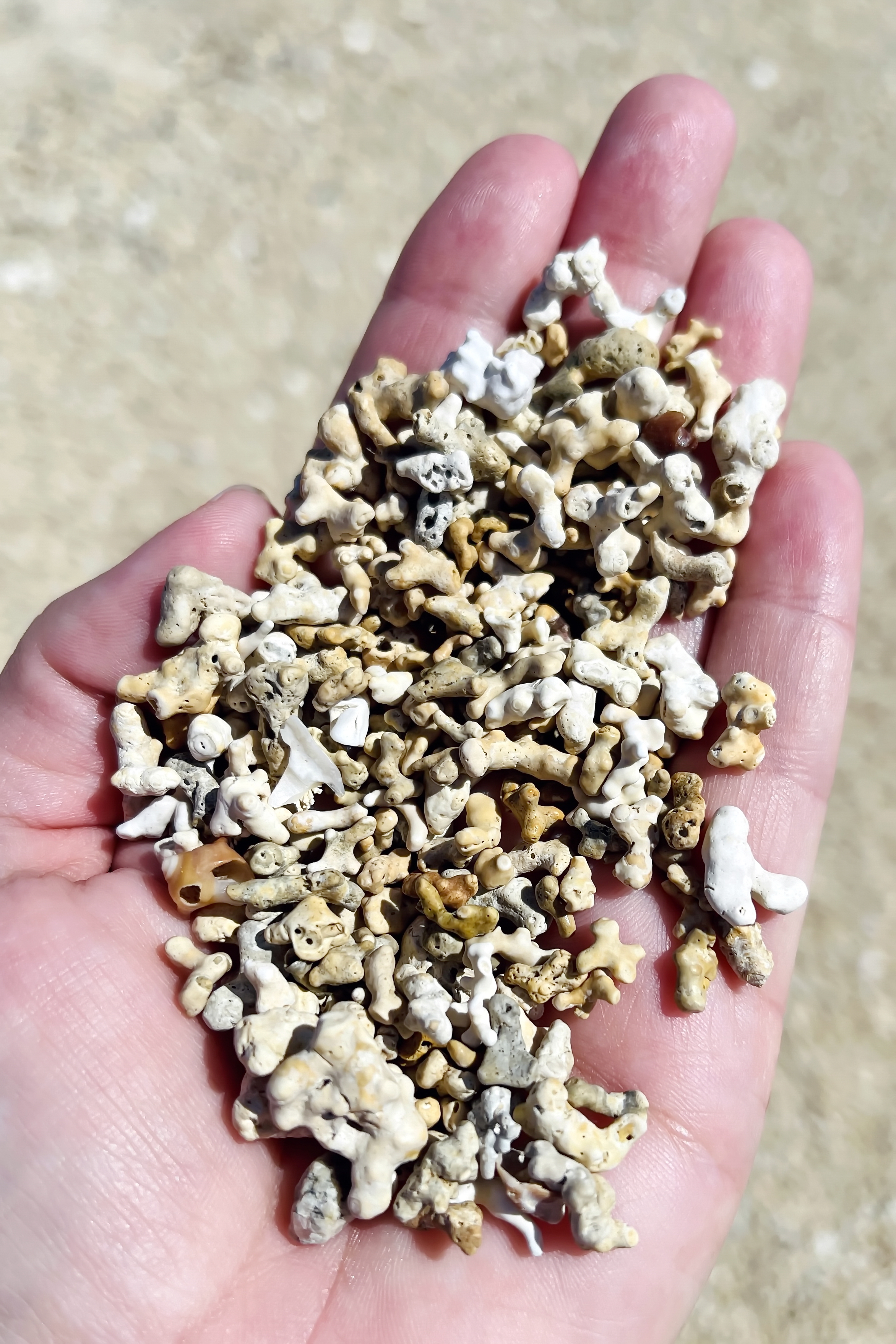
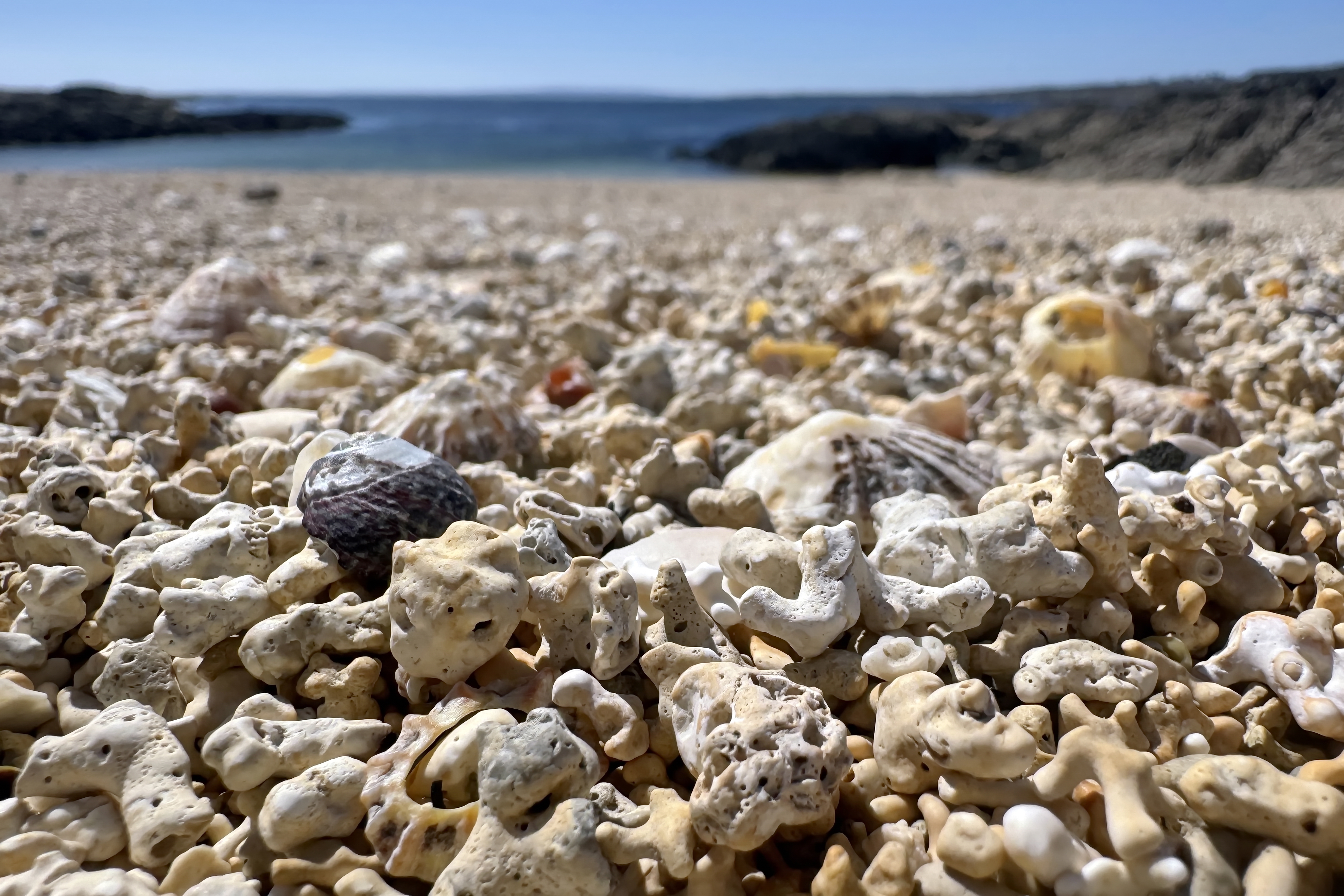
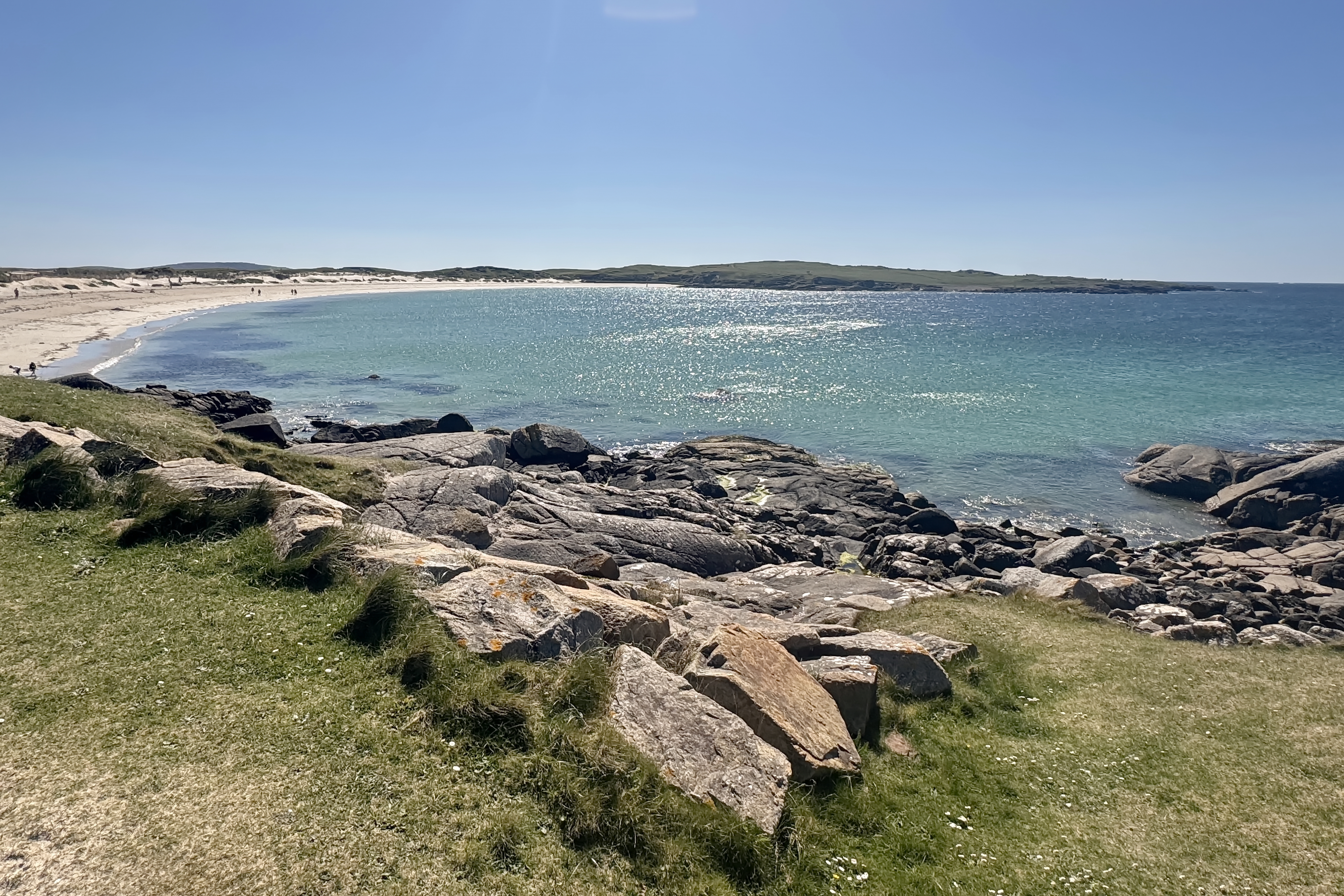
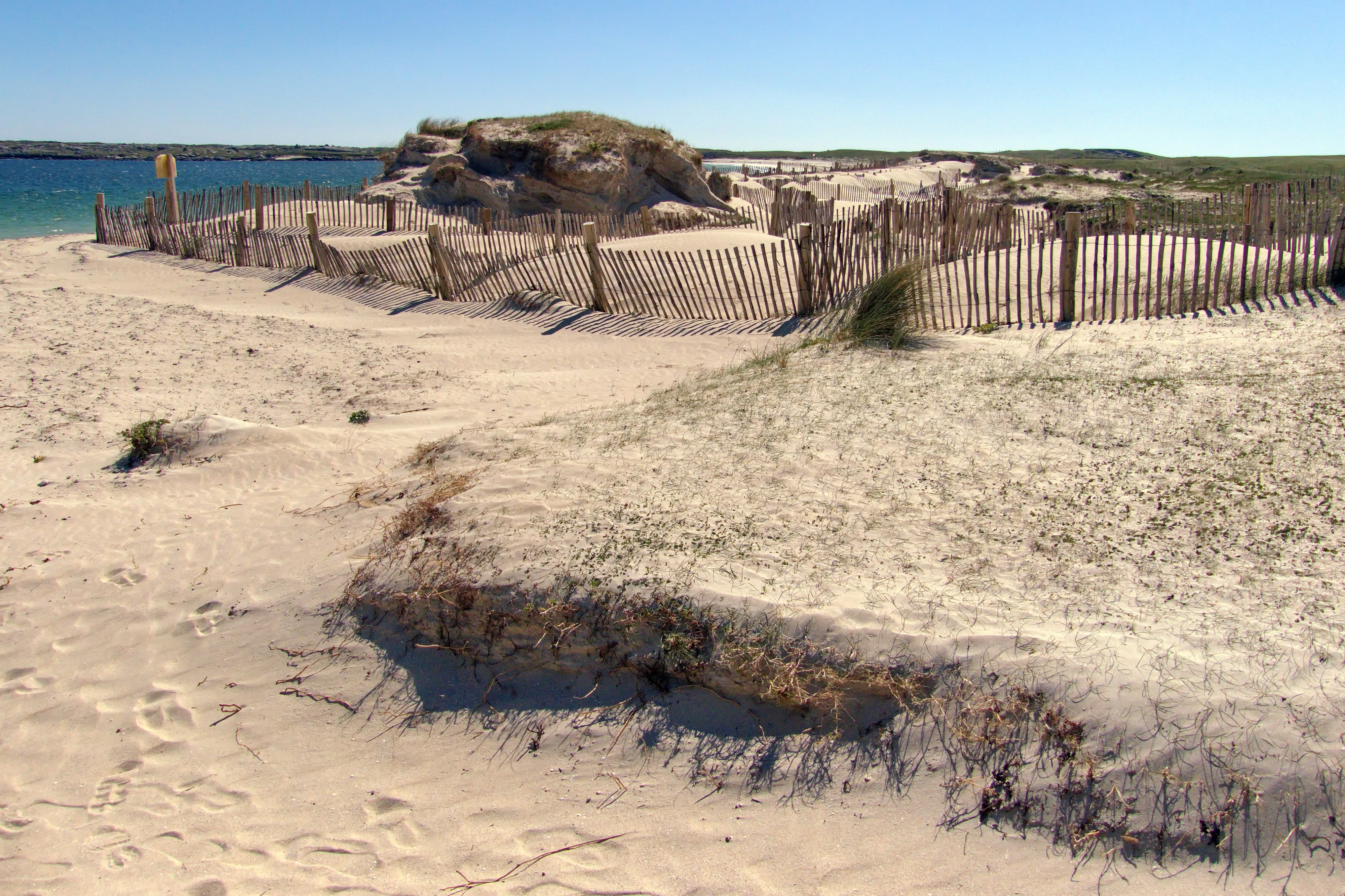
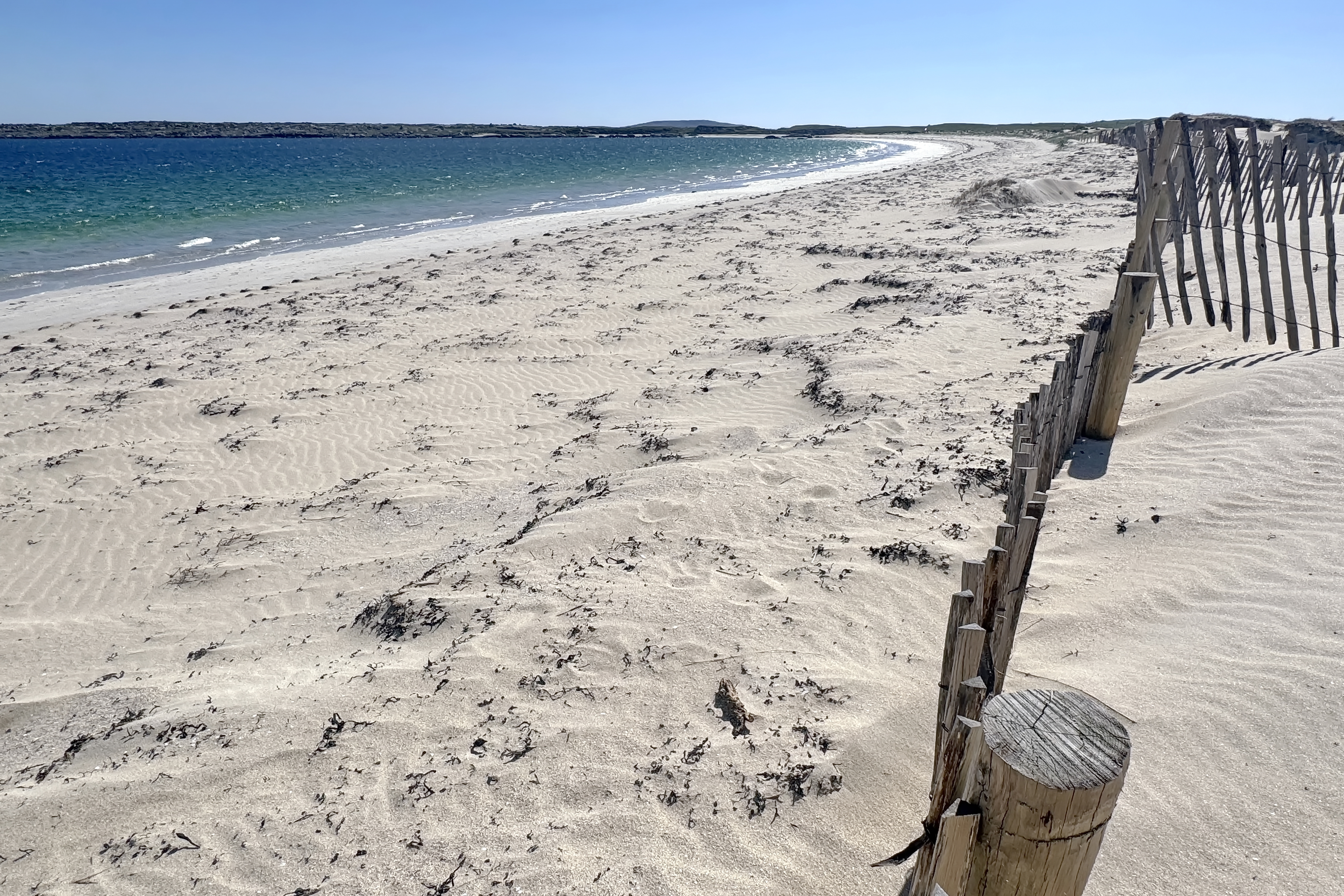
Leaving the city behind, the landscape quickly shifted into something wilder and more untamed as we followed the rugged coastline of Galway Bay west through the heart of Connemara toward the seaside villages of Roundstone and Clifden. Along the way, we stopped at the remarkable Coral Strand, where the shoreline is formed from tiny fragments of pink and white coralline algae that shimmer in the sunlight and give the beach an almost tropical appearance. Nearby, the breathtaking white sand tombolo connecting Dog’s Bay and Gurteen Bay felt more like the Caribbean than Ireland’s west coast, with turquoise water, sweeping dunes, and gentle waves rolling onto shore.
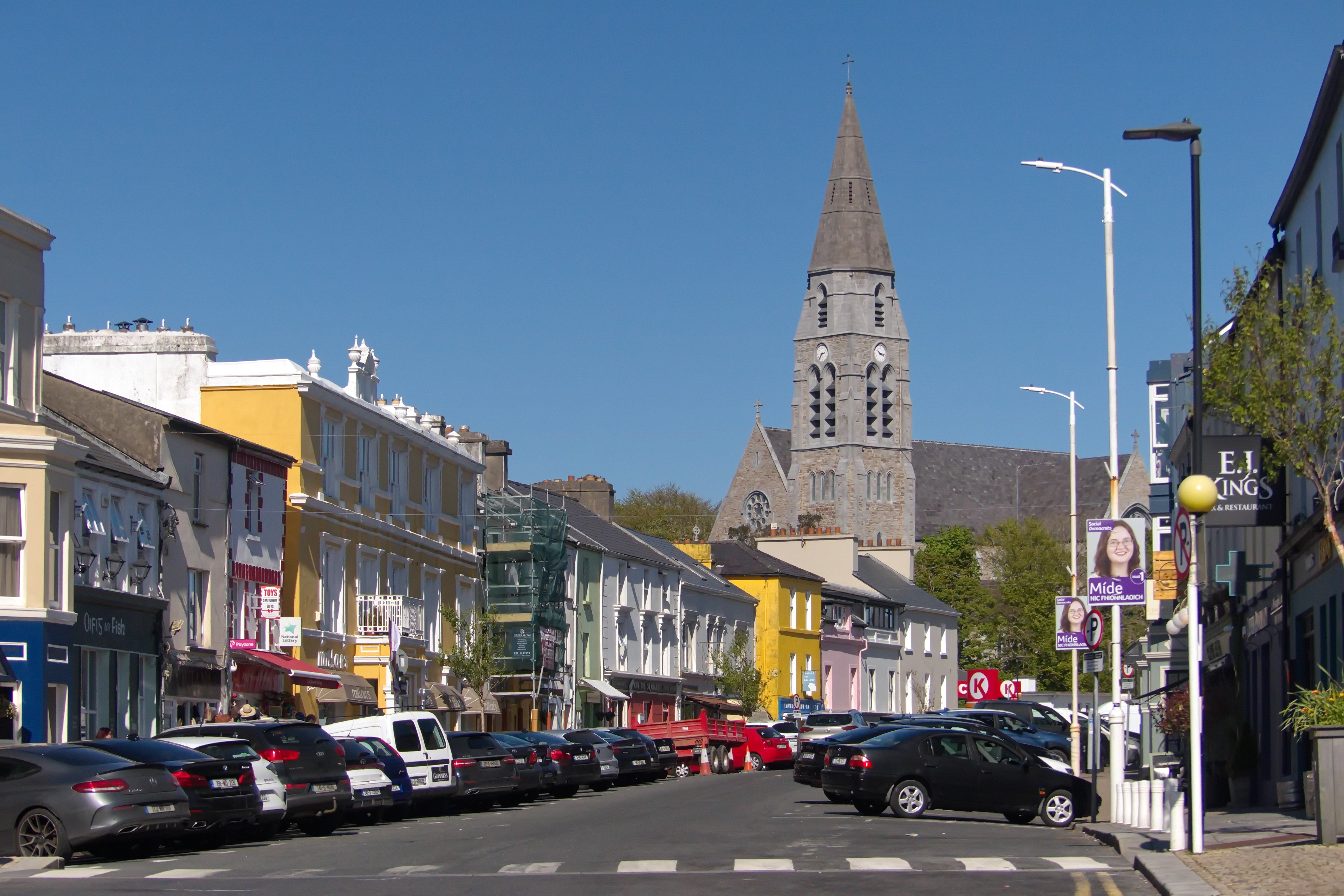
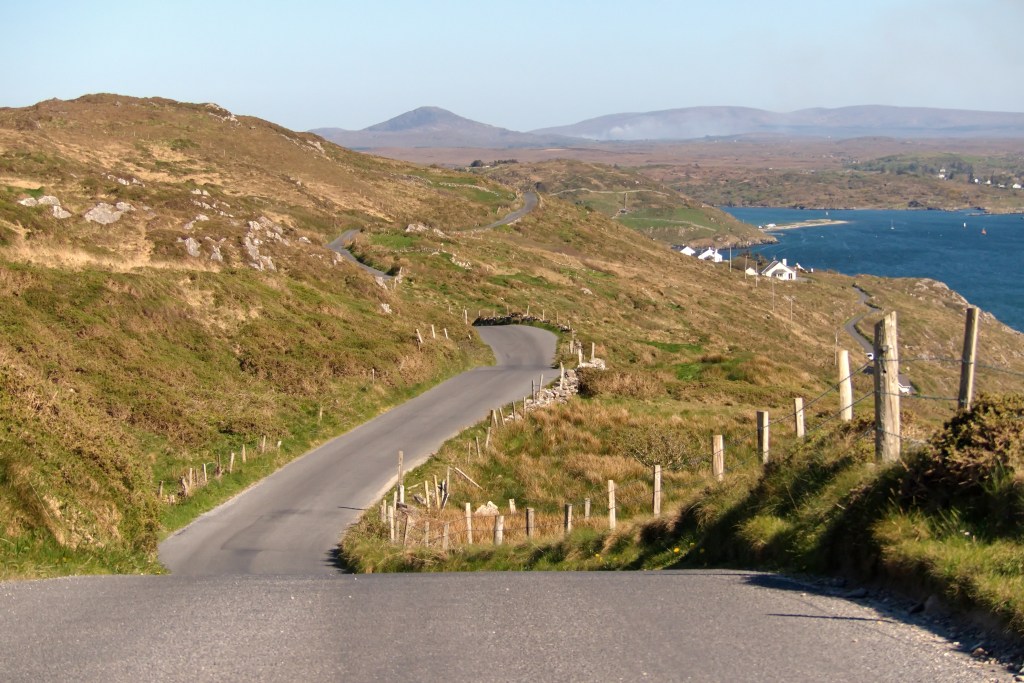
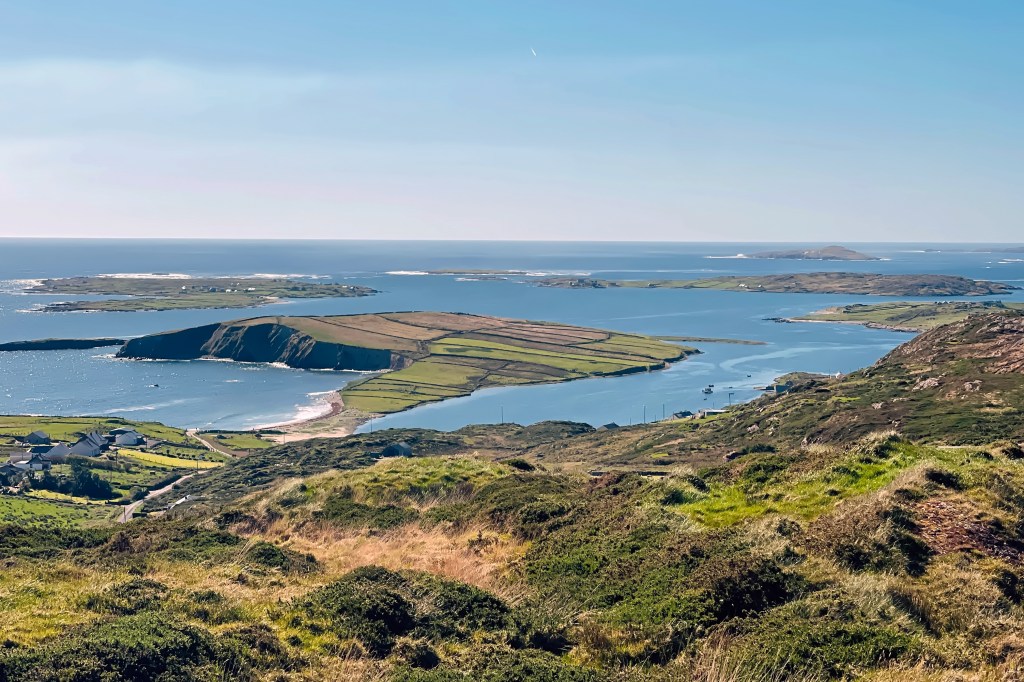
One of the highlights of the day was driving the Sky Road, a narrow and winding route looping high above the Atlantic just outside Clifden. The road climbed steadily into the hills before opening to sweeping panoramic views of rugged coastline, quiet inlets, offshore islands, and the endless ocean beyond. Sunlight danced across the water while patches of green farmland, old stone walls, and scattered white cottages created scenes that felt timeless and unmistakably Irish.
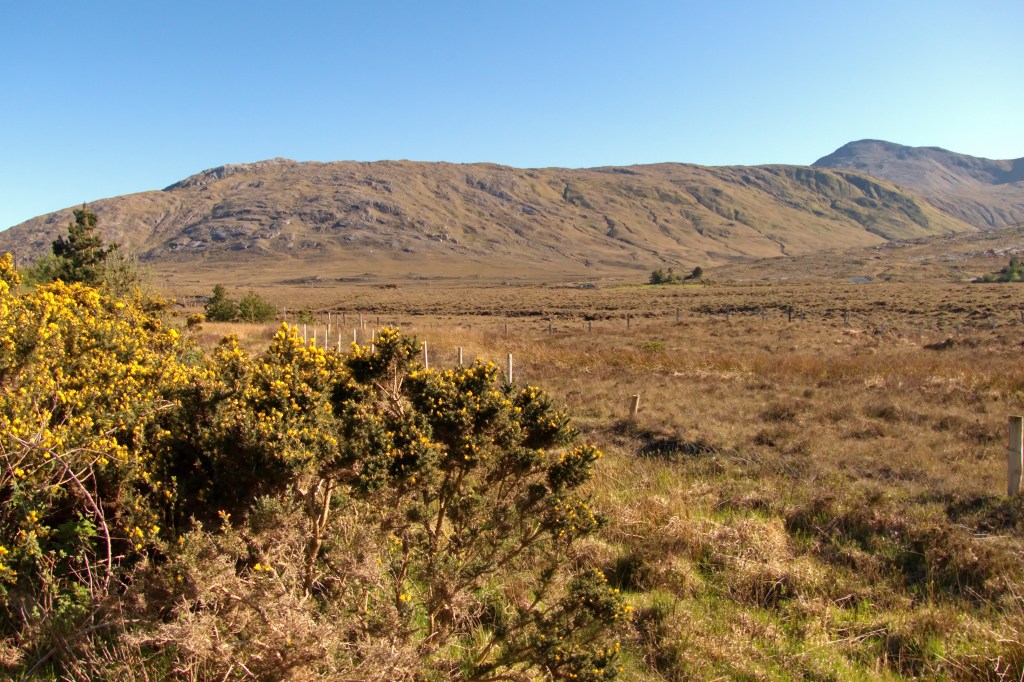
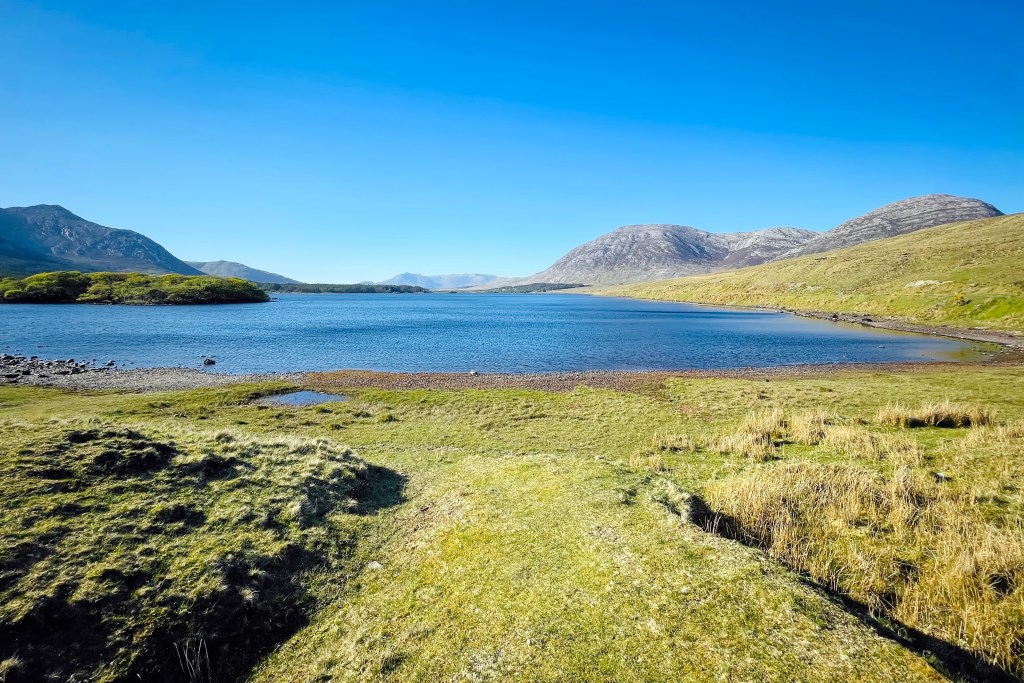
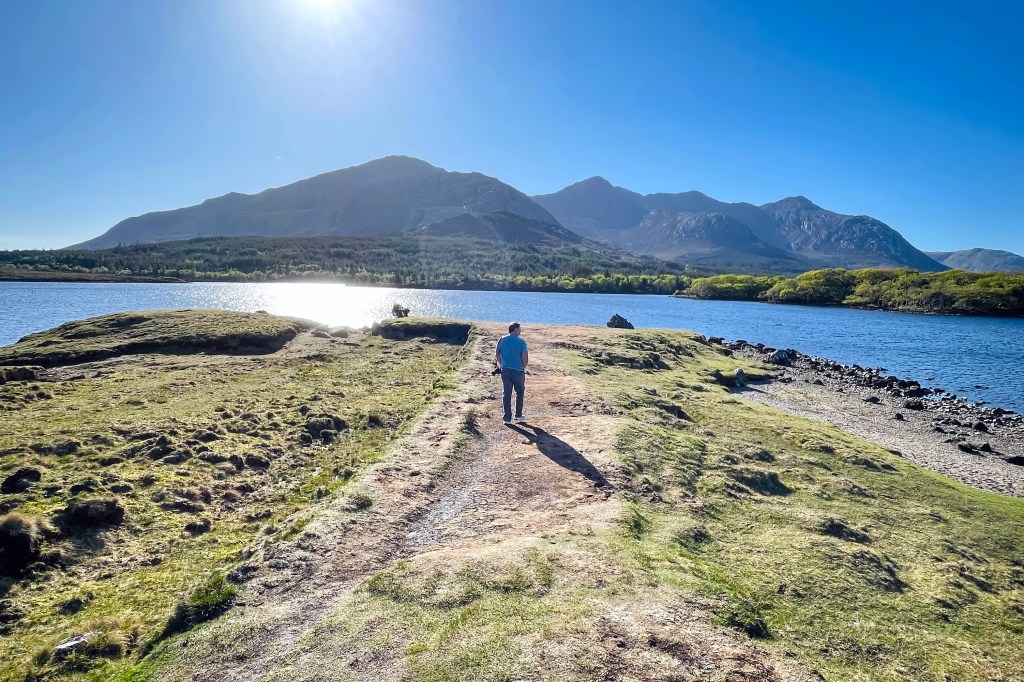
On our return to Galway, we travelled through the hauntingly beautiful Inagh Valley, where the road winds between dark mountain ranges, open boglands, and reflective lakes mirroring the ever-changing sky. It was one of those places that makes you slow down without even realizing it. Vast, remote, and peaceful, the valley captured everything we had begun to love about Ireland’s west coast.
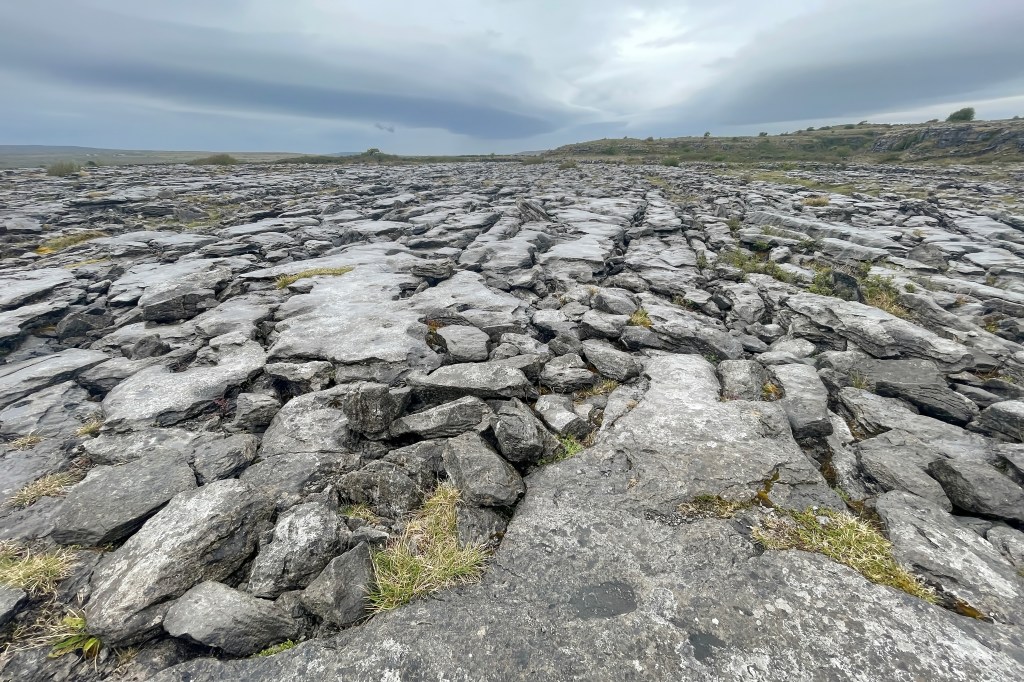
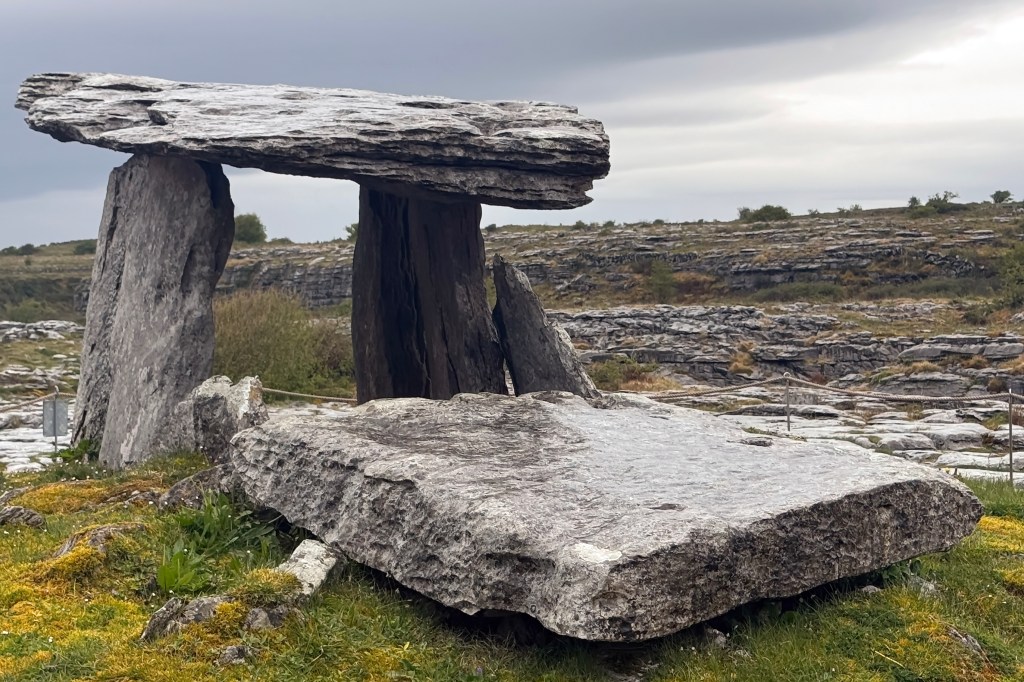
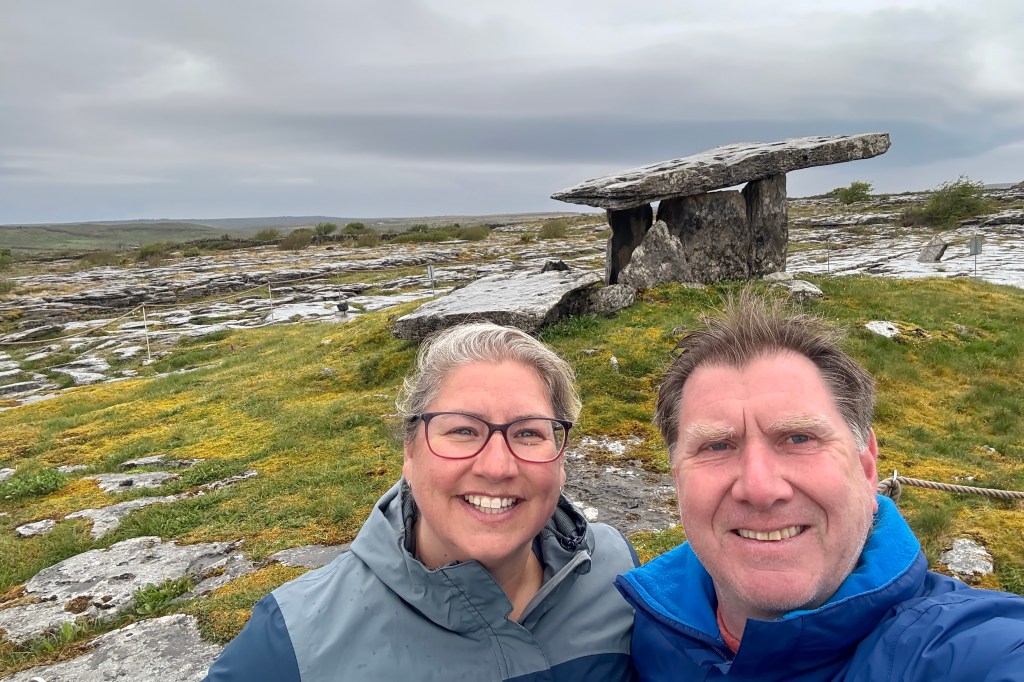
As we continued south, we entered one of the most unique landscapes we encountered on the trip—The Burren. The Burren felt almost otherworldly, with endless stretches of exposed limestone broken by deep cracks, delicate wildflowers, and ancient stone walls. There was a quiet beauty to the landscape, shaped over centuries by wind, rain, and sea. As mist and rain drifted across the hills, we stopped at Poulnabrone Dolmen, one of Ireland’s most iconic prehistoric monuments. Standing alone against the stark limestone landscape, the ancient portal tomb has watched over the Burren for more than 5,000 years, its silhouette both simple and unforgettable.
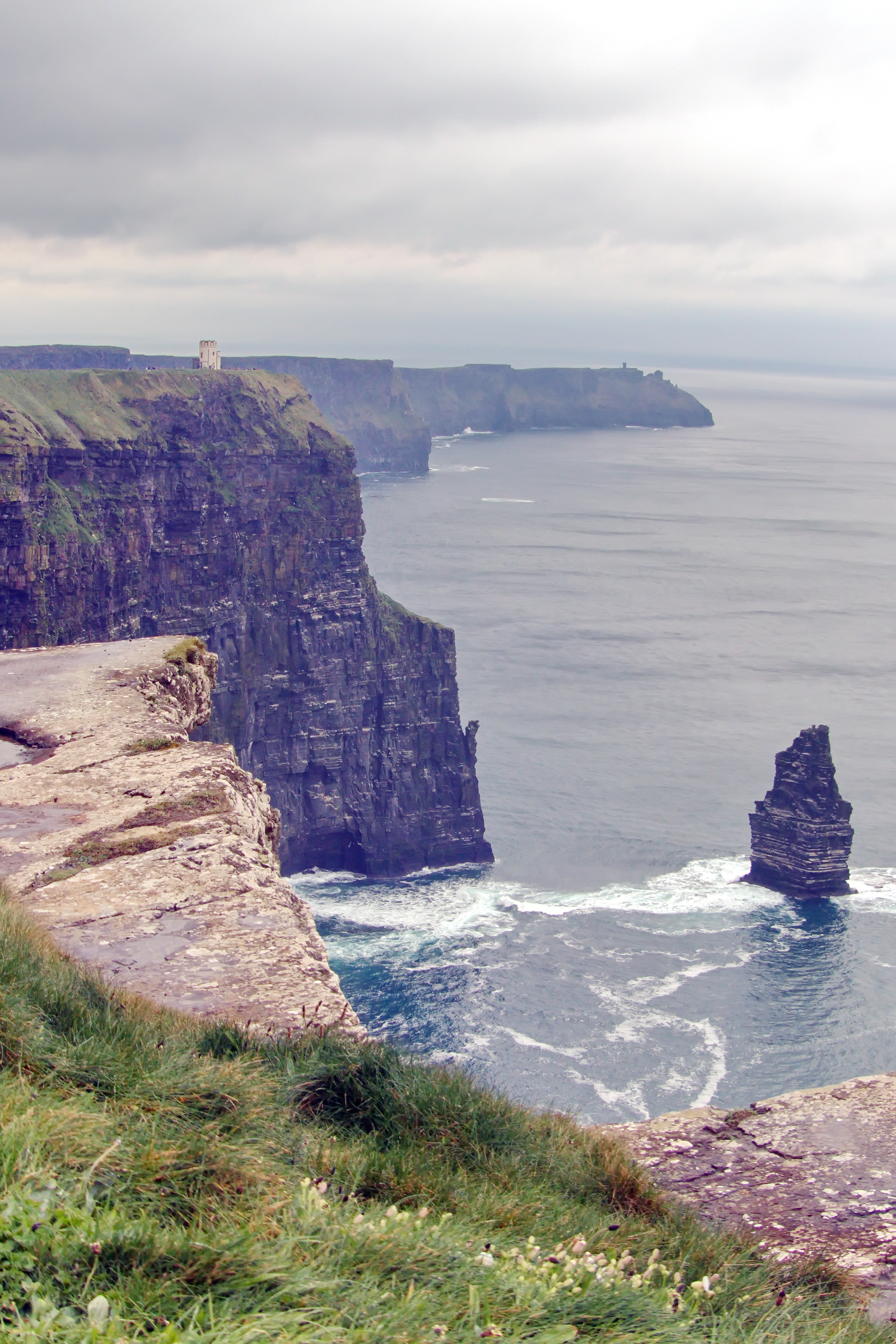
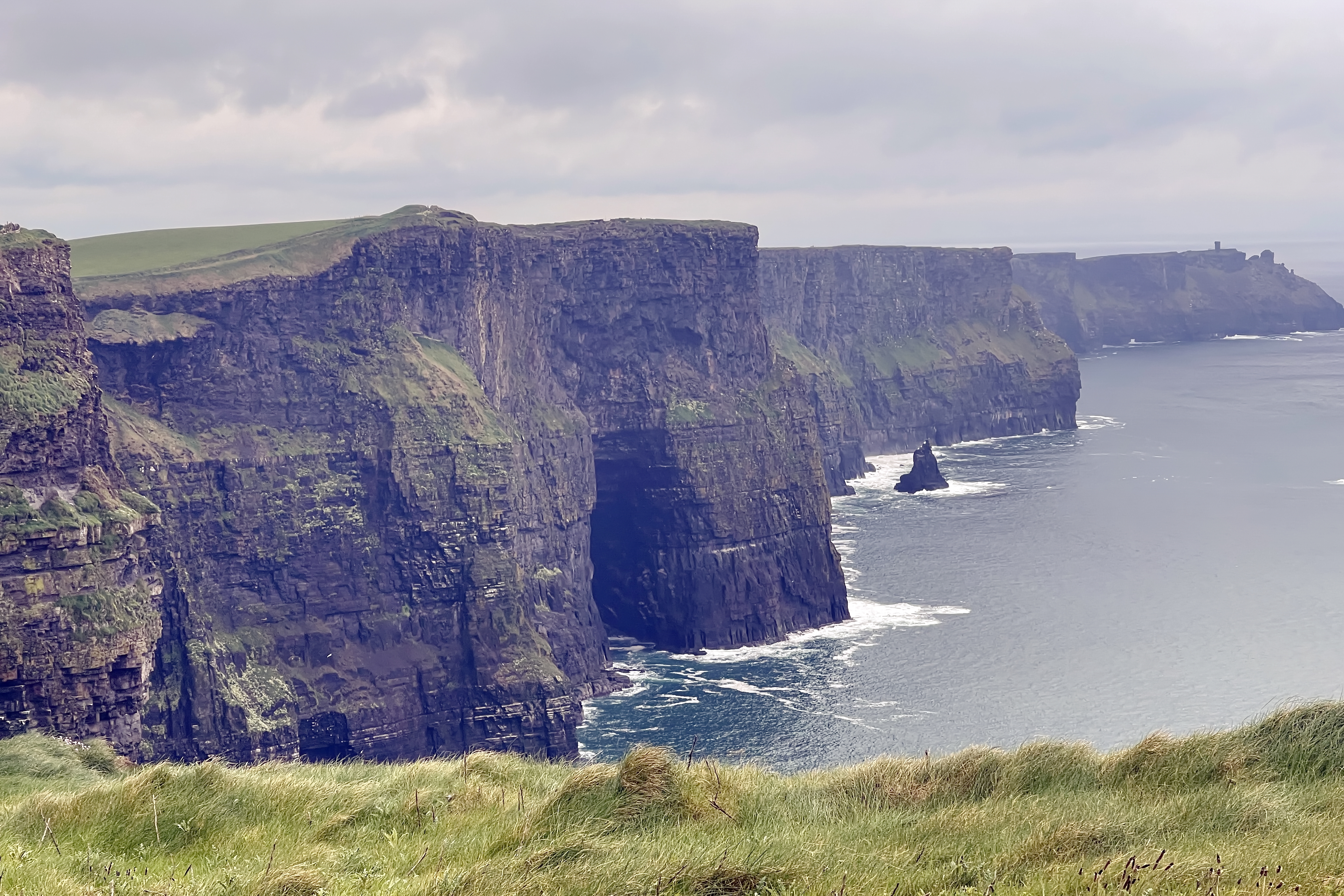
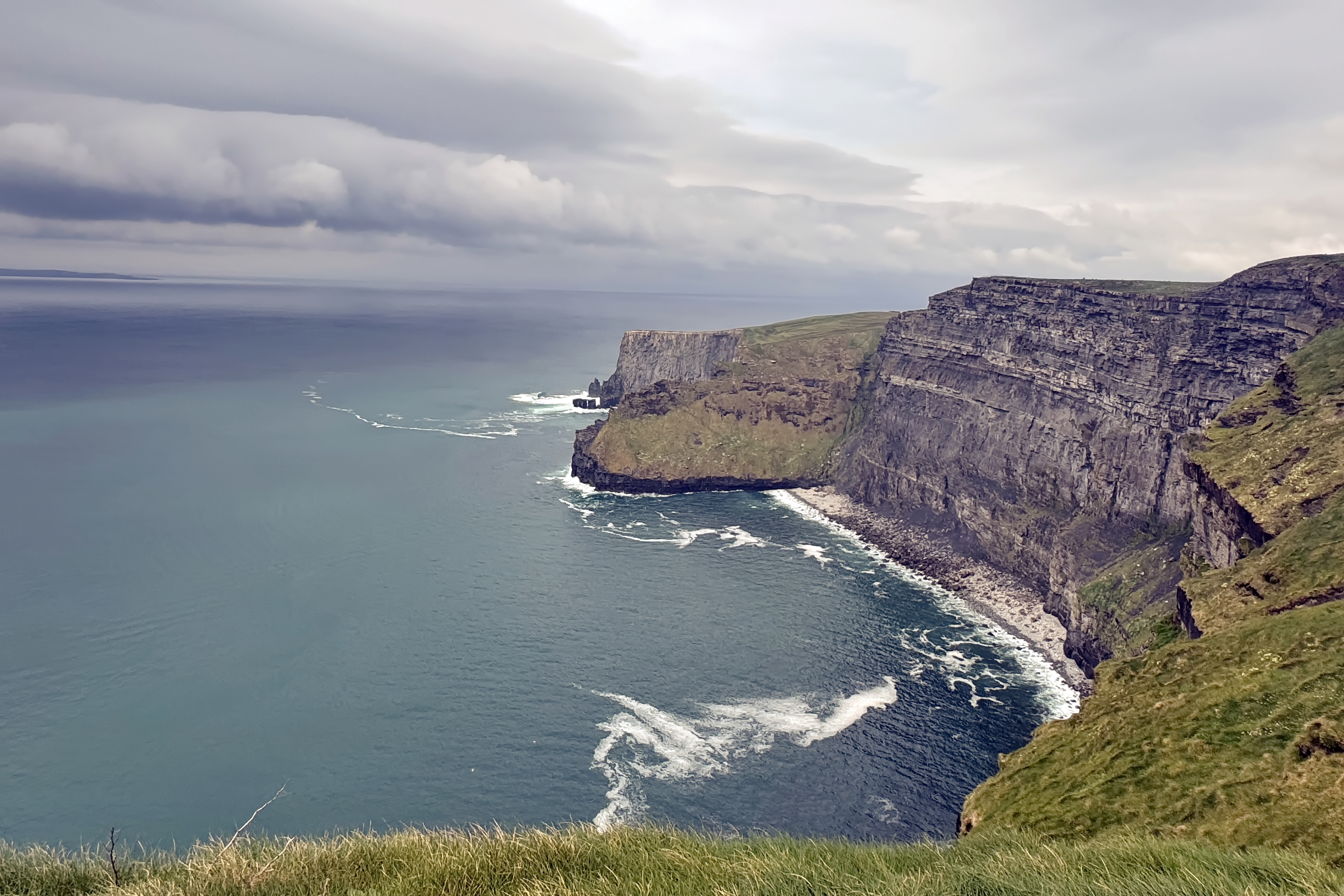
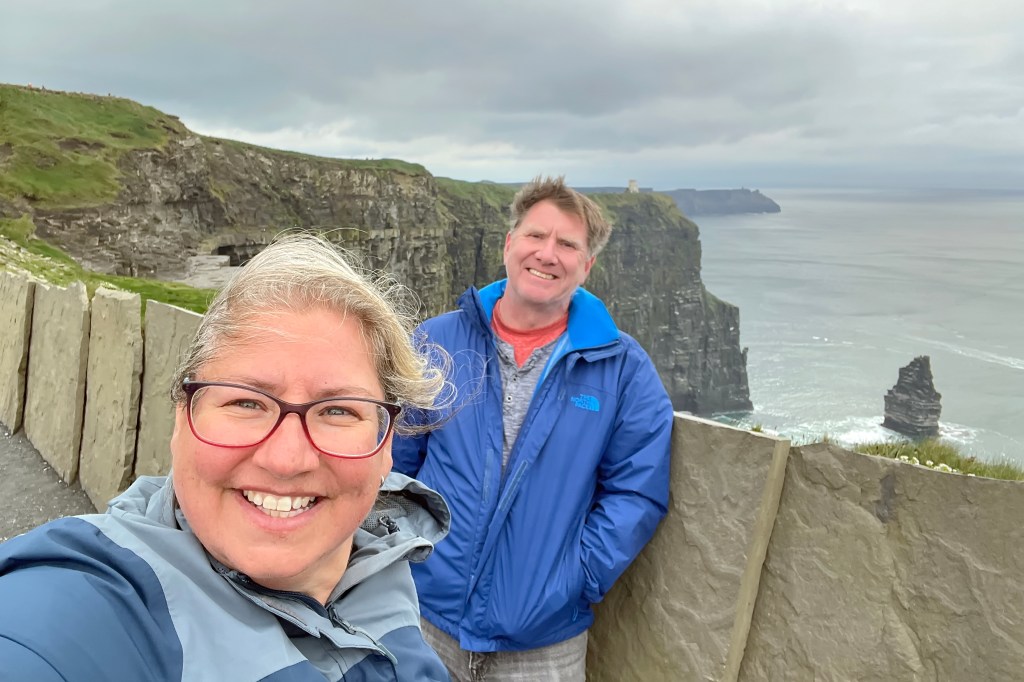
After lunch in the charming village of Doolin, the road eventually brought us to the dramatic Cliffs of Moher. Standing high above the Atlantic Ocean and watching the waves crash far below, it was easy to understand why this coastline leaves such a lasting impression on everyone who visits. The scale of the cliffs, the roar of the ocean, and the endless horizon beyond made us feel wonderfully small, reminding us just how powerful and untamed nature can be. Oh, and it was windy!
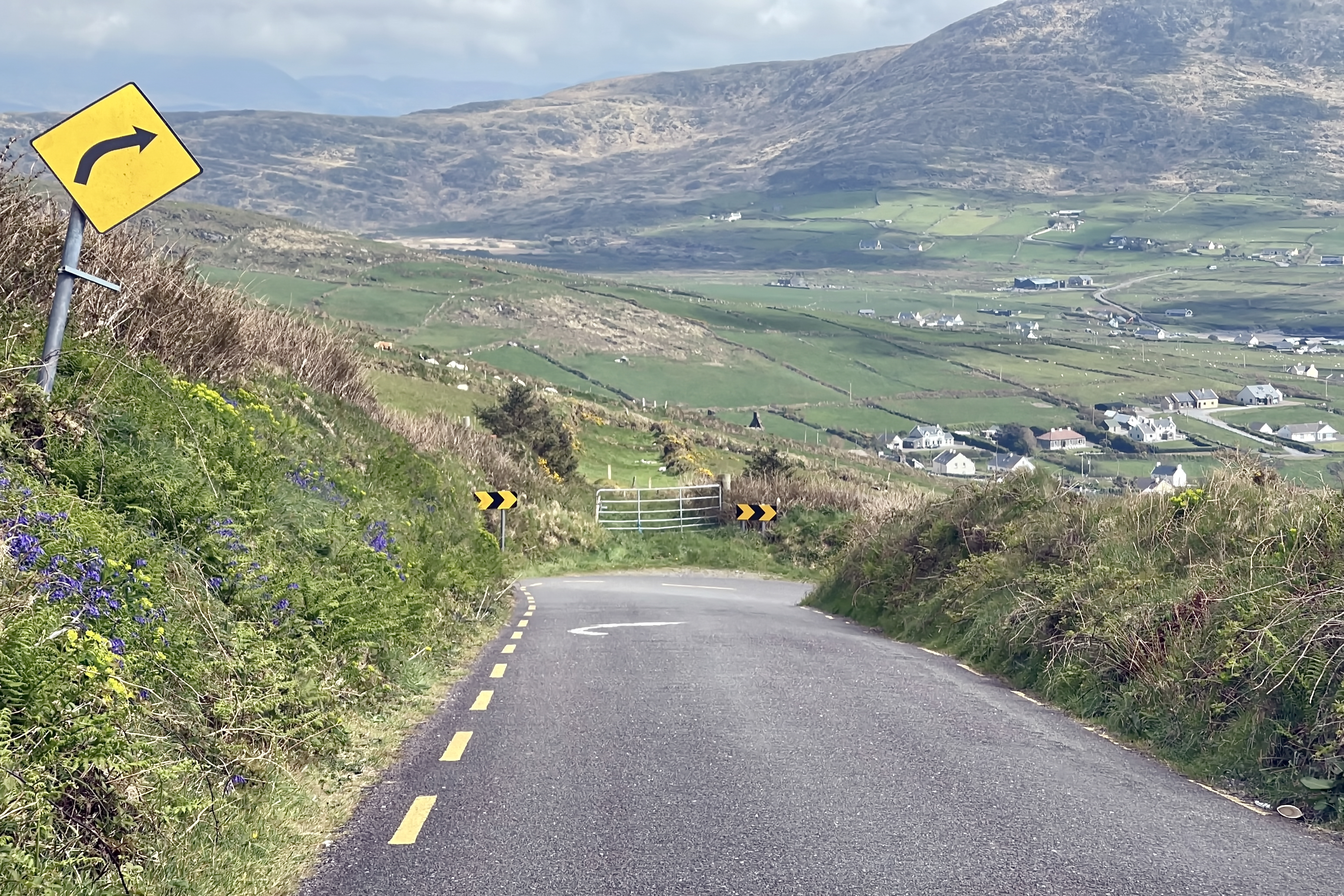
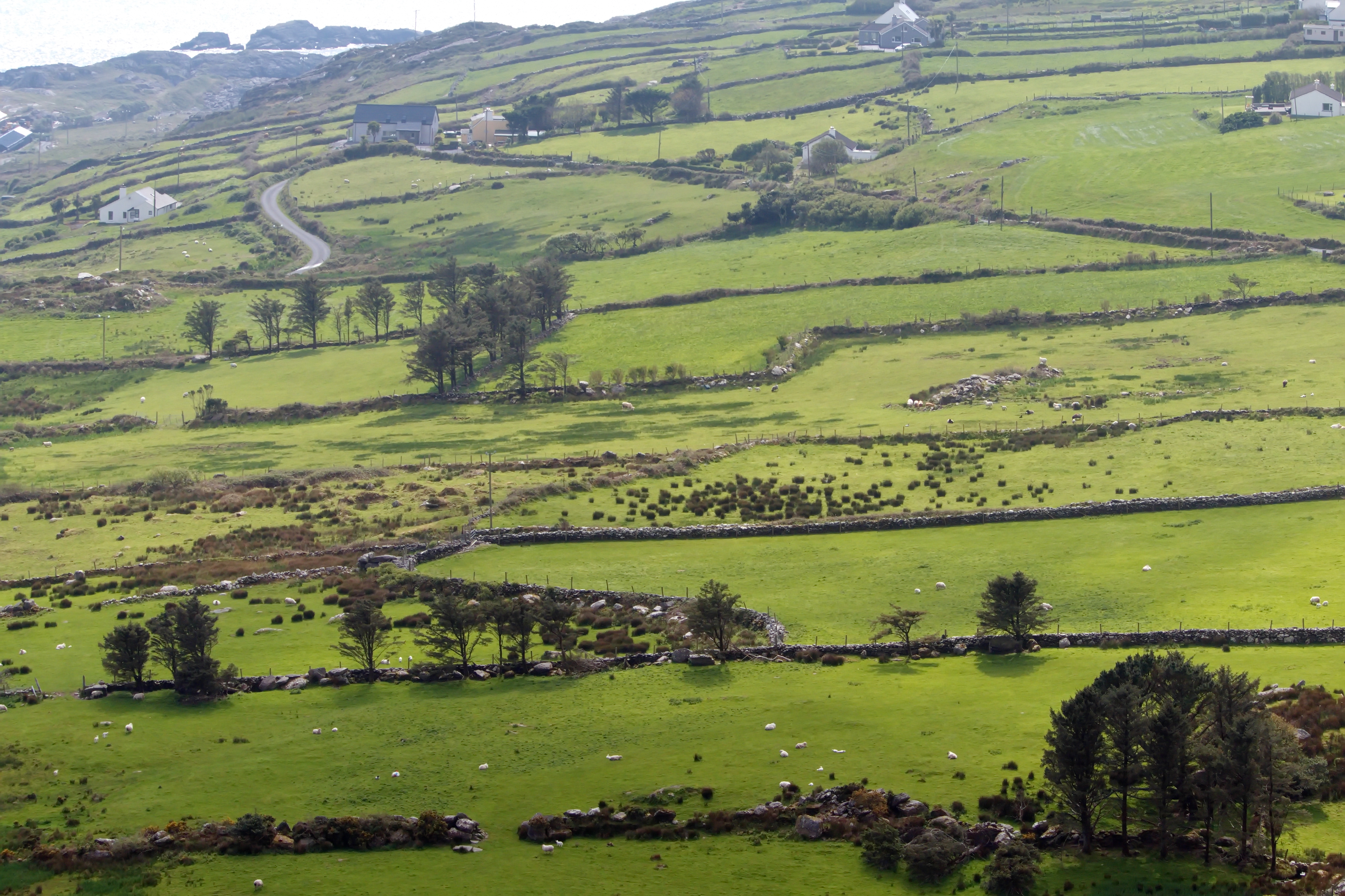
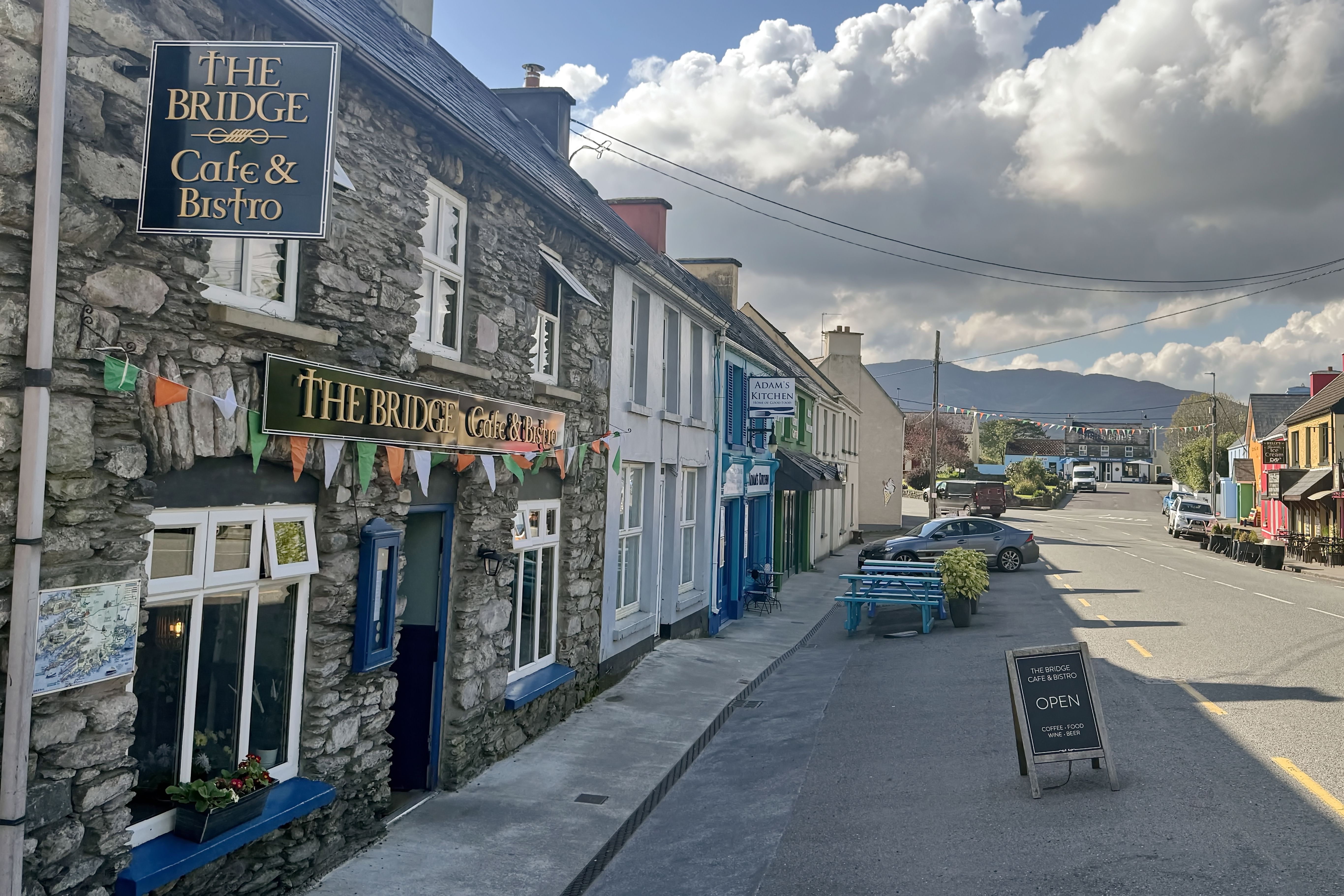
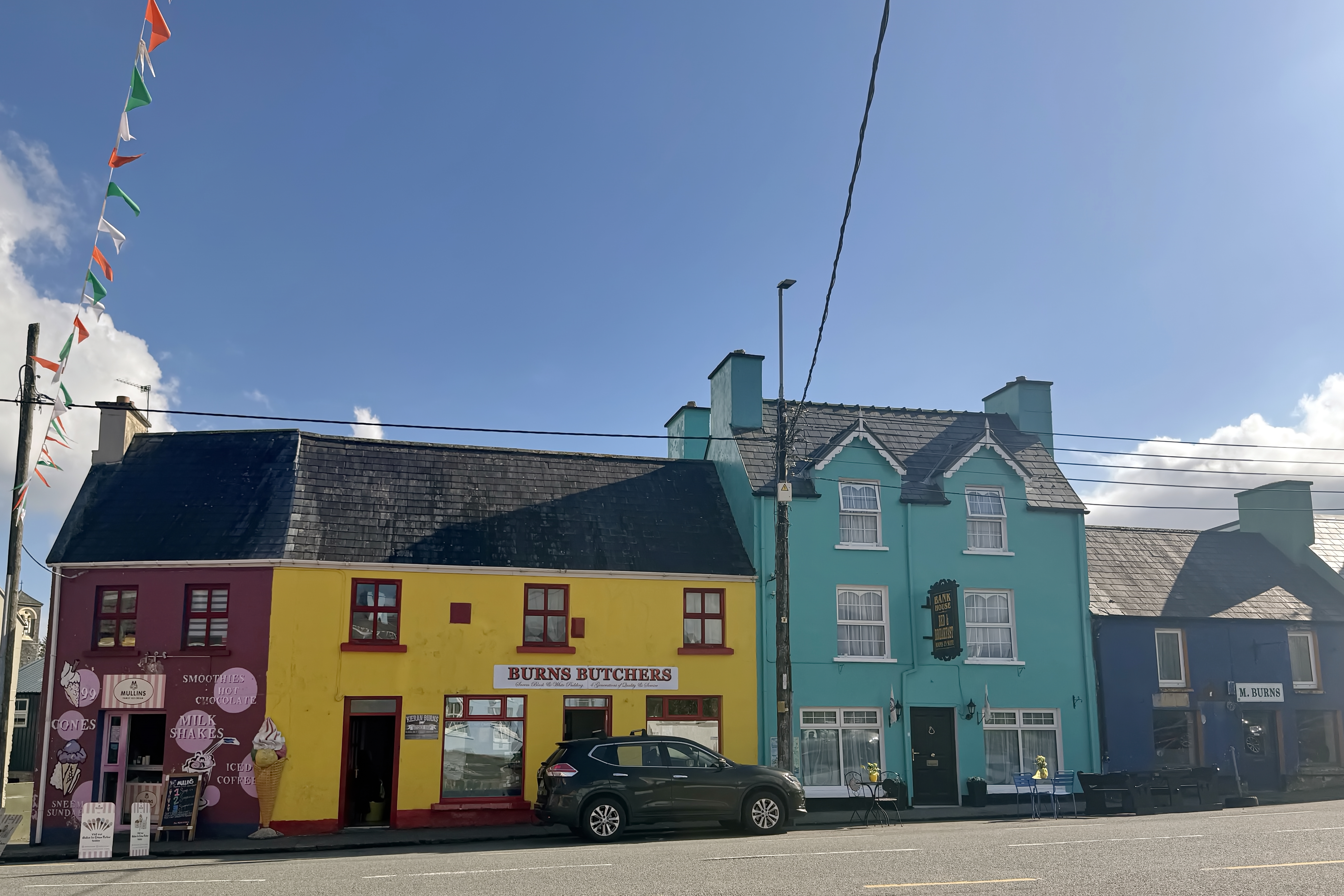
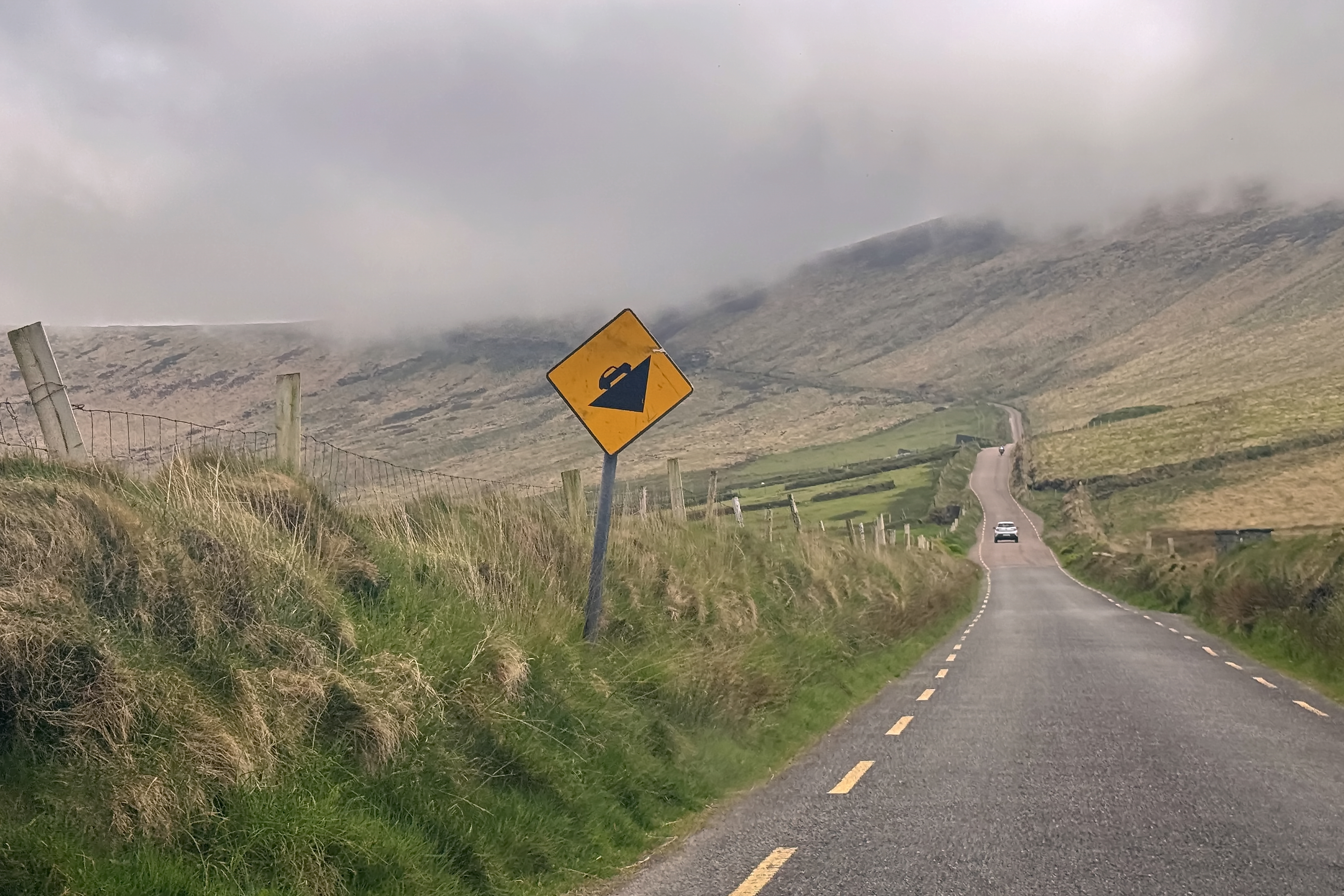
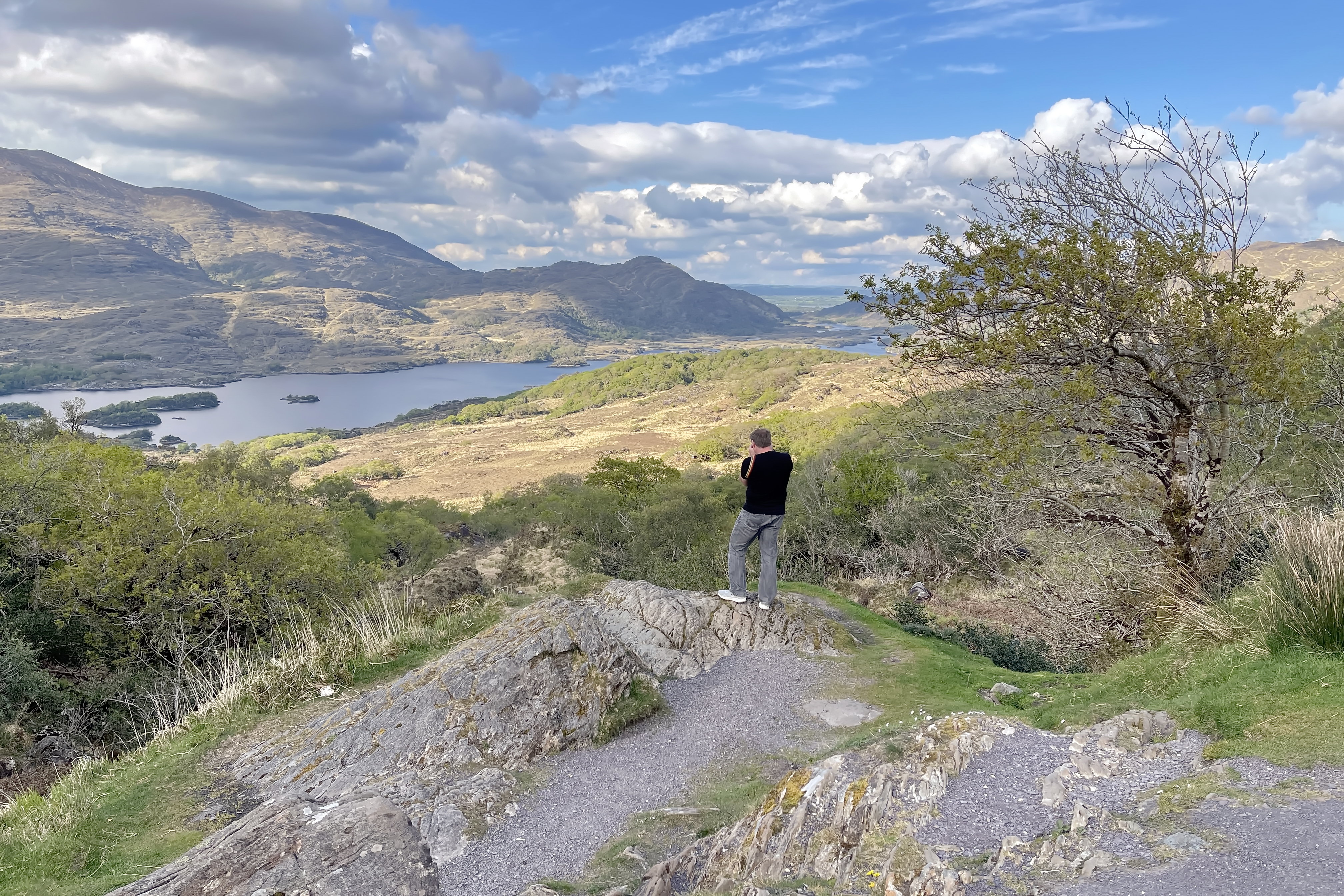
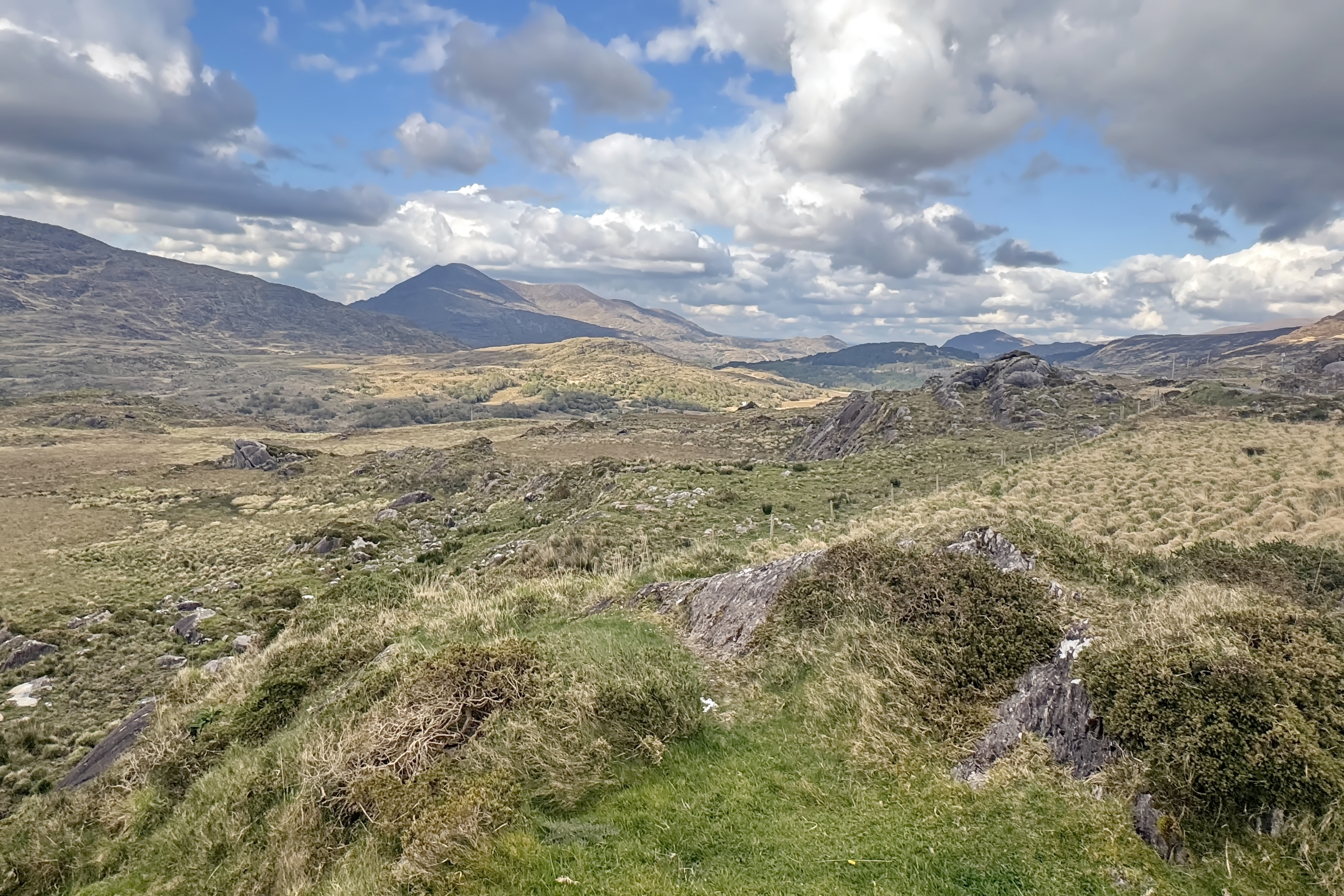
Further south, we set out to circumnavigate the legendary Ring of Kerry, one of Ireland’s most celebrated scenic drives. Narrow lanes twisted through the countryside, often hemmed in by thick hedgerows so close they brushed the sides of the car. Yet somehow, those winding roads only added to the magic, making us feel as though we were discovering a hidden side of Ireland at our own pace. Around nearly every bend, the landscape seemed to transform—rugged coastline giving way to rolling green hills, stone fences stretching across windswept fields, and distant peaks fading in and out beneath fast-moving clouds. Charming villages tucked between mountains and sea offered a gentler pace than the dramatic coastline, their brightly painted buildings, peaceful atmosphere, and relaxed rhythm epitomizing the very definition of so many of Ireland’s small towns.
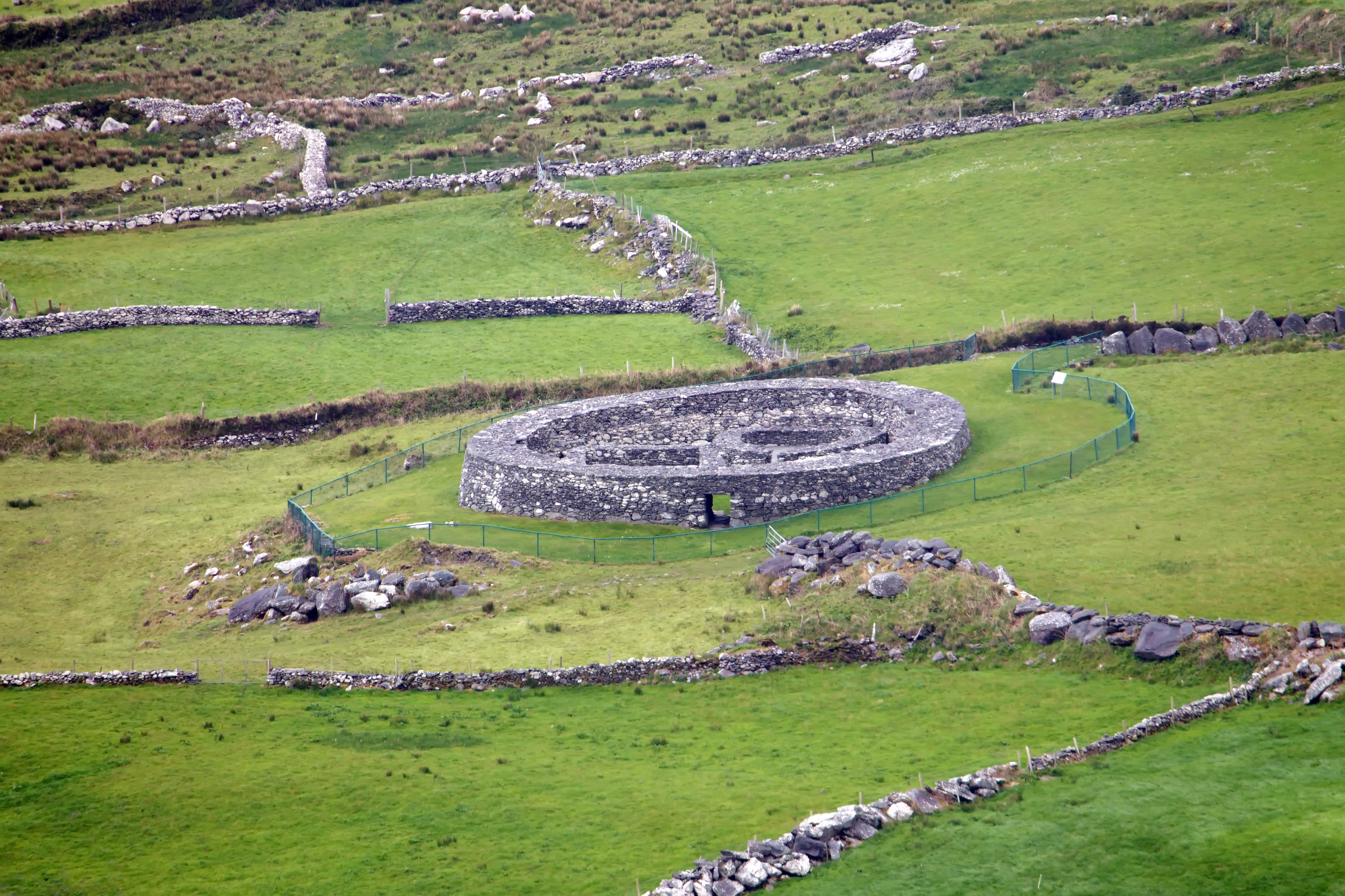
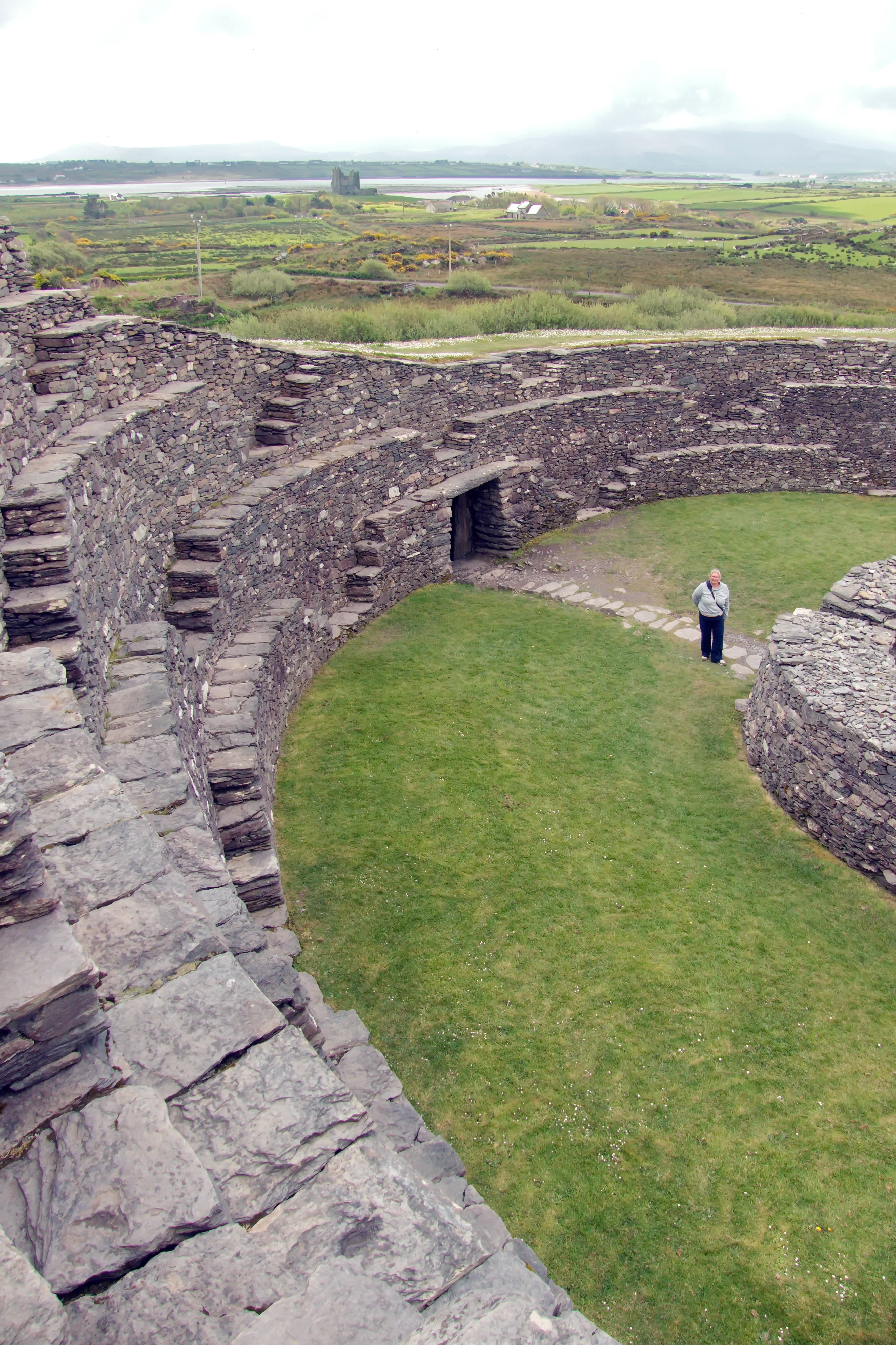
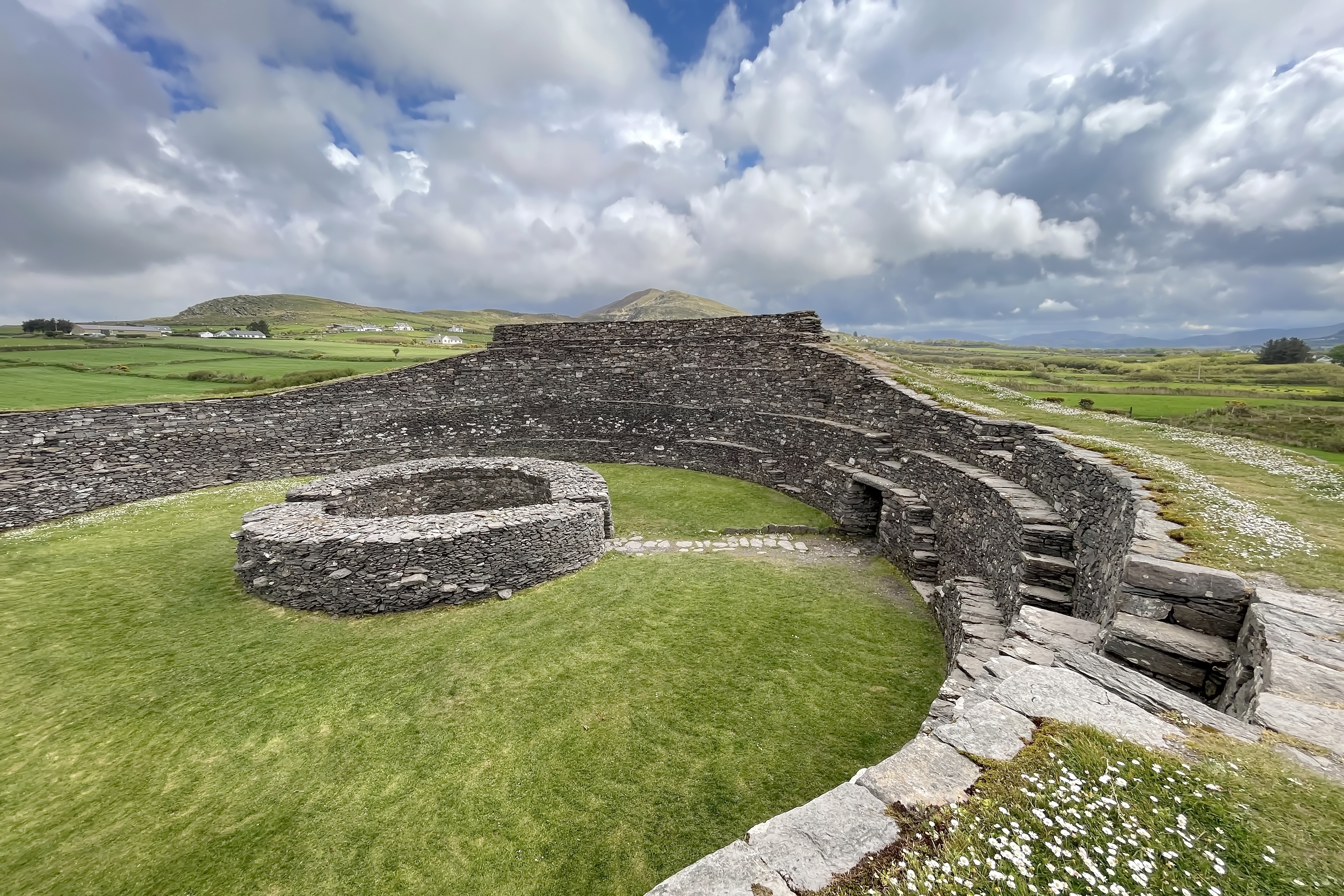
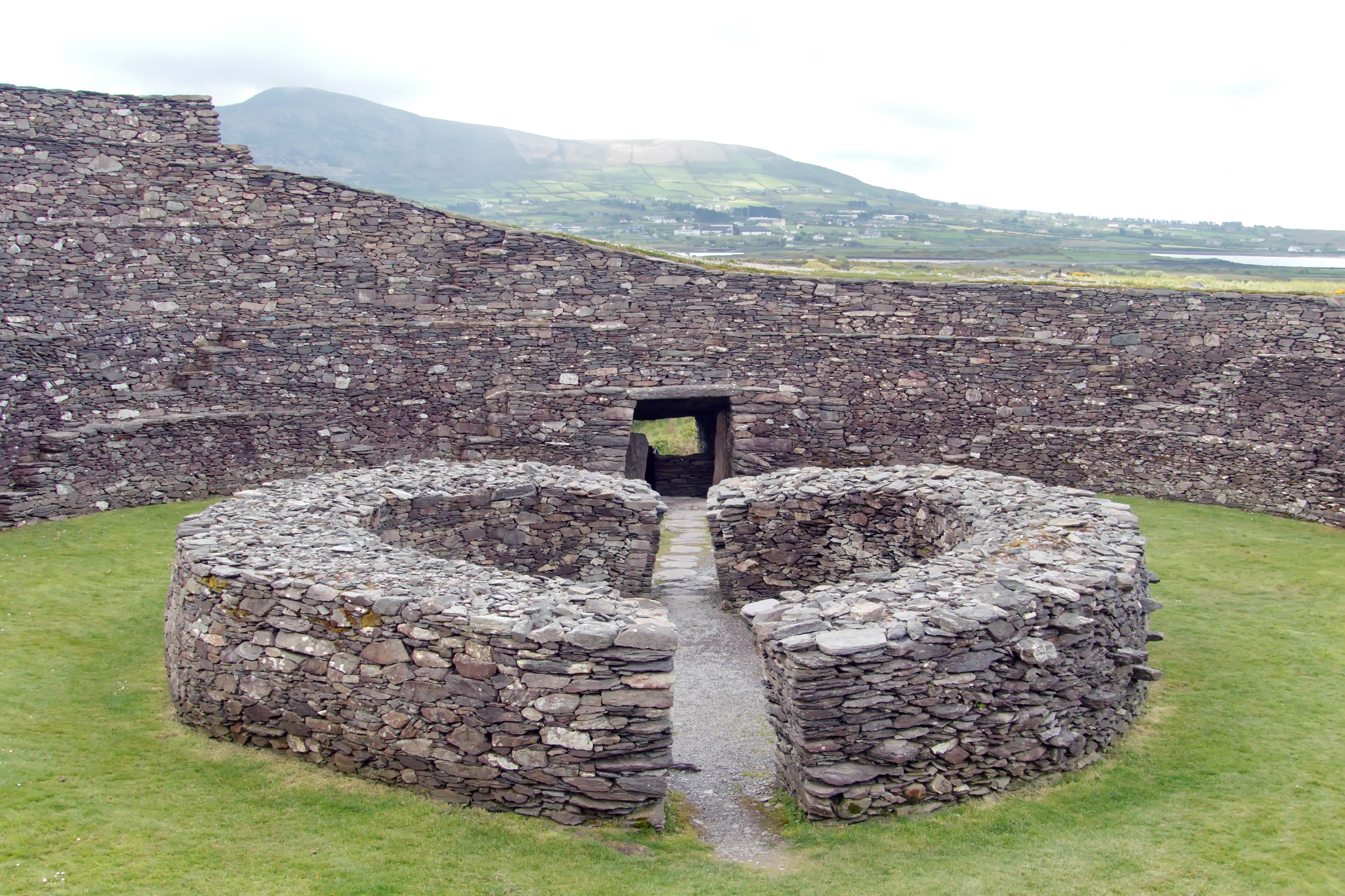
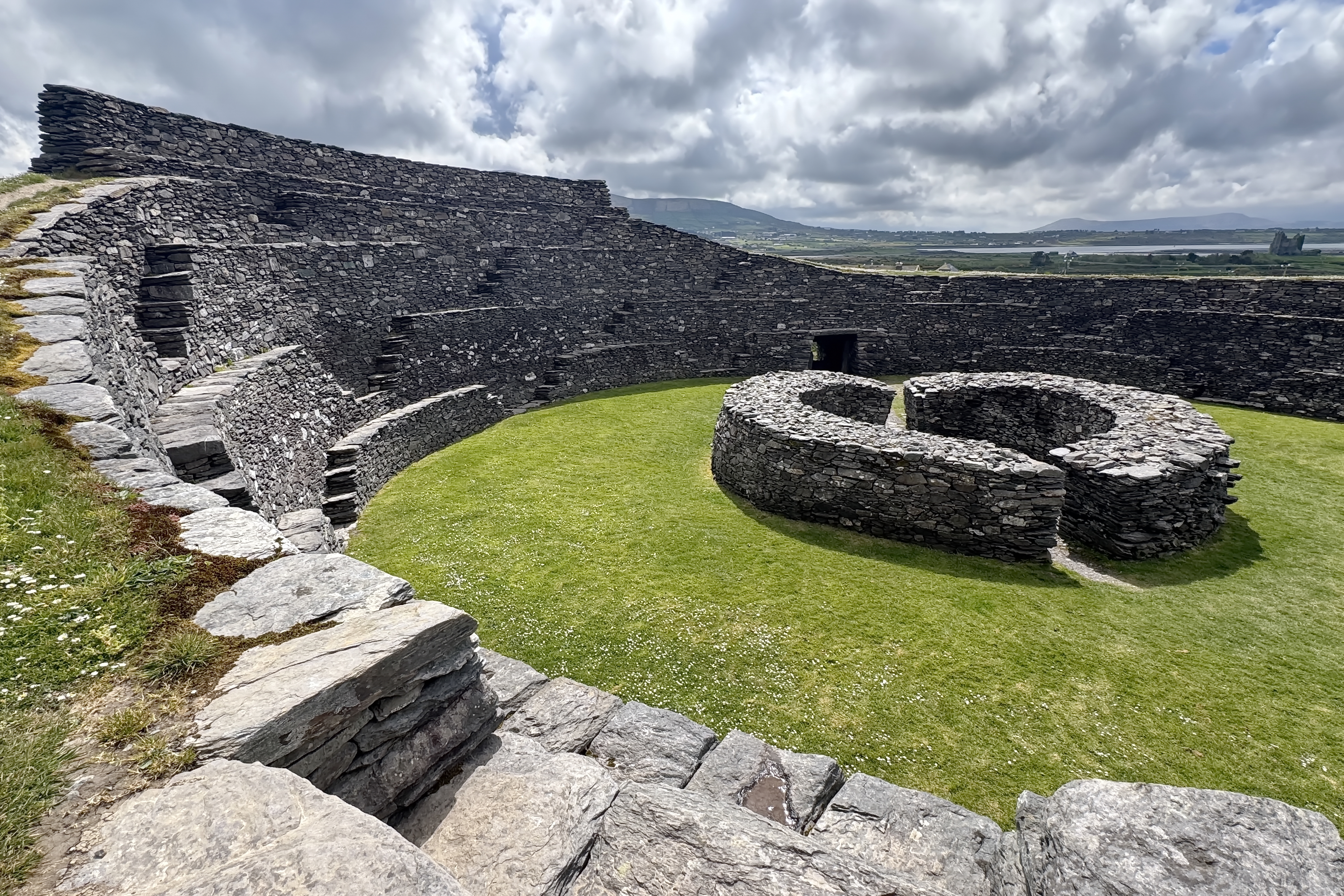
One of the most fascinating stops along the route was Cahergal Stone Fort. The ancient circular fort immediately reminded us of the Iron Age brochs we had seen in Scotland, with its progressively stepped layers of corbelled stone forming a remarkably solid structure. Walking along the magnificently restored ramparts, surrounded by sweeping countryside views, it was easy to imagine life here centuries ago. For a moment, standing atop the stone walls, it felt as though you were an ancient chieftain surveying your lands and coastline below.
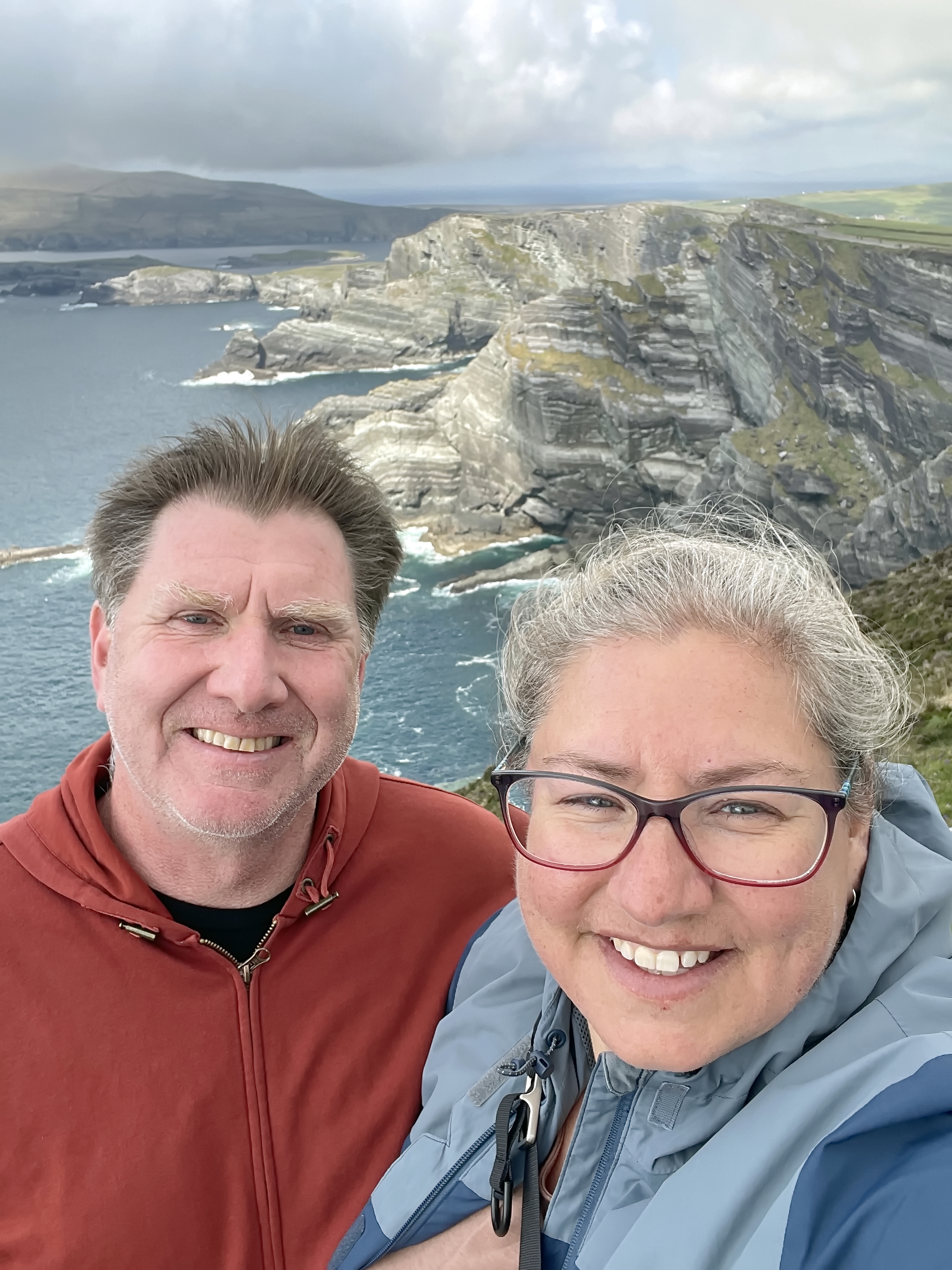
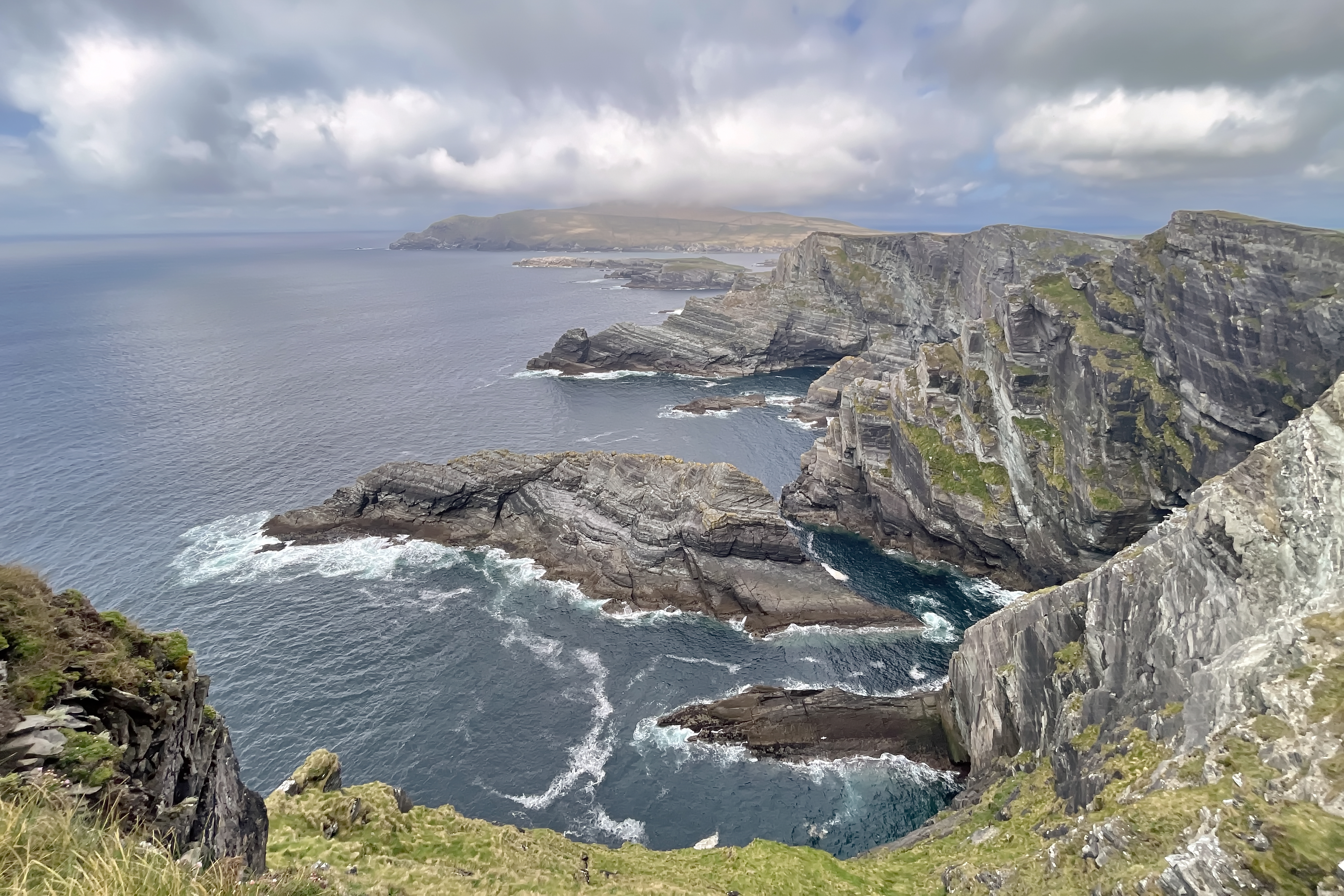
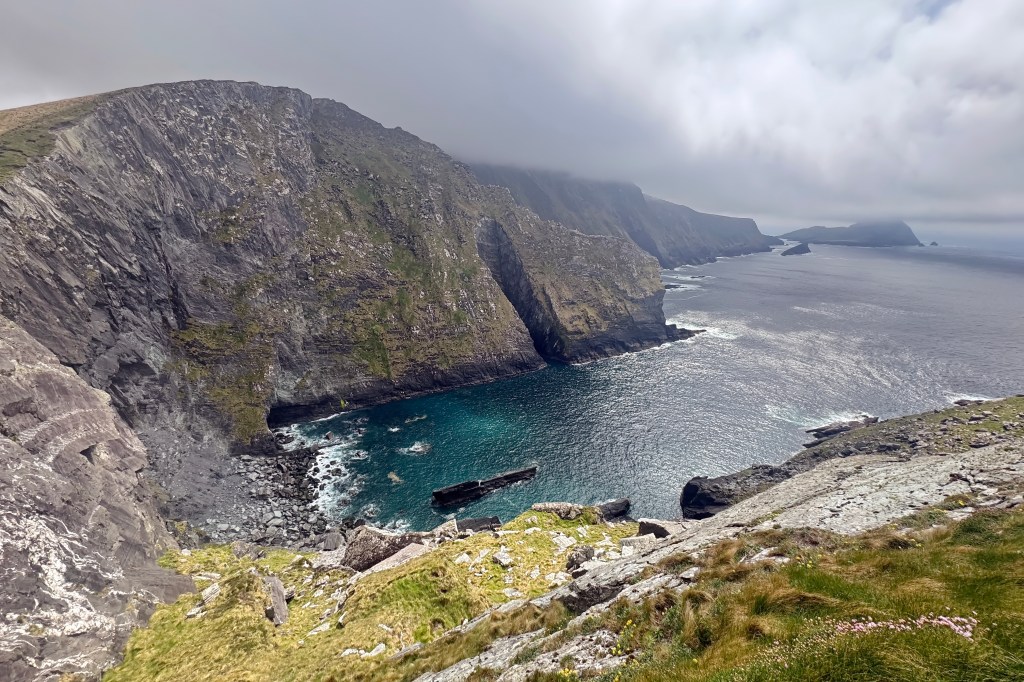
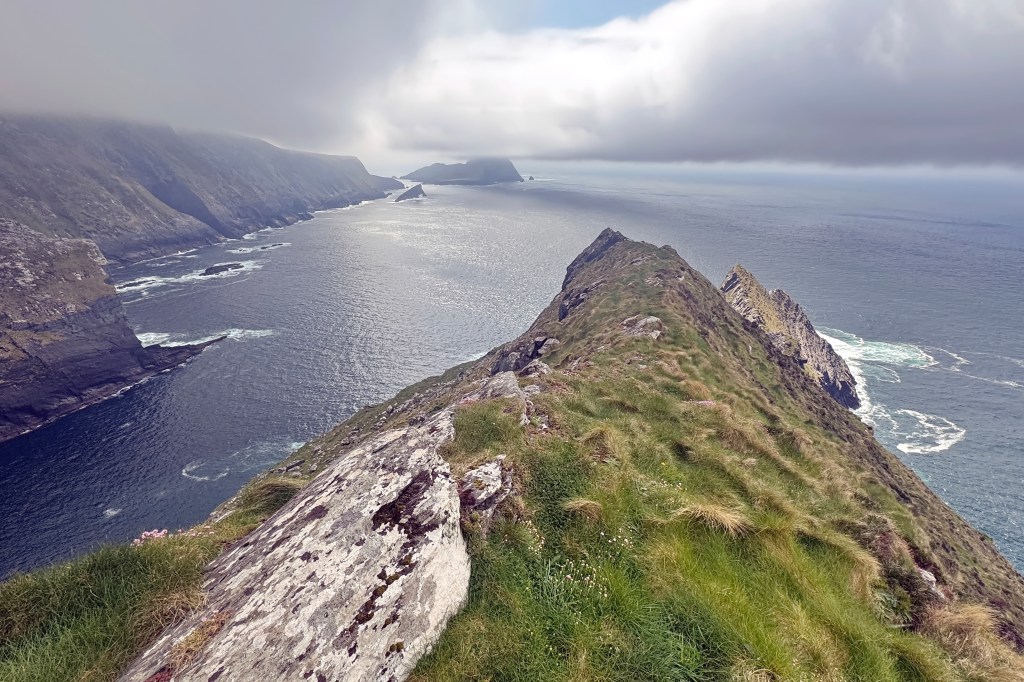
If possible, the Kerry Cliffs may have outshone the more famous Cliffs of Moher further north. Towering high above the Atlantic, these rugged sea cliffs felt wilder, more remote, and wonderfully untamed. Layers of ancient rock rose sharply from the crashing ocean below, their jagged faces shaped over millions of years by relentless wind and waves. Standing near the edge with the powerful Atlantic gusts whipping around us was both exhilarating and humbling. From this dramatic coastline, we were rewarded with breathtaking panoramic views of the distant Skellig Islands, their steep rocky silhouettes rising in isolation from the sea like something from another world.
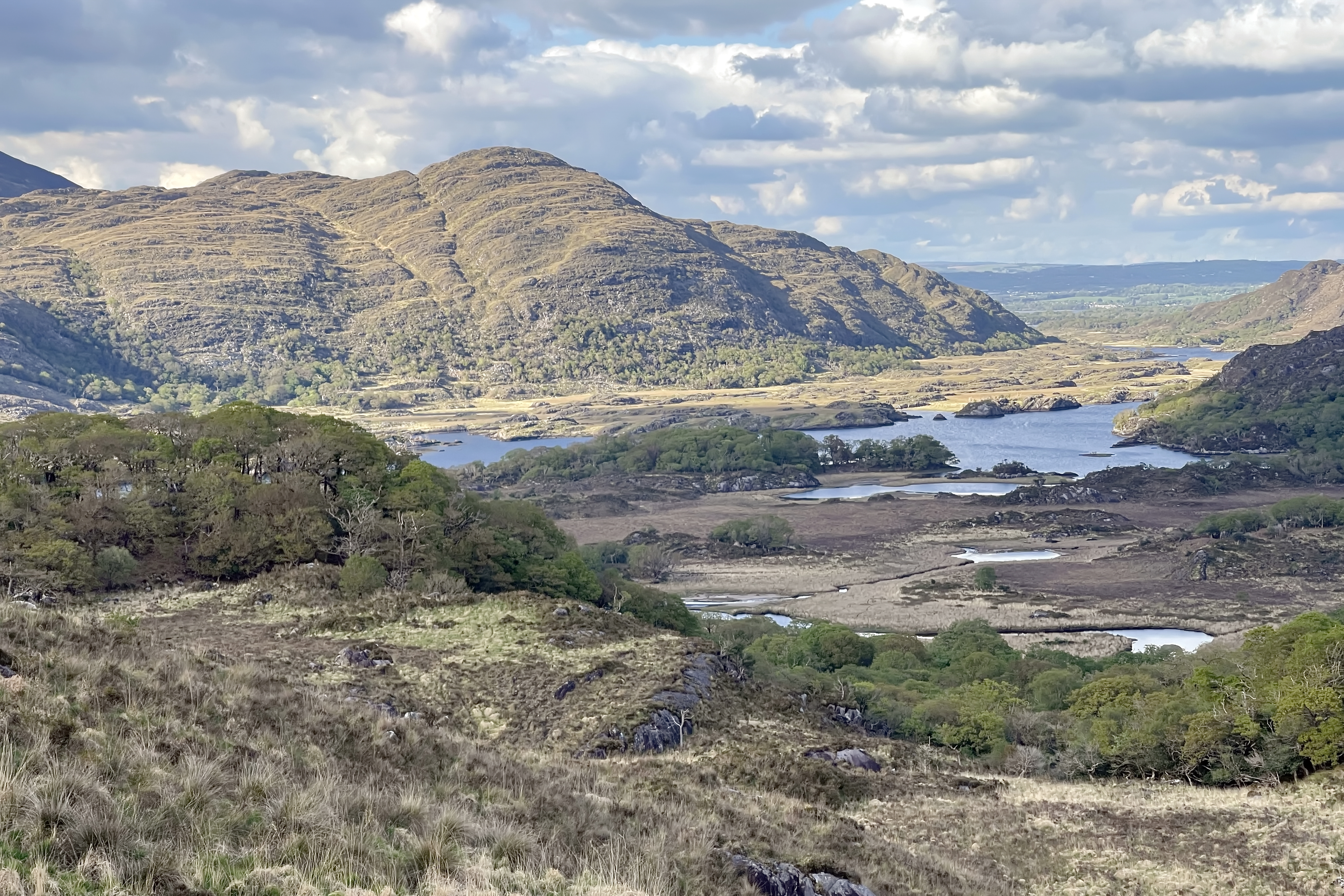
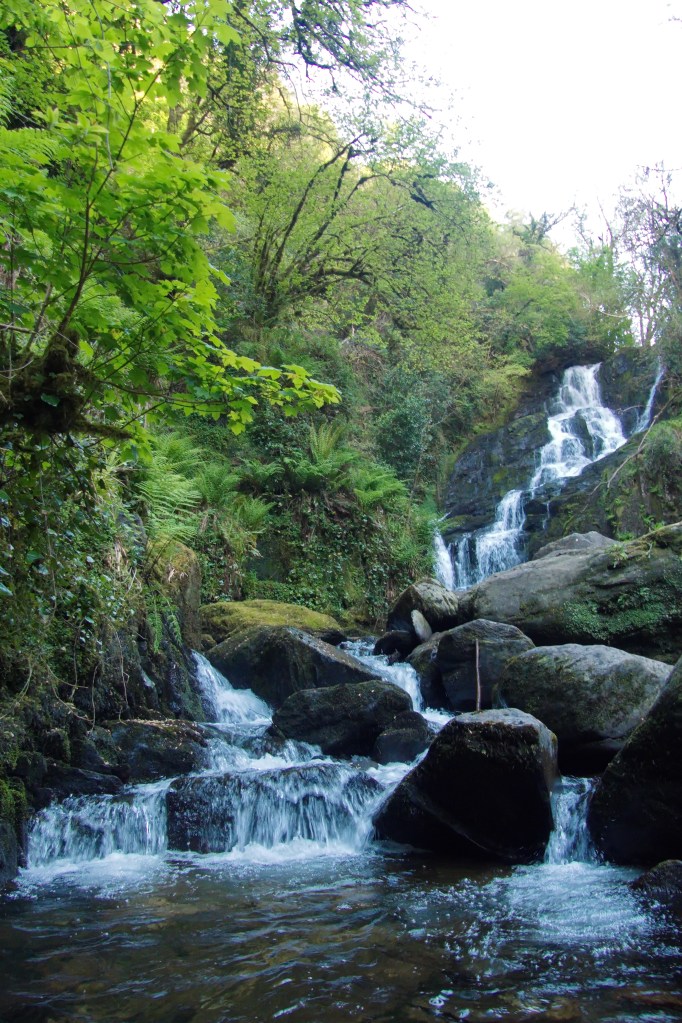
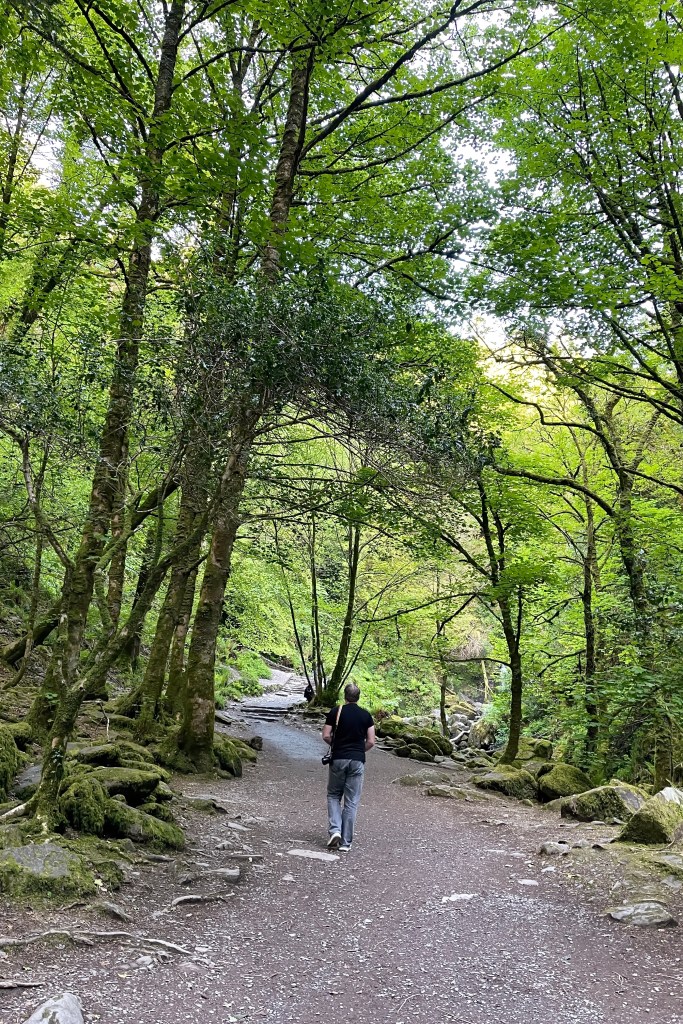
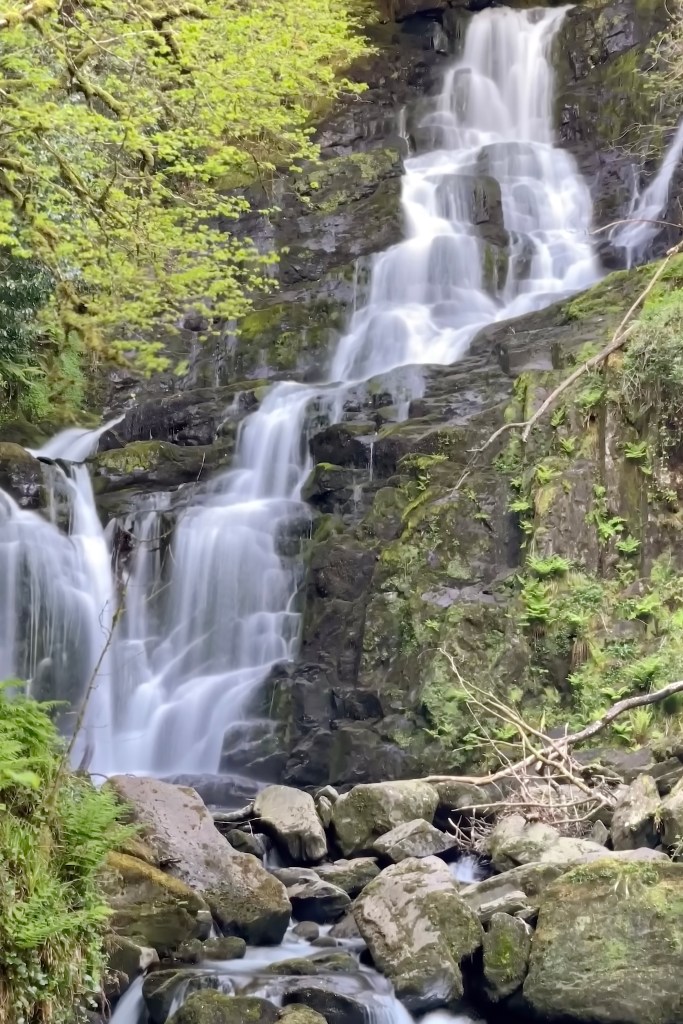
Away from the coast and nestled near the heart of the region, Killarney National Park revealed yet another side of Ireland’s beauty. The park felt timeless, with ancient forests, mirror-like lakes, waterfalls, and mountains rising beyond it all. After days of winding coastal drives, it was the perfect place to slow down and simply take everything in. We followed the short trail to Torc Waterfall, where the dense canopy of trees cooled the warm spring air and the sound of rushing water echoed through the forest. It was one of those peaceful moments that quietly stays with you long after the trip ends.
As if we hadn’t already experienced enough unforgettable scenery, our final day on Ireland’s Wild Atlantic Way perfectly captured the spirit of adventure with a journey around the Dingle Peninsula. The only small disappointment came in the colourful harbour town of Dingle itself. The lively streets were absolutely packed with visitors, tour buses, and traffic, and after circling several times without finding parking, we reluctantly decided to leave the crowds behind and continue exploring the quieter corners of the peninsula instead. In the end, it felt like the right choice, allowing us to fully appreciate the rugged landscapes that make this region so special.
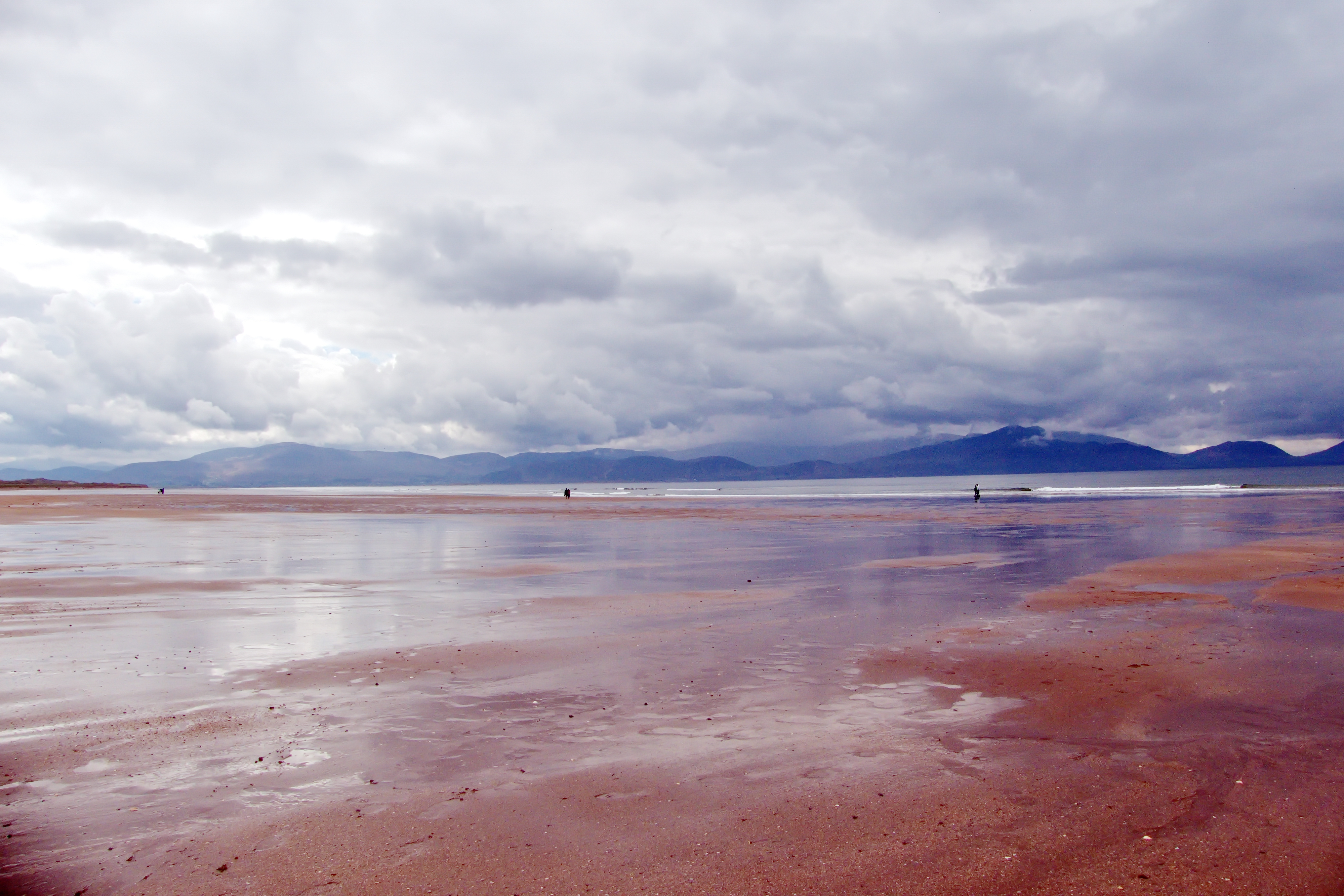
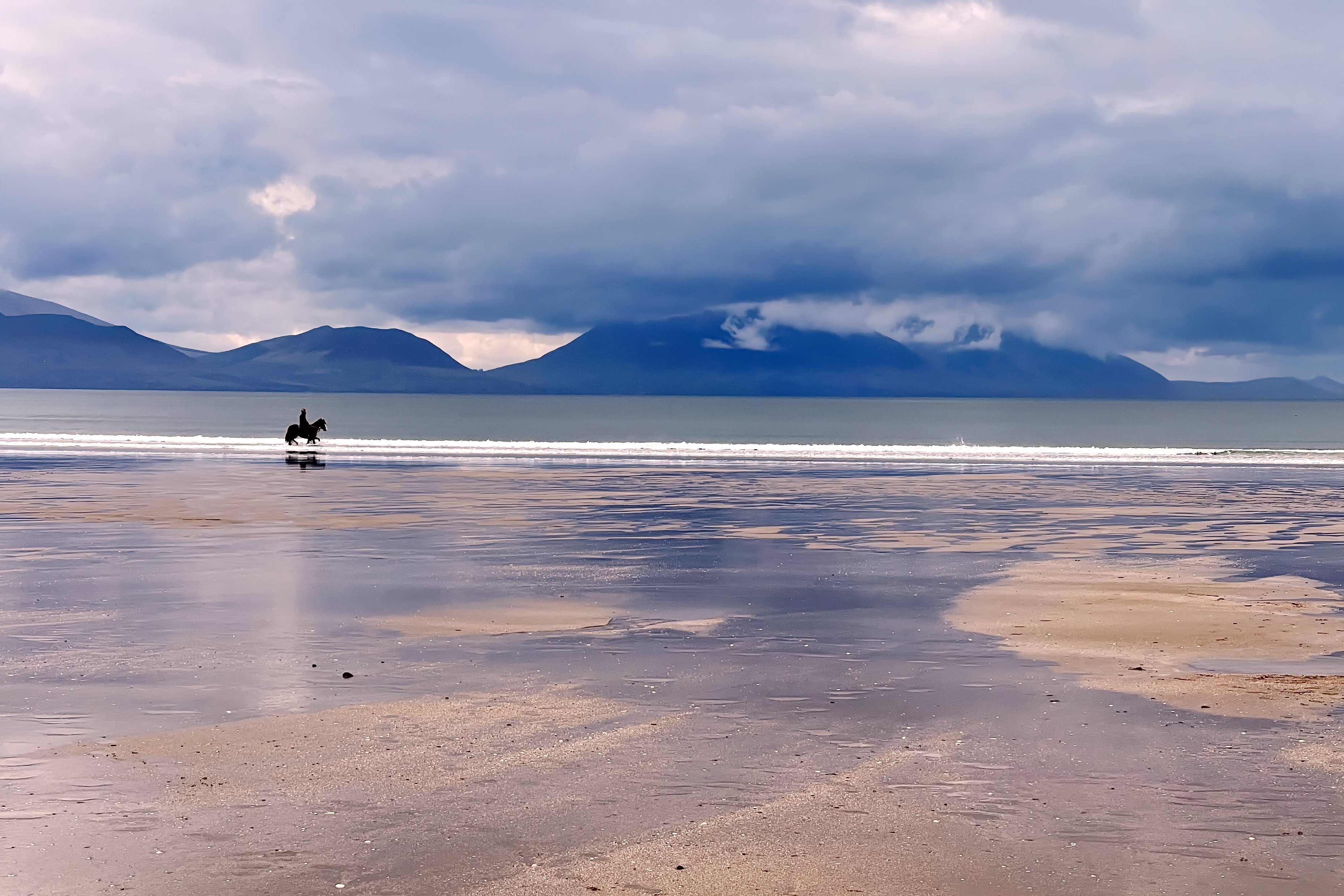
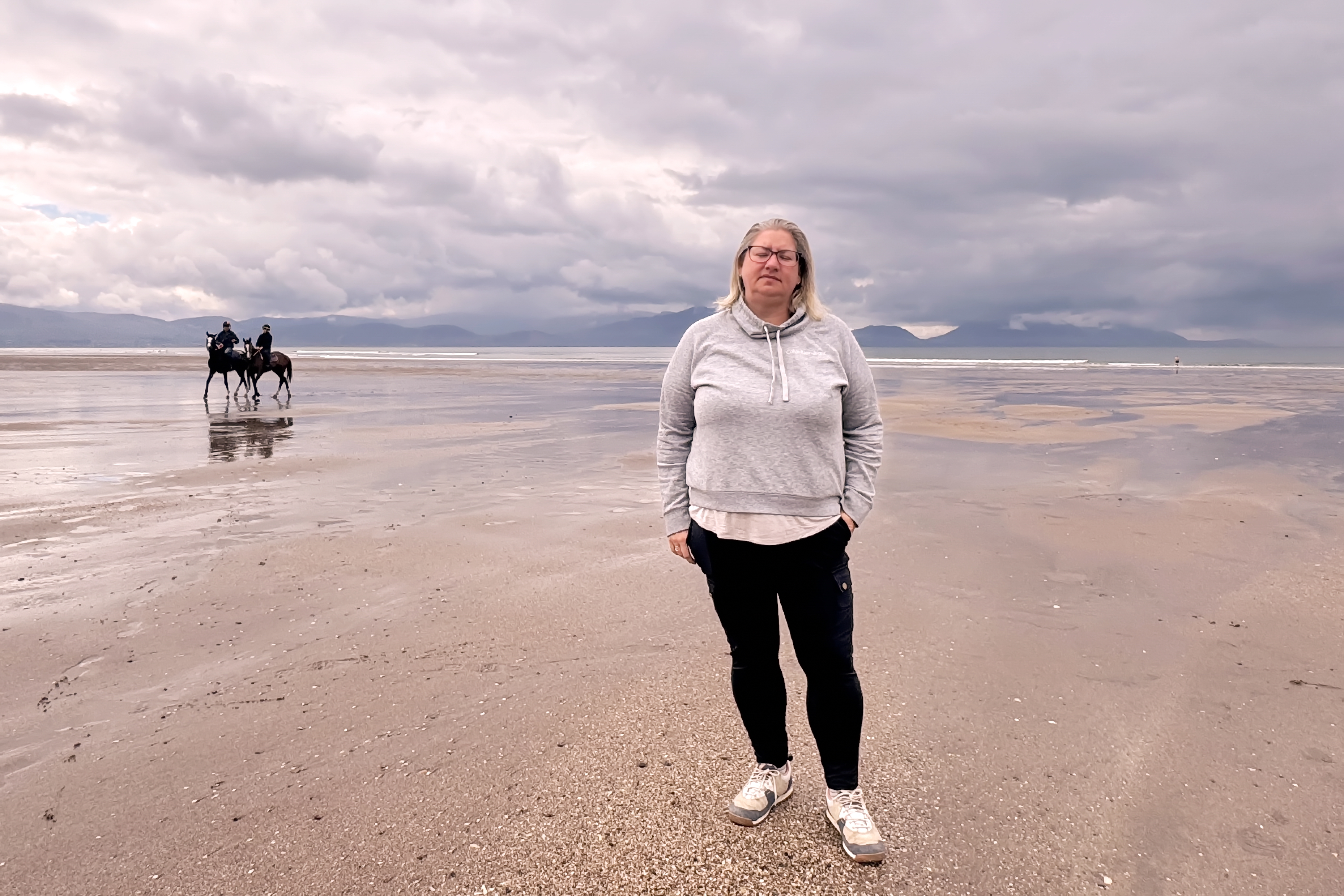
The day began peacefully at Inch Beach, where the morning sunlight reflected off the wet sand beneath distant mountain silhouettes. The wide golden strand seemed to stretch endlessly along the coast, with gentle waves rolling ashore and sea air carrying the unmistakable scent of the Atlantic. Horse riders wandered slowly along the beach while a few brave swimmers dashed into the freezing water before retreating just as quickly to warmer ground. It was the kind of calm, windswept place that invites you to simply pause and take it all in.
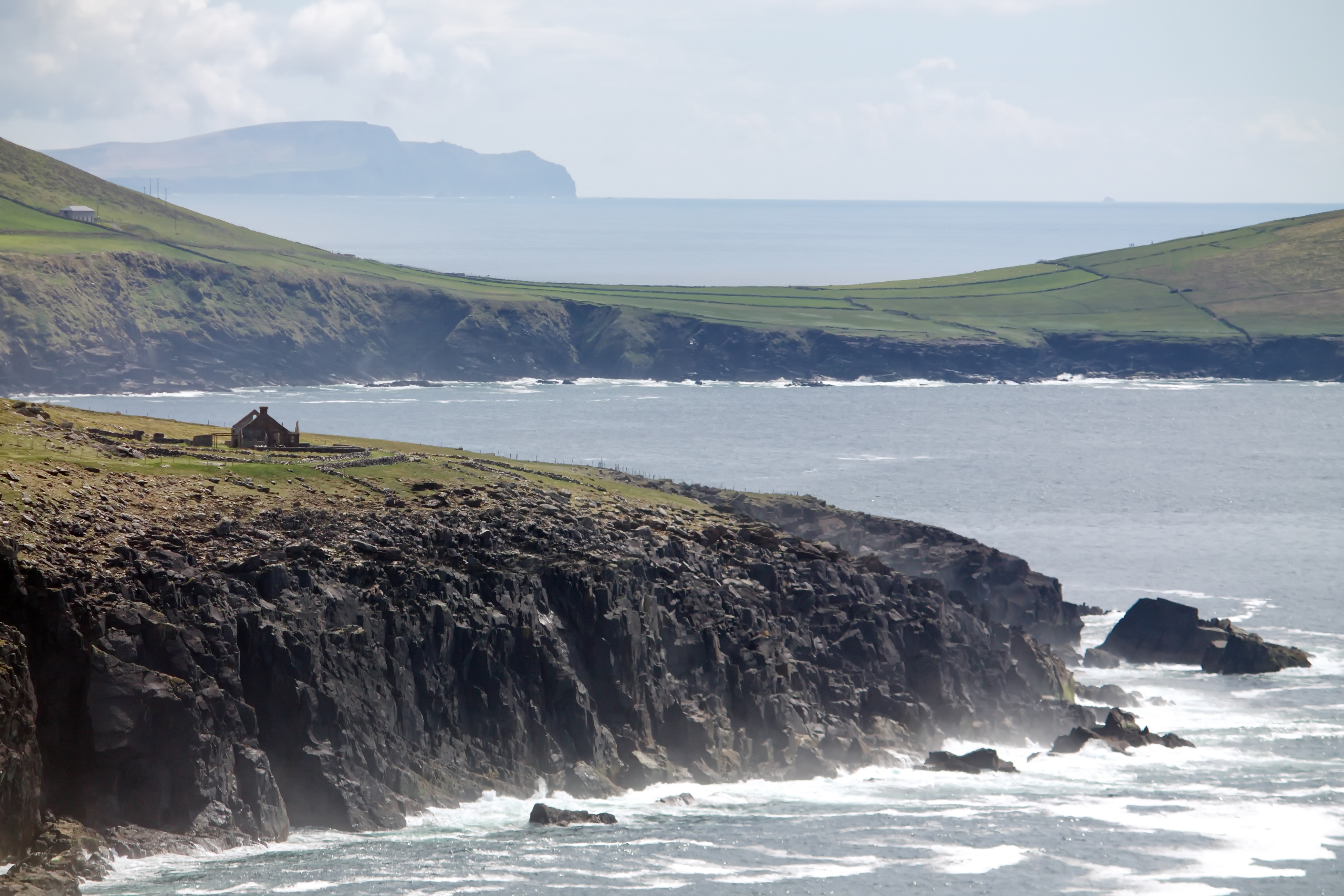
From there, the famous Slea Head Drive delivered exactly the Ireland we had imagined before the trip—dramatic cliffs plunging into the ocean, crashing surf below narrow coastal roads, rolling green hills scattered with sheep, and stone fences tracing the landscape. Around every bend, another breathtaking panorama appeared, somehow more dramatic than the last. Ancient stone cottages, rugged headlands, and distant islands rising from the Atlantic gave the drive a timeless, almost cinematic feeling.
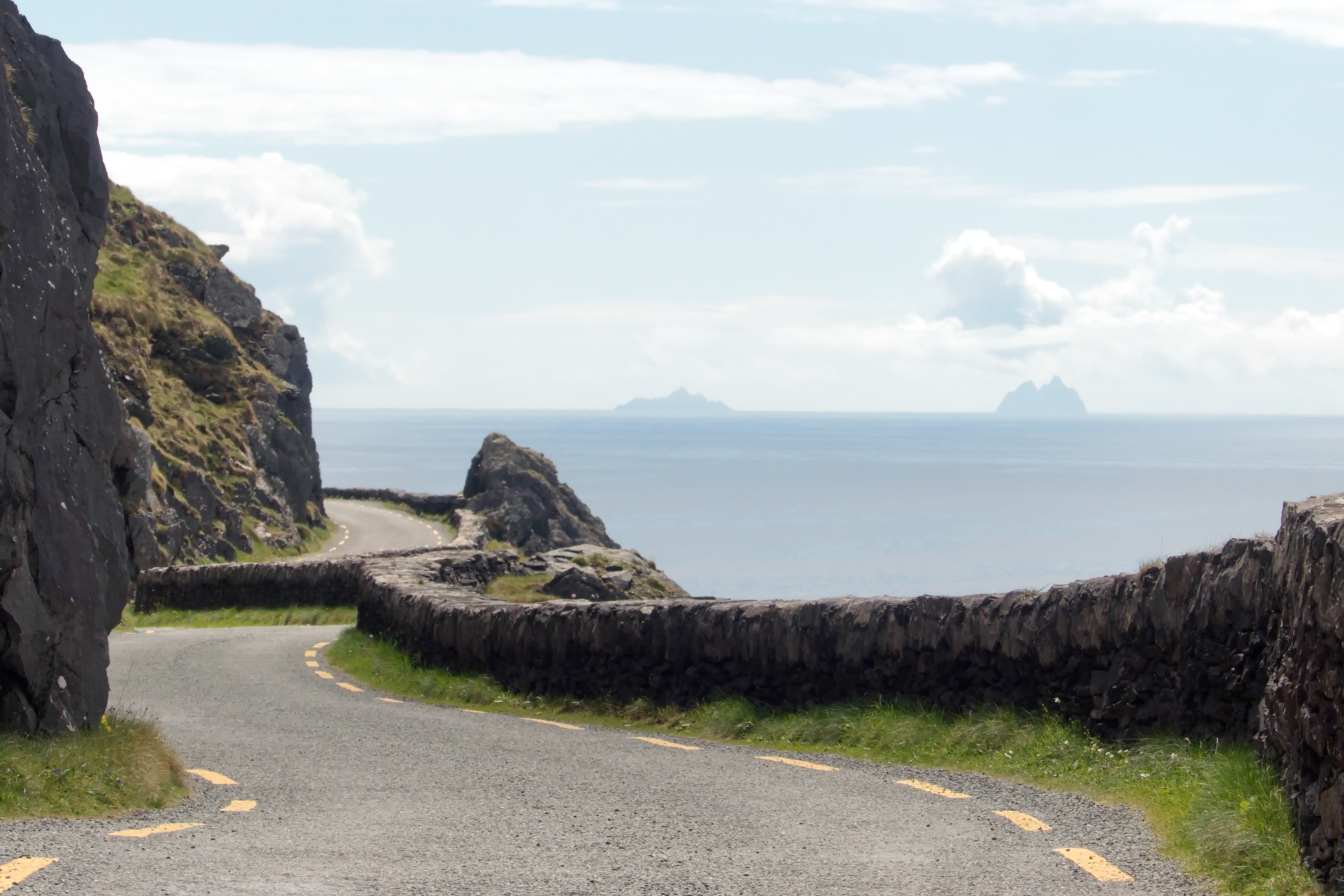
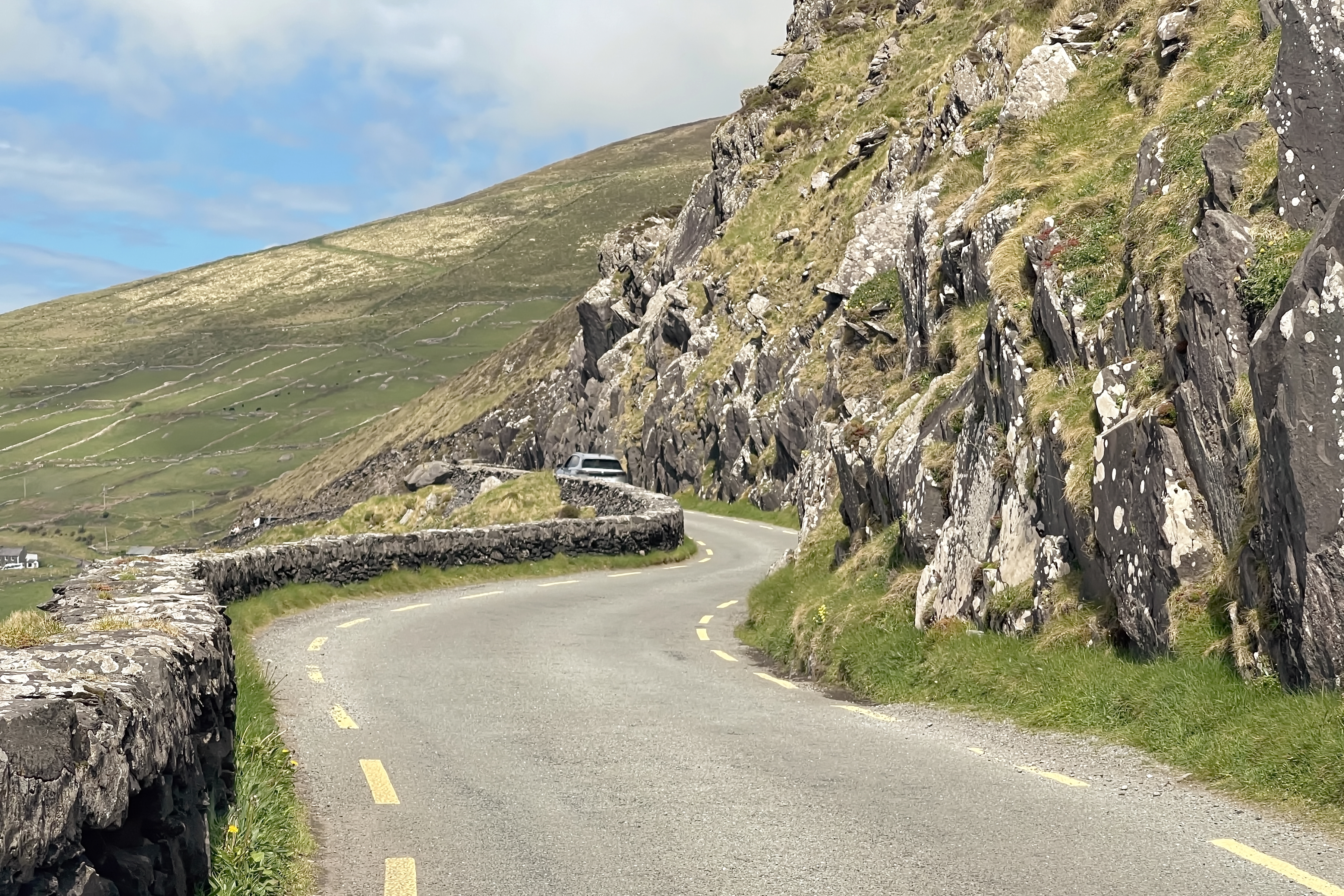
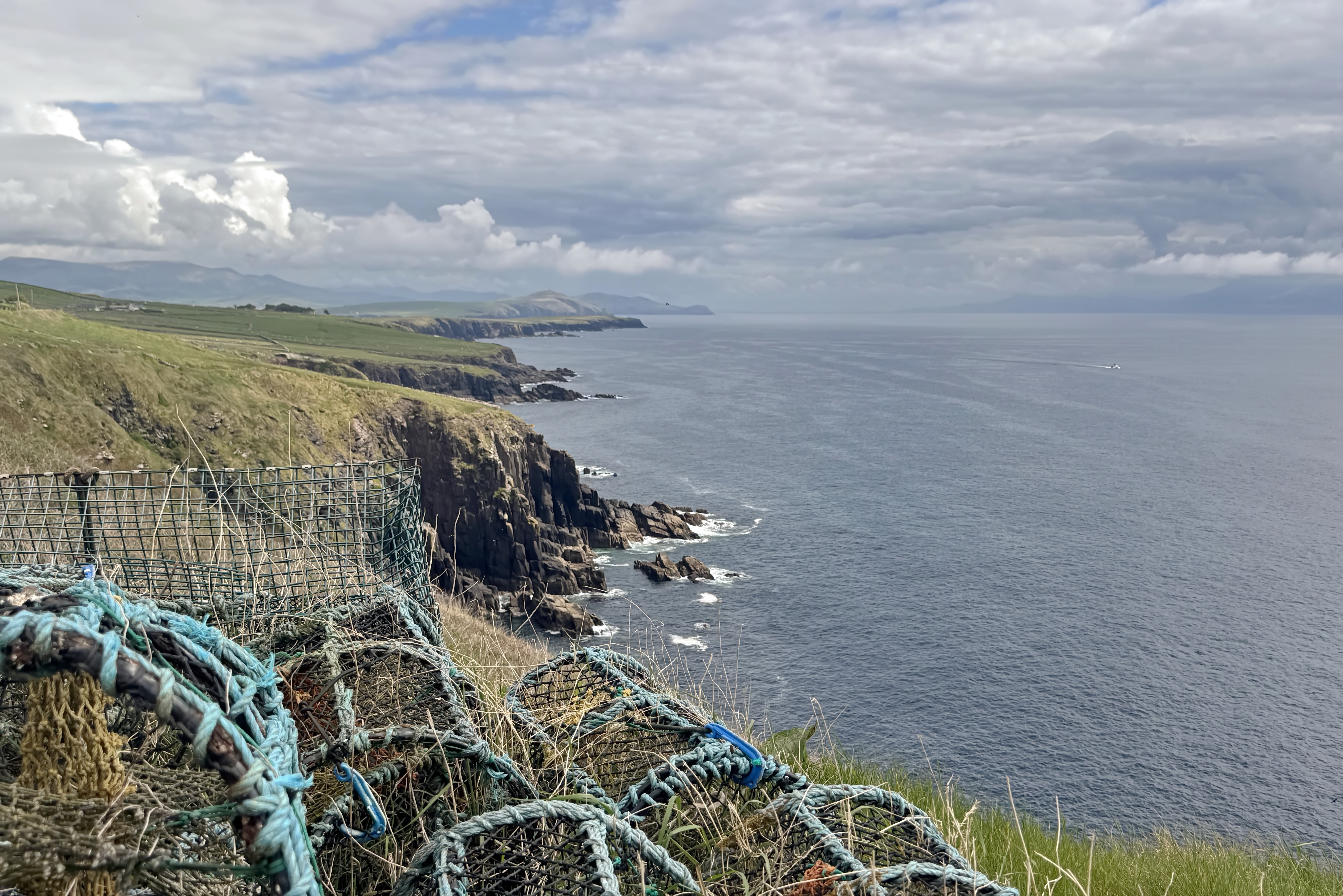
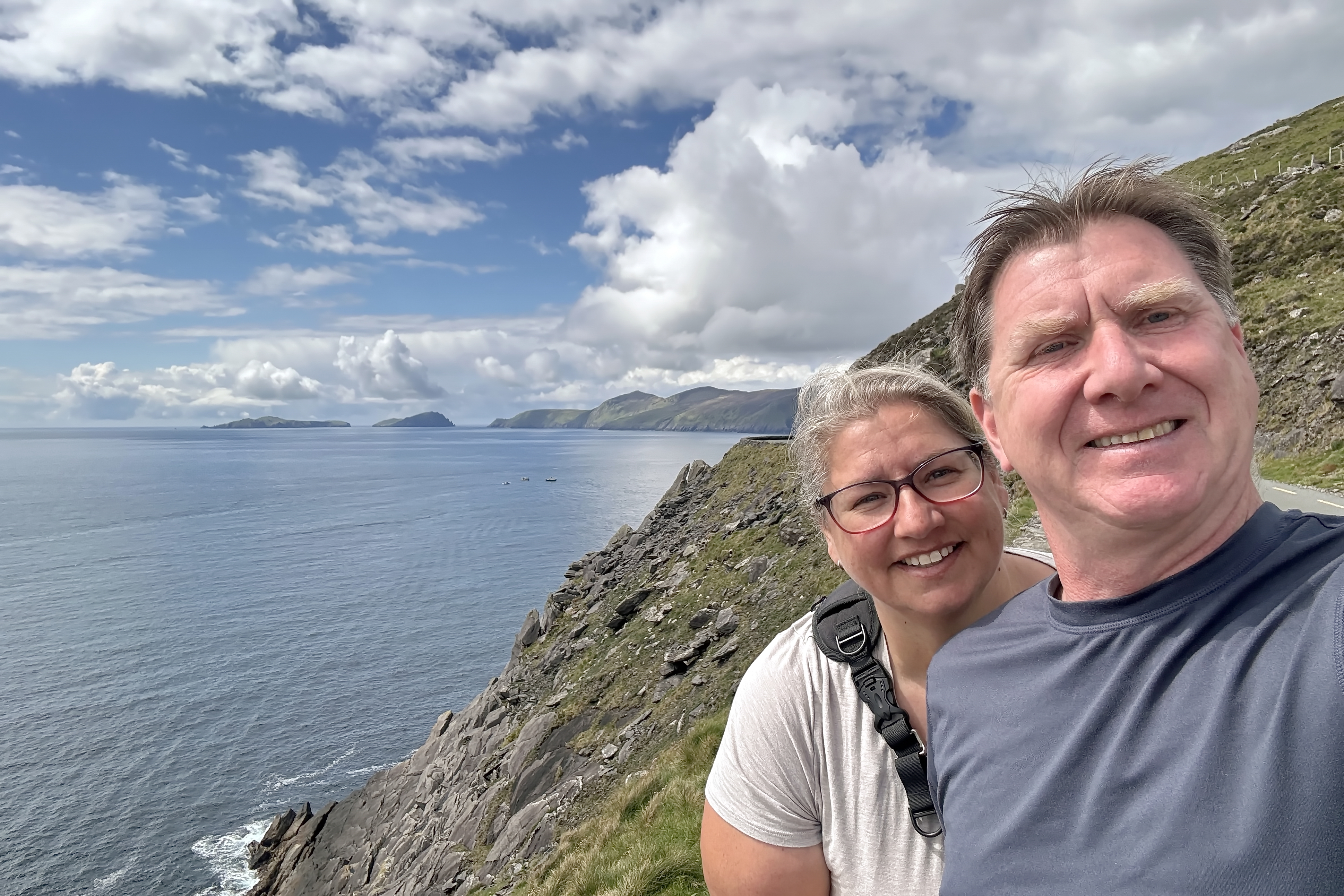
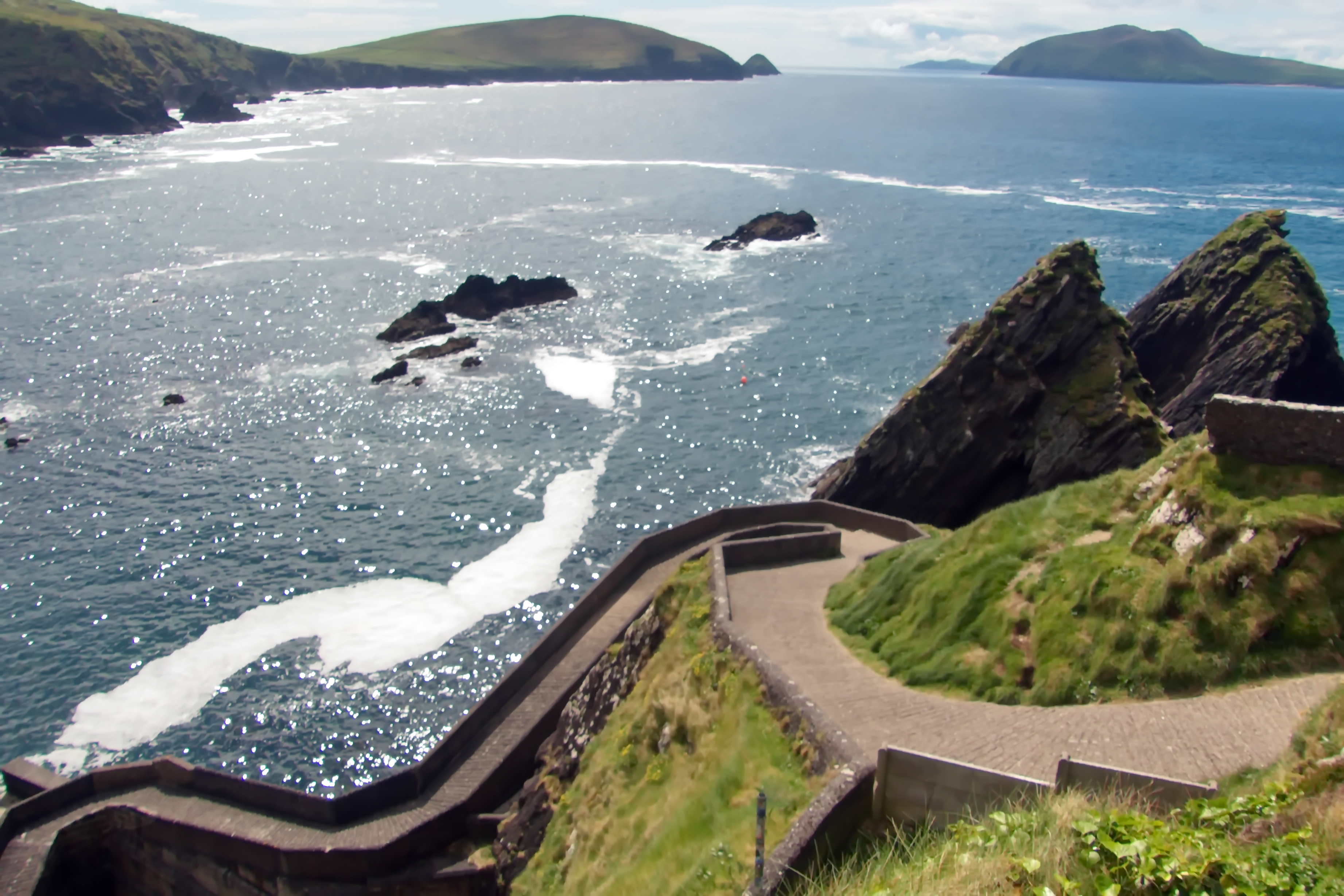
A steep, winding path led us down to Dunquin Pier, one of the most iconic and photographed spots on the peninsula. As we made our way along the narrow concrete road zigzagging sharply toward the sea, the dramatic setting felt both isolated and strikingly beautiful. Looking outward toward Dunmore Head — the westernmost point of mainland Ireland — the Atlantic seemed endless, with waves relentlessly pounding the rocky shoreline below.
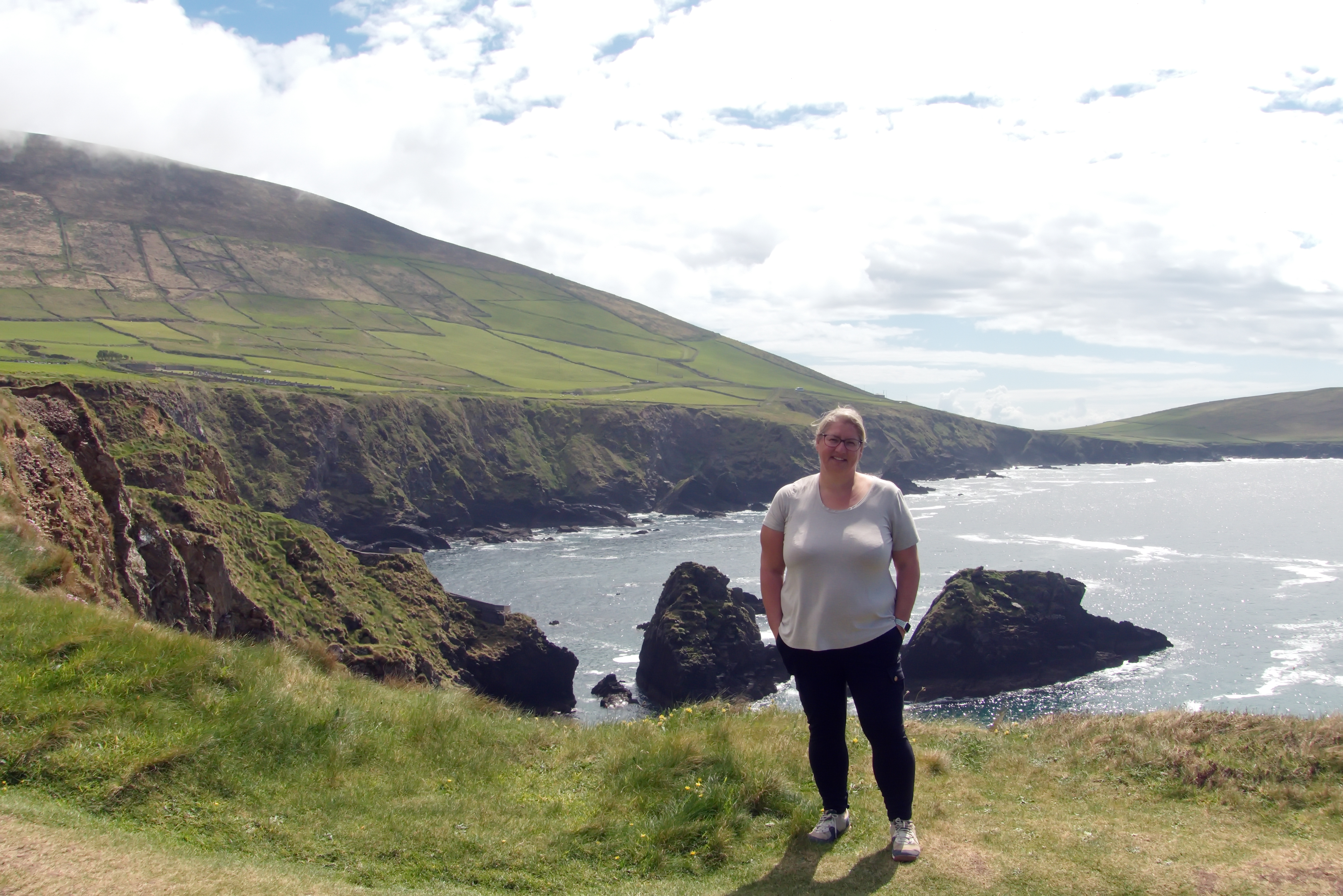
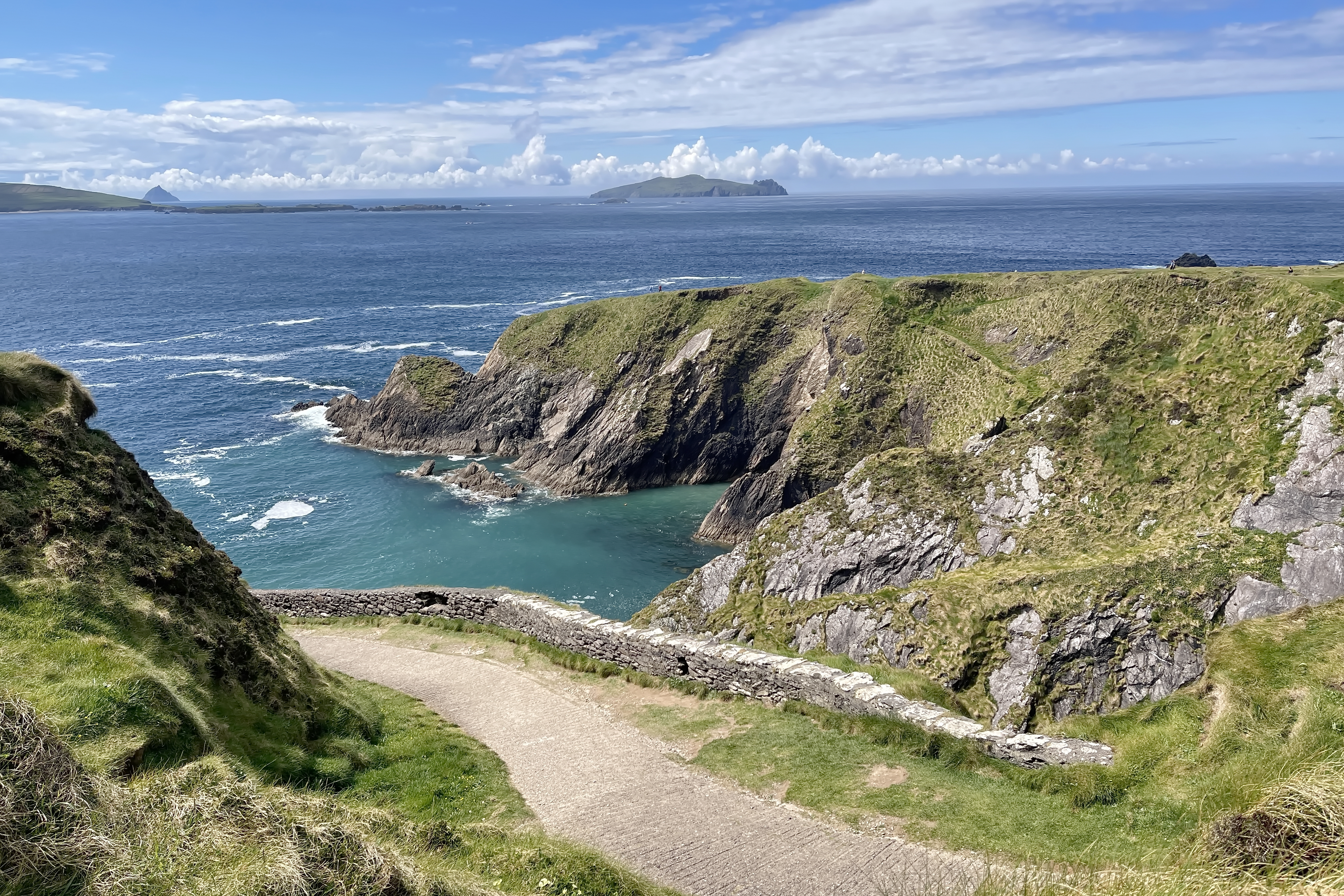
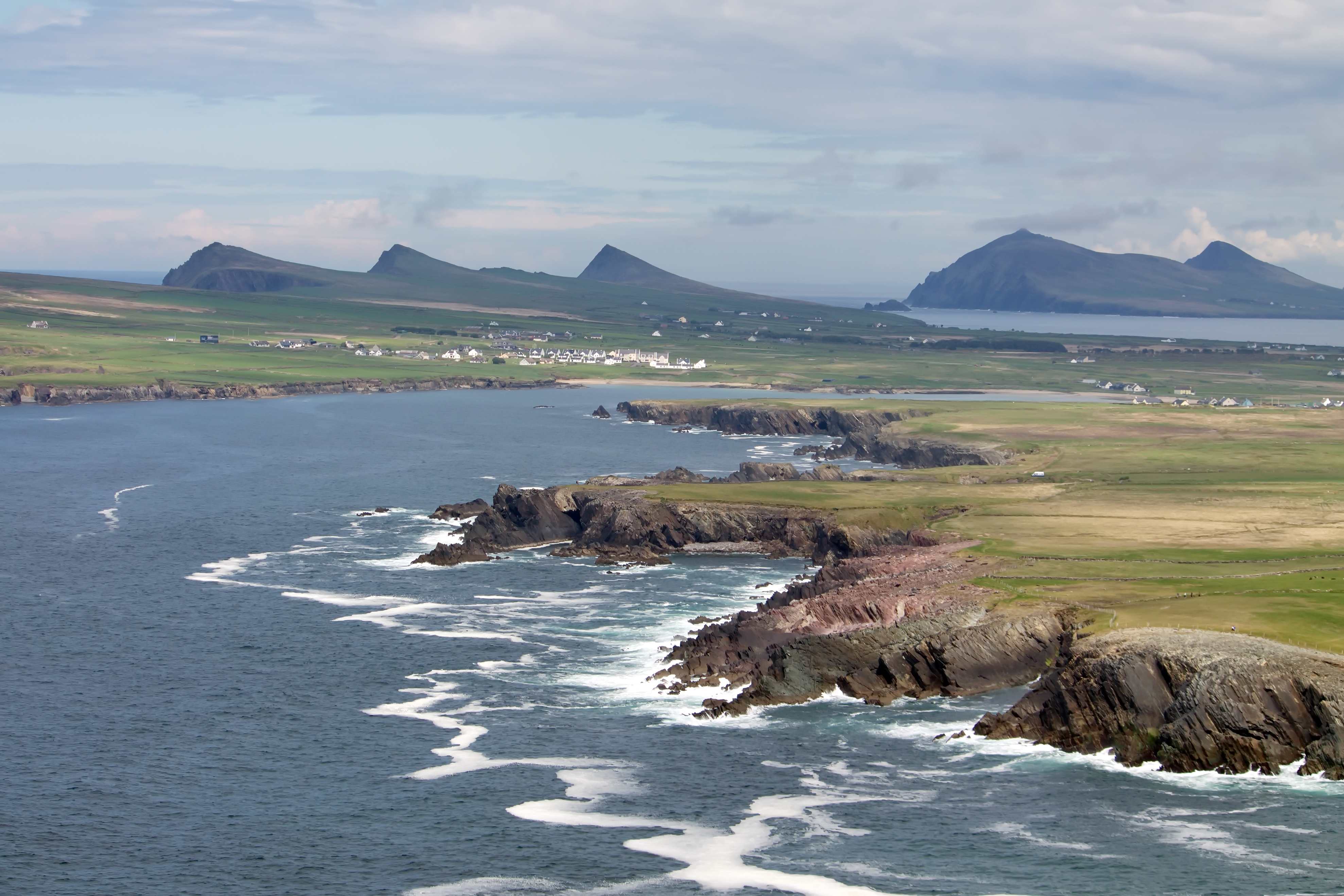
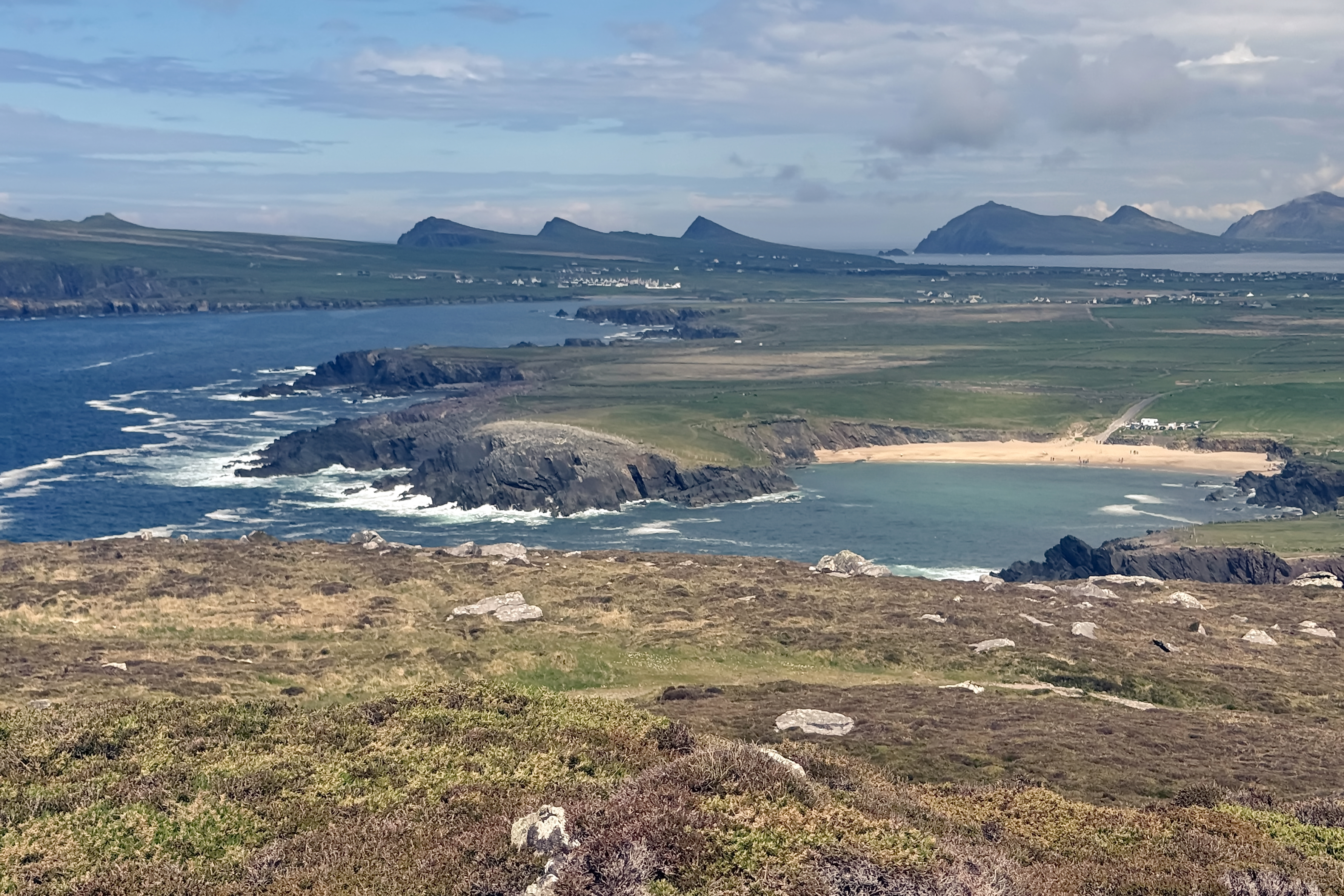
Further along, the rocky trail out to Clogher Head rewarded us with spectacular views in every direction. Out to sea, the Blasket Islands sat dark and mysterious against the horizon, while inland the golden crescent of Clogher Strand curved beneath steep green hills and distant mountains. The combination of rugged coastline, open ocean, and dramatic geology made this one of the most memorable stops of the entire drive.
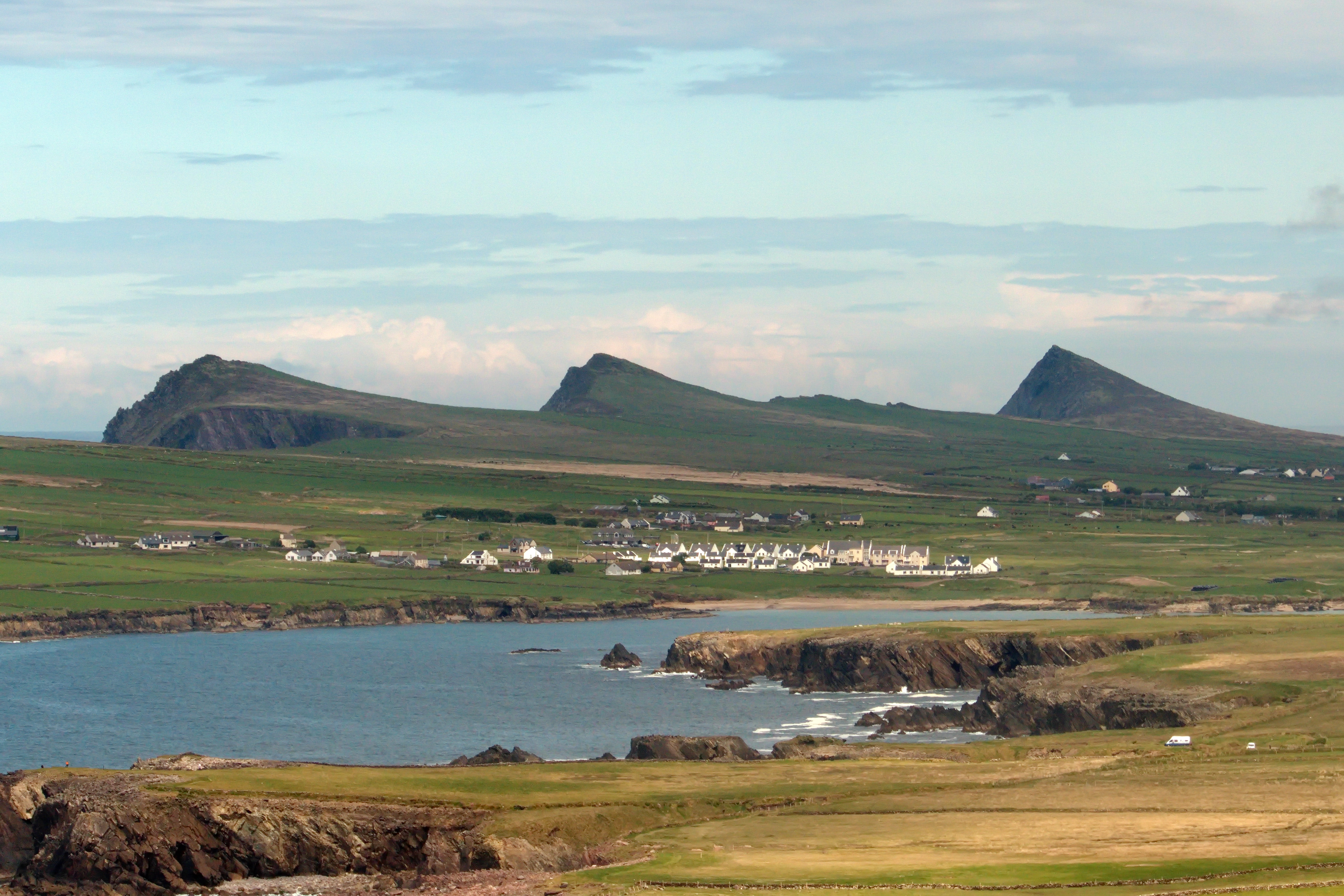
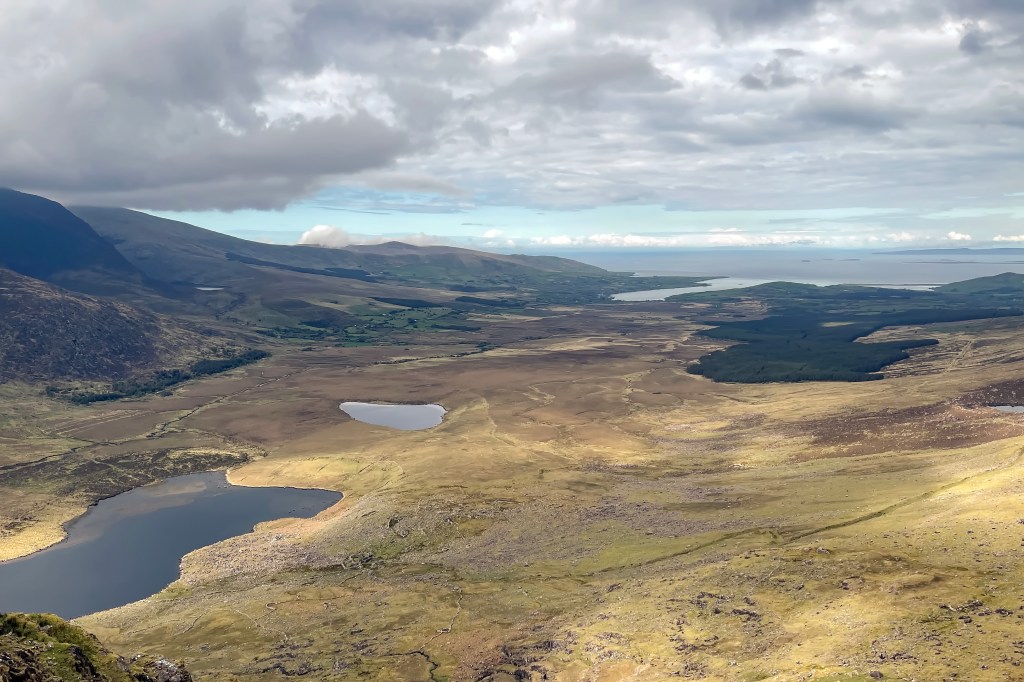
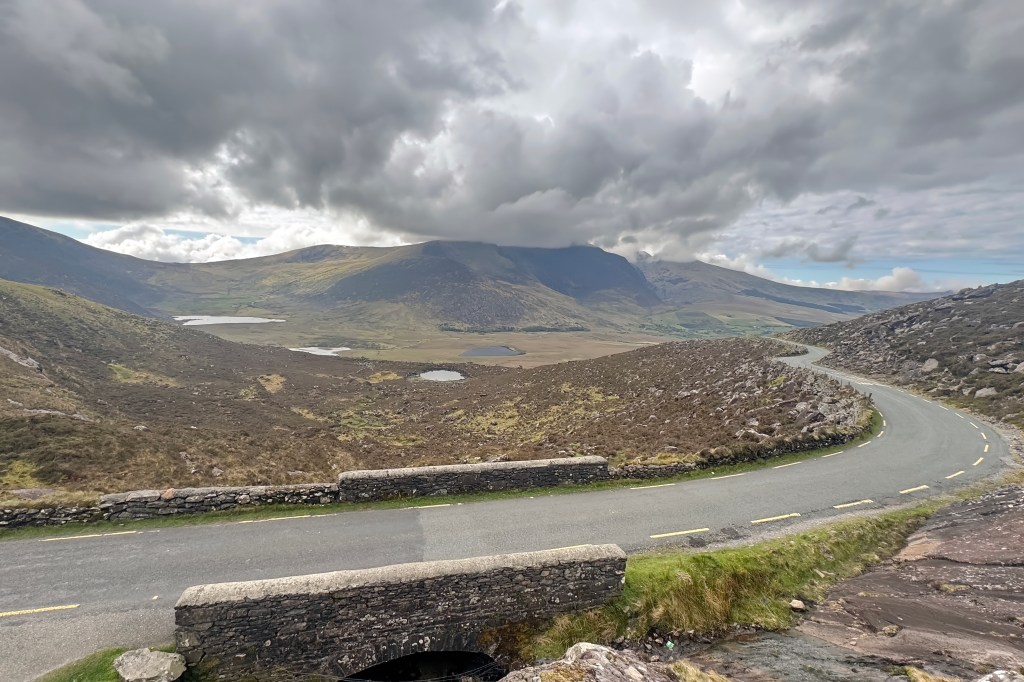
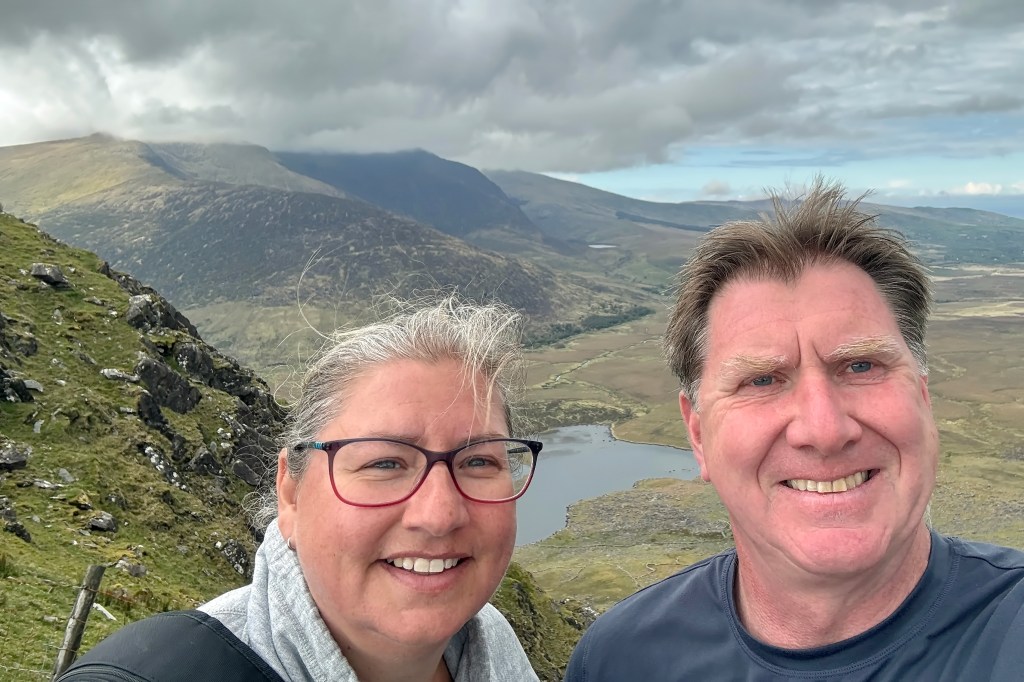
The final leg of the journey carried us high into the mountains via Conor Pass, and it felt like entering an entirely different world after following the bright coastline for most of the day. The road climbed steeply through rocky mountain slopes, narrowing to little more than a single lane in places, with sheer drops and sweeping views stretching toward the Atlantic far below. Low clouds drifted across the peaks while dark lakes shimmered between the valleys beneath us. It was both exhilarating and humbling—the kind of drive that demands your full attention while rewarding you with scenery you know you will never forget.
What stayed with us most about the Wild Atlantic Way was not just the beauty of the landscapes but the feeling of freedom and discovery that came with exploring them. The west coast of Ireland feels deeply connected to nature—shaped by the sea, storms, isolation, and history. Every winding road seemed to lead somewhere extraordinary, and every stop reminded us how wild and captivating this part of the world truly is. It was the kind of journey that left us wanting to keep driving just a little farther down the coast to see what might appear around the next corner.

 Mapgirl Adventures
Leave a comment